
You've been staring at a transistor curve tracer on a datasheet, or maybe you're wrestling with a circuit simulation that just won't settle down. The term 'quiescent point' gets thrown around, but what does it actually mean in the real world of soldering irons and signal integrity? Let's cut through the textbook fluff.
Finding the quiescent point on a load line isn't just an exercise in academic masochism. It's the single most critical step in designing a stable, linear amplifier. Get it wrong, and you get distortion. Get it right, and the circuit sings.
I've been designing analog circuits for over a decade, and I still see engineers skip this step and pay for it with oscilloscope nightmares. Let me show you the practical way to nail this.
The Load Line: Your Circuit's Operating Highway
Think of the load line as the constraints your circuit imposes on the transistor. It's not a theoretical curve; it's a physical limitation dictated by your power supply and your collector resistor. Without a load line, you're just guessing where the transistor will sit. And guessing is for lottery tickets, not circuit design.
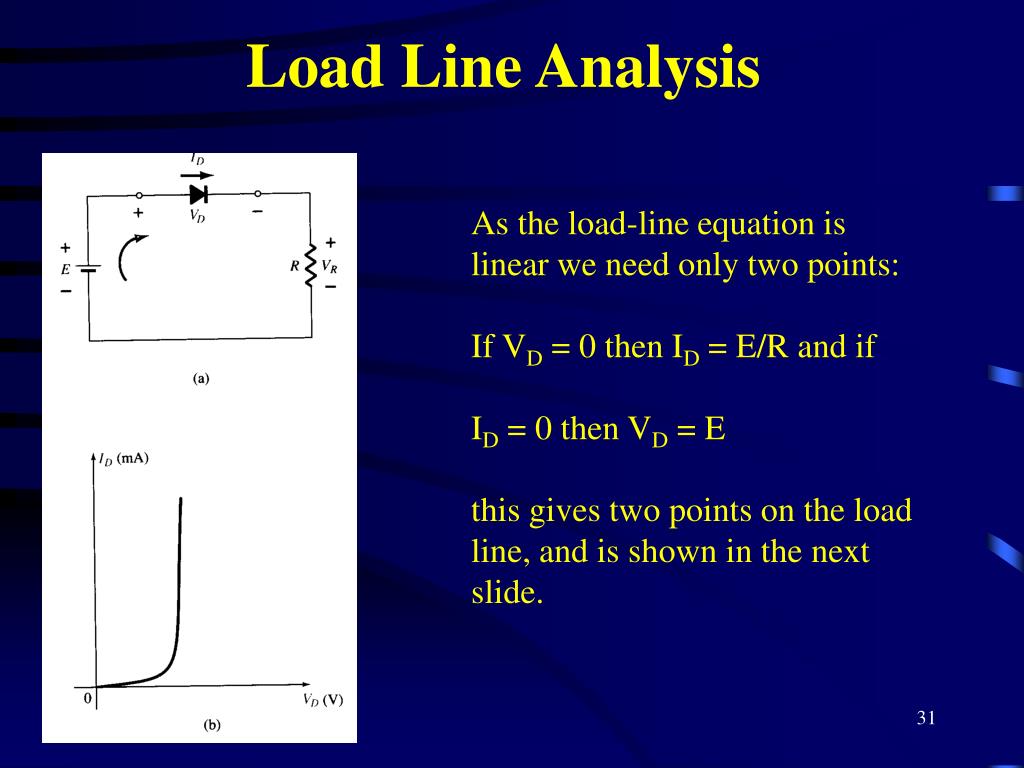
The concept is deceptively simple: you plot the voltage across the transistor against the current through it, given the fixed resistance of your load. It draws a straight line on the transistor's characteristic curves. That line represents every possible operating state the circuit can have. Every single one. It's a big deal because it shows you the boundaries of reality for your transistor.
Why the DC Load Line is Your Blueprint
The DC load line is the starting point for everything. It defines the circuit's behavior when no input signal is present. This is the quiescent point, or Q-point for short. It answers the fundamental question: where does my transistor want to be at rest?
To find this line, you need two anchor points. First, find the saturation point: assume the transistor is fully on, voltage across it is zero, and calculate the current based on V_CC and R_C. Second, find the cutoff point: assume the transistor is off, current is zero, and voltage across it equals V_CC. Connect those two points with a ruler. That's your DC load line. Seriously, a ruler. No calculus required.
The AC Load Line: The Other Half of the Story
Here's where people get tripped up. Your DC load line is static. It assumes no signal. But the moment you inject an AC signal, the transistor sees a different impedance. The AC load line is sloped differently because it includes the effect of coupling capacitors and the load resistance.
The AC load line always passes through the same quiescent point as the DC line, but it has a steeper slope. This is crucial because it determines how much voltage swing you can actually achieve before the signal clips. If your quiescent point is too low, the negative half of your signal slams into cutoff. Too high, and the positive peak hits saturation. It's a narrow window, and your quiescent point is the key.
The Art of Finding the Quiescent Point
Now we get to the meat. You have your load line plotted. How do you actually find the quiescent point? It's not arbitrary. It's determined by the base bias network you choose. The intersection of the load line with the transistor's base current curve is your Q-point. Simple in theory, finicky in practice.
I remember my first design mentor telling me, "Don't chase the perfect Q-point—chase the stable one." That advice saved me weeks of frustration. Your goal isn't some mathematically perfect midpoint. It's a point that stays put when temperature changes, when the transistor batch varies, and when the power supply drifts.
Step One: Plot the Extremes
First, calculate the saturation current. It's V_CC divided by R_C. This gives you the maximum possible collector current. Then, find the cutoff voltage. It's just V_CC. Plot these two points and draw the line. This is your constraint. Your transistor cannot operate beyond this line. It's a hard boundary, like the walls of a racetrack.
Now, look at the characteristic curves on the datasheet. They show collector current vs. collector-emitter voltage for different base currents. Your load line will intersect these curves. Each intersection represents a possible quiescent point for a given base current. Your job is to pick the right one.
Step Two: Bring in the Bias Resistors
This is where the rubber meets the road. You design the base bias network to deliver a specific base current. That base current determines which curve your Q-point sits on. For a common emitter amplifier, you typically aim for a Q-point near the middle of the load line. This gives you maximum symmetrical voltage swing.
Calculate the required base current from the beta of the transistor and the desired collector current. Then design the voltage divider or the base resistor to deliver that current. It's a back-and-forth process. You calculate, check the graph, adjust, and recalculate. This is why I always keep a datasheet handy. You cannot do this blind.
Practical Pitfalls and Why Your Q-Point Drifts
Even if you nail the math, real life gets in the way. Temperature is the biggest enemy of a stable quiescent point. As the junction heats up, beta increases. That means the same base current produces a higher collector current. Your Q-point moves up the load line. If it moves too far, you get thermal runaway and a dead transistor. I've smoked more transistors than I care to admit learning this lesson.
Another common issue is component tolerance. Your resistor may say 1k ohm, but it's actually 980 ohms. That small difference shifts your bias network and your Q-point. Good design includes emitter degeneration resistors to stabilize the Q-point against these variations. It's not glamorous, but it works.
Here is a quick checklist I use when I'm setting a quiescent point:
- Check the power dissipation. Multiply V_CE by I_C at the Q-point. If it exceeds the transistor's rating, you need to move the Q-point or use a heatsink. - Verify the beta range. Use the minimum and maximum beta from the datasheet. Calculate the Q-point shift. If it's too large, redesign your bias network. - Simulate the temperature sweep. Run a simulation from -20 to 85 degrees Celsius. Watch the Q-point drift. If it stays within 10% of your target, you are golden. - Measure in the lab. Build it, power it up, and measure the collector voltage. It should be approximately half of V_CC for a class A amplifier. If it isn't, something is off.
Troubleshooting an Unstable Quiescent Point
When your Q-point shifts, it's usually a bias problem. Don't blame the transistor first. Check your resistor values. Measure the base voltage. If it's not what you calculated, the voltage divider is wrong. This happens more than you think.
If the Q-point migrates with temperature, you need a negative feedback loop. A simple emitter resistor does the job. It creates local feedback: if current increases, voltage across the resistor increases, which reduces the base-emitter voltage and pulls the current back down. It's elegant. It's effective. Use it.
Common reasons your Q-point is wrong:
- The supply voltage is lower than expected. - The collector resistor tolerance is off. - The transistor beta is way outside the guessed range. - The emitter resistor is shorted or open. - There is an oscillation you cannot see on the scope.
Look—if you are reading this, you care about getting the details right. That puts you ahead of 90% of the hobbyists out there. Nailing the quiescent point is the difference between an amplifier that sounds clean and one that makes you wince.
Common Questions About Finding the Quiescent Point on a Load Line
Why is it called the 'quiescent' point?
Because it represents the circuit's behavior when it is at rest, or 'quiet.' No signal is being processed. The transistor is simply biased on, sitting there, waiting. It comes from the Latin word for stillness. It means 'quiet' or 'inactive.' Honestly, it's the most boring part of the circuit's operation, but it is also the most important.
What happens if the Q-point is not centered on the load line?
If the Q-point is too high (near saturation), the positive half of your signal will clip against the zero-voltage limit. If the Q-point is too low (near cutoff), the negative half of your signal will be cut off. The signal becomes asymmetric and distorted. In class A amplifiers, the ideal Q-point is typically at the center for maximum symmetrical swing. In other classes, the position varies.
How does the load line change with different load resistors?
The slope of the load line is -1/R_C. A smaller R_C creates a steeper line, which reduces the voltage gain but increases the bandwidth. A larger R_C creates a flatter line, which increases voltage gain but reduces the bandwidth and headroom. The quiescent point will shift accordingly because the saturation current changes.
Can I find the Q-point without a transistor datasheet?
You can approximate it, but you cannot be precise. You need the characteristic curves to know exactly where the base current curves intersect the load line. Without the datasheet, you are guessing the beta and the base-emitter voltage. You might get lucky, but I wouldn't bet a production run on it. Always pull the datasheet. It is your friend.
Is the quiescent point the same for all operating conditions?
No. It changes with temperature, supply voltage, and component aging. That is why good analog design uses feedback and compensation techniques to stabilize the Q-point. A well-designed circuit will keep the Q-point stable within a narrow range despite these changes. The goal is not to fix the Q-point to a single, exact value, but to keep it within a safe operating zone.