
How to Improve Your Car's Steering Response for the Track
You know that moment when you turn the wheel and the car takes a beat to respond? On the street, it’s annoying. On the track, it’s the difference between clipping an apex and understeering into the gravel. I’ve spent over a decade wrestling with suspension geometry, bushing durometers, and alignment racks, and I can tell you one thing for sure: steering response is not just about a quick ratio rack. It’s a holistic system that starts at the contact patch and travels all the way up to your fingertips. So, if you want your car to feel telepathic on track day, you need to treat the whole chain. Let’s dive into what actually works.
Seriously, I’ve seen guys drop thousands on carbon-fiber steering wheels and still complain about vague turn-in. The wheel is the last thing you should touch. The first thing? Improving your car's steering response for the track requires addressing the fundamentals: tires, alignment, bushings, and damping. Each piece multiplies the others. Miss one, and you’re leaving time—and feel—on the table.
Look—I’m not here to sell you a catalog of parts. I’m here to give you the practical, deep knowledge that separates track-day heroes from weekend warriors. We’re going to talk about why a $100 bushing upgrade can feel better than a $2,000 rack swap, and why alignment specs for the street will literally fight you on the track. Ready? Let’s get our hands dirty.
Start at the Bottom: Tire Pressure, Compound, and Contact Patch
Tires are where the rubber meets the road—literally. Every steering input translates into lateral force through the tire’s contact patch. If that patch is squirming or overheating, no amount of fancy suspension work will save you. Steering response here is about immediate bite. You want the tire to build slip angle quickly and predictably. That means you need to be ruthless about tire pressure.
I can’t tell you how many times I’ve watched people blast hot laps on 38 psi cold, then wonder why the car pushes like a shopping cart. For track use, you typically want lower pressures—somewhere in the 28–32 psi hot range, depending on tire construction. Get a tire pyrometer. Seriously. Check the inner, middle, and outer temps. If the outer edge is significantly hotter than the inner, you’re losing grip on corner entry. That’s the opposite of responsive.
Additionally, the tire compound matters immensely. A 200-treadwear tire like the Hankook RS4 or Bridgestone RE-71RS will respond far more quickly than any all-season tire. Those soft sidewalls on street tires? They flex. Flex equals lag. Improving your car's steering response for the track starts with a tire that wants to grip, not one that wants to slide.
Aligning for Response: Caster, Camber, and Toe Settings
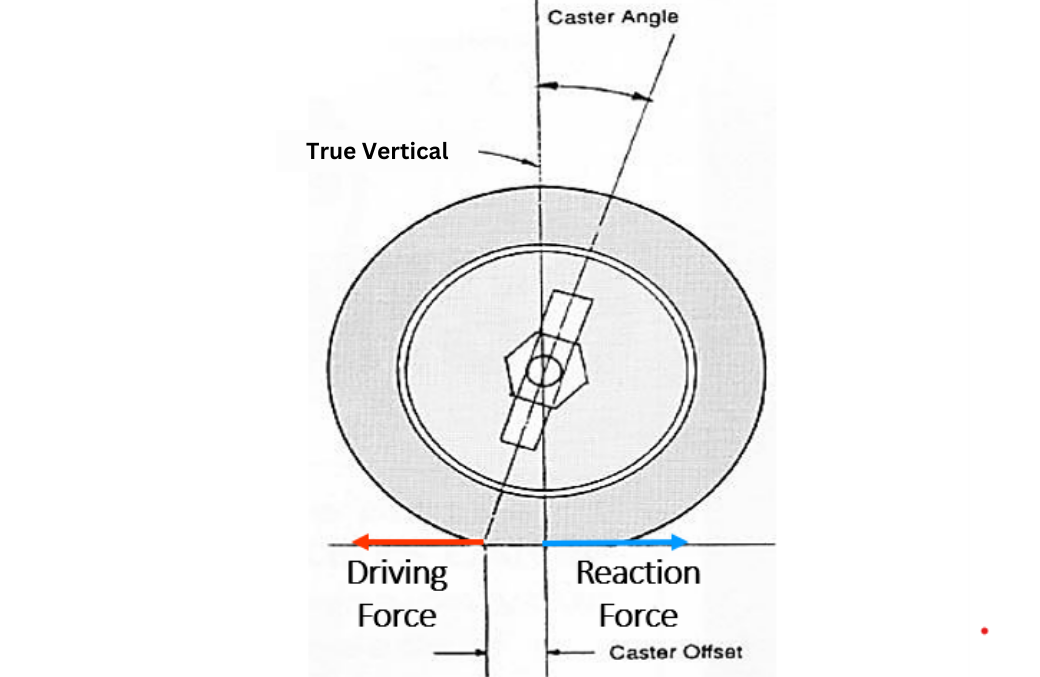
Alignment is where most people stop reading about steering response—and that’s a mistake. Caster angle is the unsung hero. More positive caster increases steering effort, but it also increases self-centering torque and dynamic camber gain. On track, a few extra degrees of caster can make the wheel snap back to center faster and give you better feedback mid-corner. Look for 6–8 degrees if your chassis allows.
Camber is your next weapon. Negative camber helps keep the tire flat through a turn. But too much can actually hurt straight-line stability and response on turn-in. For a typical front-wheel-drive or entry-level rear-drive car, I’d start around –2.5 to –3.0 degrees front, and maybe –1.5 to –2.0 rear. This reduces the “slop” when you first turn the wheel, because the contact patch is already working from the get-go. No more waiting for the tire to roll over onto the inner edge.
Toe settings? Zero front toe or very slight toe-out can sharpen initial response. Toe-in makes the car feel lazy; toe-out makes it darty. On track, a tiny bit of toe-out (like 1/16 inch) can make turn-in feel telepathic. But be warned—it can also make the car twitch under braking. You trade a little stability for a lot of urgency.
Bushings: The Silent Killer of Feel
Here’s where we get into my personal favorite topic. Rubber bushings are designed to absorb vibration and noise. On the street, they’re wonderful. On the track, they’re a marshmallow. Every time you turn the steering wheel, the energy has to travel through a control arm bushing that flexes like a rubber band. That flex delays the force transfer to the tire. It’s a blurry, imprecise feeling that many drivers blame on “bad steering rack” when it’s actually just squishy bushings.
Swap in polyurethane or spherical bearings (if you can tolerate the harshness) and you instantly tighten up the front end. The car feels more connected. You feel the road surface through the wheel. Steering response improves dramatically because the path from the rack to the tire is now solid. I did this on my own track car—replaced the front lower control arm bushings and tension rod bushings—and the difference was night and day. The car now responds to a 5-degree steering input instead of needing 20 degrees.
Be smart about it, though. Spherical bearings in street-driven cars can be noisy and wear faster. Polyurethane is a good middle ground. If you’re building a dedicated track toy, go all out. But whatever you do, don’t ignore these little rubber parts. They’re the cheap upgrade that everyone overlooks.
Suspension Geometry: Roll Center, Bump Steer, and Anti-Dive
Okay, let’s get a little nerdy. But stay with me because this is where the magic happens. Steering response isn’t just about the initial turn-in—it’s also about how the car behaves when you’re already turning and then you modulate the wheel. That comes down to suspension geometry.
Roll center is a concept that sounds scary but is actually pretty simple. It’s the imaginary point around which the car body rolls. If your roll center migrates too much as the suspension compresses, the car can feel like it’s “falling off the edge” mid-corner. You want the roll center to stay relatively consistent. Adjustable ball joints or lower control arms can raise or lower the roll center. Raising it reduces body roll, which in turn reduces the need for massive anti-roll bars, which in turn keeps the inside tire loaded—and responsive.
Bump steer is another common culprit. When a wheel hits a bump (or when the car leans), the toe angle can change unexpectedly. That makes the car feel like it’s wandering. A bump steer kit (usually a modified tie rod end) corrects that. After installing one, you’ll notice the steering feels more neutral over rippled pavement. It’s not a flashy mod, but it’s essential.
And anti-dive? If your car dives hard under braking, the front suspension compresses, and the steering geometry changes. That can make the wheel feel heavy and slow to respond. Adjustable control arms or modified pickup points can mitigate this. On track, where you’re threshold braking into every corner, that consistency is gold.
Damping and Springs: Fine-Tuning the Transient Response
Suspension damping is the speed at which your wheel follows the road. If damping is too soft, the wheel takes forever to settle after a bump. If it’s too stiff, the tire loses contact over ripples—which kills steering response. The goal is to dial in enough low-speed compression damping to resist body roll during corner entry, and enough rebound damping to keep the tire planted as you unwind the wheel.
I prefer adjustable coilovers for track use. They let you fine-tune the balance. A good starting point: set your front rebound a few clicks stiffer than the rear. This helps the front rotate on turn-in. But don’t go overboard—too much rebound and the wheel will skip over bumps. The best way? Data acquisition. But if you don’t have that, just drive and listen. If the car pushes (understeers) at corner entry, try softening the front bump or stiffening the rear rebound. About 80% of steering response issues are just damping misadjustments.
Also, spring rates matter. A stiffer front spring reduces weight transfer, which keeps the inside tire loaded—again, improving initial response. But if your springs are too stiff, the chassis will start bouncing off the track, hurting traction. There’s a Goldilocks zone. For a typical track-focused car, look at rates around 6–8 kg/mm front, 8–10 kg/mm rear (for front-engine, rear-drive). Adjust for your car’s mass and weight distribution.
Steering Feel and Hydraulics: Rack, Pump, and Fluid
Most of us overlook the steering system itself. We think about suspension and tires, but the actual rack? That’s the final link. If you have a hydraulic power steering system, the fluid condition and pump pressure affect steering response. Old, aerated fluid makes the system feel mushy. Replace it with fresh performance fluid—something with a higher viscosity index that doesn’t thin out when hot. This alone can clean up on-center feel.
Consider an upgraded power steering cooler if you track often. Hot fluid cavitates, leading to inconsistent assist. That creates a weird “dead spot” in the middle of the rack. You turn the wheel a little, nothing happens, then suddenly the assist kicks in. That’s the opposite of good response. Cooling the fluid or using an electric power steering conversion (if available) gives you a more linear feel.
Another mod I love is a steering rack ‘pinion valve’ adjustment. Some racks allow you to tune the boost curve—less assist at low speeds, more at high speeds. This makes the steering heavier but more communicative. On track, you don’t want the wheel to be too light; you want resistance so you can feel the load. If your car has adjustable steering in the ECU (like some modern BMWs), explore that. If not, a simple rack swap to a quicker ratio (e.g., from 16:1 to 12:1) is a game-changer. Just be prepared for livelier response on the highway.
Steering Column Mounting and Wheel: The Final Touchpoints
I said earlier that the steering wheel is the last thing to change, but once you’ve done everything else, a good steering wheel matters. I’m not talking about a fancy carbon rim. I’m talking about diameter. A smaller wheel reduces leverage, making inputs feel heavier—but it also reduces the amount of hand movement needed to achieve the same steering angle. If you pair a smaller wheel with a quicker rack, every input is amplified. That can feel twitchy if your bushings and alignment aren’t dialed.
Also, check your steering column. Loose U-joints or worn intermediate shafts introduce slop. I once fixed a friend’s vague steering by simply tightening the clamp bolt on the column joint. It’s free. Check it before buying anything.
Finally, consider a quick-release hub. It allows you to position the wheel closer to you or at a different angle. Ergonomics matter—if your arms are stretched or bent awkwardly, you won’t be able to make precise inputs. The best steering response mod in the world is worthless if you’re fighting the driving position.
Common Questions About How to Improve Your Car's Steering Response for the Track
Should I upgrade the steering rack first or the bushings first?
Bushings, without question. A worn rubber bushing can mask any improvement from a quicker rack. Replace control arm and tension rod bushings with polyurethane first. You’ll be shocked at how much crispness you gain. Only consider a rack upgrade after you’ve eliminated all the flex in the chassis and suspension.
Will stiffer anti-roll bars help steering response?
Yes, but indirectly. A stiffer front anti-roll bar reduces body roll, which helps the inside tire stay loaded and the geometry remain consistent. However, too much front bar can cause understeer, which actually hurts turn-in response. Balance is key. I find that a mild upgrade on the front and a more aggressive bar on the rear helps rotation without killing initial bite.
How do I know if my alignment is killing my steering response?
Simple test: Drive in a straight line, then make a quick, small steering input. Does the car respond immediately, or does it feel like there’s a half-second delay? If delayed, check your caster and front toe. Also, if the steering wheel doesn’t return to center smoothly after a turn, your caster might be too low. Get a printout from a good alignment shop and run the numbers against known track specs for your car model.
Is electric power steering always worse than hydraulic for track use?
Not necessarily. Many modern electric power steering systems (like in the Honda Civic Type R or Porsche 911) are excellent and provide linear, weighty feel. Older EPS systems can feel numb and overboosted. If you have an EPS car, look for a calibration tune or a steering torque sensor upgrade. Aftermarket companies now offer reflash options that reduce boost and add feedback. Hydraulic still usually wins for pure feel, but EPS can be very good if tuned properly.
What’s the cheapest way to improve steering response for a track day?
Three things: (1) Check tire pressure and set it to 30 psi hot. (2) Inspect all steering and suspension bushings for cracks or play. (3) Get a proper alignment with at least –2 degrees front camber and 1/16th-inch toe-out front. That’s maybe $150 total, and it can transform the car’s behavior. Don’t skip the basics—throwing money at adjustable arms won’t fix a bad alignment or worn ball joints.