
Circuit Behavior of a JFET in the Cutoff State
You've built your circuit, biased it with care, and then... nothing. The JFET just sits there, a silent, unresponsive brick in your signal path. That's the cutoff state in action. And honestly? It's one of the most misunderstood conditions in discrete semiconductor design. Most engineers treat cut-off like a simple digital off switch—gate < source, drain drops to zero, done. But the real circuit behavior of a JFET in the cutoff state is way more nuanced than that. There are leakage currents, parasitic capacitances, and subtle temperature effects that can absolutely wreck a high-impedance design if you ignore them. Let's dig into the gritty details.I've seen too many projects fail because someone assumed "cutoff" meant complete isolation. Spoiler: it doesn't. The channel may be pinched off, but the device still has a personality—and that personality involves residual drain current, gate leakage, and a capacitance matrix that changes with voltage. Understanding these elements is the difference between a circuit that works on paper and one that works in the real world. So buckle up; we're going deep into the silicon.
What Exactly Is the Cutoff Region?
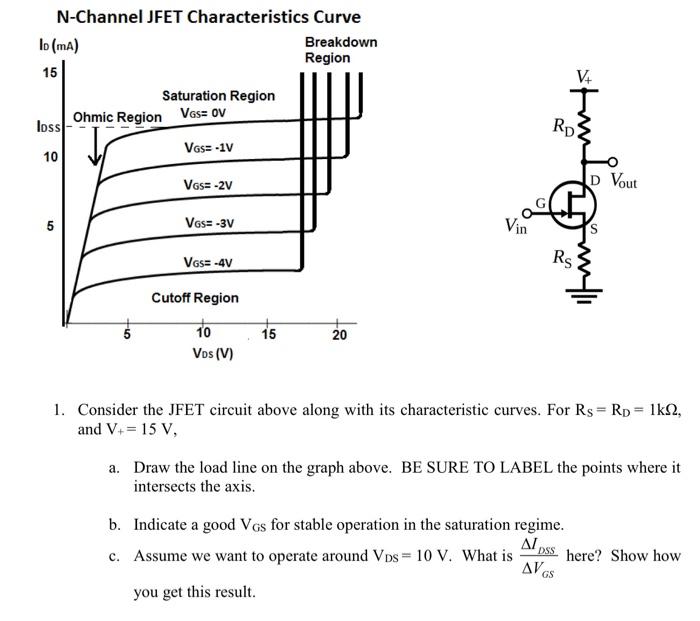
The JFET cutoff region occurs when the gate-source voltage (Vgs) becomes more negative than the pinch-off voltage (Vp for N-channel, Vgs(off) in datasheets). At that point, the depletion regions extending from the gate-channel junctions merge completely across the channel. The conductive path between drain and source is physically gone—it's a big, fat air gap of depleted silicon. No free carriers, no conduction channel. That's the textbook definition.But here's the kicker: even with a fully pinched-off channel, the JFET in the cutoff state isn't truly open. It's more like a very, very high resistance—not an infinite one. The datasheet will give you a value for Id(off) or drain cutoff current, usually in the nanoamp or picoamp range. For a 2N5457, that might be 10 nA at 25°C. Sounds negligible, right? Try that same device at 85°C, and you might see 1 µA or more. For a low-power sensor amplifier, that's a real problem. Leakage doubles roughly every 10°C, and suddenly your "off" JFET is contributing an error signal.
The Gate-Source Voltage Threshold
The threshold isn't a sharp cliff—it's a soft curve. As you drive Vgs more negative past Vp, the drain current doesn't just vanish instantly. It follows a parabolic decay until it reaches that leakage floor. This is why you can't simply rely on a weak negative bias; you need to ensure your gate voltage is deep enough into cutoff to guarantee the JFET cutoff behavior you expect. A margin of 0.5V to 1V beyond Vgs(off) is common practice. If your bias voltage drifts due to temperature or supply ripple, you might accidentally creep back into the subthreshold region. That's a real headache for analog switches.Internal Pinch-Off Mechanics
When the depletion regions touch, the electric field in the channel becomes extremely non-uniform. The pinch-off point actually begins near the drain end and moves toward the source as Vds increases. In the cutoff state, the entire channel is depleted. But here's the interesting part: the drain voltage still influences the width of the depletion region at the drain junction. A higher Vds widens the depletion zone, which can actually reduce the effective channel length for any residual leakage path. It's a minor effect, but it explains why Id(off) has a slight dependence on Vds. You'll see this in the datasheet's output characteristics—a flat, near-zero line that slopes ever so slightly upward as Vds increases.
How the JFET Behaves When It's Completely Shut Down
Let's talk about the actual terminal behavior. When the JFET is in cutoff, the drain current is essentially zero—well, that leakage current we mentioned. But the gate current isn't zero. In fact, the gate-source junction is reverse-biased, so the gate current is the leakage of a reverse-biased PN junction. For a typical small-signal JFET, that's around 1 nA to 100 pA at room temperature. Look—that's incredibly small, but it's not zero. In a high-impedance circuit like a pH probe amplifier or a charge-sensitive preamp, that gate leakage can be the dominant noise source.The drain-source resistance, Rds(off), is spec'd in many datasheets. It can be anywhere from 10 MΩ to over 1 GΩ, depending on the device and temperature. I've measured some JFETs at 100 GΩ in the lab under dry conditions. But that resistance isn't a simple resistor—it's a combination of the depleted channel's bulk resistance and the surface leakage paths. Humidity, board contamination, and soldering flux residues can easily drop that by orders of magnitude. Seriously, clean your boards. A little fingerprint grease can turn a 100 GΩ cutoff into a 10 MΩ disaster.
Leakage Currents You Can't Ignore
There are three main leakage mechanisms that define the circuit behavior of a JFET in the cutoff state:If you're designing a sample-and-hold circuit, that JFET cutoff state leakage determines how long the capacitor holds its charge. A 1 nA leakage on a 10 nF capacitor translates to a 0.1V/second droop. Acceptable? Maybe for a 10 ms hold time, terrible for a 10-second one. Plan accordingly.
- Channel leakage (Id(off)): The residual drain current from carrier generation in the depletion region. This is usually in the nA range and is highly temperature-sensitive.
- Gate leakage (Igss): Current through the reverse-biased gate junction. For N-channel, this is gate-to-source and gate-to-drain combined. At high Vdg, you might see avalanche breakdown if you exceed V(BR)gss.
- Surface leakage: Caused by ionic contamination or moisture on the die or package. This is the trickiest one because it's not consistent from unit to unit. It's also a major reason JFETs are often used in guarded layouts.
Capacitance in the Cutoff State
When the JFET shuts down, the capacitances don't disappear. Ciss (input capacitance) and Crss (reverse transfer capacitance) actually change. In cutoff, the channel is fully depleted, which widens the depletion layer and reduces the junction capacitances slightly compared to the active region. But the package capacitance and the Miller effect from the gate-drain overlap still hold sway. This is critical for high-frequency switching. If you're using a JFET as an analog switch, the JFET in cutoff will still couple signals capacitively. A 10 pF Cgs with a 1 MHz signal gives a coupling impedance of about 16 kΩ—that's not isolation. Use a series switch configuration or a T-switch topology to improve off-isolation.I've seen engineers get burned by this in RF circuits. They think a JFET in cutoff is a perfect open, and then they wonder why -40 dB of isolation is actually -20 dB above 100 MHz. It's the capacitances, always the capacitances. A good rule of thumb: assume the JFET in off-state is a capacitor with a value equal to its Ciss, and design your guard rings and shielding accordingly.
Why the Cutoff State Matters in Real Circuits
The JFET cutoff region is the foundation of several classic circuit topologies. Analog switches rely on it. Chopper-stabilized amplifiers use it to reset integrators. Sample-and-hold circuits count on it to freeze a voltage. But each of these applications demands a different understanding of the non-ideal behavior. You can't just treat cutoff as a binary state and expect professional results.Switching Applications and Off-Isolation
In an analog switch, the JFET cutoff state determines the off-isolation—that's the amount of signal that leaks from input to output when the switch is supposed to be open. Poor off-isolation can cause crosstalk in multiplexed data acquisition systems. To maximize off-isolation, you need to minimize the drain-source capacitance and keep the gate voltage well below Vp. Multiple JFETs in series can help, as can adding a shunt JFET to ground. I've used a T-switch configuration with three JFETs to get -100 dB isolation at audio frequencies. It works, but it doubles the on-resistance and complicates the drive circuit.Common Pitfalls and Practical Fixes
Here's the list of issues I've fixed more times than I can count:Look—designing with the JFET cutoff state is not rocket science. It's just careful, methodical accounting for every nanoamp and picofarad. Once you internalize that cutoff is a high-impedance state, not an open circuit, your designs will start surviving the lab-to-field transition. And honestly? That's where the fun is. Understanding the gritty reality of a component is what separates a schematic jockey from a circuit engineer.
- Not accounting for temperature drift: A JFET's Vp changes by about 2-4 mV/°C. If you barely meet cutoff at 25°C, you'll be in the active region at 60°C. Always add margin.
- Ignoring gate current: That nice, low Igss figure from the datasheet is at 25°C and low Vdg. At 100V Vdg, you're in leakage hell. Use a JFET with a V(BR)gss rating well above your operating voltage.
- Poor PCB layout: Leakage paths across the board surface can exceed the JFET's own leakage. Use guard rings around the gate and drain terminals, and keep the board scrupulously clean.
- Overlooking photocurrents: JFETs in transparent packages (like TO-92) are sensitive to light. A room-lit environment can generate enough photocurrent to pull the device out of cutoff. Shrink-wrap the device or use a metal can.
Common Questions About the Circuit Behavior of a JFET in the Cutoff State
Can a JFET in cutoff conduct any current?
Yes, but it's tiny. The JFET in the cutoff state conducts residual leakage current (Id(off)), typically in the nanoamp to picoamp range at room temperature. This leakage doubles roughly every 10°C, so at elevated temperatures it can become significant in low-power or precision circuits.
How does the gate voltage affect the cutoff state?
The gate-source voltage must be more negative than Vgs(off) to ensure the channel is fully pinched off. A deeper gate bias increases the margin against temperature drift and supply variations. However, excessive gate voltage can approach the reverse breakdown voltage of the gate junction (V(BR)gss) and cause gate current to surge.
Does the drain voltage matter when the JFET is cutoff?
Yes, it does. The JFET cutoff behavior shows a slight dependence on Vds because a higher drain voltage widens the depletion region at the drain end, which can reduce the effective leakage path. This creates a small, positive slope in the output characteristic at Id(off). The effect is minor but measurable in precision applications.
Why is off-isolation worse at high frequencies?
Off-isolation degrades at high frequencies because the parasitic capacitances (Cgd, Cgs, Cds) in the JFET cutoff state couple signals from drain to source. Even though the channel is pinched off, these capacitances offer a low-impedance path at RF frequencies. Series switches and shunt topologies help mitigate this.
Can I use a JFET as a simple on-off switch?
You can, but you need to account for the non-ideal behavior of the JFET cutoff region. The off-state leakage and capacitance limit its effectiveness in high-impedance or high-frequency applications. For general-purpose switching, a JFET is decent; for precision analog switching, you need careful bias and layout considerations.