
Why Electrons Carry a Negative Electrical Charge
Ever get a shock from a doorknob in winter and just assume it's the universe being petty? You touched the metal, you felt the zap, and you blamed static. But here's the thing—that tiny, invisible particle that jumped the gap, the electron, did so because it carries a negative electrical charge. Why negative, though? Why not blue? Why not "Type A"? Why did we saddle the universe's most energetic courier with a label that sounds like a bad credit score?
It's a great question. And the answer is a mix of historical accident, stubborn convention, and a deep truth about how the universe works. Honestly, it's one of those things that sounds simple until you dig in. I've spent years working with these little guys in labs, watching them dance through semiconductors and plasma fields. Let me tell you, the name is the least interesting part.
But we have to start there. Because the whole "negative" thing is a story about naming rights, and who got to the chalkboard first. It's a big deal in physics history, and it shapes everything from your phone battery to the fundamentals of matter itself.
The Great Naming Convention: It Was Almost the Opposite
First, you need to meet Benjamin Franklin. The man with the kite and the key. He was one of the first to seriously study electricity, and he had a problem. He noticed that rubbing a glass rod with silk made the rod attract light objects, while rubbing a rubber rod with fur made it attract different things. He figured there were two kinds of "electric fire."
Franklin arbitrarily called one kind "positive" and the other "negative." He assumed that the "electric fire" flowed from positive to negative. It was a practical guess. It made sense on paper. But here's the kicker—Franklin guessed wrong about what was moving.
Look—he didn't know about the electron. Nobody did. It wasn't discovered until over a century later by J.J. Thomson. By the time Thomson found the little particle in 1897, the "positive" and "negative" signs were already set in stone for batteries, circuits, and every text book. The electrical charge convention was locked in.
And Thomson had a choice. He knew this new particle was the thing that actually moves in a wire. He knew Franklin had the direction backwards. But renaming everything? That would have been chaos. Seriously, imagine telling every electrician on Earth that they had to swap their red and black wires. So Thomson stuck with Franklin's sign. The particle that moves? That's the negative charge carrier.
The "Excess" and "Deficit" Confusion
Here's where the terminology gets sticky. Franklin thought "positive" meant having an excess of electric fluid, and "negative" meant a deficit. He was conceptually right about there being a balance, but he had the substance backwards. To him, a positively charged rod had more fluid.
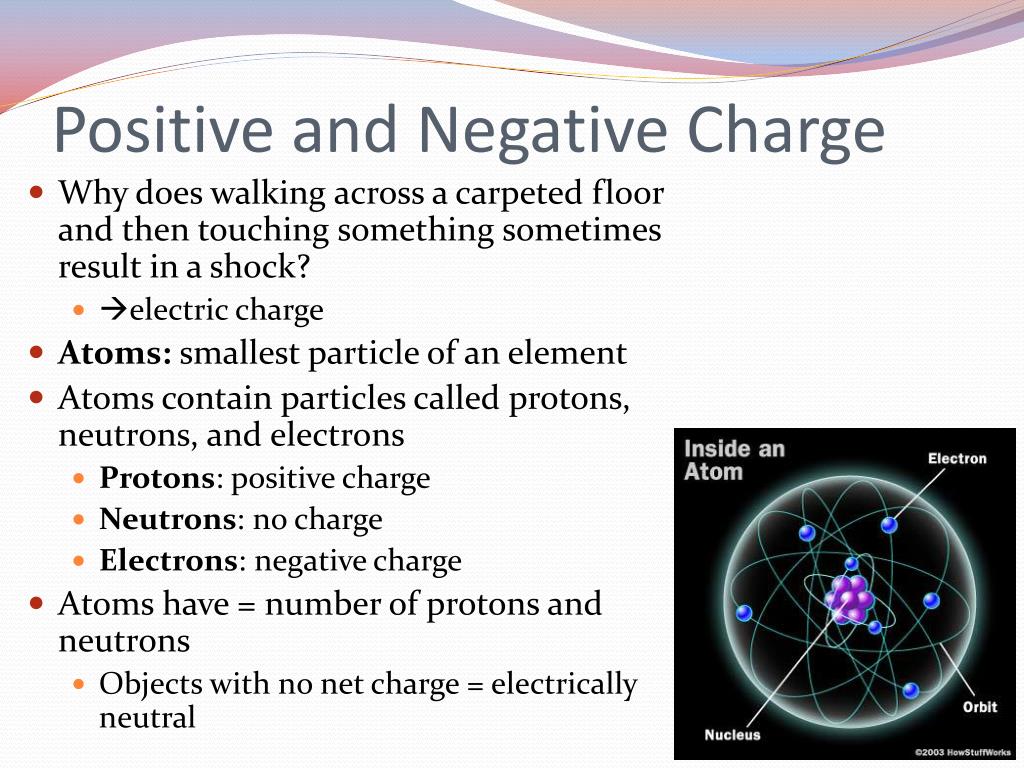
Now we know the truth. An object gets a negative electrical charge when it has an excess of electrons. It gets a positive charge when it's missing electrons, meaning it has a deficit. So a positively charged object actually has fewer of these tiny particles.
This is the sort of thing that makes students tear their hair out. A "positive" object is missing something. It feels wrong. It's like saying a full wallet is "negative" cash. But that's the convention we inherited. It works mathematically. It's just not intuitive.
And frankly? That's fine. Physics is full of conventions that feel weird at first. The important part is that the mathematics of electric charge holds up perfectly. The sign is just a label for the direction of the force.
Why Not Just Flip It? The Practical Consequence
So why can't we just flip the convention today? Let me paint you a picture. Every schematic, every textbook, every chip design, and every physics equation for the last 130 years uses this sign. Flipping it would require rewriting all of electrical engineering.
More importantly, the interaction works the same regardless of the name. Opposite electrical charges attract. Like charges repel. If we swapped the name today, protons (which are positive) would become negative, and electrons would become positive. The physics would be identical.
We just call the electron negative because Franklin drew a line in the sand first, and Thomson didn't want to erase it. It's a deeply human story. And it reminds us that a lot of science is about picking a map and sticking with it, even if the map looks a little silly from the air.
It works. Don't overthink it. But definitely question it.
The Deeper Physics: Why the Electron Has to Have a Charge
Okay, so the name "negative" is arbitrary. But the existence of the charge itself? That is absolutely not arbitrary. That is fundamental to reality. This is where we move from history to the nitty-gritty quantum mechanics that makes your hair stand on end.
The electron doesn't just "have" a charge like a backpack. The charge is a fundamental property of the particle itself. You can't separate the electron from its negative electrical charge. It's not an add-on. It's baked into the very definition of what an electron is.
Think of it like mass. A rock has mass. You can't take the mass away from the rock and still have a rock. The mass is the rock's resistance to acceleration. Similarly, the electric charge of an electron is its ability to feel and create the electromagnetic force. Without that property, the particle wouldn't be an electron.
It's a big deal. This is where the Standard Model of particle physics comes in. The electron is a lepton. Leptons are a family of particles that don't feel the strong nuclear force (the force that holds the nucleus together). But they do feel the weak force and, crucially, the electromagnetic force. The charge is their ticket to the electromagnetic party.
The Quantum Field and the Conservation of Charge
Here's where it gets wild. In quantum field theory (QED—Quantum Electrodynamics), the negative charge of the electron isn't just a number on a chart. It's a manifestation of the electron field. Every electron in the universe is an excitation of this underlying field.
The charge is quantized. It comes in discrete packets. You can't have half an electron charge. It's always exactly -1.602 × 10⁻¹⁹ Coulombs. That number is the fundamental unit of electric charge for matter particles.
- Conservation is key: In any physical process, the total net charge of the universe stays the same. If you create an electron (negative), you must also create a positron (positive) somewhere. This is pair production. It happens in particle accelerators every single day.
- It's not a choice: The electron doesn't decide to be negative. The field dictates the property. It's a symmetry of nature. The gauge symmetry of QED (U(1) symmetry, if you want to get technical) requires that charge be conserved and that the electron has this specific coupling strength.
- Why -1? Honestly, we don't know why the charge is that specific value. It's a measured constant of nature. It's one of the knobs that the universe turned to get things just right. There's no deeper reason currently known. It just is.
This is a humbling thought. We can describe how the electron interacts with electrical charge with insane precision. We can predict its behavior to 12 decimal places. But we can't explain why it has exactly that magnitude of charge. It's a fundamental constant. Take it as a gift from the cosmos.
The Mouse in the Room: The Dirac Equation and Spin
Before we move on, we have to give a nod to Paul Dirac. His famous equation was the first to correctly describe the electron using both quantum mechanics and special relativity. The Dirac equation didn't just predict the electron's charge correctly. It predicted something shocking.
It predicted the existence of antimatter. Specifically, the positron. The Dirac equation naturally produced two solutions. One for the negative charge of the electron. One for a positive charge of equal magnitude. Dirac initially tried to explain this away with a "sea" of negative energy states. It was a brilliant, awkward fudge.
Today, we know the positron is real. It's the anti-electron. It has positive charge. It annihilates with an electron on contact, releasing pure energy. The negative electrical charge of the electron is directly balanced by the positive charge of its antiparticle. This is a deep, beautiful symmetry.
The Dirac equation also predicted that the electron has an intrinsic angular momentum called spin. You can think of it, very loosely, as the electron spinning on its own axis. This spin interacts with magnetic fields. And because the electron is charged and spinning, it acts like a tiny bar magnet. This is the basis for MRI machines and all of solid-state magnetism.
So the charge isn't just for circuits. It's the reason your refrigerator magnet sticks. It's the reason hard drives store data. It's the reason the sun shines (through fusion, which involves electromagnetic forces). The humble negative charge is the engine of so much of the visible universe.
How This Negative Charge Actually Works in the Real World
Let's get practical. You don't care about Franklin's kite or Dirac's equation if you're trying to figure out why your phone battery dies. The negative electrical charge of the electron is the key to all modern electronics. Here is how it behaves in the trenches.
In a copper wire, electrons are the free radicals. They are loosely bound to their atoms and can drift. When you connect a battery, the battery's electric field pushes on these electrons. Remember, the electron is negative. The battery has a positive terminal and a negative terminal. Opposites attract.
So the negative terminal of the battery repels the negative charge of the electrons. It pushes them away. Simultaneously, the positive terminal attracts them. This creates a flow. The electrons move from the negative terminal, through the circuit, to the positive terminal.
This is called electron flow. But remember Franklin's convention? We call current "conventional current" and draw it from positive to negative. The actual electrons, the negative charge carriers, move the opposite way. It's a vector confusion that has launched a thousand exam errors.
- In metals: Electrons are the primary charge carriers. They drift slowly (like 0.1 mm per second), but the signal propagates at near light speed.
- In semiconductors (silicon): We use both electrons and "holes" (missing electrons, which act like positive charge carriers). Transistors work by controlling the flow of these negative charges.
- In electrolytes (battery acid): Ions carry charge. Negative ions (anions) move towards the positive electrode. Positive ions (cations) move towards the negative. It's a dance of electrical charge that powers your car.
Electrons are not just moving randomly. They are being manipulated by electric fields. The negative electrical charge makes them responsive to these fields. Without that property, you wouldn't have transistors, screens, or computers. You would have a lump of inert matter.
Honestly? It's miraculous. A tiny, fundamental property of a fundamental particle allows us to build a global civilization of instant communication. You are reading this on a device that shoves billions of negative charges around every second. And they never complain. They just do their job.
A Final Thought on the Sign
So, why negative electrical charge? Because of a historical naming convention that stuck, and because the universe demands that charge be a quantized, conserved property of matter. The name is a quirk. The property is a pillar of reality.
Do not let the name "negative" fool you into thinking it's bad or lesser. The electron and its charge are the workhorses of the electromagnetic world. They are the reason chemistry works, the reason stars burn, and the reason you can read this text. It's a beautiful, elegant system. And once you understand the history, the physics feels even more satisfying.
Just remember next time you get a static shock: that little negative zap is carrying 130 years of naming convention, a dash of Franklin's genius, and a whole lot of quantum field theory. You're welcome.
Common Questions About Why Electrons Carry a Negative Electrical Charge
If the name is arbitrary, could we swap the signs today without breaking physics?
Yes, completely. Physics is a description of nature, not the other way around. The mathematical relationships between charges (Coulomb's Law, Maxwell's Equations) are symmetric under a global sign change. The only thing that would break is every diagram, equation, and textbook ever written. It's a convention, not a law of nature.
Why don't protons just move instead of electrons?
Protons are massive compared to electrons (about 1836 times heavier). They are also tightly bound inside the atomic nucleus. In a solid conductor, the nuclei are locked in place in a crystal lattice. The electrons, particularly the outer valence electrons, are mobile. So the negative charge carriers do the moving because they are the lightest, freest particles available.
Is the negative charge of an electron exactly equal in magnitude to the positive charge of a proton?
Yes, to an extremely high degree of precision. Experiments have shown that the magnitude of the electrical charge on the electron and the proton are equal to at least one part in 10²¹. This exact cancellation is why atoms are electrically neutral. If they weren't exactly equal, the universe would be a very different, probably exploding, place.
Does the electron ever change its charge?
No. The negative charge of an electron is an intrinsic, fundamental property. It cannot change. The electron can be destroyed in pair annihilation, or it can be created in pair production. But while it exists, its charge is always -1.602 × 10⁻¹⁹ Coulombs. It is a perfect, unchanging constant.
What would happen if the electron had a positive charge instead?
If you simply swapped the name, nothing changes. The physics is the same. But if you actually changed the sign of the electron's charge without changing anything else, atoms would not form. The positive nucleus would repel a positively charged electron. Chemistry would collapse. All matter as we know it would cease to exist. The sign is irrelevant, but the fact that it is opposite to the proton is absolutely essential for the existence of stable matter.