
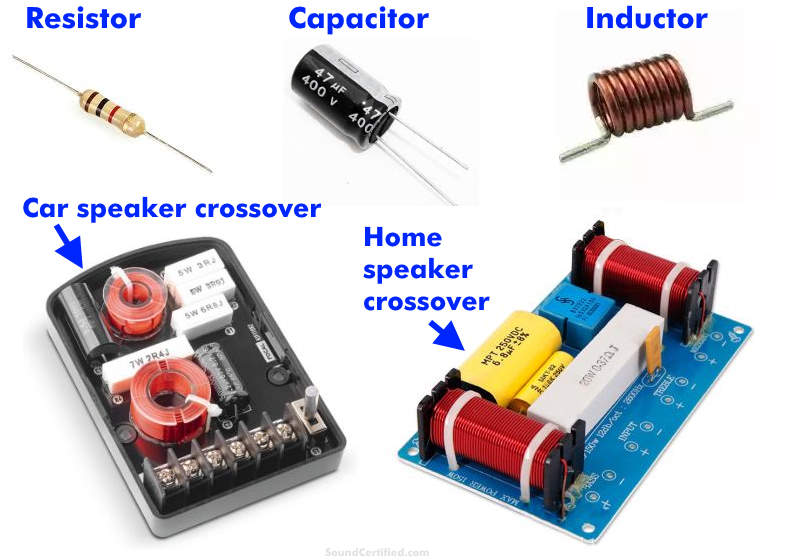
Let’s cut right to it. You’re staring at a schematic, trying to clean up a noisy power rail or knock out a specific frequency, and you have the choice: slap a resistor in there with a capacitor, or reach for a clunky inductor. It’s a fork in the road that trips up a lot of engineers, even ones with a few years under their belt. I’ve seen designs fail spectacularly because someone grabbed the cheaper, smaller part without thinking about the physics.
Here’s the short version: resistors are linear. They don’t care about frequency. They just turn energy into heat. Inductors? They’re reactive. Their impedance climbs with frequency. That difference is everything when you’re filtering, because it changes how you manage voltage drop, power dissipation, and phase shift.
So when do you use an inductor instead of a resistor for filtering? It’s not a popularity contest. It’s about what the signal or power path can afford to lose. Let’s break it down the way I wish someone had explained it to me a decade ago.
The Fundamental Physics: Why Reactivity Beats Resistance in Frequency-Sensitive Circuits
A resistor gives you a flat impedance curve. 10 ohms is 10 ohms at DC, at 60 Hz, and at 1 MHz. That makes it simple, but it also makes it a dumb brute when you need frequency selectivity. An inductor, on the other hand, builds impedance as frequency rises. It’s like a gate that gets harder to push open the faster you try to move. Seriously—that property is the entire reason an inductor-based filter can target noise without sacrificing DC performance.
Impedance vs. Frequency: The Decisive Difference
Think about a power supply. You’ve got a big DC current and a bunch of switching ripple on top. If you use a resistor in an RC low-pass filter, you’re going to drop DC voltage across it. That’s wasted power. It’s heat. For a 1-amp load and a 10-ohm resistor, you just lost 10 volts and you’re burning 10 watts. Not ideal.
With an inductor, the DC resistance is negligible—maybe 0.05 ohms. The ripple frequency sees a much higher impedance. This is where inductor-based filtering shines. You can pass the DC current with near-zero loss while stomping on the AC ripple. That’s not a small advantage; it’s a game-changer for any circuit where efficiency matters.
Power Dissipation: The Hidden Cost of Resistors
Here’s where I see people make the biggest mistake. They spec a small SMD resistor in series with a power rail. It works on the bench for five minutes. Then the layout heats up, the value drifts, and the output voltage sags. Look—a resistor dissipates power as heat. An inductor stores energy in a magnetic field and returns it to the circuit. It’s a big deal.
- In low-power signal paths (microamps), the heat is irrelevant. A resistor is fine. - In power paths (hundreds of milliamps or amps), that resistor becomes a heater. - An inductor might be physically larger, but it doesn’t waste your energy as heat.
Honestly? If your design needs to regulate a 3.3V rail to 2.5V and you’re considering an RC filter because you have the parts on hand, stop. You’re building a voltage divider with unintended consequences. Use an LC filter. The inductor does the filtering without the sag.
When an Inductor Dominates: High-Current and Low-Loss Scenarios
This is the bread and butter for anyone working with switching power supplies, motor drivers, or Class D audio amplifiers. These circuits generate switching noise at specific frequencies, and you need to knock it out without killing your efficiency. A resistor simply cannot do that job at high current without melting your board.
Power Supply Output Filters: The Obvious Choice
Take a standard buck converter’s output. The LC filter after the switch node is doing the heavy lifting. Replace that inductor with a resistor, and you instantly trash your efficiency. The resistor-based filtering would create a low-pass RC network, but the voltage drop under load would be unacceptable. You’d need a very low resistor value, which means a massive capacitor to get the same cutoff frequency. That’s a huge, expensive capacitor.
Conversely, an inductor at the same cutoff frequency is a much smaller, more efficient component. It allows a smaller capacitor, lower ripple voltage, and better transient response. It’s not even a debate in this context. Inductor-based filtering is the standard for a reason.
Sensitive Analog and Audio Lines: The Noise Sanctuary
Audio circuits are a special breed of picky. Radio frequency interference (RFI) can bleed into analog lines and create audible artifacts. A simple RC filter can work, but it introduces Johnson-Nyquist noise from the resistor. That’s thermal noise—random voltage fluctuations you can hear as a hiss.
An inductor, especially a ferrite bead in a low-power stage, solves the RFI problem without adding that thermal noise. It’s a cleaner solution. For critical analog paths like microphone inputs or precision ADC front-ends, I’ll reach for an inductor-based filter before I grab a resistor every single time. The signal-to-noise ratio thanks you.
When a Resistor is the Right Choice: Low-Power and Precision Applications
Let’s not pretend inductors are perfect. They have parasitic capacitance, they’re prone to saturation at high currents, and they can radiate magnetic fields that couple into other traces. Sometimes a resistor is the smarter, more predictable choice. It’s about knowing when the downsides of an inductor outweigh its strengths.
Low-Frequency Signal Conditioning (Under 1 kHz)
If you’re filtering a slow signal from a temperature sensor or a light sensor, the frequency is so low that the inductor’s impedance advantage vanishes. The inductive reactance at 100 Hz is tiny unless you use an absurdly large value. You’d need a physically huge inductor to get any real filtering effect.
At those frequencies, an RC filter is compact, cheap, and dead-simple. The resistor does the work without any worries about saturation, core loss, or magnetic coupling. I’ve designed dozens of industrial sensor interfaces that way. It works. Don’t over-engineer it.
The Trap of the RC Bypass Capacitor Pair
This is a classic scenario: you have a noisy digital IC, and you think, “I’ll put a 10-ohm resistor in series with the power pin and a large capacitor to ground.” That’s an RC filter. It works for moderate noise. But here’s the catch—the resistor causes an IR drop. The IC sees a lower voltage under transient load, which can cause glitching or brownouts.
The better choice? A ferrite bead. It’s an inductor (specifically a lossy one) that provides high impedance at high frequencies and near-zero DC resistance. You get inductor-based filtering without the DC voltage penalty. Look—if you’re already using a resistor for this, you’re leaving efficiency on the table. Swap it for a ferrite bead. Your IC will be happier.
Here’s a quick decision framework I use:
- Use a resistor when: - The current is less than 10 mA. - The frequency is below 1 kHz and accuracy matters. - You need a controlled impedance for termination (e.g., series termination for digital lines). - You’re prototyping and need a quick, inexpensive fix.
- Use an inductor when: - The current is above 100 mA and efficiency is critical. - You’re filtering switching noise above 10 kHz. - You can’t afford the voltage drop or power loss of a resistor. - The signal path is sensitive to thermal noise.
Common Questions About Using an Inductor Instead of a Resistor for Filtering
Can I replace a resistor with an inductor in any filter circuit?
No. An resistor is purely resistive; an inductor is reactive. Replacing one with the other changes the filter type, cutoff frequency, and phase response. A direct swap rarely works unless you recalculate the entire network.
Why is an inductor-based filter more efficient than a resistor-based filter?
An inductor stores energy in a magnetic field and returns it to the circuit. A resistor dissipates energy as heat. For high-current applications, the inductor wastes less power, which means less heat and better overall efficiency.
Do inductors always have lower DC resistance than resistors?
Generally, yes, for a given filtering requirement. A resistor used for filtering will have a specific ohmic value that causes a voltage drop. An inductor can be wound with thick wire to achieve a very low DC resistance while still providing high AC impedance at the target frequency.
When does a ferrite bead count as an inductor?
Always. A ferrite bead is a special type of inductor designed to be lossy at high frequencies. It acts as a resistor at radio frequencies while behaving like a low-resistance inductor at normal operating frequencies. It’s the best of both worlds for noise suppression on power traces.
Are inductors always larger than resistors?
For equivalent filtering performance at high frequencies, an inductor is often smaller than the combination of a large resistor and capacitor needed to achieve the same cutoff. But for low-frequency or DC paths, yes, an inductor is usually bulkier. Modern ferrite beads and tiny power inductors are shrinking the gap quickly.
The decision comes down to energy. An inductor stores it. A resistor burns it. If your filtering needs to pass current without wasting voltage, you pick the inductor. If you need a predictable, lossy, frequency-simple solution that doesn’t radiate, you grab the resistor. Knowing that tradeoff isn’t just theory—it’s the difference between a design that works on the bench and one that survives in the field.