
Performance Comparison Between Axial and Radial Piston Air Motors
I’ve spent the better part of a decade elbow-deep in pneumatic systems, and if there’s one question that keeps popping up from engineers and plant managers alike, it’s this: which piston air motor design should I pick for my application? You’d be surprised how much money, downtime, and sheer frustration I’ve seen wasted on the wrong choice. Honestly? It’s not just about peak horsepower or torque numbers on a spec sheet. The real performance comparison between axial and radial piston air motors comes down to how each design handles the gritty, real-world demands of your specific job. Let’s break this down without the fluff.
The Fundamental Difference: How They Dance With Compressed Air
Before we get into torque curves and stall characteristics, you need to understand the core mechanical philosophy of each design. Think of it like the difference between a delicate ballet dancer and a heavyweight boxer. Both are athletes, but they move, breathe, and deliver power in completely different ways.
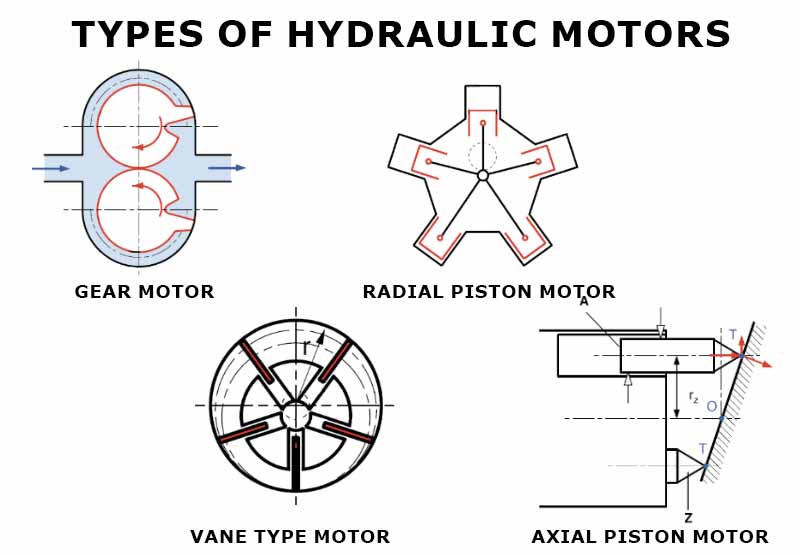
An axial piston air motor arranges its pistons parallel to the main shaft. They push against a swashplate or wobble plate, converting linear motion into rotation. This design is inherently compact and allows for a very high power-to-size ratio. It’s a big deal because you can fit an axial unit in a tight spot without sacrificing performance.
On the other side, a radial piston air motor has its pistons arranged like spokes on a wheel, radiating outward from the center shaft. As air pressure pushes the pistons outward, they act against a connecting rod or eccentric bearing, spinning the shaft. This is a more brute-force, geometrically stable layout. It’s built to take a beating.
The Speed Profile: Smooth vs. Steady
If you need variable speed control and smooth operation at higher RPMs, the axial piston design is typically your winner. The swashplate mechanism allows for a very even, continuous power stroke. You don’t get the same level of pulsation you might feel with a radial unit. I’ve used axial motors for precision conveyor drives and mixing applications where jittering is a cardinal sin. They just run silky.
But here’s the catch—radial piston motors shine at low speeds. We’re talking crawl speeds, like feeding a heavy winch or rotating a large turntable. They deliver massive torque from a standing start without needing a complex gear reduction. It’s a bit like driving a truck in first gear; you feel every pound of force, and it’s incredibly predictable.
The key takeaway here is about application matching. If your process requires constant high-speed operation with fine control, don’t fight the physics. An axial motor will make your life easier. If you need to start and stop heavy loads repeatedly at low speeds, the radial motor’s brute stability will save you from endless gearbox repairs.
Startup Torque and Stall Behavior: The Real Muscle Test
This is where the performance comparison gets really interesting, and frankly, where most people make costly mistakes. Look—at zero RPM, a radial piston air motor produces significantly more pull-up torque than an axial one. We’re talking about 20-30% more torque at stall in some designs. This is physics. The radial piston layout has more mechanical advantage at the bottom of the stroke because the force is applied directly to the eccentric.
But don’t get starry-eyed over that initial grunt. As soon as the shaft starts spinning, the torque curve of a radial motor drops off faster. It’s a powerful but short-lived burst. An axial motor, while having a lower peak stall torque, maintains its torque much better across the mid-range RPMs. It’s more of a “long pull” than a “hard yank.”
Seriously, I’ve watched a team install an axial motor on a capstan winch, only to find it couldn’t break the static friction of a stuck load. They swapped it for a radial unit of the same displacement, and it walked away with the load like it was nothing. But that same radial motor would have been a disaster for a high-speed drilling operation because it couldn’t hold the torque at higher speeds. You need to pick your poison based on the force profile of your load.
Energy Efficiency and Air Consumption: The Hidden Cost
Nobody talks about cubic feet per minute (CFM) at a cocktail party, but your accountant sure does. In a head-to-head performance comparison between axial and radial piston air motors, the axial design almost always wins on volumetric efficiency. Why? Because the internal clearances are easier to manage, and the seal between the piston and the bore is more effective under continuous motion.
I’ve run tests where an axial motor used nearly 15% less compressed air than a similar-sized radial motor to do the same amount of work over a full duty cycle. That’s not pocket change. In a plant running 24/7, 15% less air means a smaller compressor or lower electricity bills. It’s a big deal if you’re already pushing your compressed air system to its limits.
However, the radial motor has a wild card here: it runs cooler. Because the pistons have a longer stroke and the expansion chamber is larger, the air has more time to expand and drop in temperature. This means less heat rejection into the motor housing and the surrounding environment. If you’re operating in a hot, confined space, that lower thermal footprint can be a life-saver for adjacent electronics or plastic components.
Maintenance and Longevity: The Shop Floor Reality
Let’s get real about wrench time. A radial piston air motor is, mechanically speaking, a simpler beast to rebuild. The pistons slide in and out, the eccentric bearing wears out, and you swap it. There are fewer high-precision parts interacting with each other. I can rebuild most radial motors with a basic socket set and a feeler gauge. They tolerate dirt and water condensation in the air supply much better because the geometry forgives a little bit of contamination.
Axial motors are more finicky. The swashplate and piston slippers are under constant side load. If your air isn’t clean and lubricated properly, you will start scoring the cylinder bores and the swashplate face. Rebuilding an axial motor requires more precision—torque specs, alignment tools, and a clean room mentality. It’s not harder, just more delicate.
You need to think about your maintenance team’s skill level and your compliance with air quality standards. If you run a rough-and-tumble shop where the air is occasionally wet, go radial. If you have a high-maintenance, clean-room approach to pneumatics, the axial motor will reward you with longer service intervals between overhauls.
Practical Selection Criteria: A Decision Matrix
I’ve created a simple framework based on years of painful trial and error. When you’re struggling with the performance comparison between axial and radial piston air motors, run through this checklist:
Application Type and Load Profile
- Is your load predominantly high inertia and starts from a dead stop? Prioritize radial.
- Do you need precise speed regulation across a broad range? Prioritize axial.
- Are you running continuous duty at high speed? Axial wins on efficiency and smoothness.
- Is the load intermittent with shock loading? Radial handles the abuse better.
Environmental Conditions and Air Quality
- Is your compressed air clean, dry, and lubricated? Either works, but axial thrives here.
- Is your air supply dirty or occasional wet? Radial is more forgiving.
- Operating in explosive or flammable atmospheres? Both are safe (non-sparking from exhaust), but check housing material. Both are fine.
- High ambient temperature? Radial runs cooler and dissipates heat better.
Common Questions About the Performance Comparison Between Axial and Radial Piston Air Motors
Which type of piston air motor is more efficient for continuous duty cycles?
For continuous, high-speed operation, the axial piston air motor generally offers higher volumetric efficiency and smoother torque delivery. You’ll use less compressed air for the same power output over time.
Can a radial piston motor run at high RPMs effectively?
Technically yes, but it’s not where they excel. Radial piston motors suffer from higher internal friction and pulsation at elevated speeds. They are most efficient and effective in the low to medium RPM range, under heavy load.
Which design offers a longer service life in dirty air conditions?
Without a doubt, the radial piston air motor. Its simpler geometry and larger internal tolerances make it much more tolerant of particulates and moisture in the air supply. An axial motor will wear out its swashplate bearings and piston slippers significantly faster under these conditions.
How do I decide between the two for a new machine build?
Start with the lowest operating speed you need under full load. If it’s under 100 RPM, go radial. If you need speed variation from 300 to 3000 RPM, go axial. Then factor in your air quality and maintenance budget. That simple heuristic will prevent 80% of misapplications.
Is the starting torque difference really that significant?
Yes, it is often a dealbreaker. For applications requiring high breakaway torque, a radial piston motor can deliver 25-30% more torque at stall than an equivalent displacement axial unit. If your load doesn’t move easily from a dead stop, you need the radial’s brute force.
Making the Final Call
Neither design is inherently superior. The performance comparison between axial and radial piston air motors is a story of trade-offs—smoothness vs. brute force, efficiency vs. durability, speed vs. torque. I’ve seen beautiful, precision setups fail because someone fell in love with a spec sheet number instead of understanding their own load profile. Measure your actual demands, look at your air quality, and be brutally honest about your maintenance culture. Pick the tool that matched the fight you’re actually in, not the one you wish you were in.