
Common Reasons Why MOSFETs Fail in Power Circuits
I’ve been elbows-deep in power electronics for over a decade, and let me tell you—watching a MOSFET fail is like watching a magician’s trick. One second, everything’s fine. The next? Smoke. Silence. The smell of burnt silicon and regret. A power MOSFET failure isn't just frustrating; it's expensive, time-consuming, and often entirely preventable.
Most engineers I work with assume their circuit design is bulletproof. Then a prototype goes up in flames, and suddenly they’re digging through datasheets for answers they should have known in the first place. It’s a big deal. A single failed MOSFET can cascade into a blown gate driver, fried PCB traces, and a week’s worth of debugging.
Here’s the truth: power MOSFET failures are rarely random. They follow patterns. And once you know those patterns, you can design around them. Seriously, stop gambling with your hardware. Let’s talk about the common failure mechanisms that actually kill these devices.
1. Gate Oxide Breakdown (The Sneaky One)
The gate oxide layer in a MOSFET is remarkably thin—we’re talking nanometers. It’s the heart of the device, and it’s fragile. When you exceed the maximum gate-source voltage (Vgs), even for a microsecond, that oxide layer can rupture.
Look—this isn’t theoretical. I’ve seen it happen on a bench where someone bumped a probe. A tiny spike. A dead part. Most datasheets specify a maximum Vgs of ±20V for standard logic-level MOSFETs. But here’s the kicker: real-world ringing on the gate node can blast past that limit in nanoseconds. The oxide breaks down, the gate becomes a short, and your device is toast.
How Safe Operating Area Plays a Role
Your MOSFET’s Safe Operating Area (SOA) isn't just a graph in a datasheet—it’s a promise. But that promise has limits. Operating outside the SOA for even a short time can push the junction temperature past the critical threshold. The gate oxide, under thermal stress, becomes even more susceptible to voltage spikes. Honestly? This is one of the most overlooked MOSFET failure modes in high-frequency switching circuits.
Think of it this way: you can’t just look at steady-state conditions. You have to account for transients during startup, shutdown, and load changes. Every time the device switches, there’s a risk. The oxide layer doesn’t care about your intentions. It cares about physics.
The Silent Killer: dv/dt Induced Turn-On
This one’s insidious. A high dv/dt on the drain can couple back to the gate through the Miller capacitance. That parasitic coupling can spike the gate voltage above the threshold—without your driver doing anything. The result? Cross-conduction. Shoot-through. Instant failure.
I once worked on a half-bridge design for a motor drive. The gate driver was fine. The layout was decent. But the dv/dt was fast enough to trigger a partial turn-on of the opposite MOSFET. It wasn’t a full failure, but it ran hot. Weeks later, the gate oxide degraded and popped. A classic case of accumulated stress.
2. Avalanche Breakdown and Energy Ruggedness
Every power MOSFET has a body diode. That diode can handle reverse current, but only up to a point. When the drain-source voltage exceeds the breakdown rating, the device enters avalanche mode. It starts conducting—hard. If the energy in that avalanche event exceeds what the device can dissipate, the silicon melts.
Here’s something most tutorials don’t tell you: avalanche ruggedness isn’t the same across all MOSFETs. Some are built with deeper junctions to handle more energy. Others aren’t. If you’re designing for inductive loads—motors, solenoids, transformers—you need to check the avalanche energy rating, usually listed as EAS (Avalanche Energy, Single Pulse).
Thermal Runaway: The Vicious Cycle
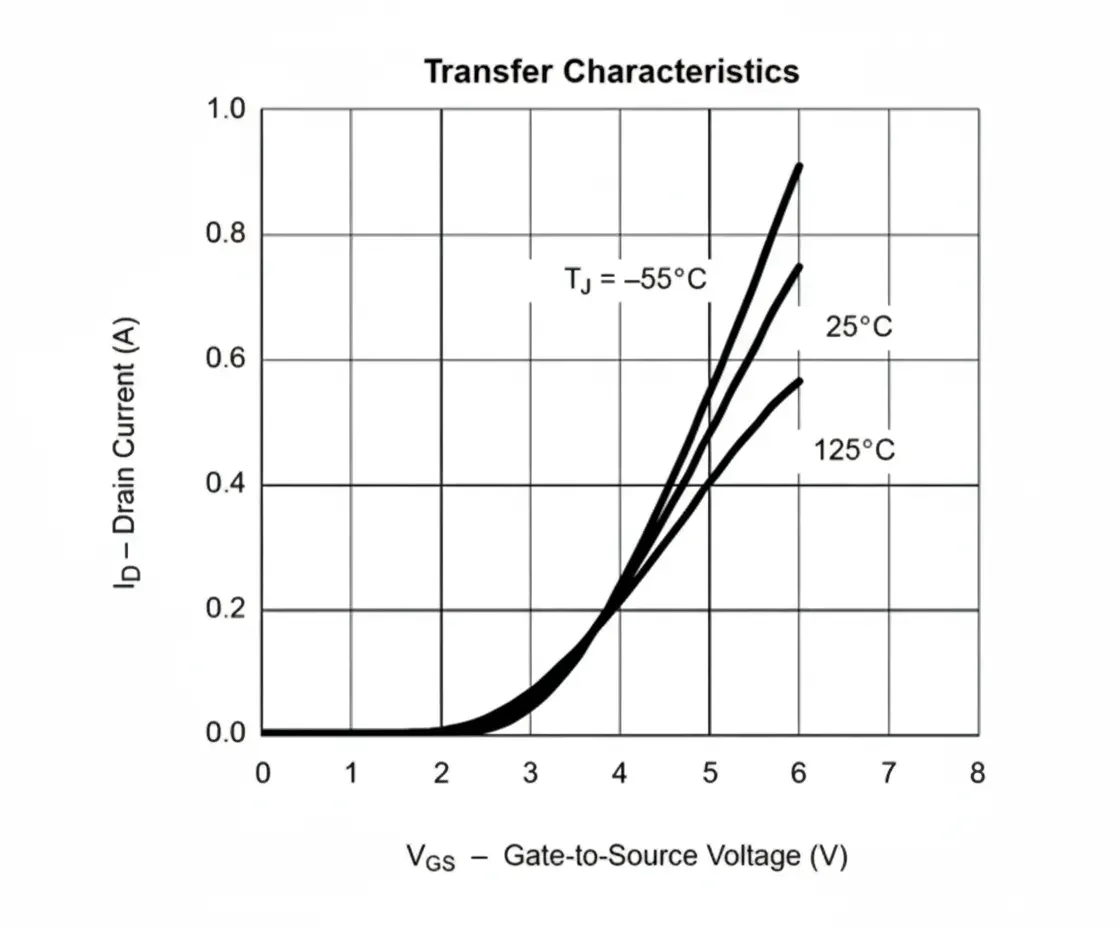
Hotter MOSFETs conduct less efficiently. That’s a fact. As temperature rises, the on-resistance (Rds(on)) increases. Higher Rds(on) means more I²R losses. More losses mean more heat. More heat means even higher Rds(on). You see where this is going.
I’ve seen thermal runaway happen in under two seconds. A MOSFET running at 80% of its rated current, with poor heatsinking, can spiral into destruction faster than you can react. The device doesn’t just fail—it violently shorts. Drain to source. Source to gate. All of it.
The fix? Proper thermal management. But also, consider derating. Don’t run a MOSFET at 90% of its maximum junction temperature. Give yourself a 30-40% margin. It’s not cowardice. It’s engineering.
The Hidden Danger in Transformer Designs
If you’re working with flyback or forward converters, your MOSFET sees reflected voltage from the transformer. That reflected voltage adds to the input voltage. If your transformer design has leakage inductance, you get spikes. Those spikes push the device into avalanche, pulse after pulse.
I’ve debugged countless designs where the transformer turns ratio was calculated correctly, but the leakage inductance wasn’t snubbed. The MOSFET was absorbing those spikes like a sponge. Eventually, the sponge caught fire. Use a proper RCD snubber or a Zener clamp. Your MOSFET will thank you.
3. Overcurrent and Short-Circuit Conditions
A MOSFET can handle a lot of current for a short time. But “short” means microseconds. If you have a short circuit on the output, the device will conduct until its bond wires fuse open or its die melts. Current limit isn’t optional—it’s survival.
I’ll be blunt: relying on a fuse to protect a MOSFET is dumb. Fuses are slow. MOSFET failure happens in microseconds. You need a fast-acting current limit circuit, preferably with a dedicated comparator monitoring the drain current.
The Role of Gate Drive Voltage
Underdriving the gate is a classic mistake. If you apply only 5V to the gate of a standard MOSFET, it might not fully enhance. The Rds(on) stays high, losses skyrocket, and the device cooks. Conversely, overdriving the gate (beyond the max rating) destroys the oxide.
Choose your gate drive voltage carefully. For logic-level MOSFETs, 5V might be fine. For standard ones, 10V-12V is typical. And yes, you need a dedicated gate driver IC—not a pull-up resistor from a microcontroller pin. That resistor trick works for LEDs, not for switching 20 amps.
Crosstalk in Half-Bridges
When you have two MOSFETs in a half-bridge, one turning off can kick the other one on. It’s called crosstalk. It’s caused by the Miller effect and parasitic inductance in the source connections. This is especially nasty in high-side drivers.
The solution? A negative gate drive during turn-off can help. Or use a gate resistor that’s optimized for the specific timing. But honestly? The best fix is a better PCB layout. Keep the gate loop tight. Minimize source inductance. It’s boring advice, but it works.
4. Poor PCB Layout and Parasitic Effects
I’ve seen beautiful schematics turn into smoke machines because the PCB layout was a disaster. The power MOSFET doesn’t care about your schematic elegance. It cares about the physical trace lengths, the return paths, and the parasitic capacitance.
High di/dt in power circuits creates voltage spikes across any parasitic inductance. That inductance could be in the drain trace, the source connection, or even the gate loop. Those spikes can exceed the breakdown voltage, drive the gate oxide crazy, or cause oscillations. Yes—MOSFETs can oscillate at hundreds of megahertz if the gate loop is too large.
Common Layout Mistakes to Avoid
Let me list out the usual suspects. I see these in almost every design review:
- Long gate traces without a series resistor. This creates an LC tank with the input capacitance. Ringing guaranteed. - Source inductance shared between power and gate return. This creates a voltage drop that fights the gate drive. - Poor decoupling on the gate driver supply. The driver needs a low-impedance path to pull current. Without it, the gate voltage sags during switching. - Vias with high resistance in the power path. That's just a heating element waiting to happen.
Every single one of these can cause MOSFET failures that you’ll chase for days. Fix the layout first, then blame the component.
The Fix: Kelvin Connections and Decoupling
A Kelvin connection separates the high-current path from the gate return path. It’s a four-terminal approach, but many power MOSFETs now come with a Kelvin source pin specifically for this. Use it. It eliminates the parasitic voltage drop that messes with your gate drive.
For decoupling, place ceramic capacitors as close to the gate driver as physically possible. Use a low-ESR bulk capacitor nearby. I like to put a 1µF X7R right at the driver pins. It’s small, it’s fast, and it saves lives.
5. Electrostatic Discharge (ESD) Damage
Here’s a dirty secret: many MOSFETs are surprisingly robust against ESD for an unpowered device. Power MOSFETs have large gate capacitances that can absorb some energy. But “robust” doesn’t mean “invincible.” A static shock from your finger can still puncture the oxide, especially in devices with very low gate thresholds.
I worked with a team that had a batch of MOSFETs failing at an alarming rate. The root cause? A technician was handling them without a wrist strap. The failures were intermittent, the damage latent. It looked like overvoltage, but it was ESD.
Mitigation Strategies That Actually Work
- Use anti-static bags and mats. Obvious but ignored. - Add external gate protection diodes or a Zener clamp if the gate is exposed to the outside world. - Never touch the leads of a MOSFET unless you’re grounded. Seriously. It’s not optional.
If you see a MOSFET that failed without any obvious electrical overstress, suspect ESD. The damage is tiny, but it grows over time.
Common Questions About MOSFET Failures in Power Circuits
Can a MOSFET fail short circuit instead of open circuit?
Yes. In fact, most MOSFET failures result in a short circuit between drain and source. The silicon melts and fuses. The device becomes a permanent conductor. That’s dangerous because it removes all control and can cause downstream damage. Open-circuit failures happen, but they’re less common, often due to bond wire fusing.
What is the most common cause of MOSFET failure in switching power supplies?
In my experience, it’s a tie between gate oxide breakdown from voltage spikes and thermal runaway from poor design margin. Both are preventable. The gate oxide issue usually comes from layout parasitic ringing, while thermal runaway is a derating problem.
How can I test a MOSFET to see if it failed?
Use a multimeter in diode mode. Check between gate and source—it should read open or high impedance. A short here means the gate oxide is dead. Check between drain and source. A low resistance reading (near zero) indicates a short circuit failure. Also, measure the body diode between source and drain; it should show a typical diode drop. If it’s open or shorted, the device is done.
Does temperature affect MOSFET reliability?
Absolutely. Every 10°C rise in junction temperature roughly doubles the failure rate for most silicon devices. High temperature accelerates electromigration, degrades the gate oxide, and increases leakage currents. Keep your MOSFETs cool, and they’ll last.
Should I always use a gate resistor?
Yes. A gate resistor of 10 ohms to 100 ohms slows down the switching and dampens ringing. Without it, oscillations can destroy the gate oxide. The exact value depends on your switching speed needs, but never connect the gate directly to a driver output without some resistance.
Failure isn't a mystery. It's a lesson. Once you understand these common reasons why MOSFETs fail, you stop making excuses for your designs and start making reliable hardware. Treat every copper trace like a resistor. Treat every parasitic inductance like a grenade. And for the love of good engineering, respect the gate oxide.