
Understanding the Flow of Energy in Complex Thermal Circuits
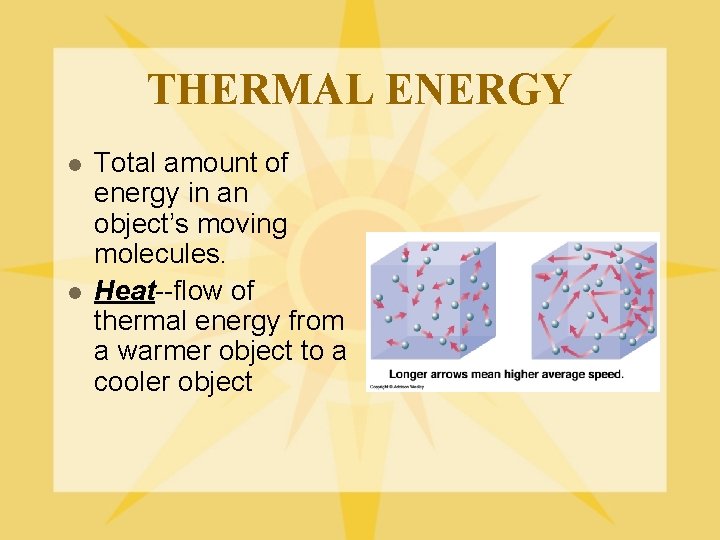
Ever wonder why that high-end CPU cooler still lets your chip throttle under load, or why a seemingly simple heat sink design completely misses the mark? I’ve spent over a decade elbow-deep in thermal management systems, from the guts of satellite power amplifiers to the cooling loops in prototype electric vehicles. And I can tell you this: if you don’t respect the rules of the circuit, the heat will absolutely win.Honestly? Most people treat thermal circuits like plumbing they just wing. They slap on a big fan, pile on some paste, and hope for the best. But the physics of energy transfer doesn’t care about hope. It cares about resistance, capacitance, and the path of least resistance. Once you start viewing heat flow the same way an electrical engineer views current, everything clicks. You stop guessing and start engineering.
This isn’t just theory for lab coats. Understanding how heat flow moves through a network of materials—a complex thermal circuit—is the difference between a device that lasts a decade and one that fails in six months. Let’s break it down the way I wish someone had shown me years ago. No fluff, just the meat of it.
The Core Analogy: Why Your Brain Already Understands Ohm’s Law for Heat
Think about a simple electrical circuit. You have a voltage source pushing current through a resistor. The resistor drops the voltage, and the current generates heat. Now, flip that. In a thermal circuit, your voltage source is a temperature difference. The current is thermal energy moving from hot to cold. And the resistor? That’s every material, gap, or interface in the path.It’s a big deal because this analogy gives you a precise language for diagnostics. I can measure a temperature gradient across a joint and calculate the exact thermal resistance of that interface. If the resistance is too high, I know exactly where the bottleneck lives. You can’t manage what you can’t measure, and this framework lets you measure the invisible.
Where most people trip up is treating the whole system as one lump. They look at the junction temperature of a chip and the ambient air temperature, and they call it a day. But the real path is a chain of multiple thermal resistances—from the silicon die to the case, through the thermal interface material (TIM), into the heat sink base, through the fins, and finally into the air. Each junction is a resistor. Each one matters.
Thermal Resistance: The First Rule You Can't Ignore
The fundamental unit here is "degrees Celsius per watt" (C/W). A thermal resistance of 1 C/W means that for every watt of heat you dump in, the temperature rises one degree. It sounds simple, but the devil is in the details. A perfect, solid block of copper has a very low resistance. A thin layer of air gap has a massive resistance. That's why thermal paste exists—to displace the high-resistance air with a lower-resistance compound.I remember consulting on a power supply design where the engineer used a 0.5mm thick thermal pad because it was "easy to assemble." The pad had a published resistance of 3 C/W. The heat sink was massive, maybe 0.5 C/W. The total path resistance was 3.5 C/W. But the cooler itself was almost irrelevant because the pad was the dominant bottleneck. We swapped to a thin layer of paste (0.1 C/W), and the junction temperature dropped 15 degrees. Same heat sink. Same fan. Just a smarter thermal circuit.
Look—the equation is boring but essential: Q = ΔT / R_th. Where Q is heat flow in watts, ΔT is the temperature difference, and R_th is the total thermal resistance. If you double the wattage, the temperature doubles. If you halve the resistance, the temperature halves. It’s that direct. Once you internalize this, you stop blaming the fan and start analyzing the path.
Thermal Capacitance: The Invisible Buffer That Saves Your Butt
Resistance handles steady-state, but real systems are dynamic. You slam a processor with a full load for two seconds, then it idles. That's where thermal capacitance steps in. Capacitance in a thermal circuit is the ability of a material to store energy—like a heat sponge. A big chunk of aluminum or a water block has high capacitance. It takes time to heat up and time to cool down.This is where the math gets a little more interesting, and why a massive heat sink can feel "cold" to the touch even when the CPU is screaming hot. The heat hasn't soaked all the way through yet. The transient response of your system is governed by the time constant—the product of resistance and capacitance. A high capacitance dampens temperature spikes. For applications like bursty CPU loads or pulse-power lasers, capacitance is your friend. It turns a sharp temperature mountain into a gentle hill.
But don't rely on capacitance for continuous loads. If your system runs at 200 watts for hours, capacitance is fully saturated and offers no benefit. It becomes dead weight. That's why server racks use high-flow liquid cooling—they bypass the capacitance problem entirely by moving the thermal energy away continuously. Knowing when to use capacitance and when to ignore it is a skill you earn through painful field experience.
Modeling Complex Networks: Series, Parallel, and the Dreaded Mix
A real thermal circuit is rarely a straight line. You have the CPU junction in series with the TIM, in series with the heat sink base, in series with the fins. But then you also have parallel paths: heat can leak down through the PCB substrate, into the motherboard, and out to the chassis. It can radiate from the heat sink to the enclosure. It can convect directly from the component body.To predict energy transfer accurately, you have to model these paths. I use the same rules as electrical resistors. Resistors in series add up: R_total = R1 + R2 + R3. Resistors in parallel follow the reciprocal rule: 1/R_total = 1/R1 + 1/R2. Misunderstanding this leads to oversizing or, worse, undersizing cooling systems.
I once saw a design where the engineer placed a small heat sink on a TO-220 package but forgot that the package was already thermally bonded to a large copper pour on the PCB. That copper pour was a parallel thermal circuit with a lower resistance than the air path to the heat sink. The result? Most of the heat flow went into the PCB, not the heat sink. The component survived, but the trace near it delaminated. A simple parallel path model would have caught that before the prototype burned.
Series Paths: The Chain is Only as Strong as its Weakest Joint
In a series path, every resistor adds. The thermal resistance of the interface between the die and the heat spreader is often the highest in the chain. I call this the "handshake." No matter how good your heat sink is, if the handshake is poor, you're cooked. TIMs, solder, or direct bonding—each has a cost and a resistance. For high-power systems, direct copper bonding or vapor chamber integration is worth the expense because it eliminates a major series resistor.One trick I use daily: always calculate the required total resistance backwards. Start from the maximum allowed junction temperature, subtract the ambient, then divide by the power. That gives you the maximum total thermal resistance for the entire path. Then you allocate that budget across each series element. If one element (like a plastic enclosure) eats too much of the budget, you have to redesign. It’s a zero-sum game, and the transistor always wins.
Parallel Paths: When Heat Takes the Back Door
Parallel thermal circuits can be a godsend or a nightmare. In a high-density LED array, the board itself acts as a parallel path. A thick aluminum PCB conducts heat away from the LEDs laterally, spreading it to the edges where a frame sink picks it up. This effectively reduces the total resistance of the system because the heat isn't forced through a single narrow channel.But here's the trap: parallel paths can also mask failures. You might measure a cool temperature at one point and assume the system is fine, while a hidden parallel path is saturating somewhere else. In multi-chip modules, one hot chip can dump heat into a shared substrate, heating up a neighboring chip that's supposedly off. That neighbor then fails because its own thermal circuit is disrupted. I've seen this kill entire production runs. The fix is to use dedicated thermal vias or isolation slots to force the energy flow where you want it.
Troubleshooting Real Systems: From Hot Spots to Cold Misery
Theory is great until you have a screaming hot prototype and three days to ship. Then you need a practical playbook. I always start with an infrared camera and a thermocouple on the critical junctions. I'm looking for discontinuities. A 20-degree jump across a single interface is a screaming red flag that your thermal contact resistance is too high.Next, I check the pressure. Seriously. Bolts that aren't torqued correctly create air gaps. Thermal paste needs to be spread to a thin, uniform layer—too thick and you add resistance, too thin and you leave air voids. I've watched engineers slather paste like peanut butter, and then stare in bewilderment at their hot spots. It's physics, not magic. Use the correct grid or stencil pattern for your specific component geometry.
Finally, model the airflow. Convection is a huge part of any thermal circuit, but it's nonlinear. Velocity, direction, and turbulence matter. A fan blowing against an obstructed inlet does almost nothing. I use CFD simulations for rough guesses, but I always validate with a hot-wire anemometer. If the air isn't moving where the fins are, you're just heating the air inside your box. Rinse and repeat.
Measuring and Validating Your Thermal Model
You can't trust a spreadsheet model until you've correlated it to real data. I build a test rig with a known heat source (a power resistor on a block) and measure temperatures at every node along the path. I compare the measured temperature drops to the calculated drops from my thermal circuit model. If they match within 5%, I'm confident. If they don't, I look for an unmodeled parallel path or an incorrect material property.One of the most common errors is assuming bulk thermal conductivity values apply to thin layers. A 0.1mm layer of grease has a different effective resistance than a 1cm block of the same material because of boundary effects and non-ideal spreading. I always derate datasheet values by 20-30% for thin interfaces. It's a safety margin that has saved my bacon more times than I can count.
Common Failures in Complex Thermal Circuits
Let me give you a short list of nightmares I've personally debugged:
- Pump-out: Thermal paste squeezes out under repeated thermal cycling, leaving a dry contact. The resistance drifts upward over time.
- Delamination: In multi-layer heat spreaders, the bond between layers fails, creating an air gap right in the middle of the thermal circuit.
- Blocked airflow: Dust, cable clutter, or a poorly placed bracket starves the heat sink of convective air.
- Thermal runaway: A hot component heats up its neighbor, which draws more current, gets hotter, and cooks the entire assembly.
- Misapplication of TIM: Using a phase-change material where a paste is needed, or vice versa. The wrong material for the right temperature range can fail silently.
Each of these failures traces back to a break in the energy flow path. If you model the thermal circuit with honest numbers, you'll catch them on paper before they become field failures. That's the value of this approach—it forces you to visualize the invisible.
Common Questions About Understanding the Flow of Energy in Complex Thermal Circuits
How do I calculate the total thermal resistance of a complex circuit?
Start by drawing the path from heat source to ambient. Identify every material layer and interface. Look up or measure the thermal resistance per unit area (R-value) for each layer. Add series resistances. For parallel paths, use the reciprocal formula. Sum them all to get the total. Then validate with a temperature measurement under a known power load. If the math doesn't match the meter, you missed a path.
What is the most common mistake in thermal circuit modeling?
Ignoring contact resistance. People assume a perfectly smooth interface between two solids. In reality, microscopic air gaps dominate the resistance. Without thermal grease, solder, or pressure, the effective thermal resistance of a joint can be ten times higher than the bulk material. Always account for the interface. Seriously.
Can I use electrical simulation software for thermal circuits?
Absolutely. Tools like SPICE are excellent for modeling thermal circuits because the math is identical. Replace voltage with temperature, current with heat flow, resistance with thermal resistance, and capacitance with thermal mass. I do this regularly for transient analysis. It's a powerful way to simulate start-up behavior or pulse loads without building a physical rig.
How does thermal capacitance affect transient performance?
Thermal capacitance smooths out rapid changes. A system with high capacitance will take longer to reach steady-state temperature, but it will also resist sudden spikes. For short bursts of high power, capacitance can keep the junction below critical limits. But for continuous loads, capacitance is irrelevant because it saturates. The time constant (R * C) tells you how fast the system responds.
When should I use a vapor chamber instead of a standard heat sink?
When you have a high heat flux concentrated in a small area and you need to spread it across a large surface efficiently. Vapor chambers have an effective thermal conductivity hundreds of times higher than copper for spreading. They act as a super-efficient parallel thermal circuit that distributes the heat flow evenly to the fins. Use them when the source is smaller than about 20% of the heat sink base area.