
Why Balanced Loads Let You Ditch the Neutral: The Engineering Hack Nobody Talks About
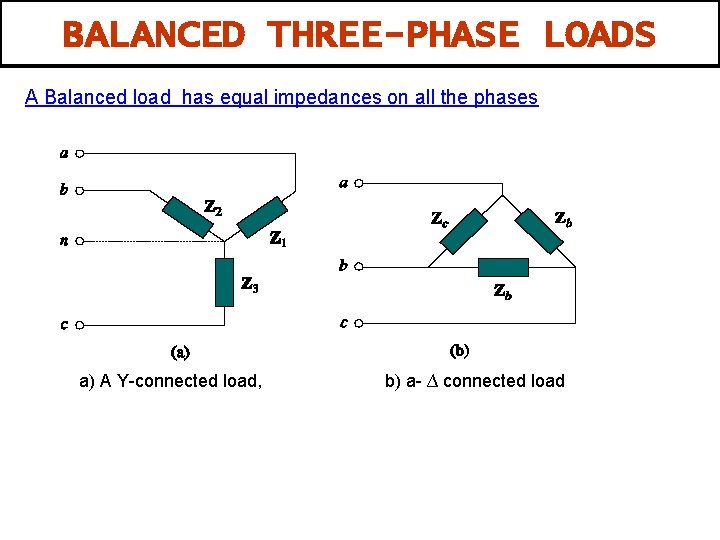
Look—I’ve been in this trade for over a decade, and there’s still a moment every time I see a three-phase motor running without a neutral that makes me smile. It’s like watching a magician pull off a trick. The motor hums, the lights stay on, and somewhere in the panel, a wire that would normally be mandatory is just... missing. How is that legal? How is that safe? The answer lives and dies with one concept: balanced loads. And if you’ve ever scratched your head wondering why three-phase systems can sometimes run cold without that white wire, you’re not alone. Trust me, I’ve been there. Let’s burn through the theory, bust some myths, and get practical.
First, let’s get this straight: balanced loads aren’t a gimmick. They’re a fundamental property of three-phase power. When you have three sine waves 120 degrees apart feeding three identical impedances, something magical happens. The currents on each phase cancel each other out at the neutral point. Seriously. It’s not oversimplified hype. The vector sum of the three phase currents is zero. That means no current flows on the neutral conductor. That means you can eliminate the need for a neutral connection entirely.
But here’s the kicker—most systems aren’t perfectly balanced. Not even close. So when can you actually do this? And when will it bite you? Grab a coffee. We’re going deep.
The Fundamental Principle: Why Three-Phase Cancellation Works
Think of three-phase power like a perfectly timed relay race. Each runner (phase) hands off the baton (current) at exactly the right moment. In a balanced load, each phase draws exactly the same current magnitude. And because the phases are offset by 120 electrical degrees, the currents don’t just add up—they cancel. Graphically, if you plot the three sine waves, at any instant two are positive and one is negative (or vice-versa), and the sum of all three is a flat line at zero. That flat line is your neutral current.
Now, why does this matter? Because in a standard single-phase residential system, the neutral carries the difference between the hot currents. If you pull 10 amps on L1 and 15 amps on L2, the neutral carries 5 amps. That’s fine. But in a three-phase wye (star) configuration, the neutral carries the vector sum of all three phases. When they’re equal and offset, that sum is zero. Balanced loads eliminate the need for a neutral connection because there’s physically nothing left to return.
Phasor Math: The Silent Hero Behind Your Motor
Honestly? Most electricians hate phasor diagrams. I get it. But bear with me for thirty seconds, because this is where the magic lives. Represent each phase current as a vector with a magnitude and angle. Phase A at 0 degrees, Phase B at 120 degrees, Phase C at 240 degrees. Add them head-to-tail. The resultant vector? A perfect triangle. No leftover component. No neutral current. Balanced loads create a closed polygon in phasor space. That’s the geometry of cancellation.
This isn’t theoretical mumbo-jumbo. It’s why three-phase induction motors, which are inherently balanced, don’t need a neutral wire. The motor windings are identical, the impedances match, and the current draw per phase is equal. Connect the three line wires and the motor runs. Period. No neutral. No ground reference required for the load current.
But watch out—if one phase has a slightly higher resistance (say a bad connection or aging winding), the balance breaks. Suddenly you have a residual current. That residual has to go somewhere. In a system designed without a neutral, that current might flow through ground paths or cause overheating. It’s a big deal.
Safety Implications: When Skipping the Neutral is Actually Safer
Let’s flip the script. There are scenarios where dropping the neutral improves safety. Think about a three-phase heater bank. Three identical resistive elements wired in wye, no neutral. If the system is truly balanced, the neutral current is zero. If you install a neutral wire anyway, and the load is perfectly balanced, that wire does nothing. It’s dead weight. But here’s the catch—if a fault occurs and the neutral is present, you might create a low-impedance parallel path that masks an unbalanced condition. Without a neutral, an imbalance forces current through protective devices and trips relays faster. Eliminating the need for a neutral connection can actually simplify fault detection. Counterintuitive? Absolutely.
Grounding vs. Neutral: Don’t Confuse Them
One of the most dangerous mistakes I see junior techs make is thinking that skipping a neutral means you don’t need a ground. Wrong. You always need a ground—for safety, for fault clearing, for personal survival. The neutral is a current-carrying conductor under normal operation. The ground is a fault-current path. In a three-phase, three-wire system (no neutral), the ground isn’t carrying operational current. It only acts during a fault. That’s an important distinction. Balanced loads allow the neutral to vanish, but the ground stays. Don’t ever remove the ground.
Look—I’ve seen guys wire a 480V motor with three wires and call it done. Then they forget to bond the frame. That’s how people die. The neutral may be optional, but the equipment grounding conductor is never optional. Keep that line clear in your head.
Practical Scenarios: Where You Can (and Can’t) Skip the Neutral
Alright, let’s get our hands dirty. Here’s a quick rundown of where I’ve successfully used three-wire systems and where you’d be a fool to try.
- Three-phase motors: Always a yes. Induction motors, synchronous motors, even some VFD outputs—they all present balanced loads by design. No neutral needed.
- Resistance heating banks: Yes, as long as all three elements are identical. But resistors drift with age. Check balance annually.
- Lighting circuits: Hell no. LEDs and fluorescents have nonlinear loads that generate harmonics. Those harmonics don’t cancel. You’ll cook the neutral if you even think about skipping it.
- Data center power distribution: Only for three-phase PDU outputs feeding balanced racks. But once you add single-phase servers, you need the neutral. Don’t gamble.
- Wye-connected transformers with grounded neutral: The transformer secondary needs a neutral for system reference. You can’t skip it there. But the load downstream might not need it.
The Harmonic Trap: Why LEDs Break the Rule
I mentioned harmonics. Let’s unpack that. In a perfect 60 Hz sine wave system, balanced loads cancel. But switching power supplies, like those in computers and LED drivers, shove third-harmonic currents onto the neutral. Third harmonics are zero-sequence—they don’t cancel. In fact, they add on the neutral. I’ve measured neutral currents higher than phase currents in commercial lighting panels. If you eliminate the neutral in that scenario, you’ve just created a fire hazard. Seriously. That neutral is carrying the sum of all the triplen harmonics. You need that wire. And it needs to be oversized.
So the rule is simple: Balanced loads that are purely linear (resistive or motor windings with clean sine waves) can be neutral-free. Nonlinear loads? Keep the neutral and double the ampacity.
Systems That Are Born Without a Neutral
Some systems never had a neutral to begin with. Three-phase delta systems, for example, have no neutral point. They’re three-wire by default. In a delta, each phase current flows through two windings, and the line currents are the vector sum of those winding currents. If the delta is balanced, the line currents are equal and 120 degrees apart. No neutral needed because there’s no neutral point to reference. This is common in industrial settings with 480V equipment. The neutral simply doesn’t exist.
Then there are corner-grounded delta systems. One phase is intentionally grounded to provide a reference. But again, no neutral conductor. Ground and neutral become one thing at the source. It works, but it’s wild—if you touch an ungrounded phase while standing on the grounded corner, you get full phase-to-phase voltage. I’ve seen apprentices make that mistake exactly once. The smell is unforgettable.
Why the NEC Allows It (And When It Doesn’t)
The National Electrical Code (NEC) permits three-phase three-wire systems for most motor and industrial loads. Article 250 covers grounding, but there’s no mandate for a neutral if the load is balanced. However, if the system supplies any line-to-neutral loads—like a 120V outlet in a 277/480V panel—you must provide a neutral. Those single-phase loads break the balance. And the code is clear: you can’t skip a neutral just because most of the load is balanced. If any portion of the system expects a neutral, you run it.
This is where experience saves you. I’ve walked into warehouses where a contractor pulled only three wires to a 480V panel, then tried to wire a 120V convenience outlet. Spoiler: they had to run a new conduit. Eliminating the need for a neutral connection is only valid when the entire load downstream is balanced and three-phase. The moment you add a phase-to-neutral load, that wire is mandatory.
Common Questions About How Balanced Loads Eliminate the Need for a Neutral Connection
Can I remove the neutral from an existing three-phase panel if all loads are three-phase?
Technically, yes, but only if you verify that balanced loads exist on every circuit, with no single-phase loads or harmonics. You’d also need to re-evaluate grounding and bonding. Realistically, this is rare in practice. Most panels have at least one control transformer or indicator light that uses a neutral. Don’t remove a neutral just because it’s “not needed right now.” Future changes might bite you.
What happens if a balanced three-phase system loses one phase?
You lose the balance. The neutral current instantly jumps to nearly the magnitude of one phase current. If the system was designed without a neutral, that current has nowhere to go except through ground paths or backfeed. Motors will single-phase and draw high currents. Protection devices should trip, but if they don’t, you get overheating and equipment damage. This is why I always recommend monitoring phase imbalance on neutral-less systems.
Does a delta system count as having “no neutral”?
Yes. A delta configuration has no neutral point. It’s inherently a three-wire system. Balanced loads are assumed, but the system doesn’t even offer a neutral terminal. If you need neutral for anything, you must use a step-down transformer or a wye-connected service. Delta systems are great for motors and heaters, terrible for general-purpose outlets.
Are there any efficiency benefits to eliminating the neutral?
Yes, but they’re minor. You save the cost of one conductor and the installation labor. You also reduce copper losses slightly—because no current flows on the neutral, there’s zero I²R loss there. But the real benefit is simplicity. Fewer wires mean fewer terminations, fewer failure points, and less clutter in the panel. For large installations, that adds up.
The bottom line: balanced loads are the only reason three-phase three-wire systems exist. They’re elegant, efficient, and perfectly safe when applied correctly. But they demand respect for the math and the code. Never assume balance—measure it. Never skip the ground—bond it. And never let a shortcut turn into a shock hazard. That’s the ten-year perspective talking. Now go check those phase currents.