
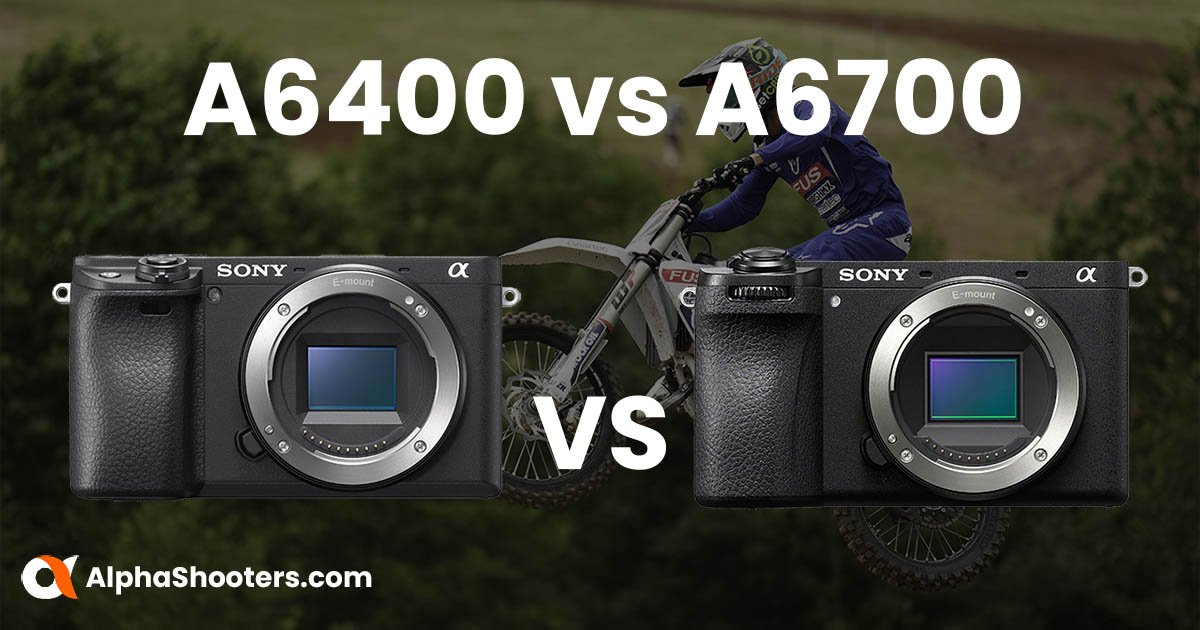
So you've got an Sony a6400. You've shot thousands of frames with it. You love the compact size, the speed, and that real-time Eye AF that still impresses people. But there's a new kid on the block. The Sony a6700 has been out for a bit now, and the internet is buzzing. Is it really that much better? Or is this just another incremental update designed to empty your wallet?
I've been hands-on with both cameras for years, shooting everything from fast-moving wildlife to run-and-gun video gigs. I know the a6400 inside and out. I also know exactly where it falls short today. Honestly, the a6700 isn't just a refresh. It's a fundamental rethink of what a crop-sensor Sony can do. Let's cut the marketing fluff and get into the five real, tangible reasons why ditching your old warhorse for the new a6700 actually makes sense. Because spoiler alert: it's not just about a new sensor.
Reason 1: The Autofocus is Now Next-Gen. Seriously.
The a6400 had class-leading autofocus. For its time, it was magic. You could throw it at a running dog and get sharp eyes every single time. But technology doesn't stand still. The a6700 borrows the AI processing unit from the full-frame giants like the A7R V. This isn't a simple firmware bump. It's a completely different way of processing what the camera sees.
With the a6400, you get Real-time Tracking. It locks onto a subject and follows it. That's good. With the a6700, you get AI-based Subject Recognition. It doesn't just track. It understands what it's looking at. It knows the difference between a human, an animal, a bird, an insect, a car, a train, and an airplane. It recognizes specific body parts. If the eye is obscured, it jumps to the head or the body instantly.
From Real-Time Tracking to AI Subject Recognition
This is where the upgrade hits you in the face. I was in a forest shooting a flitting wren. With the a6400, I would fight with the autofocus box as the bird jumped from branch to branch. It would lose lock if the bird turned its head away. The a6700? I switched on 'Bird' mode. I didn't touch the focus box. It just glued onto the bird's eye, even when the bird was a tiny speck against a messy background of leaves. It felt like cheating. Look, if you shoot any kind of wildlife, sports, or even unpredictable kids, this is the single most compelling reason to upgrade. The a6400 was a fast car. The a6700 is a self-driving spaceship.
The Low-Light Performance Boost
Here's the dirty little secret about the a6400: its autofocus stumbles in dim light. It hunts. It struggles to find contrast. The a6700's AI autofocus operates down to -4 EV. In practical terms, that means you can focus in near darkness. I shot a candlelit dinner scene for a short film. The a6400 was hunting for four seconds every time I recomposed. The a6700 locked on instantly. It's not just about speed; it's about confidence. You stop second-guessing your gear and start focusing on the actual shot. That peace of mind? It's worth the upgrade price alone for many pros.
Reason 2: Video Specs That Finally Catch Up to 2024
Let's be brutally honest. The Sony a6400 video specs are dated. 8-bit 4:2:0 4K. Limited to 30fps in 4K unless you accept the crop. No S-Log 3 without significant banding issues. It works, but it feels like a toy when compared to modern cameras. The a6700 doesn't just improve; it obliterates the gap. This is a video-first upgrade disguised in a stills-body.
You get 4K 120fps (albeit with a 1.58x crop, but it's there). You get 4K 60fps from the full 6K oversampled readout. That's massive for sharpness. But the real game changer is the internal codecs and color science.
10-Bit, S-Log3, and the End of Banding
The a6700 shoots 10-bit 4:2:2 internally. The a6400 shoots 8-bit. If you don't know the difference, here it is: 8-bit is like using watercolors with only 256 shades per channel. 10-bit is like using a professional oil paint set with 1024 shades per channel. When you grade footage from the a6700, you can push the shadows, recover the highlights, and shift colors without everything turning into a blocky, banded mess. The a6400's 8-bit falls apart if you breathe on it too hard in post. Also, the a6700 has a proper S-Log 3 gamma curve that is usable out of the box. No more fighting with noisy shadows. It's a big deal.
All-I Compression and Reliable Frame Rates
Here's a technical but hugely practical win. The a6400 often records variable frame rates that drift. If you shoot for a long take, the audio and video can slip out of sync. The a6700 offers All-I (intra-frame) compression at high bitrates. This is the standard for professional editing workflows. It means every frame is a full picture, making it easier on your computer for color grading and easier on your timeline for syncing. If you do any freelance video work or even serious vlogging, this stability is a must-have. The a6400 was a great starter video camera. The a6700 is a professional B-Cam or main A-Cam for a run-and-gun filmmaker.
Reason 3: The Body Grip and Build are a Grown-Up's Camera
I love the a6400 for its size. But after a few hours of shooting with a heavy telephoto lens, my pinky finger would go numb. The grip is tiny. It's designed for small hands or for using with tiny primes. The Sony a6700 fixes this in a massive way. Sony gave it a deeper, chunkier grip. It feels like holding a full-frame camera body. It's an instant relief for anyone who uses larger lenses like the 70-350mm or Sigma's 18-50mm f/2.8.
It's not just the grip. The overall ergonomics are smarter. Sony finally moved the movie record button to a better position and added a front control dial. The a6400 only has two dials. The a6700 has three (front, rear, and a new exposure comp dial on top). This sounds small, but in the field, it means you can adjust aperture, shutter, and ISO without taking your eye off the viewfinder.
The Viewfinder: No More Squinting
Let's talk about the EVF. The a6400 has a 2.36-million-dot OLED viewfinder. It's fine. It's usable. The a6700 bumps that to a 2.36-million-dot unit as well, but it's a higher magnification (0.70x vs 0.59x). This makes a massive difference in real-world usability. That bigger viewfinder makes manual focusing easier. It lets you see detail in shadows before you click the shutter. It simply feels more immersive. The a6400 viewfinder feels like looking through a keyhole. The a6700 feels like watching a small cinema screen.
Weather Sealing You Can Trust (Mostly)
The a6400 is not weather-sealed. I've gotten dust on its sensor after a single trip to the beach. It's not a rugged camera. The a6700 has significantly improved weather sealing. It's not as sealed as a pro body like the A7 IV, but it has gaskets around the battery door, ports, and lens mount. You can shoot in light rain or a dusty environment with much more confidence. If you like shooting outdoors in less-than-perfect conditions (which is where the best light often is), this is a safety net the a6400 simply doesn't offer.
Reason 4: The New Sensor and Processor Mean Real Image Quality Gains
The a6400 uses a 24.2-megapixel sensor. The a6700 uses a brand new 26-megapixel sensor with the BIONZ XR processor. On paper, that's only a 2-megapixel difference. Don't let that fool you. The real-world improvements are in dynamic range, color science, and noise handling. The a6700's sensor is a back-illuminated (BSI) design. This is a huge leap.
The BSI design allows for better light gathering. You will see noticeably cleaner shadows at ISO 3200 and 6400 compared to the a6400. The a6400 is noisy at high ISOs. The a6700 gives you a noticeable one-stop, maybe even two-stop, improvement in usable sensitivity. For a crop-sensor camera, this is a huge step toward full-frame performance.
Color Science: Goodbye, Greenish Skin Tones
One of the biggest complaints about the a6400 was its color science. Skin tones often looked a little sallow or had a strange magenta/green shift that was a pain to fix in Lightroom. The a6700 inherits the color science from the A7R V. It renders colors, especially skin tones, much more naturally out of the box. The reds are richer. The greens are more accurate. It's subtle, but when you compare images side-by-side, the a6700 files look more filmic and require much less post-processing. It's a massive quality-of-life improvement for portrait and wedding photographers.
Rolling Shutter: Say Goodbye to Jello
The a6400 had pretty bad rolling shutter in video mode. Pan too fast, and vertical lines would wobble like jelly. It was distracting and limiting. The a6700's faster readout from the new sensor and processor drastically reduces rolling shutter. It's not global shutter perfect, but it's close enough that you won't notice it in most normal use. This alone makes video look far more professional. Scanning is fast, clean, and reliable.
Reason 5: The Menu System is Finally Usable (And the Ports)
We have to talk about the menus. The Sony a6400 has the old, terrible menu system. It's a rabbit warren of hundreds of pages in a single vertical list. Finding 'Movie Rec Settings' feels like trying to find a needle in a haystack of haystacks. It's frustrating. It slows you down. The a6700 finally gets the new touch-screen menu system from the A7 IV and A7R V. It has a horizontal tab system, a 'My Menu' section for your most-used settings, and proper touch response.
It's not just a nice-to-have. It's a productivity multiplier. I spend less time digging through menus and more time shooting. If you've ever missed a shot because you were scrolling through the a6400 menu, you know exactly what I mean. The a6700's operating system even boots up and wakes from sleep faster. It's a smoother, more modern experience.
The USB-C (with Power Delivery) and Scrubbing
The a6400 has a Micro USB port. It's slow. It's fragile. It's a relic. The a6700 has USB-C with Power Delivery support. That means you can plug in a power bank and shoot or charge the camera while you use it. No more swapping batteries every 45 minutes on a long timelapse or live stream. It also has a proper headphone jack for monitoring audio, something the a6400 lacks entirely without a dongle. You're getting modern connectivity, faster file transfer speeds (10Gbps), and the ability to use the camera as a high-quality webcam with a single USB-C cable. It's a massive upgrade in practical, daily usability.
The Final Sticky Point: That Amazing Battery Life Improvement
Okay, let's put it simply. The a6400 uses the NP-FW50 battery. It's notoriously small. You get about 200-350 shots per charge in real-world use. You need at least three batteries for a day's shoot. The a6700 uses the larger, more powerful NP-FZ100 battery. This is the same battery used in the A7 series. You get 600+ shots per charge easily. I shot an entire wedding with one battery. Think about that. That's less charging, less carrying, less downtime. The a6400's battery life was its Achilles' heel. The a6700 solves it completely.
Common Questions About the Sony a6400 vs a6700 5 reasons to upgrade
Is the image quality really that much better, or is it just the specs?
It's not just specs. The a6700 has noticeably better dynamic range and cleaner high-ISO performance. The color science is also significantly improved. If you regularly push shadows or shoot in low light, you will see a clear difference. For casual daytime shooting, you might not notice a massive file quality gap, but the editing flexibility is night and day.
I shoot only photos. Is the video upgrade on the a6700 wasted on me?
Not at all. The autofocus improvements, the better viewfinder, the improved grip, and the faster sensor readout all benefit stills photography. The AI autofocus is a game-changer for wildlife and sports. The better dynamic range helps in high-contrast scenes. Even if you never shoot video, the ergonomic and autofocus upgrades are huge.
Is the Sony a6700 worth the extra $500-600 over the a6400?
Honestly, yes, if your budget allows. The a6400 is still a capable camera, but the a6700 is a complete generational leap. You get a better sensor, massively better video, a usable menu, a professional battery, and weather sealing. If you are a serious hobbyist or a working professional, the investment pays for itself in time saved and shots you won't miss. The a6400 is a beginner's tool. The a6700 is a professional tool.
Does the a6700 overheat like Sony cameras used to?
Good question. The a6400 had overheating issues, particularly when recording 4K for long periods in warm conditions. The a6700 has significantly improved thermal management. It can record 4K 60fps indefinitely in most conditions, and the 4K 120fps is limited to about 30 minutes due to the heat generated. It's a massive improvement over the a6400, but it's still not a pro cinema camera. For most users, overheating is no longer a concern.
Should I keep my a6400 as a backup and buy the a6700?
This is actually a great strategy. The a6700 becomes your main shooter, and the a6400 stays as a lightweight, cheap second body for a different lens or as a gimbal camera. The lenses are the same E-mount, so they share perfectly. Many working pros use this exact setup. The a6400 is still a good camera, but it's no longer your best camera.