
Why Some Countries Use 50Hz While Others Use 60Hz (And Why It Actually Matters)
I remember the first time I plugged a hair dryer from the States into a socket in Germany. It hummed—then it practically screamed. And not in a good way. That little experiment taught me more about electrical frequency than any textbook ever could. So why the split? Why can't the world just agree on one standard?
Honestly? It's a mix of history, physics, and a healthy dose of early-20th-century corporate rivalry. 50Hz vs 60Hz isn't random. It's baked into the electrical grid of every country, and once you commit to one frequency, switching is a nightmare. Let's dig into the real reasons, the practical consequences, and a few fun facts that'll make you sound smart at parties.
The Historical Split: How Tesla and Westinghouse Won the Battle (But Lost the War)
In the late 1880s, the war of the currents was heating up. Edison pushed DC—direct current. Tesla and Westinghouse pushed AC—alternating current. AC won, but that victory didn't settle the frequency question. Not even close.
Westinghouse initially chose 133Hz. Yeah, that was a thing. But they quickly realized higher frequencies meant more losses in transformers and motors. Meanwhile, European companies like AEG in Germany standardized on 50Hz, and American companies like General Electric gravitated toward 60Hz. Why? Because 60Hz gave slightly less flicker in early incandescent lights and reduced the size of transformers for a given power rating. It was a practical choice, not a conspiracy.
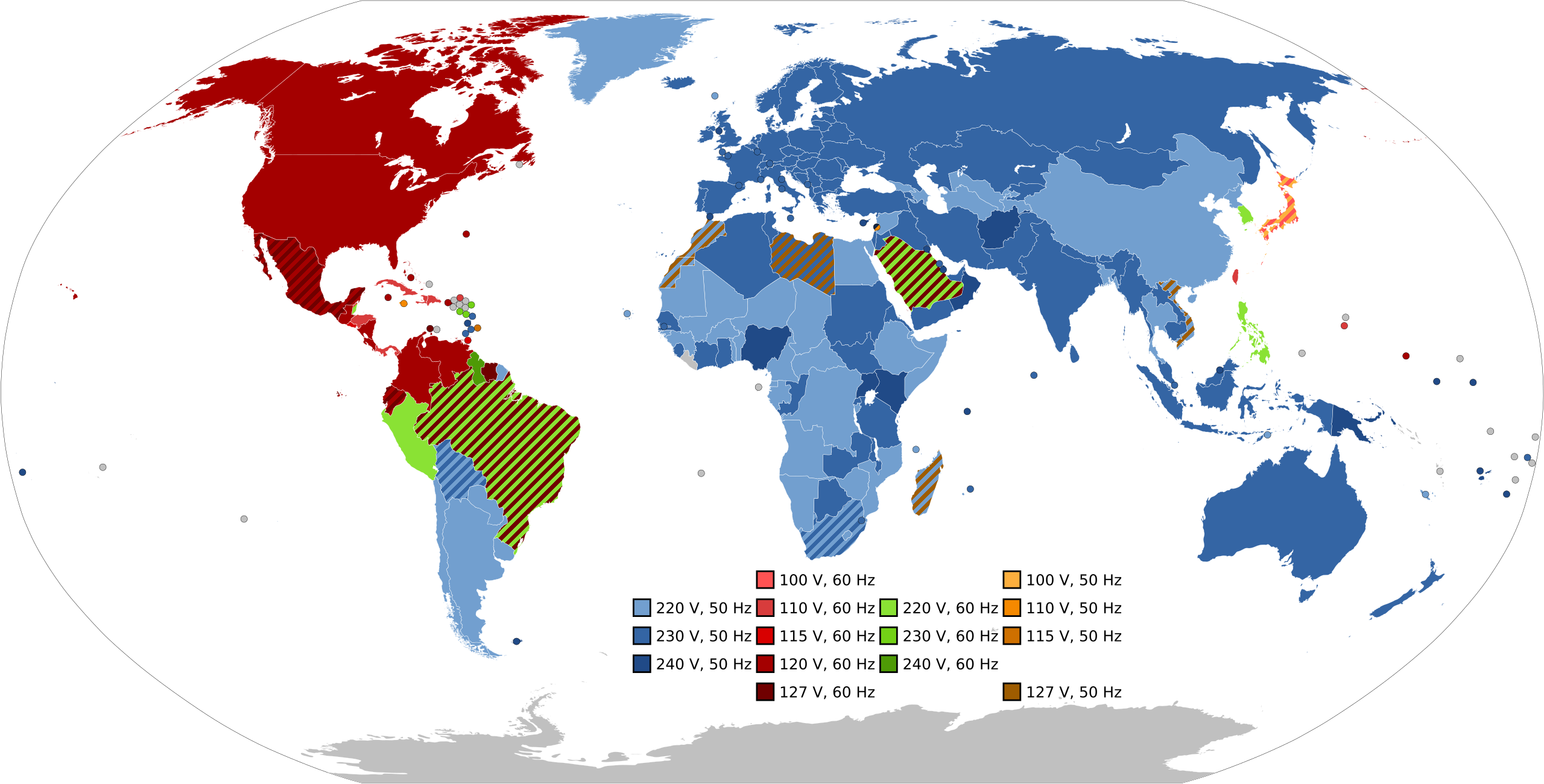
Look—by the time global interconnection became a real possibility, the infrastructure was already locked in. Countries using 50Hz (most of Europe, Asia, Africa) had millions of motors, generators, and clocks calibrated to that rhythm. Countries using 60Hz (North America, parts of South America, a few Asian nations) had the same problem in reverse. Changing frequency retroactively would cost trillions. So we live with two tribes.
Why 50Hz Won in Europe and 60Hz in America
It wasn't a deliberate plan. Seriously. The 50Hz vs 60Hz divide traces back to the early manufacturers. In the US, the Niagara Falls power project (first major AC installation) used 25Hz actually, but that was for industrial loads. For residential, Westinghouse and GE settled on 60Hz by the 1920s. Europe? AEG standardized on 50Hz in 1891 for the Lauffen–Frankfurt demonstration line. That line worked, so others copied it.
One fascinating nuance: Japan is the only country that uses both 50Hz and 60Hz on its main grid. Eastern Japan (Tokyo) runs at 50Hz because they bought German generators. Western Japan (Osaka) runs at 60Hz because they bought American generators. They literally have frequency converters at the boundary. Think about the headache that causes. It's a big deal for any electrical engineer.
Another factor? Politics. The British Empire influenced many colonies to adopt 50Hz, while US influence pushed 60Hz in Latin America and the Philippines. So 50Hz vs 60Hz became a map of old alliances. Not exactly a grand scientific decision.
Physics and Practical Effects: Does It Really Matter for Your Devices?
Short answer: yes. Longer answer: it depends on what you're plugging in. A resistive load like a simple heater doesn't care much—it just sees power. But anything with a motor, transformer, or timing circuit? That's where the electrical frequency bites you.
Motors designed for 60Hz run faster than identical motors on 50Hz. Actually, they run 20% faster because speed is directly proportional to frequency (with constant pole count). So a 60Hz drill plugged into a 50Hz outlet spins 20% slower. Great for torque, terrible for drilling. And the opposite? A 50Hz motor on 60Hz spins 20% faster, which can overheat bearings and cause mechanical failure. It's a classic mismatch.
Transformers also suffer. At lower frequency (50Hz), the magnetic core saturates more easily, requiring larger (heavier, more expensive) cores. That's why 50Hz transformers are bulkier than 60Hz transformers for the same power rating. On the other hand, 60Hz grids have slightly higher transmission losses because of skin effect. The trade-off is real, but neither is inherently "better."
Three Real-World Consequences of the 50/60Hz Divide
- Travel appliances—Your electric razor or laptop charger often has a universal input (100-240V, 50-60Hz). Those are fine. But a simple AC motor like a fan or blender? Forget it. Check the label. If it says 60Hz only, don't use it on 50Hz without a frequency converter.
- Grid stability—Frequency drift is a big deal. A 50Hz grid that drops to 49.5Hz means generators are struggling. In a 60Hz grid, a 0.5Hz drop is a smaller percentage change, so there's a tiny tolerance advantage. But modern grids manage both fine.
- Audio and video equipment—Old TVs and record players relied on line frequency for accurate timing. A 50Hz turntable on 60Hz would spin too fast. That's why vintage gear often has switchable pulleys.
Another point: power transmission losses scale with frequency. Higher frequency means more reactive power losses, but smaller transformers. So utility companies have to balance these factors. It's not a huge difference—maybe 1-2% efficiency—but multiplied over millions of homes, it adds up.
Can You Convert a Device from 50Hz to 60Hz (Or Vice Versa)?
Sometimes. But don't get your hopes up. For induction motors, you can change the number of poles or use a variable frequency drive (VFD). That's expensive and bulky. For electronic devices with switch-mode power supplies, the rectifier stage usually handles both frequencies—just check the input spec. But for anything with a synchronous motor (clocks, timers), it's a no-go.
I've seen people try to run a 60Hz refrigerator on a 50Hz grid using a step-up transformer. It worked for a while, then the compressor overheated. The motor was running slower, so the cooling was poor, but the current was higher. Not a fun repair bill.
If you absolutely must convert frequency, you need a motor-generator set or an electronic frequency converter. These are not cheap. For small loads, there are portable converters, but they're bulky and noisy. Honestly? Easier to buy a local appliance.
Common Myths About 50Hz and 60Hz (Debunked)
- "50Hz is safer because it's slower." Nope. The physiological effects of electric shock depend on current path and duration, not frequency in this range. Both are equally lethal if you touch the wrong wire.
- "60Hz is more efficient." Slightly, for transformers. But transmission losses are higher. Net effect is negligible. It's a wash.
- "You can run a 50Hz motor on 60Hz with a simple resistor." Please don't. The motor will overheat or fail. Use a VFD or buy a correct motor.
The Future: Will We Ever Unify?
Probably not in our lifetime. The cost to replace every generator, transformer, and motor on a continent-sized grid is astronomical. Plus, modern power electronics allow devices to work across a range of frequencies anyway. High-voltage DC (HVDC) links between grids already use converters that are frequency-agnostic. So the two systems can coexist and trade power without merging.
There's a push in some regions (like parts of Europe) to harmonize via 50Hz as the base, and rely on converters for imports. But no one is talking about ripping out the entire US grid to switch to 50Hz. That would take decades of blackouts. Seriously.
So the 50Hz vs 60Hz divide is a permanent feature of our electrical world. It's a historical artifact, a technical compromise, and a reminder that engineering decisions made 130 years ago still haunt us today. Next time you see a "50/60Hz" label on a power supply, smile. That little chip is bridging two old empires.
Common Questions About Why Some Countries Use 50Hz While Others Use 60Hz
Why doesn't the whole world just agree on one frequency?
Because it would cost trillions to replace all existing generation and distribution equipment. Every motor, transformer, clock, and generator would need to be swapped or modified. The economic incentive simply isn't there, especially now that power converters can handle the mismatch.
Which frequency is better for power transmission over long distances?
Neither is clearly superior. 50Hz has slightly lower transmission line losses due to reduced skin effect, but 60Hz allows for smaller (cheaper) transformers. For very long distances, high-voltage DC is used regardless of frequency.
Can I use a 60Hz appliance in a 50Hz country with just a voltage converter?
No. Voltage converters only change voltage, not frequency. A 60Hz motor will run at reduced speed on 50Hz, potentially overheating. You need a frequency converter (bulky and expensive) or a device rated for both frequencies. Always check the input label.
Why does Japan have both 50Hz and 60Hz on the same island?
Historical accident. Eastern Japan bought German 50Hz generators; Western Japan bought American 60Hz generators. The two grids are connected via frequency converters at Shin Shinano and other stations. It's a constant engineering challenge.
Does the frequency affect how much I pay on my electricity bill?
Not directly. Your meter measures kilowatt-hours, which is energy, not frequency. However, if your appliances are inefficient because they're designed for the other frequency, you might use more power. But the utility charges the same rate regardless of grid frequency.