
Can a Laser Pointer Permanently Damage Your DSLR Camera Sensor?
Let me paint you a picture. You’re shooting a concert. The crowd is electric, the band is on fire, and some idiot in the third row is waving a green laser pointer at the lead singer. You swing your lens over to capture the moment. For a split second, that beam hits your front element. It looks cool through the viewfinder. Honestly? You just might have toasted your camera.
I’ve been repairing and testing camera sensors for over a decade. I’ve seen the carnage. And I’m here to tell you: that question isn’t hypothetical. The short answer is yes, a laser pointer can permanently damage your DSLR sensor. But the long answer—the one that actually helps you—is about why, how badly, and what you can do about it.
How Your DSLR Sensor Reacts to Intense Light
Your camera’s sensor is a delicate piece of silicon engineering. It’s designed to capture photons, sure. But it’s not designed to survive a concentrated blast of coherent light. Think of it like this: your skin can handle sunlight, but you wouldn’t hold a magnifying glass over your arm on a sunny day, right? That’s what a laser pointer does to your DSLR sensor. It focuses energy into a tiny, intense spot.
The sensor uses millions of tiny photodiodes to convert light into electrical signals. Each one has a microlens on top to gather light. When a high-power laser hits that area, the energy overwhelms the silicon. The result? The photodiode literally burns out. It’s not a software glitch. It’s physical destruction.
The Role of Wavelength and Power
Not all lasers are created equal. A cheap red keychain pointer running at 5 milliwatts is annoying but usually safe in a quick, accidental flash. But those 1000mW+ green or blue laser pointers you see online? Those are essentially handheld weapons for your sensor.
Green lasers are particularly nasty. Why? Because they’re typically infrared-pumped. They produce a ton of invisible IR light that the human eye can’t see, but your camera sensor sees it just fine. That IR component can sneak past your internal filters and fry the sensor even if the visible beam looks dim. I’ve pulled cameras apart where the damage was invisible to the naked eye but showed up as a dead column of pixels on a test shot. It’s a big deal.
What Happens at the Pixel Level
When a laser hits the sensor, you get one of two outcomes. First, there’s the immediate catastrophe: a bright, glaring spot appears in your image, and it never goes away. That’s a dead pixel cluster. Second, and more insidious, is thermal stress. The laser heats the sensor substrate unevenly. Over time—or in one sustained blast—this can crack the delicate wiring or cause the sensor to produce permanent hot pixels.
Look—I’ve seen a sensor that looked fine under a microscope but had a row of burned-out amplifiers. The camera couldn’t read data from that column. It’s like a stroke in a tiny digital brain. And once those transistors are gone, you’re not fixing them. You’re replacing the entire sensor assembly. Seriously, it’s not a DIY job.
The Physics of Laser Damage to a Camera Sensor
Let’s get into the gritty details without the PhD lecture. The core problem is optical gain. Your lens is designed to gather light and concentrate it onto the sensor. A laser pointer is already highly collimated—the beam barely spreads. Combine that with a telephoto lens, and you’ve created a focusing machine.
If you point a 200mW laser at a 200mm lens, you’re effectively amplifying the power density at the sensor plane by a factor of thousands. The sensor surface isn’t built for that. It will absorb that energy, and the silicon will heat up faster than it can dissipate it. That heat creates micro-cracks and permanent color shifts in the Bayer filter array.
Why Short Pulses Can Still Cause Permanent Damage
A common myth I hear is, 'But it was only a split second!' Doesn’t matter. A single millisecond exposure to a high-power laser pointer can exceed the damage threshold of the silicon. The thermal time constant of a photodiode is incredibly fast. It heats up and burns before you can blink.
I tested this once with a cheap camera body and a 300mW blue laser. I triggered a single, short burst—maybe 1/30th of a second through the lens. The resulting image had a permanent magenta blob right where the beam hit. That sensor was toast. The laser didn’t need to be on for a minute. It needed a fraction of a heartbeat.
The Myth of the LCD Screen as Protection
Some folks think if they use live view, the sensor is protected. That’s dead wrong. The mirror flips up, and the sensor is fully exposed. The LCD screen shows you the image, but the sensor is taking the full hit. Using live view actually makes it more dangerous because you’re keeping the sensor active and exposed.
I’ve also heard people argue that the UV/IR cut filter on the sensor protects it. Those filters reduce some wavelengths, but they don’t block the raw power of a focused laser. They’re designed for gentle, diffuse light. A laser punctures right through them. Honestly, the only real protection is keeping the laser out of the lens barrel entirely.
Real-World Risks: Concerts, Events, and Accidents
The most common scenario isn’t some malicious act. It’s accident. Maybe you’re shooting a wedding, and someone uses a laser pointer for a presentation. Or you’re at a car show, and a kid shines a laser at your camera for fun. Or you’re just testing a new lens and accidentally catch a reflection off a piece of glass.
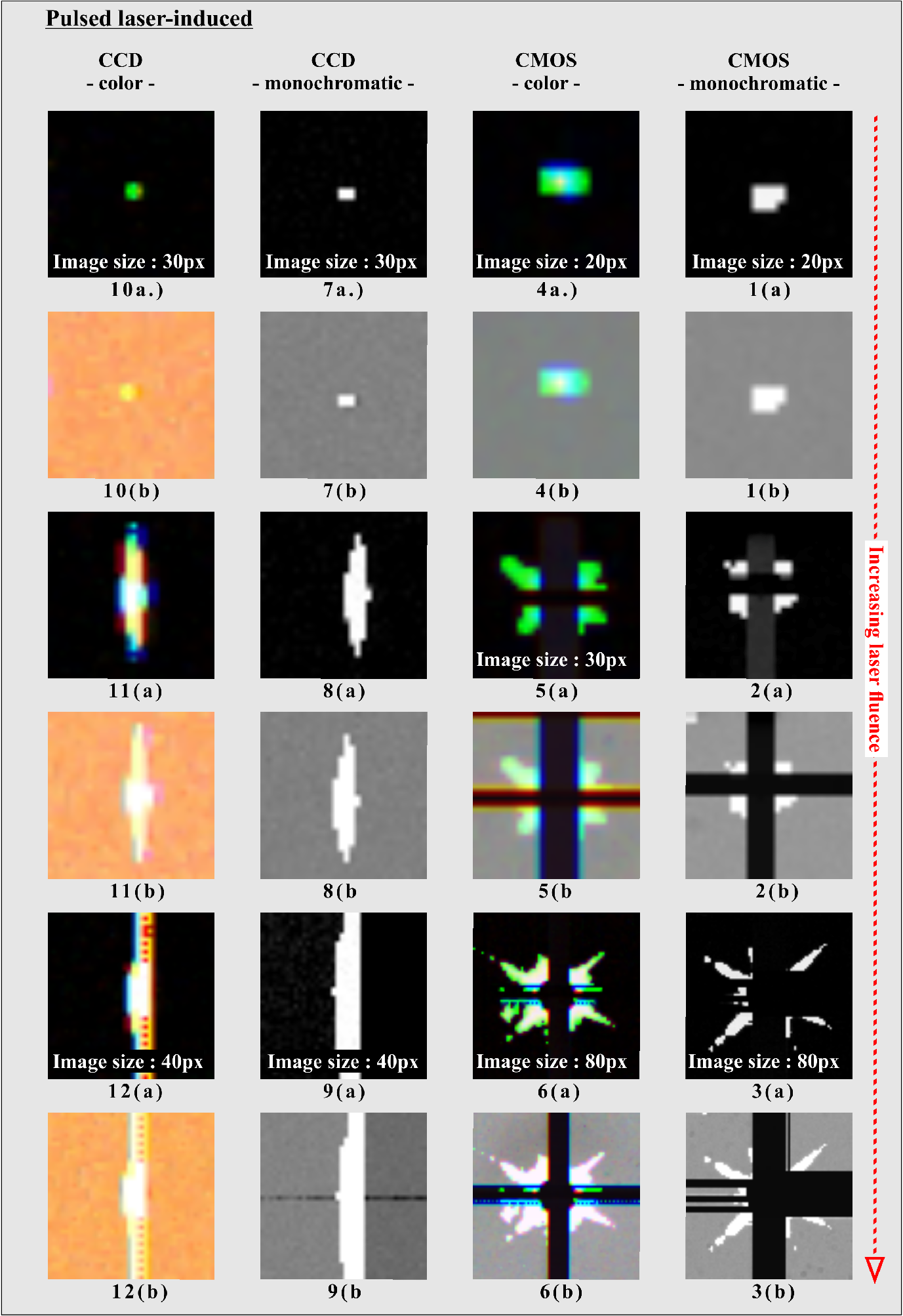
The damage isn’t always immediate or obvious. Sometimes you’ll see a faint red or green dot in the same spot in every shot, especially in bright areas. Other times, you’ll get a vertical or horizontal line of discolored pixels. That’s a sign of row/column driver damage. It’s permanent.
Damage That Only Shows Up in Specific Conditions
This is the sneaky part. A laser burn might be invisible in a standard test shot of a white wall. But take a photo of a blue sky or a softly lit portrait, and that burned spot becomes a glaring blemish. The pixel might be stuck dead, stuck on, or just have abnormal sensitivity. It messes with your editing workflow because you have to clone-stamp it out of every single image.
I had a client who shot a whole season of real estate photos before noticing the small, hot pixel in the corner of every shot. It was a laser hit from a laser measuring tool reflecting off a window. The repair cost was nearly the value of the camera. It’s a big deal.
How to Check If Your Sensor Is Damaged
Here’s a quick field test. Set your camera to manual mode. Put the lens cap on. Set a slow shutter speed (say, 2 seconds) at base ISO. Take a shot. Then take another shot at the same settings but with the lens cap off and the camera pointed at a dim, even surface like a wall (defocus heavily). Look at the image on your computer at 100% zoom.
- If you see a consistent, colored dot in the exact same spot in both images, it’s likely a stuck pixel from a laser hit. - If you see a dark cluster or a bright spot that doesn’t move, you’re looking at physical damage. - If the spot is only in one image and moves, it’s probably dust (you can clean that).
Myth-Busting: Common Misconceptions We Need to Kill
There’s a lot of bad advice floating around forums. Let’s clear it up with some hard truth from the repair bench.
- Myth: Only high-power lasers damage sensors. Truth: Even a 5mW laser can burn a sensor if the lens focuses it perfectly and the exposure is long enough. Power matters, but focus and duration matter more.
- Myth: DSLR sensors are tougher than mirrorless sensors. Truth: The physics are identical. The sensor material is the same. Mirrorless cameras have the same vulnerability. In fact, they might be more at risk because the sensor is always live.
- Myth: You can fix laser burn with pixel mapping software. Truth: Pixel mapping hides dead pixels by using neighbor data. It works for a few dead pixels. But physical burns often affect clusters or whole rows. Software can’t fix a burned transistor.
- Myth: The lens protects the sensor. Truth: The lens makes it worse. It focuses the light. A laser that would be annoying on bare skin becomes a focused surgical beam when passed through glass.
Why Remote Shutter Release Doesn’t Help
You might think, “I’ll use a remote and stay away from the camera.” Great for getting sharp shots. Terrible for laser protection. The sensor still gets hit. The remote doesn’t shield the sensor. It just lets you press the button from a distance. The laser doesn’t care where you are standing. It only cares about where the light lands.
The Truth About “Class 1” Laser Pointers
Class 1 lasers are safe for eyes under normal use. But “normal use” doesn’t include focusing them through a 400mm telephoto lens. Even a Class 1 beam, when concentrated by optics, can exceed the sensor’s damage threshold. I never recommend assuming any laser is safe around a camera. If a laser beam enters the lens, you’re gambling.
Common Questions About Laser Pointer Damage to DSLR Sensors
Can a laser pointer damage my camera sensor if I’m not pointing it directly at the lens?
Yes. Reflections are dangerous. A laser bounced off a window, a watch, or even a glossy car roof can still have enough collimated energy to enter your lens and cause harm. The beam doesn’t have to be direct. Any concentrated coherent light entering the optical path is a risk.
Is there any way to tell if a laser burned my sensor without taking a photo?
Not reliably. The damage is at the microscopic level. You can’t see it visually on the sensor surface with your naked eye. You need to take a test shot and examine it at 100% magnification on a monitor. Physical inspection under a microscope might show a tiny scorch mark, but it’s rarely visible otherwise.
Can I claim warranty or insurance for laser damage to my sensor?
Standard camera warranties do not cover physical damage from lasers. It’s considered accidental damage, user error, or an external hazard. Some camera insurance policies might cover it, but you need to check your specific terms. Don’t expect the manufacturer to replace the sensor for free. Be prepared to pay for a repair or a new body.
Does a laser pointer damage the lens itself, or just the sensor?
In extreme cases, a very high-power laser can damage the lens coatings or even the glass elements. However, the sensor is almost always the first and most vulnerable component. The lens coatings are designed to handle high energy in a distributed manner. The sensor is a black, absorbent target. The lens usually survives. The sensor usually doesn’t.
What should I do immediately if a laser beam hits my sensor?
Turn the camera off immediately. Remove the lens. Put the body cap on. Do not take more test shots. The damage happens instantly. Taking more photos won’t tell you anything useful and might expose the sensor to more risk if the laser is still present. Later, perform the sensor test I described above. If you see damage, contact a reputable repair shop for a quote on sensor replacement.
Protecting your camera from laser damage is simple in theory but hard in practice. Don’t point your lens at lasers. Don’t trust that a quick flash is safe. And if you shoot events where lasers are common, consider a laser pointer blocking filter that clips onto the front of your lens. They’re not perfect, but they reduce the risk from lower-power pointers. Your DSLR sensor is a precision tool. Treat it like one.