
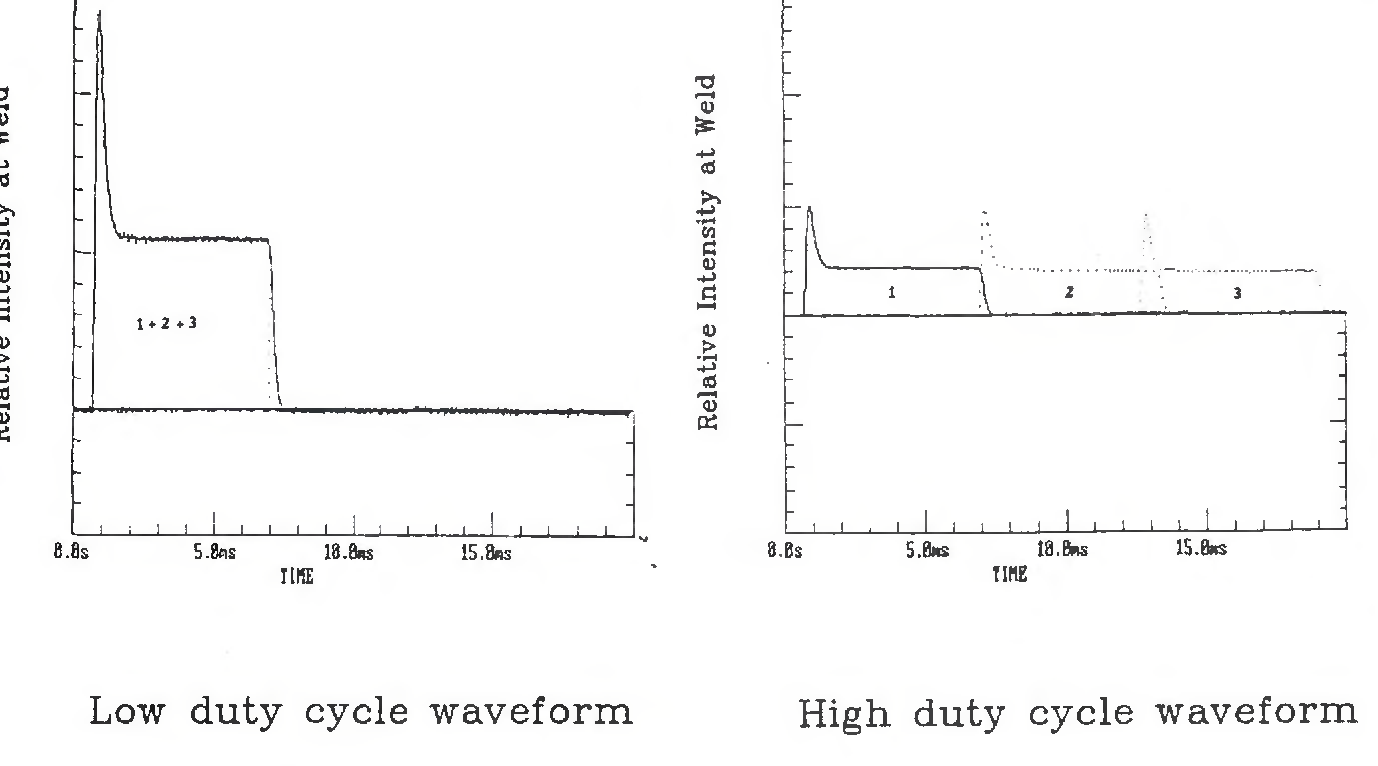
High Duty Cycle vs Low Duty Cycle Performance: The Real-World Trade-Offs
So here's the thing. I've spent over a decade staring at oscilloscopes, burning through resistors, and watching equipment fail in spectacular ways. And the one question that keeps coming up, often from engineers who should know better, is this: should I spec for high duty cycle or low duty cycle performance?
Look, I get it. The datasheets are confusing. Marketing teams love to slap "100% duty cycle" on a product and call it a day. But in the real world, duty cycle isn't just a number. It's the difference between a tool that lasts for years and one that turns into a paperweight after three months of hard use.
Let me tell you a story. A buddy of mine runs a small fabrication shop. He bought a "bargain" welder with a 20% duty cycle at max amps. For his weekend projects, it was fine. Then he took on a contract that required him to weld continuously for four hours. By lunch, the machine's thermal overload kicked in. He spent the afternoon waiting for it to cool down. He lost money. He lost the client. The lesson? Duty cycle isn't a suggestion. It's a hard limit.
Duty cycle performance dictates how long a device can operate before it needs to rest. It's the pulse of your equipment's endurance. Ignore it, and you're gambling with your productivity.
The Core Distinction: Not Just a Spec Sheet Number
Let's cut through the noise. Duty cycle is defined as the percentage of time a device can operate within a given period (usually a 10-minute window) under specific load conditions. A 60% duty cycle at its rated output means the device works for 6 minutes and rests for 4. Simple.
But here's where it gets sneaky. A device rated for a high duty cycle is designed to dissipate heat more effectively. It's got beefier components—bigger heat sinks, better fans, higher-grade insulation. A low duty cycle unit cuts corners to save cost and weight. It's a trade-off.
And honestly? Most consumer-grade tools are built for low duty cycle performance. They assume you'll use them intermittently. Professional or industrial-grade gear targets high duty cycle performance because they assume you're billing by the hour, not by the nap.
What Duty Cycle Actually Tells You
A good friend of mine is a robotics engineer. He once told me, "The spec sheet is a promise under ideal conditions." He's right. Duty cycle is tested in a lab at 25 degrees Celsius with optimal airflow. Your workshop is not a lab. It's dusty, hot, and cramped. That 60% duty cycle rating might drop to 30% in your environment.
The real metric is thermal management. Duty cycle limits are set by the maximum junction temperature of the semiconductors. Exceed that, and the silicon degrades. Permanently. High duty cycle components are chosen for their lower thermal resistance. They're built to handle sustained current draw without crying uncle.
Think of it like a marathon runner versus a sprinter. The sprinter can burst for 100 meters, but then he's done. The marathon runner can go for hours at a steady pace. A high duty cycle machine is the marathon runner. A low duty cycle machine is the sprinter. Both are valid, but you don't use a sprinter for a 10k.
The Performance Trade-Offs You Can't Ignore
Here's the kicker: duty cycle performance is inversely related to peak output. To achieve a high duty cycle, manufacturers often have to derate the maximum current or voltage. You might get a welder that can do 200 amps at 20% duty cycle, or 150 amps at 100% duty cycle. It's a choice.
Let's break down the common trade-offs:
- Cost: High duty cycle equipment is more expensive. You're paying for better materials, larger transformers, and more robust cooling systems.
- Weight: Heavier heat sinks and bigger components add pounds. A portable welder with a low duty cycle might weigh 30 lbs. An industrial unit can easily top 100 lbs.
- Durability: Components in low duty cycle devices experience more thermal cycling. They heat up, cool down, heat up again. This expansion and contraction stresses solder joints and can lead to failure over time.
- Efficiency: High duty cycle systems often run cooler, which improves electrical efficiency. Lower resistance in cooler conductors means less power wasted as heat.
- Noise: Bigger fans required for high duty cycle cooling can be loud. You're trading silence for sustainability.
Don't fall for the trap of "more is always better." If you're a hobbyist who uses a saw for ten cuts a day, a high duty cycle motor is wasted money. But if you're running a CNC plasma table for 8-hour shifts, you need that continuous rating. It's a big deal.
Real-World Implications: From the Lab Bench to the Job Site
I've seen projects fail because someone spec'd a motor with a 25% duty cycle for a continuous feed application. It ran for 90 seconds, then stopped. The entire production line came to a halt. That's a costly mistake.
The application is king. Let's talk about two scenarios.
The High Duty Cycle Hero
Imagine a conveyor system in a bottling plant. It runs 24/7. The motors need to operate at constant torque without overheating. This demands a high duty cycle motor, often rated for continuous operation (S1 duty in IEC standards). The motors are larger, have separate cooling fans, and are built with Class H insulation.
High duty cycle performance in this context means reliability over raw power. You're optimizing for mean time between failures (MTBF). A motor that can run for 10,000 hours without needing service is worth its weight in gold. You're looking at cast iron frames, precision bearings, and thermal protection built in.
In welding, a high duty cycle machine (say, 60% or more) is essential for structural steel work. You're laying down long beads. You can't stop every two minutes to let the machine cool. The cost of downtime on a construction site is astronomical. High duty cycle performance here is directly tied to your hourly profit.
The Low Duty Cycle Specialist
Now consider a portable spot welder used for auto body repair. You're making a few welds, moving the gun, making a few more. The unit sits idle for 30 seconds between welds. A 20% duty cycle is more than adequate. In fact, a high duty cycle machine here would be overkill—heavy, expensive, and unnecessary.
Low duty cycle devices excel in intermittent tasks. Think of:
- Power tools: Drills, impact wrenches, and saws. You drill a hole, then reposition. The motor cools during the pause.
- Portable generators: A small inverter generator can run a fridge during a power outage, but it can't run a continuous 15 amp load for hours. It's designed for brief, high-demand cycles.
- Home welders: The classic 110-volt MIG welder is rated for a 20% or 30% duty cycle. Perfect for fixing a trailer or building a garden gate.
The key insight here is thermal capacity. Low duty cycle equipment relies on the off-time to allow the components to cool. If you violate that off-time, you trigger the thermal overload. It's not a bug; it's a deliberate design choice to keep the unit cheap and light.
The Thermal Tango: Why Heat is the Real Enemy
Let's get technical for a second. The war is won or lost in the thermal domain. Duty cycle performance is fundamentally a heat management problem. Every electrical device has a thermal time constant—how quickly it heats up and how quickly it cools down.
A high duty cycle device is designed with a large thermal mass. Think of a massive cast-aluminum heat sink. It takes a long time to heat up, but it also takes a long time to cool down. That's why you can run it for longer periods.
A low duty cycle device has a small thermal mass. It heats up fast and cools down fast. That's fine for short bursts. But if you chain those bursts together without enough recovery time, the temperature ratchets up. Each cycle starts hotter than the last. Eventually, you hit the thermal limit.
I once saw a guy try to weld a ship's hull with a 10% duty cycle machine. He'd weld for 30 seconds, wait 4 minutes 30 seconds, weld again. It was painful to watch. The equipment wasn't the problem—it was the application mismatch. Low duty cycle performance has its place, but it's not on a ship.
How to Choose: A Practical Framework
After a decade of watching people burn up equipment, I've developed a simple heuristic. You don't need a PhD in electrical engineering to get this right. You just need to be honest about how you work.
First, identify the duty cycle factor in your specific application. Are you running the device continuously for more than 10 minutes? If yes, you likely need high duty cycle performance. If you're using it in spurts with breaks in between, low duty cycle will save you money.
Second, consider the ambient temperature. If you're working in a hot environment (like a foundry or a desert), derate the duty cycle. A device rated for 60% duty cycle at 25°C might only be good for 30% at 40°C. Manufacturers often publish derating curves. Look at them.
Third, look for thermal protection features. Even a high duty cycle machine can be overloaded if you push it beyond its rated current. A good unit has a thermal cutoff that trips before damage occurs. A great unit has an active cooling fan that ramps up with temperature.
Matching the Duty Cycle to the Job
Let's paint some scenarios:
- Professional welding: Stick welding a pipeline. You're laying beads continuously for 5-8 minutes at a time. You need a 60% or higher duty cycle at the required amperage. Anything less is a recipe for downtime. - Intermittent cutting: Using a plasma cutter to cut scrap metal. You make a cut, move the slag, make another cut. A 40% duty cycle is usually sufficient. - Continuous motor operation: A pump running a water fountain 24/7. You need a motor rated for continuous duty (S1). Zero tolerance for low duty cycle performance. - DIY use: A cordless drill for hanging shelves. You use it for 30 seconds at a time. The duty cycle is essentially irrelevant because the device cools during the pauses.
The mistake I see most often is buying on peak power alone. "This welder can do 200 amps!" Great. But at 200 amps, the duty cycle is 10%. That means 1 minute of welding, 9 minutes of waiting. If you need 200 amps for more than a minute, that machine is useless to you.
The Cost of Ignoring Duty Cycle
Let's talk money. A high duty cycle industrial spot welder can cost three times as much as a low duty cycle hobbyist unit. But if your production line depends on it, the cost of downtime is ten times the price difference. You can't afford to buy the wrong tool.
On the flip side, don't over-spec. I've seen companies buy industrial-grade high duty cycle scanners for a small warehouse that processes 50 packages a day. It was a waste of capital. The low duty cycle equivalent would have performed perfectly for years.
The smart approach is to calculate your actual duty factor. Track how long the device is actively working versus idle. If your actual duty cycle is 15%, buying a machine rated for 100% duty cycle is like buying a dump truck to move a bag of mulch.
Common Questions About High Duty Cycle vs Low Duty Cycle Performance
Can I use a low duty cycle device by simply letting it cool more often?
Theoretically, yes, but practically it's a pain. You can run a 20% duty cycle welder by welding for 2 minutes, then waiting 8 minutes. But that's inefficient. The bigger issue is that low duty cycle devices often have smaller components that degrade faster under thermal stress, even with proper cooling breaks. It's better to buy the right tool for the job.
Does a higher duty cycle always mean better quality?
Not necessarily. High duty cycle performance requires heavier components, which can make a device less portable and more expensive. Quality is about the entire design—winding insulation, bearing quality, controller robustness. A well-made low duty cycle tool from a reputable brand can outlast a poorly made high duty cycle unit. Always check the build quality, not just the spec.
How do I test the actual duty cycle of my equipment?
You can measure it with a thermal camera. Monitor the temperature of the critical component (like the rectifier or the motor windings) while running at its rated load. When it reaches the manufacturer's maximum rated temperature, stop the clock. That's your safe operating time. The duty cycle is that time divided by the total cycle time (typically 10 minutes). But honestly, if you have to test it yourself, you probably bought the wrong device.
What happens if I exceed the duty cycle rating?
First, a thermal protection circuit will likely trip, shutting the device down until it cools. If the protection fails or is bypassed, the insulation degrades. This can lead to short circuits, arcing, and catastrophic failure. In motors, you can demagnetize the magnets. In welding equipment, you can blow the IGBTs (Insulated Gate Bipolar Transistors). It's never a good outcome. You risk fire and equipment destruction.
Is duty cycle the same for all types of electrical devices?
No, the principle is universal but the standards differ. Welding equipment uses a 10-minute window. Motors use IEC 60034 duty types (S1 through S10). Power supplies use a continuous or peak rating. Always check the specific standard for your equipment class. A "100% duty cycle" in a welding machine means continuous operation at a specific current. In a motor, it means the motor can run indefinitely at its rated load without exceeding temperature limits.
The bottom line is simple. Duty cycle isn't a marketing gimmick. It's the fundamental thermal limit of your equipment. Respect it, understand it, and match it to your real-world usage. Buy a high duty cycle machine for continuous work, and a low duty cycle machine for intermittent jobs. It's the difference between working with a partner and fighting an adversary.