
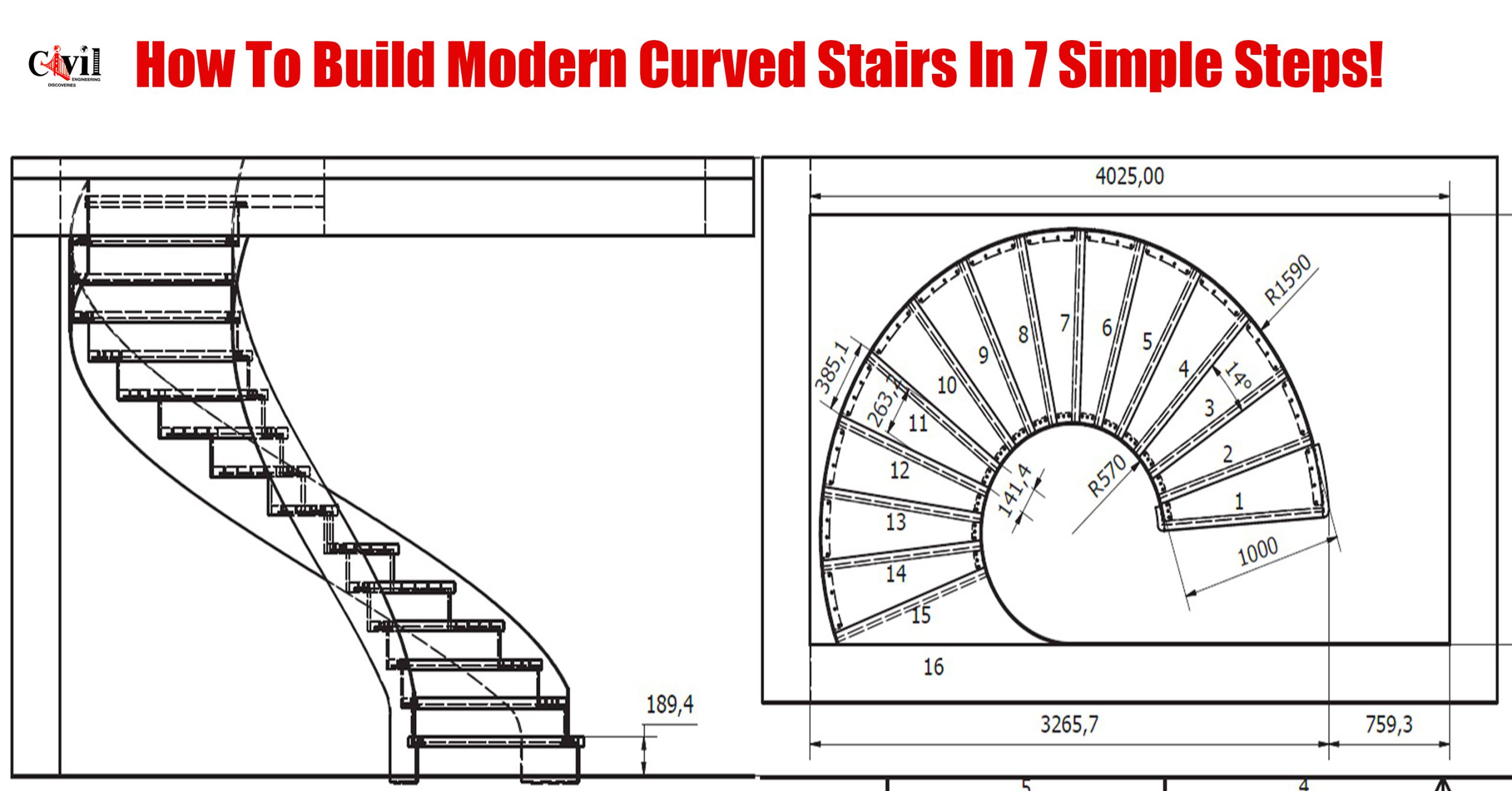
The Step-by-Step Guide to Measuring Curved Walls and Paths
Ever stood in front of a beautiful garden path or a sweeping indoor arch and thought, 'How the hell am I going to measure that?' I have. More times than I care to count. A straight tape measure feels like a betrayal when you're facing a curve. It lies to you. It gives you a chord length when you need the arc. And that mistake can cost you a full day of cutting and re-cutting materials.
Look—I've been doing this for over a decade. I've installed curved baseboard in a Victorian rotunda and laid out a winding stone path that my client swore was 'freeform' (narrator: it was not freeform; it was an ellipse with a terrible axis ratio). The truth is, measuring a curved surface isn't guesswork. It's geometry. Simple, practical geometry. You just need the right approach and the right tools.
This step-by-step guide to measuring curved walls and paths is the exact system I teach to new apprentices. It saves time. It saves material. And honestly? It saves your sanity when you're squinting at a broad radius and wondering if your eyeball is lying to you. Let's get into it.
Why Your Tape Measure Will Lie to You
You pull out your standard 25-foot tape. You stretch it across the curve from point A to point B. The reading says 12 feet. You cut your material to 12 feet. Then you try to install it and find a two-inch gap at the center of the arch. What happened?
You measured the straight-line distance (the chord). But you needed the arc length—the actual curve. That gap is the difference between a straight shortcut and the true curve. It's a rookie mistake, and I've seen seasoned contractors do it. Seriously, I once watched a guy try to force a 10-foot straight board into a 10-foot radius path. He snapped the board in half. Not my finest day as a foreman.
Here's the core concept: a curve has two key dimensions. The radius (how tight the bend is) and the arc length (the distance along the curve itself). You need both. If you only have the radius, you can calculate the arc. If you have the chord and the height of the arc (the sagitta), you can trace the curve on paper. It's not magic. It's high school math that finally becomes useful. We'll use two main methods to get this right.
The String Method: Simple, Cheap, and Surprisingly Accurate
This is my go-to for most interior curved walls and short garden paths. You need a non-stretch string or a flexible tape, a marker, and a helper (or a heavy rock). It's dead simple.
First, anchor one end of the string at the start of the curve. Press it flat against the wall or path edge. Then, carefully trace the contour with the string, keeping it flush without pulling it tight. Mark the string exactly where the curve ends. Now lay that string flat against a straight tape measure. That's your true arc length.
This method is ideal for gentle, sweeping curves where the radius is larger than your tape measure is long. It's also perfect for measuring curved paths that are made of irregular stone or pavers where you can't easily measure to a center point. The key is using a string that won't stretch at all. Nylon or polyester mason's line works perfectly. Cotton string? It's a trap. It stretches under tension, and you'll be off by a quarter-inch on a 12-foot run. Avoid it.
One pro tip: tape the string down every two feet with blue painter's tape. This prevents it from slipping or lifting off the surface as you work. For a path that's already laid, you can simply walk the string along the outer edge. For a path you're planning to build, you'll drive stakes at the start and end points and run the string along the intended curve outline.
The Chord Method: When You Need Precision
Sometimes the string method isn't feasible. Maybe the curve is too tight, or you're working on a sketch for a custom piece of stone or metal. That's when the chord method shines. You don't need to follow the curve physically. You measure two things: the chord length and the height of the arc (the sagitta).
Here's the step-by-step:
- Find the chord: Stretch your tape measure from one endpoint of the curve to the other. Record this as distance C.
- Find the sagitta: Measure the distance from the midpoint of that chord (the line you just measured) straight out to the curve itself. This is the height H. Use a carpenter's square to get a perpendicular line from the chord to the curve.
- Math it out: The radius R is ( (C/2)^2 + H^2 ) / (2H). Or, just use an online radius calculator. I keep one saved on my phone. No shame in that.
- Calculate the arc length: Once you have the radius R and the angle of the arc (which you can find using trigonometry if needed, or simply divide the chord by the radius and use some arc formulas), you have your curve mapped.
This method is incredible for measuring curved walls that are already built and covered in drywall. You can't always trust the string on a painted wall because the paint texture can throw off the string's path. The chord and sagitta method gives you a pure mathematical reading. I use it routinely for ordering custom-radius countertops and curved glass panels.
Look—I'm not going to pretend the math is fun. But the precision is worth it. If you're buying a $1,200 curved window, you want the radius to be exact, not 'about right.' The chord method is your insurance policy.
Measuring Long, Sweeping Paths Without Losing Your Mind
A garden path that arcs gently through a backyard is a beautiful thing. Measuring it accurately is a pain in the neck. The string method works for short sections, but on a 50-foot path with a complex radius, you'll end up with a tangle of string and frustration.
I learned this the hard way on a job in Marin County. The client wanted a path that mimicked a gentle river bend. It was over 80 feet long with three different radius changes. My first attempt using a single string gave me an arc length that was off by nearly a foot. The stone I ordered didn't fit. The supplier wasn't sympathetic. The lesson stuck: long paths need segmentation.
You break the path into logical sections. Look at the curve and identify where it changes direction significantly. Mark these transition points with small flags or stakes. Now measure each segment individually using either the string method or the chord method. Add the arc lengths together for your total material requirement. This approach also gives you the data you need to cut your stone, concrete, or pavers in manageable, predictable batches.
Breaking It Into Manageable Arc Segments
The golden rule for segmenting a long path is to keep each individual arc length under 15 feet. Why 15 feet? Because most flexible measuring tapes and string lines are easy to handle below that length. Beyond 15 feet, wind, gravity, and the natural curvature of the earth (yes, Earth is curved, but for your path, let's ignore that) start to introduce tiny errors.
At each segment boundary, drive a small stake. Measure the chord and sagitta for that segment. Write the numbers on a notepad immediately. Don't trust your memory. I once forgot a sagitta measurement and had to re-stake a whole section in the rain. You learn these things.
For paths with a uniform radius (like a circular driveway that sweeps a full 90 degrees), you can simplify. Measure the radius once from the center point of the circle. Then calculate the arc length for your specific angle using the formula: Arc = (Angle in degrees / 360) (2 pi * Radius). This is fast and highly accurate. But you need a clear center point, which isn't always available in a real yard with trees and sheds in the way.
If you're dealing with an existing path that's been installed poorly, pay close attention. The path might not be a perfect curve. It could be a series of straight chords with slight angles (a cheap contractor's trick). Your measurement will show sharp deviations in the sagitta from one segment to the next. Flag these as problem areas for correction.
Accounting for Slope and Grade on Landscape Curves
A path isn't just a curve in plan view. It also goes up and down. Measuring the curved path length on a slope is where most people lose their minds. A 50-foot path on a 2D drawing can be 55 feet of actual walking surface on a 15% grade.
Here's the trick: use a cloth tailor's tape or a lightweight metal rule that conforms to the terrain. You don't want a rigid tape that tries to hover over the ground. You need something that drapes. Measure along the actual ground contour, not through the air. If you measure through the air, you're measuring the horizontal projection, not the true path length. Your stone or concrete order will be short by the gradient percentage.
For extreme slopes (over 20% grade, which is steep enough to need steps or ramps), measure in two dimensions. First, measure the horizontal chord using a level line. Then measure the vertical drop with a laser level. The true path length is the hypotenuse of that triangle. This is basic Pythagorean theorem: a^2 + b^2 = c^2. It takes 30 seconds and saves you from ordering 10% too little material.
Don't forget to account for material thickness on slopes. If you're installing pavers, the running bond pattern will shift slightly on a curve combined with a slope. You might need to cut more wedges than you think. Add 5% waste to your material order for any curved, sloped path. Seriously. It's a universal rule.
The Forgotten Art of Inside vs. Outside Radius
This is the detail that separates a professional finish from a DIY disaster. When you measure a curved wall, you need to know whether you are measuring the inside face (concave) or the outside face (convex). They are not the same.
Take a 4-foot radius curve. The difference between the inside and outside face of an 8-inch-thick wall is exactly that 8 inches along the straight radial line. But the arc lengths are different. The outside face is longer. If you build a template for molding based on the inside radius and try to use it on the outside, you'll be off by several inches over a short span. It looks terrible. I've ripped out more trim pieces for this exact error than I care to remember.
Always measure the exact surface where your material will sit. If you're installing baseboard on a curved wall, measure the baseboard line. Don't measure the ceiling and assume it's the same. Walls taper. They have out-of-plumb sections. Measure the specific plane.
Why Your Baseboard Won't Fit (and How to Fix It)
A curved wall that looks perfect in drywall often has hidden lumps and hollows. When you take a single measurement at the midpoint of the wall, you're missing the local variations. Your baseboard needs to follow the wall, not an idealized mathematical curve.
The fix is to take multiple sagitta measurements along the chord. Measure at quarter points, not just the center. If the sagitta changes significantly between those points, your wall isn't a simple circular curve. It's a compound curve or an irregular freeform shape. You can't use a single radius. You'll need to scribe-fit your baseboard or create a flexible template using thin plywood and a router.
For trim carpenters, the best tool for this is a contour gauge combined with a long flexible batten. You press the batten against the wall, marking the curve onto paper or directly onto the material. This is called 'ticking' the curve. It's old-school. It's messy. It works every time. I always carry a set of aluminum battens in my truck. They're 1/8-inch thick, 2 inches wide, and 8 feet long. They bend into any curve and hold the shape while you transfer it.
The biggest mistake? Cutting the baseboard to the exact calculated arc length instead of the real-world length. A wall with a perfect 10-foot arc length on paper might actually be 10 feet and 3/8 inches in reality because of material build-up from joint compound and paint. Always verify with a string before making your final cut.
Using a Framing Square for Compound Curves
Compound curves (curves that bend in two directions at once, like a dome) are rare in typical residential work, but they happen in modern architecture. For these, you can't rely on simple chord measurements. The string method fails because the curve exists in 3D space.
Here's a practical hack: use a framing square to establish a grid over the surface. Divide the curve into a series of small squares, say 6 inches by 6 inches. Measure the height of the curve at each grid intersection point. Write the coordinates on a sheet of graph paper. Then plot those points on a 1:1 scale template. This gives you a precise contour map of the surface.
This is tedious, I won't lie. But for a custom curved stair stringer or a barrel-vaulted ceiling, there is no shortcut. You need point-by-point data. Once you have the grid, you can use thin plywood strips to physically connect the dots and create a smooth spline curve. Cut that spline, and you have your template.
For really complex surfaces, I hand the coordinates to a CNC router operator. They can convert your grid data into a tool path in minutes. That's the future. But the measuring still happens with a framing square, a sharp eye, and patient hands. No app replaces that baseline skill.
Common Questions About Measuring Curved Walls and Paths
Can I use a laser measure for curved surfaces?
Not directly. A standard laser measure gives you a straight-line distance. It can't measure the arc length. However, you can use a laser to create a perfect chord line. Set up the laser at one endpoint and a target at the other. Then use the chord and sagitta method. The laser ensures your chord line is perfectly straight and level, which improves your sagitta measurement accuracy. So yes, use a laser as a helper, not as a primary tool for the curve itself.
What is the best tool for measuring a tight curve (radius less than 2 feet)?
For tight curves, a flexible curve ruler is your best friend. It's a lead-core strip that holds any shape you bend it into. Press it against the curve, carefully lift it off, and trace it onto paper or directly onto your material. This is infinitely more accurate than trying to guess a small radius with a tape measure. I carry a 24-inch and a 36-inch flexible curve in my kit at all times.
How do I measure a curved path that has already been built with irregular stone?
Irregular stone paths are the hardest to measure accurately because the edge isn't a smooth line. The best approach is to run a string taut from the start to the end of the path (the chord). Then measure the distance from the string to the average edge of the stone at multiple points along the path. Measure at every 2 feet. Average those distances to get your sagitta for a rough arc calculation. For material ordering, add 10-15% waste to account for the irregularity. Don't try to match every stone exactly—it's impossible.
Is it better to over-measure or under-measure a curved wall?
Always over-measure for material ordering and under-measure for final cutting. When ordering stone, concrete, or long trim pieces, add 10% to your calculated arc length. You can always cut off extra. You can't add material back. When you make your final cut on a trim piece or paver, cut slightly long and then creep up to the exact fit using a sander or a file. This is the golden rule of carpentry: measure twice, cut once, and leave room for adjustment.
That's the entire system. String for simple curves, chord method for precision, segmentation for long runs, and multiple measurements for slopes and complex forms. It's not glamorous work. But it stops you from standing in a hardware store parking lot at 6 PM on a Saturday, realizing you're two feet short on stone because you trusted a straight tape on a curved path. Learn this, and you'll never dread a curve again.