
How to Use a Magnet to Identify Material Properties
I remember my first day in a metal shop, way back when I was a green apprentice. The old-timer, a guy named Frank who smelled like cutting oil and coffee, tossed me a chunk of steel and a little ceramic magnet. 'Tell me what it's made of,' he said. I just stared at him. It felt like magic. But here's the thing: it's not magic. It's physics, and it's incredibly practical. You don't need a $50,000 spectrometer to figure out what a material is. Seriously, sometimes all you need is a magnet to identify material properties.
Look—if you work in fabrication, construction, or just tinker in your garage, you've probably grabbed a piece of metal and wondered, 'Is this stainless steel or plain steel? Is this brass or bronze?' Honestly? Most people overthink it. They reach for grinders or acid tests. But a simple magnet test, when done correctly, tells you volumes. It's fast. It's cheap. And it's brutally honest. It won't lie to you.
But you have to know how to interpret the results. Not every magnetic response means the same thing. A strong pull might indicate pure iron, while a weak, hesitant grab might mean you're holding a specific grade of stainless steel. Over the years, I've used magnetic testing to sort scrap piles, check for counterfeit alloys, and even diagnose why a weld failed. This isn't just theory. It's a daily, hands-on skill.
So let's ditch the mystery. I'm going to walk you through exactly how to use that little magnetic tool in your drawer. We'll cover the science without the headache, the technique without the fluff, and the real-world applications that save you time and money. Grab a magnet. Let's get to work.
The Science Behind the Stick: Why Magnets Even Work
Before we start sticking magnets to everything in sight, let's talk about why this trick works. It all comes down to the electrons inside the material. In simple terms, ferromagnetic materials like iron, nickel, and cobalt have electrons that line up and create a strong internal magnetic field. That's why a magnet sticks hard. Paramagnetic materials (like aluminum or titanium) have electrons that don't align, so they barely respond. And diamagnetic materials (like copper or wood) actually repel a magnetic field, but so weakly you'd never feel it with a cheap magnet.
I know, I know. You didn't sign up for a physics lecture. But understanding this helps you avoid a classic mistake: assuming that 'non-magnetic' means 'low quality.' It doesn't. Take austenitic stainless steel (like 304 or 316). It's mostly non-magnetic because of its crystal structure. But work it hard—bend it, beat it, cold roll it—and it can become slightly magnetic. It's a big deal. That change in magnetic response tells you the material has been stressed or cold-worked. That's actionable data.
Here's a simple way to think about it. The pull you feel is a direct measure of the material's magnetic permeability. It's the material's ability to support the formation of a magnetic field within itself. A high permeability material (like electrical steel) will practically yank a magnet out of your hand. A low permeability material (like lead) won't even flinch. This isn't just a yes-or-no test. It's a spectrum.
And don't even get me started on the thickness factor. A thin sheet of iron will feel weaker than a thick block of the same material, simply because there's less mass to interact with the field. Trust me on this: always compare apples to apples. Don't test a 1mm thick shim and expect the same pull as a 25mm thick plate. That's just common sense.
Ferrous vs. Non-Ferrous: The Instant Classification Trick
This is where the rubber meets the road. The fastest thing a magnet to identify material properties tells you is whether you're dealing with a ferrous (iron-based) or non-ferrous material. Grab your magnet. Touch it to the metal. If it sticks with a firm, solid grip, you're almost certainly looking at carbon steel, cast iron, or some type of iron alloy. Congratulations—you've just classified it instantly.
But what if it doesn't stick? That's where the fun begins. A complete lack of attraction means you're likely holding aluminum, copper, brass, bronze, lead, or a high-grade austenitic stainless steel. Each of those has a very different personality. Aluminum is light and usually has a gray-white color. Copper is reddish. Brass is yellowish. Lead is heavy and soft. The magnet gave you the first clue; now your eyes and hands finish the job.
I've watched guys spend hours trying to sort a mixed bin of scrap with their eyes alone. But with a magnet and a checklist, they can do it in twenty minutes. Honestly? The efficiency gain is massive. The magnetic sorting process is the single most underrated time-saver in any metalworking shop. It separates the valuable copper windings from the steel cores in motors, and it pulls the iron contamination out of aluminum recycling streams.
One warning: don't trust a $1 fridge magnet for heavy-duty work. The cheap ones have weak fields. Spend a few bucks on a rare earth neodymium magnet. Those things are monsters. They can 'feel' through a layer of paint or rust, and they'll give you a much more definitive answer on borderline materials. It's the best investment you'll ever make for material testing.
Reading the Response: Strong Pull, Weak Pull, and the In-Between
Now let's get into the nuance. A strong, aggressive pull doesn't just say 'ferrous.' It says 'high carbon content,' or 'pure iron,' or 'low alloy steel.' Think of a piece of rebar—it practically jumps for the magnet. Now test a piece of hardened tool steel. The pull is there, but it's maybe 80% as strong. The alloying elements (chromium, vanadium, tungsten) dilute the iron's response. That difference is your first clue to the material's chemistry.
Then you have the weak pullers. This is the tricky territory. A magnet that slides off slowly or barely holds its own weight often points to magnetic stainless steel grades like 409, 410, or 430. These are ferritic or martensitic stainless steels. They contain chromium but still have enough iron in their crystal structure to be attracted. You'll find 409 in automotive exhaust systems. It's cheap, it's magnetic, and it's not as corrosion-resistant as 304. The magnet test keeps you from confusing the two.
I once had a customer insist he was buying 316L stainless for a marine application. I pulled out my magnet, touched it to his material, and it stuck like glue. 'My friend,' I said, 'this is 430, or maybe even plain galvanized steel.' He argued. We ran a spark test. He lost the argument. The magnetic identification caught a potentially expensive and dangerous mistake. Never underestimate the power of a simple pull test
And what about that strange in-between response—the one where the magnet slides slowly down the surface like it's thinking about it? That's usually a sign of cold-worked austenitic stainless. You can actually use this to check if a stainless part has been bent or formed. A flat sheet of 304 might show zero attraction. But a sharp, 90-degree bend in that same sheet? That bend line will grab a magnet. It's a free quality-control check that anyone can do.
Practical Steps: How to Run a Reliable Magnet Test
Alright, enough theory. Let's get our hands dirty. Here's exactly how I run a magnet test for material identification on the shop floor. It's not complicated, but there's a technique to it. If you just slap a magnet on the surface and shrug, you'll miss half the story. Follow these steps, and you'll get reliable, repeatable results every time.
First, clean the surface. A layer of grease, paint, or rust can physically separate the magnet from the metal. That gap kills the magnetic field strength. It's like trying to hear a whisper through a wall. Use a wire brush or some sandpaper to get down to bare metal. You don't need a mirror finish, just a solid metallic contact. Then, use a strong rare-earth magnet. The little black ones from the hardware store are worthless for this.
Next, don't just test the middle. Test the edges, test corners, test any area that might have been cold-worked or heated. The magnetic response can vary across a single piece. I always start with a simple 'lift off' test: place the magnet on the surface and pull it straight up. Feel the resistance? That's your baseline. Then try a 'slide test': tilt the magnet and slide it across the surface. A strong ferrous material will drag with a gritty, strong resistance. A weak one will slide smoothly.
Compare your results against known standards. Keep a few samples of known materials in your toolbox—a piece of carbon steel, a piece of 304 stainless, a piece of aluminum. Test those first to calibrate your hand. You're building a reference library in your muscle memory. It sounds silly, but it works. After a few weeks, you'll be able to guess the alloy family with 90% accuracy just by the feel of the magnetic attraction.
Finally, document your results. I use a simple code: S for strong pull, W for weak pull, N for no pull. If the material is thin, I add a 'T' note. If it shows variation across the part, I mark that too. This isn't rocket science, but it keeps you honest. And when you use magnetic testing alongside a file test or a spark test, you've got a low-budget materials lab right in your hands.
Common Materials and Their Magnetic Signatures
Let's build that mental cheat sheet. Here are the materials you encounter most often, and exactly what your magnet will tell you. Mild steel (A36): strong, immediate pull. It's the baseline. Cast iron: strong pull but often feels a bit 'grittier' because of the graphite flakes. Tool steel (D2, A2): moderate to strong pull, often slightly less than mild steel due to alloy content.
Then we hit the stainless family. 304 and 316 (austenitic): usually no pull in the annealed state. But if it's been bent or machined heavily, you might get a weak, localized pull. 409 and 430 (ferritic): moderate to strong pull. These are 'magnetic stainless' and are common in exhaust systems and kitchen sinks. 410 (martensitic): strong pull. This is a hardenable stainless, often used for cutlery and valves.
Now the non-ferrous stuff. Aluminum: no pull. Ever. Period. Copper: no pull. But here's a trick—if you drop a magnet through a thick copper tube, it falls slowly. That's eddy current braking. Fascinating, but not useful for identification. Brass and bronze: no pull. But note that some 'brass' items have steel cores or steel fasteners. You'd be amazed how many cheap faucets have a steel insert hidden under the brass plating. The magnet catches that every time.
And the oddballs. Nickel alloys (like Monel): usually some pull, but it's weak. Nickel itself is ferromagnetic, but most commercial nickel alloys are designed to be non-magnetic. Zinc die-cast: no pull. Very heavy for its volume, with a dull gray finish. Lead: no pull. Heavy, soft, easy to scratch. If you're working with these, the magnet to identify material properties is your first filter, not your last.
When the Magnet Lies: Limitations You Need to Know
Look—I love magnets, but they are not infallible. There are situations where the test gives you a false positive or a misleading negative. Let's talk about those so you don't get burned. The biggest lie is the 'non-magnetic' stainless that is actually magnetic. If you take annealed 304 and cold roll it hard, it can become ferromagnetic. I've seen whole sheets that were 'wrong.' It wasn't the wrong material; it was just processed wrong.
Another pitfall: plating and coatings. I once tested a part that looked like brass. The magnet stuck. I thought I was losing my mind. Turns out it was a steel bracket with a thick brass plating. The magnet felt the steel through the plating. The lesson is clear: test on an edge or a scratch where you can see the base metal. Don't test on a painted or plated surface and assume the magnet is talking about what you see.
Thickness also plays tricks. A very thin sheet of steel might not give you the strong pull you expect, simply because there isn't enough mass to channel the magnetic flux. Think about it—a magnet can lift a 1-inch steel block, but it might struggle with a 0.01-inch foil. That doesn't mean the foil isn't steel. It means your test needs to be calibrated for the geometry. Use a stronger magnet for thin sections.
Finally, temperature can change things. Heat a piece of steel above its Curie temperature (around 770°C for iron), and it becomes non-magnetic. Instantly. If you're testing something that was recently welded or heat-treated, let it cool. A hot piece of mild steel will fool you into thinking it's stainless. I've seen this happen with welding rods—a hot rod sticks to a magnet weakly, but a cold rod from the same batch grabs hard. Always test cold material.
Real-World Applications: From Scrap Yards to Aircraft Maintenance
So where does this skill actually matter? Everywhere, honestly. But let me give you a few concrete examples from my career. In the scrap metal industry, sorting is everything. Copper is worth ten times what steel is. But if you have a motor assembly with copper windings around a steel core, you can't just throw it in the copper bin. A magnet to identify material properties lets you quickly determine which parts are ferrous and which are not, saving you from loss or contamination fines.
In welding and fabrication, identifying the base metal is critical for choosing the right filler rod. I've been on job sites where a crew was supposed to weld stainless to mild steel. They ran a magnet test on the 'stainless' pipe and got a strong pull. It was actually a low-alloy steel pipe that someone's supplier mislabeled. If they had welded it with standard stainless filler, the weld would have cracked under load. The magnet test prevented that disaster.
In the fastener industry, counterfeit bolts are a real problem. You order a batch of 316 stainless bolts for a marine deck. They show up looking good. But a magnet test reveals they're slightly magnetic. That could mean they're cheaper 410 stainless or even plated steel. A material mix-up here could mean catastrophic corrosion failure in a year. The magnet test is a zero-cost way to catch fakes before they go into your project.
In hobbyist work, I use a magnet constantly. When I'm restoring an old car or tractor, and I find a broken bracket, I need to know if it's cast iron (which requires a special weld) or mild steel. The magnet test is my first check. It takes two seconds and stops me from making a stupid mistake. Honestly? Anyone who works with metal should carry a magnet in their pocket. It's the most underrated tool in the box.
Combining the Magnet Test with Other Simple Tests
The magnet test is powerful, but it's even better when you pair it with other quick checks. Here's your multi-tool arsenal. Use the magnetic signature as your first filter, then reinforce it with the spark test. Run the metal against a grinder. Low-carbon steel gives long, bright sparks. Cast iron gives short, dark red sparks. Stainless steel gives thin, forked sparks. Each spark pattern corresponds to what the magnet already told you.
The file test is another great partner. A sharp file will bite into mild steel easily. It will skate off hardened steel or tool steel. It will dig deep into aluminum. The hardness you feel from the file, combined with the magnetic response, gives you a much clearer picture. For example, a magnetic material that the file skates off is probably hardened tool steel. A non-magnetic material that files easily is probably aluminum.
Then you have the weight test. Heft the piece in your hand. Aluminum feels light. Steel feels heavy. Lead feels very heavy. Copper is heavy and has a distinct color. This tactile feedback, mixed with the magnetic identification, is almost always enough to pin down the material family. I do this without thinking after years of practice. It becomes automatic.
But don't ignore the simple act of scratching the metal. A stainless steel scratch will look bright and shiny. A mild steel scratch will rust quickly in the air. A brass scratch will show a golden color. You're building a case, piece by piece. The magnet is the lead detective. The other tests are the supporting witnesses. Use them all, and you'll rarely be wrong.
Common Questions About Using a Magnet to Identify Material Properties
Can a magnet identify all types of metal?
No, absolutely not. A magnet is excellent for identifying ferrous metals (iron, steel, nickel, cobalt) and for distinguishing ferrous from non-ferrous materials. But it cannot tell you if you have pure copper versus a copper alloy like brass or bronze. It also cannot measure alloy percentages. Think of it as a high-speed, low-resolution filter. It gives you a category, not a chemical analysis.
What kind of magnet should I use for material testing?
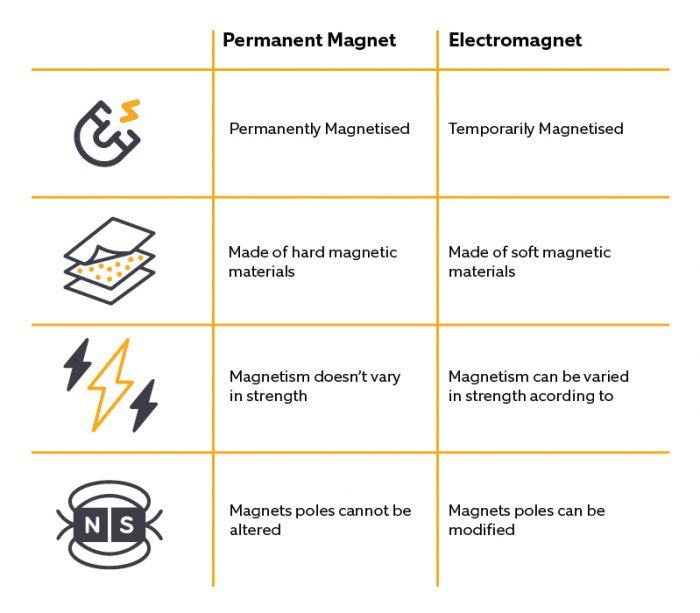
Invest in a rare-earth neodymium magnet. These are small, cheap, and incredibly powerful. A standard fridge magnet is too weak to reliably test heavier pieces or materials with borderline permeability. I carry a 1-inch diameter neodymium disc in my tool pouch. It costs about five dollars and will last forever. Avoid using an electromagnet, as the battery can die or give inconsistent results.
Why does some stainless steel stick to a magnet and some doesn't?
It comes down to the crystal structure of the alloy. Austenitic stainless steels (304, 316) have a face-centered cubic structure that is non-magnetic. Ferritic (409, 430) and martensitic (410, 420) stainless steels have a body-centered cubic or tetragonal structure that is magnetic. Cold working can also cause some austenitic grades to partially transform into a magnetic structure. So the magnet test can tell you about the grade and the processing history.
Can I use a magnet to test for material hardness?
Not directly. The magnet test only measures magnetic permeability. However, in some cases, a change in magnetic response can indicate a change in hardness. For example, if you have a piece of steel that is normally strongly magnetic, and a section near a weld is less magnetic, that area might have been heat-affected and softened or hardened. It's an indirect indicator, not a replacement for a hardness tester.
Is the magnet test reliable for detecting counterfeit metals?
It's a great first line of defense. If someone sells you 'non-magnetic' stainless steel and your magnet sticks hard, you have a clear red flag. It's not definitive proof of counterfeiting, but it's strong circumstantial evidence. I've used it to catch counterfeit bolts, mislabeled pipes, and fake tool steel blanks many times. It's not foolproof, but it's shockingly effective for the low cost.
So there you have it. A simple magnet, used with a little bit of knowledge and a consistent technique, becomes a powerful diagnostic tool. It's not the only test you'll ever need, but it's often the first and fastest one. Keep your magnet handy, trust your hands