
Calculating 3-Phase Power in Industrial Systems
Let me paint you a picture. I'm standing in a control room outside Houston, staring at a panel that's humming just a little too loud. The maintenance lead looks at me and says, 'We think it's a phase imbalance, but we're not sure.' I pulled out my clamp meter and started running the numbers. Within ten minutes, I had the culprit: a loose connection on Phase B, dropping the voltage by nearly 7%. The motor was pulling excess current on the other two phases, and the power bill was about to get ugly.
That day cemented something for me. You cannot manage what you cannot measure. And when it comes to calculating 3-phase power in industrial systems, you better measure right. The math isn't hard. The reality? That's where things get spicy.
If you're running pumps, compressors, conveyors, or entire factory floors, three-phase power is the backbone. But the formula you learned in school? It only covers the ideal case. Let's talk about what actually happens when the rubber meets the road.
The Core Formula and Why Most People Get It Wrong
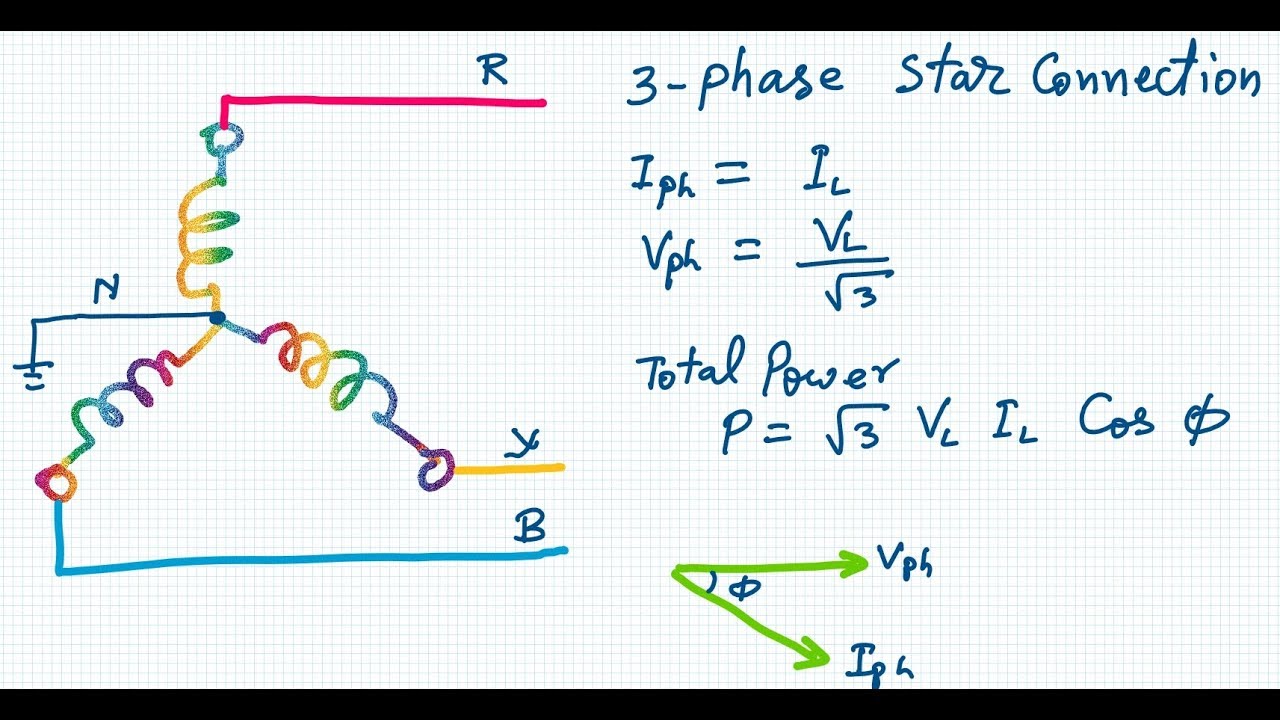
The textbook formula for three-phase power is deceptively simple: P = √3 × V × I × PF. Voltage times current times power factor, multiplied by the square root of three. Looks clean. Looks easy.
Here's the problem. That formula assumes a perfectly balanced load —all three phases drawing identical current with identical phase angles. In the real world? Hardly ever. I've walked into facilities where Phase A was carrying 80 amps, Phase B was at 64 amps, and Phase C was at 92 amps. The motor was still running. The lights were still on. But the system was bleeding energy through harmonics, heat losses, and neutral current.
Honestly? If you plug the average voltage and average current into that formula without checking balance, you're guessing. Not estimating. Guessing.
Look—when I teach this to plant engineers, I always start with a simple rule: measure every phase individually. Always. Then use the two-wattmeter method for real-world accuracy. That method gives you total real power without assuming anything about balance. It's been around for decades, and it still works like a charm.
The Difference Between Apparent, Real, and Reactive Power
This is where the terminology trips people up. You'll see kW, kVA, and kVAR on your equipment tags and your utility bill. They are not the same thing. Not even close.
Real power (kW) is the work being done. It's the power that turns the shaft, heats the element, or lights the bulb. This is what you pay for on most industrial tariffs. When you're calculating 3-phase power in industrial systems, the real power is your bottom line.
Apparent power (kVA) is the total power the system must supply, including the wasted component. Think of it as the gross power before losses. Your transformer rating is in kVA. Your generator rating is in kVA. But your process cares about kW.
Reactive power (kVAR) is the sloshing back and forth between inductive loads (motors, transformers, ballasts) and the source. It doesn't do useful work, but it still heats up conductors and eats up capacity.
I once audited a plant where the power factor was 0.62. Seriously. The utility was charging a penalty so large it covered the cost of a full capacitor bank installation in under eight months. The plant manager had no idea. He was just reading the kW numbers. He wasn't calculating 3-phase power correctly.
Why Power Factor Is the Silent Killer in the Formula
Power factor is the ratio of real power to apparent power. It's expressed as a decimal between zero and one. For most industrial systems, you want it above 0.90. Anything below that, and you're paying for power you can't use.
Here's the kicker. Power factor changes with load. A motor running at full load might have a PF of 0.85. That same motor running at 30% load might drop to 0.60. If you're only measuring at full load, you're missing the full picture.
When I train teams on calculating 3-phase power in industrial systems, I always tell them to capture PF under multiple loading conditions. Log it. Trend it. A sudden drop in power factor often indicates something failing—bad bearings, misalignment, or even a rotor bar issue. It's a diagnostic signal hiding in plain sight.
Real-World Measurement Techniques That Actually Work
You can't calculate what you don't measure accurately. And believe me, I've seen more bad data from cheap meters than from failing motors. Invest in a quality true-RMS clamp meter. Not the $50 special from the hardware store. A real one that handles harmonics and captures crest factors.
The process is straightforward. Set your meter to measure voltage line-to-line. Record all three pairings: AB, BC, CA. Then measure current on each phase: A, B, C. Then measure power factor if your meter supports it. If not, you can calculate it from real power and apparent power.
Now you have the raw data. From here, calculating 3-phase power becomes a matter of choosing the right method.
The Two-Wattmeter Method for Unbalanced Loads
This method uses two wattmeters connected to any two phases, with the voltage reference taken from the third phase. You add the readings. That's your total real power. No assumptions about balance needed.
I use this method every single time I audit a system with multiple motor starters or variable frequency drives. It catches issues that the simple formula misses. For example, if one phase has significant harmonic content, the standard formula can give you a power reading that's 5% to 10% off. The two-wattmeter method stays accurate.
For industrial folks who want to go deeper, you can also use the three-wattmeter method. It requires a bit more hardware but gives you per-phase power. That's gold for troubleshooting. You can see exactly which phase is dragging down the system.
How to Handle Variable Frequency Drives and Non-Linear Loads
VFDs change everything. They chop up the sine wave into pulses, creating harmonics that confuse standard meters. If you're calculating 3-phase power in industrial systems with VFDs, you need a meter that measures true power even with distorted waveforms.
I learned this the hard way. Early in my career, I measured a VFD-fed motor using a basic averaging meter. The current reading was 45 amps. I swapped to a true-RMS meter and got 62 amps. The motor was fine. The meter was the problem.
For VFDs, measure at the input side (line side) if you want total system power. Measure at the output side (motor side) if you want motor power. They won't match. The drive itself consumes some power and introduces losses. That's normal. But if the difference exceeds about 5%, you might have a drive issue.
The Importance of Current Transformers and Scaling
For large systems, you can't always clamp directly around the conductor. The cables are too big, or the voltage is too high. That's where current transformers (CTs) come in. But here's the trap: CTs have ratios, and if you mess up the scaling, your power calculations are worthless.
I once saw a technician use a 600:5 CT but set his meter to 400:5. He thought the current was 500 amps. It was actually 375 amps. That's a 33% error. When you multiply that by voltage and power factor, the power error compounds.
Always verify the CT ratio. Always check the phase relationship between voltage and current. If the CT is wired backwards, your power factor reading will be inverted. The motor will show leading power factor, which is almost impossible for an induction motor. That's a dead giveaway something is backwards.
Common Errors That Destroy Accuracy
Over the years, I've compiled a mental list of the most frequent mistakes I see when people are calculating 3-phase power in industrial systems. Some are simple. Some are embarrassing. All of them waste money.
- Using line-to-neutral voltage instead of line-to-line voltage in the formula. This alone can double your error. - Forgetting that the square root of three (approximately 1.732) only applies to balanced systems. - Measuring voltage at the panel but current at the motor. The cable drop between them changes the numbers. - Assuming power factor stays constant across different loads. - Using a meter that isn't rated for the harmonic content of modern drives.
I could go on. Honestly? The most common error is not measuring at all. People rely on nameplate ratings or design specs. Those numbers were true on the day the equipment was built. They mean nothing today.
How to Triple-Check Your Work
After you've done your measurements, run a sanity check. Calculate the total apparent power using the simple formula. Then calculate it using the individual phase measurements. If they differ by more than 5%, you have a problem. Either your meter is lying, your connections are loose, or your load is significantly unbalanced.
I always cross-validate using a second method. If I used the two-wattmeter approach, I'll also calculate from voltage and current and compare the results. The numbers should be close. If they're not, I dig deeper.
Another quick check: measure the neutral current in a wye system. For a perfectly balanced three-phase load with no harmonics, the neutral current should be near zero. If you're seeing significant neutral current, your three-phase power balance is off. And that imbalance costs you in efficiency and equipment life.
The Relationship Between Voltage Drop and Power Loss
Voltage drop isn't just a code requirement. It's a direct hit to your system efficiency. If you have a 5% voltage drop from the transformer to the motor, you lose 5% of the available power as heat in the conductors. That heat doesn't do useful work. It just makes your cooling system work harder.
When I do power audits, I always check voltage at the source and at the load. The difference tells me how much power is being wasted in the distribution system. In one facility, I found a 12% voltage drop on a long feeder run. The cable was undersized. They replaced it, and the motor current dropped by 8%. The payback period was four months.
This is why calculating 3-phase power in industrial systems isn't just an academic exercise. It's a financial tool. Every watt you waste is a dollar you don't need to spend.
Practical Scenarios You'll Encounter
Let me walk you through three real situations I've handled. Each one illustrates a different challenge.
Scenario One: The Confusing Motor Startup. A plant had a 200 HP motor that kept tripping the overload relay. The maintenance team assumed the motor was bad. I measured the full-load current, and it was within 2% of the nameplate rating. But I also measured the voltage drop during startup. It was 14%. The supply transformer was too small. The motor wasn't the problem. The infrastructure was.
Scenario Two: The Mysterious Power Bill Spike. A food processing plant saw their electric bill jump 30% in one month. Nothing had changed in production. I clamped every major load. One phase on the main distribution panel was reading 50 amps higher than the other two. A corroded connection on the bus bar was creating resistance, which generated heat and drew more current. The fix was a two-hour shutdown and a torque check on every bolt. The bill dropped back to normal the next month.
Scenario Three: The Harmonic Nightmare. A data center had UPS systems and VFDs running side by side. The neutral current was 80% of the phase current. The transformers were buzzing. The ground fault indicators were flickering. Standard power calculations showed the load was fine. But the harmonics were so high that the neutral conductor was overloaded. We had to install a harmonic filter and re-run some conduit runs. This is a prime example of why basic calculating 3-phase power isn't enough. You need to understand the quality of that power, not just the quantity.
When to Call in a Power Quality Analyzer
A handheld meter is great for spot checks. But if you're seeing recurring issues—tripping breakers, overheating cables, flickering lights, or unexplained failures—you need a power quality analyzer. These devices log voltage, current, power, harmonics, and transients over time.
I once left a power quality analyzer on a panel for a week. The data showed a 2-second voltage sag happening every 48 hours. It was coming from a neighboring tenant starting a large compressor. The sag was brief enough to go unnoticed by operators but long enough to reset a PLC. The downtime cost was astronomical. The fix was a small ride-through device that cost less than one hour of lost production.
The point is this: calculating 3-phase power in industrial systems at a single moment gives you a snapshot. Logging it over time gives you the movie. You need both.
Common Questions About Calculating 3-Phase Power in Industrial Systems
What happens if I don't account for power factor in my calculations?
You'll overestimate the real power your system can deliver. Your apparent power (kVA) might be fine, but your usable power (kW) will be lower. This leads to undersized transformers, overloaded generators, and unexpected utility penalties. Every industrial facility should track power factor monthly at minimum.
How do I measure power on a system with unbalanced loads?
Use the two-wattmeter method. It gives you accurate total real power even when the phases are unbalanced. You can also measure each phase individually and sum the results, but the two-wattmeter method is more reliable and requires less equipment. Always verify by checking the neutral current.
What's the difference between measuring at the motor and measuring at the panel?
The voltage at the motor is almost always lower than at the panel due to cable resistance and connection losses. The current might be higher because the motor compensates by drawing more amps to maintain torque. If you want to know what the motor is actually experiencing, measure at the motor terminals. If you want to know what your utility is billing you, measure at the main service entrance.
Can I use the same formula for wye and delta configurations?
Yes, the formula P = √3 × V × I × PF works for both wye and delta systems, provided you use the correct voltage. For wye systems, you typically measure line-to-line voltage. For delta systems, also measure line-to-line. The line current and phase current relationship is different, but the total power formula remains the same because the √3 factor accounts for the configuration.
How often should I recalculate power consumption for my industrial system?
At minimum, quarterly. But for critical systems or systems with variable loads, monthly is better. I recommend setting up permanent power monitoring on any load above 100 HP. The data pays for itself in energy savings and failure prevention. If you see a sudden change in power factor or current draw, investigate immediately.