
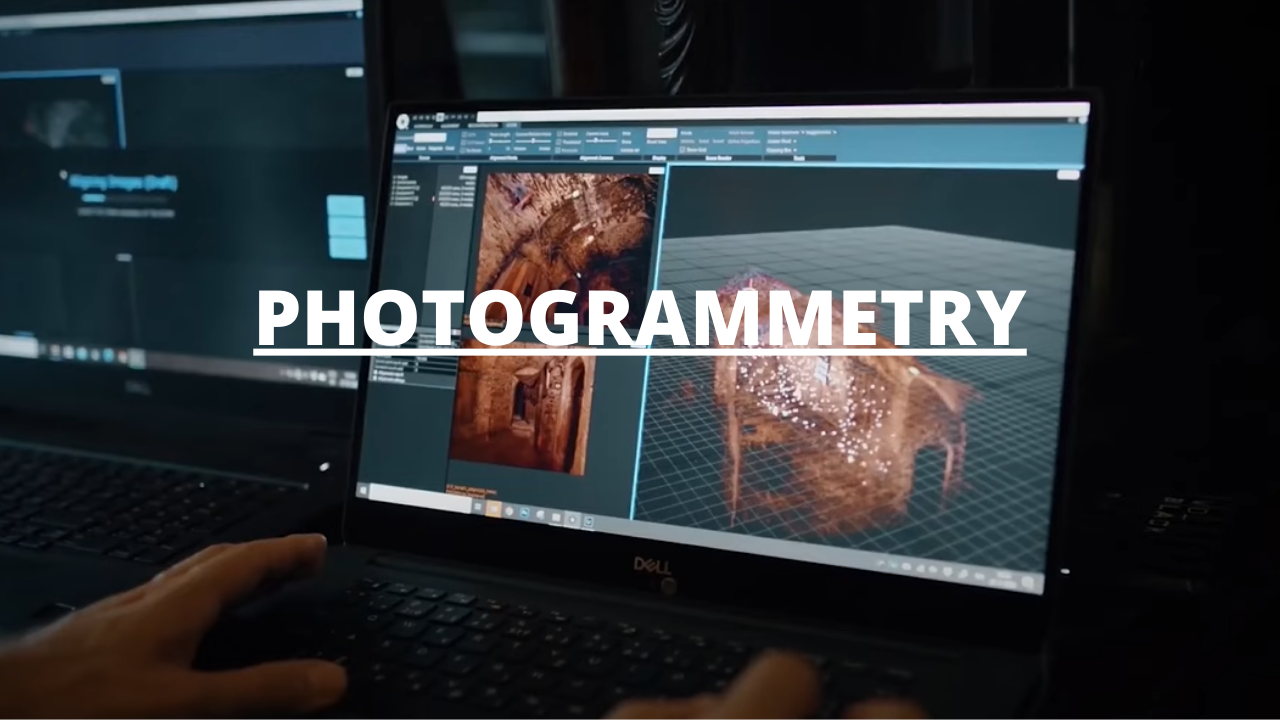
Are 27 Pictures Enough for High-Quality Photogrammetry?
Look—I’ve been doing this for over a decade. I’ve seen pharaohs scanned from dusty museum basements and crash scenes reconstructed for courtrooms. And every time a new client or a junior artist asks me that question—'Is 27 pictures enough?'—I have to bite my tongue. Because the honest answer is a maddening 'It depends.'
Seriously though, the number 27 has become some kind of urban legend in photogrammetry circles. I blame outdated tutorials and forum posts from 2014. People treat it like a magic threshold. Take exactly 27 photos, and boom—perfect model. That’s nonsense. High-quality photogrammetry isn't about hitting a specific number; it's about how those images capture the subject's geometry and texture. I've made museum-grade models with 14 images, and I've failed spectacularly with 80. Let me explain why.
The Magic Number Fallacy: Why 27 Is a Dangerous Assumption
I blame the early Structure-from-Motion papers. They often used datasets of 24 to 30 images for small-scale objects. That got repeated until it became dogma. But those were controlled lab conditions with perfect lighting and a stationary subject. Real-world photogrammetry is a beast of chaos.
Coverage vs. Overlap: The Silent Killer
Here's where most people get tripped up. They take 27 photos but they're all from the same hemisphere of the object. Think about it—if you shoot 27 frames of a statue's face from the front, you've got zero data on the back of the head. The software can't just guess. It needs at least a 60-80% overlap between adjacent images. Without that, the algorithm can't triangulate points. I've seen a model fail because someone took 40 photos but only changed the angle by 5 degrees each time. Complete waste of time.
Honestly? You could get away with fewer images if you nail that overlap. I once did a high-quality photogrammetry scan of a ceramic vase using only 18 photos. But those 18 were shot in a perfect spiral pattern—covering every latitude and longitude of the object. The key is uniform coverage. If you have gaps in your data, it doesn't matter if you took 27 or 270. The software will either fail to align or produce a hole-ridden mesh.
Subject Geometry and Texture Play a Massive Role
A flat wall? You can photograph that with 3 images and get a perfect orthomosaic. A reflective chrome sphere? You could take 500 images and still get garbage. The complexity of your subject's surface determines how many photos you need. High-quality photogrammetry works best on matte, textured surfaces with lots of detail. When I scan a human face, I usually need 50-70 images to capture the subtle contours of the nose and eyelids. For a simple rock? I can do it with 12.
The biggest mistake people make is assuming the number of images correlates directly to quality. It doesn't. It's about the data density per square centimeter of your subject. Every image adds information, but only if it brings new angles and details that the previous shots missed. 27 pictures might be overkill for a smooth, featureless object, and pitifully inadequate for something complex like a tree trunk with bark crevices.
The Real Variables That Define Data Quality
Let's step away from the number game. I want to talk about the three pillars that actually matter: camera setup, lighting, and processing decisions. If you get these wrong, 1000 images won't save you. If you get them right, 27 might just work beautifully.
Camera Calibration and Sensor Noise
You're not using your phone from 2016, are you? I hope not. The sensor size and lens distortion matter immensely. A full-frame camera with a fixed 50mm lens gives you predictable distortion that the software can correct. Smartphone cameras, especially with ultra-wide lenses, have terrible rolling shutter and barrel distortion. I've seen photogrammetry fails caused by auto-focus hunting between shots. Every slight change in focus changes the internal geometry. Lock your focus. Lock your exposure. Use a remote shutter if you can.
If you're using 27 photos from a high-end DSLR with a calibrated lens, you're at a huge advantage over someone using 60 photos from a GoPro. High-quality photogrammetry starts with the data. Garbage in, garbage out. That phrase is beaten to death in this industry, but it's true. Here's a quick checklist I give my students:
- ISO as low as possible (100 or 200 max).
- Aperture around f/8 to f/11 for good depth of field.
- Shutter speed fast enough to freeze motion (1/125 or faster).
- White balance fixed to daylight or as per your lighting.
Lighting Conditions and Subject Movement
This is the part nobody talks about enough. Shadows are the enemy of photogrammetry. Harsh, directional light creates high-contrast areas that confuse the feature-matching algorithms. Diffuse, overcast lighting is your best friend. I've shot entire high-quality photogrammetry datasets in a cloudy parking lot. The soft light ensured every surface was evenly exposed, and the point cloud was clean.
Also—and this is crucial—your subject cannot move. Not even a millimeter. I once tried to scan a flower, and by the time I got to image 27, the petals had shifted 2mm. The alignment failed completely. For living subjects, you need faster capture methods or a turntable. For static objects, make sure nothing is vibrating. A wobbly tripod or a gust of wind can ruin your entire set.
Processing Pipeline: Where 27 Images Can Shine or Fail
Let's be real for a second. The software you use matters. I mean, Agisoft Metashape, RealityCapture, and Meshroom all handle sparse sets differently. Some algorithms are more tolerant of limited images than others. I've had datasets with 27 photos that aligned perfectly in RealityCapture but failed in Meshroom. It's not just about the number—it's about the software's ability to extract features.
The Problem of Sparse Point Clouds
When you only have 27 images, your sparse point cloud might be thin. That leads to a poor dense cloud and a rough mesh. But here's a trick: if your images have high resolution and strong overlap, those 27 photos can produce millions of tie points. I've pushed a 24-megapixel camera to create point clouds with over 5 million points from just 27 shots. The key was that every image had rich texture—wood grain, stone cracks, fabric weaves.
If your subject is smooth, like a painted wall or a plastic toy, you'll struggle. Featureless surfaces kill photogrammetry. If you're stuck with such a subject, consider adding artificial texture. Project a speckle pattern onto it. Use a grid of tape. Anything to give the algorithm something to latch onto. I've literally sprayed water on a concrete slab to create temporary texture for a scan. Desperate times.
When 27 Images Is Actually Perfect
Surprised? Don't be. There are specific scenarios where 27 is a sweet spot. If you're scanning a small to medium-sized object (like a coffee mug, a shoe, or a human skull) with matte texture and you've got good lighting, 27 images can be ideal. It forces you to be efficient. You can't just spray the subject with random shots and hope. You have to think about coverage.
I often tell my workshop attendees to aim for 30 images as a starting target. Why 30? Because it's a manageable number that forces you to plan. You end up taking a few test shots to check your coverage, then you shoot systematically. Here's a quick workflow that works for me with around 27 photos:
- Full orbit at the equator: 12 shots, every 30 degrees.
- Upper hemisphere orbit: 8 shots, tilted down 45 degrees.
- Lower hemisphere orbit: 4 shots, tilted up 45 degrees.
- Zenith and nadir shots: 3 directly top and bottom.
That gives you 27 total, with strong overlap at all angles. For many objects, this is ample. High-quality photogrammetry doesn't mean you need to drown in data. It means you need the right data.
Common Questions About Photogrammetry Image Count
What is the absolute minimum number of images for photogrammetry?
The theoretical minimum is two images for stereoscopic depth, but that only gives you a depth map, not a full 3D model. For a closed object (like a sphere or a statue), you typically need at least 8-12 images to cover the surface without holes. However, don't risk it. Aim for at least 20-30 for anything you care about.
Can I use 27 images for a large building or landscape?
No chance. For large-scale photogrammetry, like a building facade or a small hill, you need hundreds or even thousands of images. The scale is completely different. 27 images might capture one corner of a building, but not the entire structure. Aerial photogrammetry often requires hundreds of overlapping images to achieve decent ground resolution.
Does adding more images always improve quality?
Absolutely not. After a certain point, you get diminishing returns. Extra images can actually degrade quality by introducing noise and redundant data. More importantly, poorly shot extra images can confuse the alignment. Focus on quality per image, not quantity.
How do I know if 27 images are enough for my specific project?
Run a test alignment first. Most software gives you a sparse point cloud preview. If you see holes or regions with zero points, you need more images. If the cloud is dense and uniformly distributed across the subject, you're good. Trust the data, not the number.
What camera settings are best when limited to 27 images?
Use manual mode. Set aperture to f/8, ISO to 100, and shutter speed to freeze motion. Turn off auto-focus and auto-white balance. Calibrate your lens beforehand if possible. Every image must be sharp and consistent in exposure. This maximizes the usable data from each frame.
So, are 27 pictures enough for high-quality photogrammetry? The answer is a conditional yes. It's enough if you understand the geometry of your subject, if you control your lighting and camera settings, and if you process the data with patience and skill. But 27 random snaps from your phone in a dim room? Not a chance. Like most things in this field, the tool is only as good as the hand that wields it.