
Effective Learning Strategies for Re-learning Math as an Adult
You know that feeling when a bill doesn't add up, or you need to calculate a discount in your head, and your brain just… freezes? I get it. For years, I sat across from adults who swore they were 'just not math people.' They'd made peace with it, convinced that ship had sailed back in high school algebra. But here's what I learned after a decade of coaching professional adults back into math: that ship isn't just waiting in the harbor—it's fully fueled and ready to go.
Re-learning math as an adult is not about being smarter or younger. It's about undoing the damage. Most of us were taught math as a set of memorized steps, not as a logical language. And when you missed one step in that rigid process, you felt like a failure. The truth? You weren't failing math. Math was failing you. So if you're ready to toss out the old narrative, buckle up. I'm going to walk you through the effective learning strategies that actually work for grown-ups who want to rebuild their mathematical confidence and competence from the ground up.
Why Your Brain is Actually Better at Math Now (Seriously)
The Myth of the 'Math Brain'
Let's get one thing straight: there is no such thing as a 'math brain.' Honestly, that's the biggest lie we tell ourselves. I've worked with architects who couldn't calculate a tip and musicians who could improvise complex rhythms but froze at fractions. The problem was never their raw intelligence. It was the way they originally learned the material.
When you were a kid, math was often presented as a series of arbitrary rules. You memorized the quadratic formula without understanding why it worked. You did fifty problems of the same type, hoping the pattern would stick. That's not learning—that's pattern-matching. And pattern-matching fails the moment the problem looks slightly different. As an adult, you have something far more valuable: context. You know why you need this stuff. You see the consequences of guessing. And that genuine motivation switches your brain from passive reception to active, hungry acquisition.
Why Adult Context Changes Everything
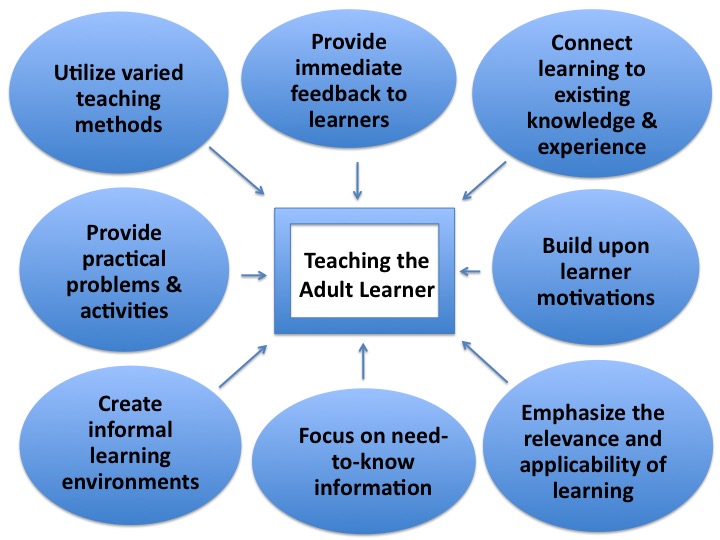
Look—adults are terrible at memorizing random trivia. I can't remember what I ate for lunch two days ago. But I can remember how to calculate the square footage of a room because I've painted six rooms in my house. Re-learning math as an adult leverages that real-world connection. When you learn percentages to understand interest rates on your credit card, you aren't memorizing. You're solving a problem that has immediate stakes.
This is the secret sauce. Your adult brain is wired for relevance. If the math connects to your job, your finances, or your hobby, you will learn it faster than any teenager in a classroom. The most effective learning strategies for adults always start with a 'why' that matters. So before you touch a single textbook, ask yourself: where does this math show up in my life today? That single question changes everything. It turns abstract symbols into tools you actually want to use.
The Specific Strategies That Actually Work for Adult Learners
The 'Brutal Honesty' Diagnostic
Before you start any serious adult math learning journey, you need to get honest about what you actually know. Not what you think you should know. Not what you vaguely remember from tenth grade. I see adults waste months because they start with algebra when they haven't truly mastered fractions. It's like trying to build a house on a foundation of oatmeal.
Here's a simple diagnostic process I've used with hundreds of learners:
- Take a free assessment from Khan Academy or an online community college. Don't study for it. Just take it cold. - Review every wrong answer. Don't just note the mistake—figure out the concept that tripped you up. Was it a fraction operation? Negative numbers? Order of operations? - Identify your 'gap topics'. These are the specific skills that block everything else. For most adults, it's fractions, decimals, and basic algebra manipulation. - Build a concrete starting point. Write down: 'I am here. I am going to there.' The gap is not shameful. It's just data.
This brutal honesty is actually liberating. Once you know exactly where the cracks are, you can patch them. Trying to learn advanced math while your foundation crumbles is like trying to run before you can crawl. And as an adult, you don't have time for that nonsense.
Mastering the Art of Active Recall (Not Just Reading)
This is the single most powerful weapon in your re-learning math arsenal. Passive learning is a trap. Reading a textbook chapter, watching a video tutorial, nodding along thinking 'yes, that makes sense'—that creates an illusion of understanding. You haven't learned anything until you try to produce the answer yourself, from scratch.
Active recall is the opposite. You close the book. You cover the solution. You force your brain to drag the information up from the depths. It hurts. It feels inefficient. But I promise you, this struggle is where the real learning happens.
Here's how to apply it ruthlessly:
1. Solve problems with the solution hidden. After watching an example, immediately try a similar problem without looking at the steps. 2. Explain the concept out loud to an imaginary student (or your confused dog). If you can't explain it simply, you don't understand it. 3. Use spaced repetition. Don't cram. Review a concept after one day, then three days, then a week. Apps like Anki can automate this for you, but even a simple notebook works. 4. Vary the problem types. Don't do twenty subtraction problems in a row. Mix subtraction, addition, and multiplication. That forces your brain to actually choose the correct strategy, not just repeat the pattern.
Adults often resist active recall because it feels uncomfortable. We like the smooth, easy flow of understanding. But effective learning is messy. It's the mental equivalent of heavy lifting. If you aren't sweating a little, you aren't growing.
The 20-Minute Rule and Spaced Repetition
Your adult brain is amazing at focused work but terrible at sustained, mindless repetition. You have bills to pay, a job to manage, maybe kids to wrangle. You don't have three-hour study blocks. And honestly? You don't need them.
The 20-Minute Rule is simple: study math in short, intense bursts of no more than twenty minutes. Set a timer. Shut off all distractions. Go absolutely bonkers on one specific concept. When the timer rings, walk away. Do something else. Let your brain consolidate.
Re-learning math is not about volume. It's about consistency and repetition. Twenty minutes daily for six months will beat four hours on a Saturday every single time. Why? Because your brain builds neural pathways during sleep and during the gaps between sessions. Short, frequent sessions let that process happen naturally.
- Monday: 20 minutes on fraction addition. Active recall. Done. - Tuesday: 20 minutes on fraction subtraction, with one mixed review problem from Monday. - Wednesday: 20 minutes on fraction multiplication. Review one problem from each previous day. - Thursday: 20 minutes on fraction division. Review random problems from the week. - Friday: 20 minutes on a mixed quiz of all four operations. No help. No excuses. - Weekend: Off. Seriously. Let your brain rest.
This rhythm builds a rhythm of mastery that feels organic, not forced. It respects your time and your cognitive limits. And it works because it mirrors how your brain actually learns—in layers, over time, with repeated retrieval.
The Mindset Shift No One Talks About
Killing Your Inner Perfectionist
Here's the truth that no textbook will tell you: you are going to get things wrong. A lot. And that is not just okay—it is essential. Adults have a terrible habit of quitting the moment they hit a wall. We tell ourselves, 'I'm too old for this,' or 'I should have learned this already.' That voice is a liar.
I've seen professional engineers cry over algebra because they made a simple sign error. I've seen executives rage-quit a geometry problem because they couldn't visualize a triangle. These are smart, capable people. But they had been conditioned to believe that mistakes are failures. In adult math learning, mistakes are not failures. They are data points. They tell you exactly where your understanding is fuzzy.
When you make a mistake, don't erase it and hide it. Circle it. Analyze it. Ask: 'Did I misread the problem? Did I misapply a rule? Did I forget a step?' That analysis is ten times more valuable than getting the right answer on the first try. Seriously. The right answer on the first try often means you just got lucky or you were mimicking a pattern. The wrong answer, analyzed properly, is a treasure map to your confusion.
The Algebra of Learning (One Step at a Time)
You wouldn't try to deadlift 300 pounds on your first day at the gym. So why do you expect to jump straight into calculus without solid arithmetic? Effective learning strategies for re-learning math as an adult require building, not jumping.
Think of math as a staircase. Every single step relies on the step below it. If you try to skip steps, you will stumble. And stumbling as an adult feels terrible because we have egos and deadlines. The solution is to be ruthlessly sequential.
Here's the order I recommend for almost every adult learner:
1. Arithmetic fundamentals: Addition, subtraction, multiplication, division with whole numbers, fractions, and decimals. Master these until they are automatic. 2. Ratios, proportions, and percentages: This is where most real-world math lives. 3. Basic algebra: Variables, equations, inequalities. This is the language of advanced math. 4. Geometry and measurement: Area, volume, basic shapes. Visual and practical. 5. Statistics and probability: Data interpretation, averages, probability basics.
Do not move to step 2 until step 1 feels easy. And I mean truly easy—like, you can do five fraction problems in a row without a single mistake. That might take a week. It might take a month. Who cares? You are not in a race. You are building a skill that will last the rest of your life.
Common Questions About Re-learning Math as an Adult
I stopped math in high school. Is it too late to start again?
Absolutely not. I have worked with learners in their sixties who passed college-level statistics. Your brain retains neuroplasticity your entire life—it can form new connections and learn new skills at any age. The real barrier is not age; it's fear and the belief that you've missed the window. You haven't. You just need to start where you are, not where you wish you were.
Should I use free online resources or buy a tutor?
Both work, but they serve different purposes. Free resources like Khan Academy, Professor Leonard on YouTube, and Paul's Online Math Notes are excellent for structured learning. They give you clear videos and practice problems. A tutor, however, is invaluable for targeted feedback. A good tutor can diagnose your specific gap in five minutes and help you fix it in fifteen. If you can afford a few sessions, use a tutor to get over your biggest hurdles. Use free resources for daily practice.
How much time do I need to spend per day to see real progress?
Twenty focused minutes per day will produce visible results within one month. That's not a gimmick—it's based on how memory consolidation works. If you can commit to thirty minutes, even better. But more than an hour is often counterproductive for most adults unless you are in a full-time program. Consistency beats intensity every time. A daily habit, even a tiny one, builds momentum that a weekend cram session never can.
When will I start to feel like I actually understand math, not just memorize it?
That shift usually happens between the third and sixth month of consistent practice. It happens when you stop looking for 'the step' and start looking for 'the relationship.' You'll be solving a problem and suddenly realize you aren't just following a recipe—you are making decisions about what to do next. That moment is the breakthrough. It doesn't happen overnight, but it happens reliably if you stick with the effective learning strategies I've outlined here.