
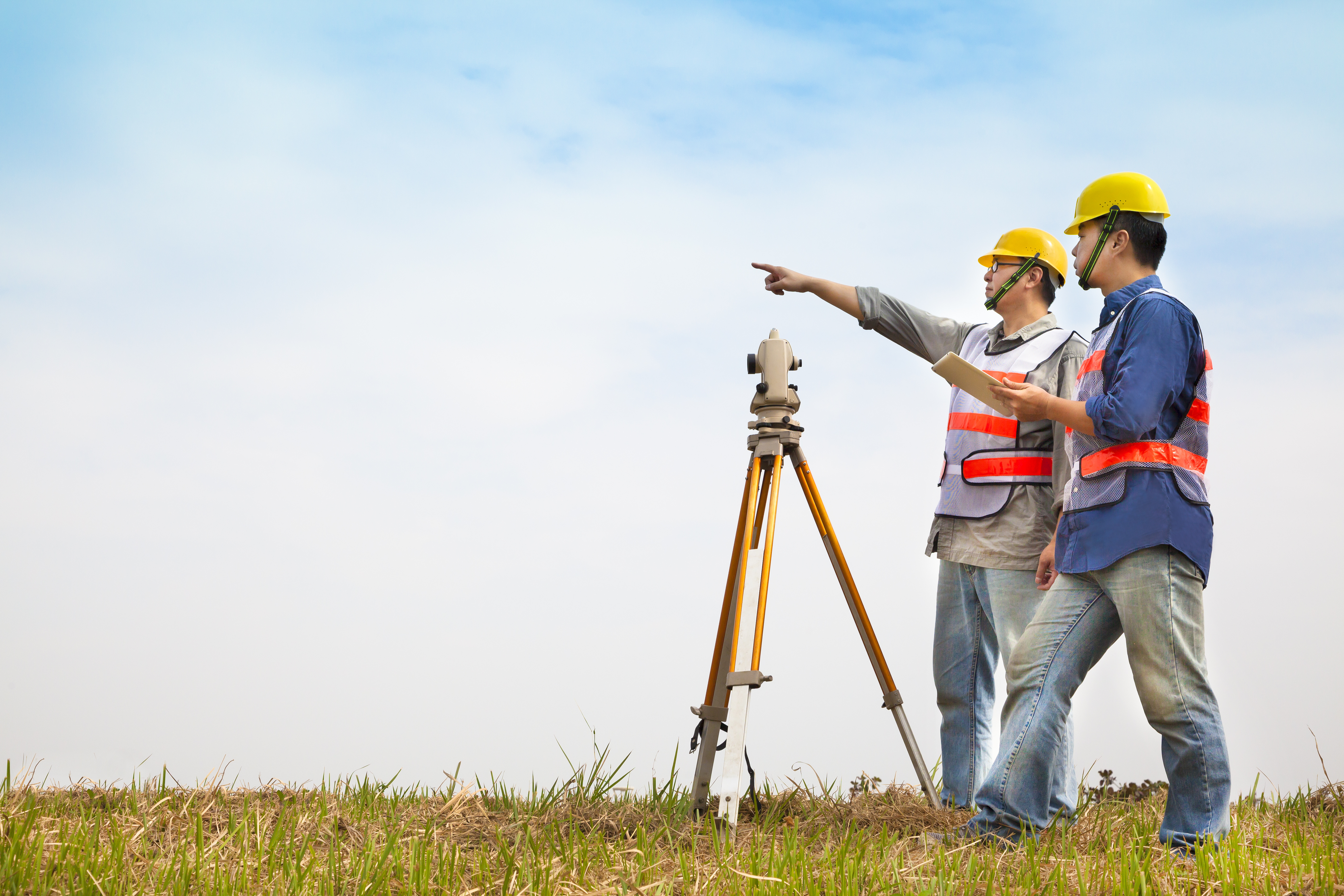
So, you're staring at a confusing property line, planning a massive construction project, or maybe you just need to know where your fence actually goes. And now you're stuck on a surprisingly tricky question: should you hire a land surveyor or a geodetic engineer? It's a big deal. Seriously, picking the wrong professional can mean costly delays, legal headaches, or a foundation that's a few inches off.
I've spent over a decade in this field, and I've seen both types of experts save—and sink—projects. The general public often lumps them together, but the difference is massive. Think of it like the difference between a master carpenter and an architect. Both work with structures. Both know wood. But one builds the cabinets; the other designs the skyscraper's skeleton. You need to know who to call before you sign that contract.
Should You Hire a Land Surveyor or a Geodetic Engineer
Let's cut through the confusion right now: land surveyors are your boots-on-the-ground problem solvers for practical, local projects. Geodetic engineers are the heavy hitters for large-scale, mathematically complex, and long-distance precision work. You hire one for your backyard; you hire the other for a high-speed rail line stretching across the state. And yes, sometimes you actually need both.
The Core Difference: Measuring vs. Modeling
Look—at their heart, land surveyors focus on relative accuracy. They set up a total station or GPS rover on one corner of your lot and measure to the next. They care about the distance between point A and point B on your piece of dirt. A geodetic engineer, on the other hand, obsesses over absolute positions. They aren't just asking, "How far is this from that?" They're asking, "How does this plot of land fit onto the actual, lumpy, spinning ellipsoid of the Earth?"
The Practical Problem-Solver
If you need a simple boundary retracement for a fence, a mortgage survey, or an ALTA/NSPS survey for a commercial property, you want a licensed land surveyor. Full stop. They know the local regulations, the county recorders' offices, and the historical plats. They're the ones who dig up the old deed from 1923 that says "to the old oak tree." They manage the local coordinate systems, like State Plane or a specific county grid.
The Big Picture Thinker
Now, imagine you're building a 15-mile tunnel under a mountain. Or monitoring the subtle shift of a dam's wall over five years. Or connecting a solar farm that spans thousands of acres. The curvature of the Earth matters here. A geodetic engineer accounts for that curvature, for the gravitational variations, and for tectonic plate movement. They establish a geodetic control network so every single measurement, miles apart, is linked to a single, centralized truth. Honestly? A land surveyor might not even know how to start that job.
When a Land Surveyor is Your Go-To
This is the simpler, more common scenario. For 90% of the public, this is who you call. Don't overthink it.
- Boundary Disputes: Your neighbor says their fence is six inches onto their property. A land surveyor settles it. They go to the courthouse, find the legal description, and physically mark the corners. - Building Permits: Most local governments require a site plan drawn by a licensed surveyor before you pour concrete for a new garage or addition. - Subdivision Plats: Splitting a piece of land into two lots? That's a classic land surveyor job. They handle the layout and the legal filings. - Construction Staking: Pinning out the corners of a house foundation or a new driveway. They make sure the excavator digs in the right spot.
Your Typical Boundary Dispute
I remember a job where a guy had a beautiful new shed, but it was 18 inches onto the city's utility easement. He called a geodetic engineer by accident. The engineer came out, set up a high-precision GPS base station, waited three hours for satellite convergence, and generated a report accurate to the millimeter. Overkill. He paid $4,000 for what a land surveyor could have done for $800 in two hours with a tape measure and a metal detector. Know your scope.
Construction Stakes and Subdivisions
The sweet spot for a land surveyor is any project smaller than a square mile. They use that local coordinate system that ties into the county's records. They know the benchmark on the corner of Main and Elm. They're fast, they're practical, and they're usually a fraction of the cost. For a house, a fence, or a retail center, this is your professional.
When You Need a Geodetic Engineer
Alright, now we're talking about the heavy lifting. Geodetic engineers live in the world of geodesy. They understand the math behind the ellipsoid, the geoid, and the dynamic Earth. It's not just about "finding the corners"; it's about building a spatial framework that doesn't break down over vast distances or long time periods.
Large Infrastructure and Deformation Monitoring
This is the primary domain. You hire a geodetic engineer for: - Highways and Railroads: Especially straight-line or long-curvature projects where a deviation of a centimeter over a mile is a catastrophic failure. - Bridges, Dams, and Tunnels: Any structure that needs to be monitored for shifts. They use sophisticated techniques like InSAR (satellite radar interferometry) and continuous GPS to measure millimeter-level movement. - Large Solar or Wind Farms: Where the site is so massive that you need a primary control network first, before any local surveyors can start their staking work.
GIS and Geospatial Data Foundations
Think about a county's entire GIS system. All those parcel lines, road centerlines, and utility layers. A geodetic engineer ensures that data all fits together on the correct datum—like NAD83 or WGS84. Without that foundational work, a land surveyor measuring a boundary in one township might accidentally create a disconnect with the data in the next county over. The engineer provides the "truth" that everything else snaps to.
The Decision Tree: Practical Questions to Ask Yourself
Before you pick up the phone, run this mental checklist. It'll save you time and money.
1. What is the size of the project? Less than 50 acres? Start with a land surveyor. More than 1,000 acres? Consider a geodetic engineer to set the primary control. 2. What is the required accuracy? "Within a few inches" is a land surveyor job. "Within a few millimeters over a 5-mile stretch" is a geodetic engineer job. 3. Is this a legal matter? Boundary lines, deeds, and easements are almost exclusively handled by licensed land surveyors. 4. Does the Earth's curvature matter? For a house lot? No. For a pipeline or a runway? Absolutely. That curvature error adds up fast. 5. Do I need a report for a judge or a contractor? A land surveyor gives you a plat and a boundary description. A geodetic engineer gives you a technical report with adjusted coordinates, error ellipses, and datum specifications.
Common Questions About Hiring a Land Surveyor or a Geodetic Engineer
Can a geodetic engineer do a boundary survey?
Technically, if they hold a professional surveyor license, yes. But it's often not their focus. Their training is in the global and mathematical theory, not in the local records search and historical deed interpretation. You'll likely pay more for a job that a specialist land surveyor could do faster. Stick with the specialist for typical boundary work.Is a geodetic engineer more expensive?
Almost always. Their rates are typically 1.5 to 3 times higher than a land surveyor's. You're paying for a higher level of mathematical expertise, more expensive equipment (like dual-frequency geodetic GPS receivers), and more complex processing software. But for the right job, it's worth every penny. Cheap surveying on a billion-dollar bridge is a false economy.Do I need a geodetic engineer for a drone survey?
Depends on the drone's job. If you're just taking pretty orthophotos of a building site, a land surveyor can handle the ground control points (GCPs). But if you're doing volumetric calculation on a massive mining pit or mapping a pipeline corridor, a geodetic engineer should establish the base stations for the aerial survey to ensure absolute positional accuracy.What if my project needs both?
This is more common than you think. A large subdivision often works this way: A geodetic engineer comes in first to set two permanent, highly accurate monuments (the control network). Then a land surveyor uses those monuments as a starting point to stake all the individual lots. The engineer provides the anchor; the surveyor provides the local detail.How do I verify their credentials?
Always ask for their license number. In the U.S., land surveyors are licensed by the state (PS license). Geodetic engineers are often Professional Engineers (PE) with additional experience in geodesy. Some states have a specific Geodetic Engineering license. Check with your state's licensing board. Don't just take their word for it.