
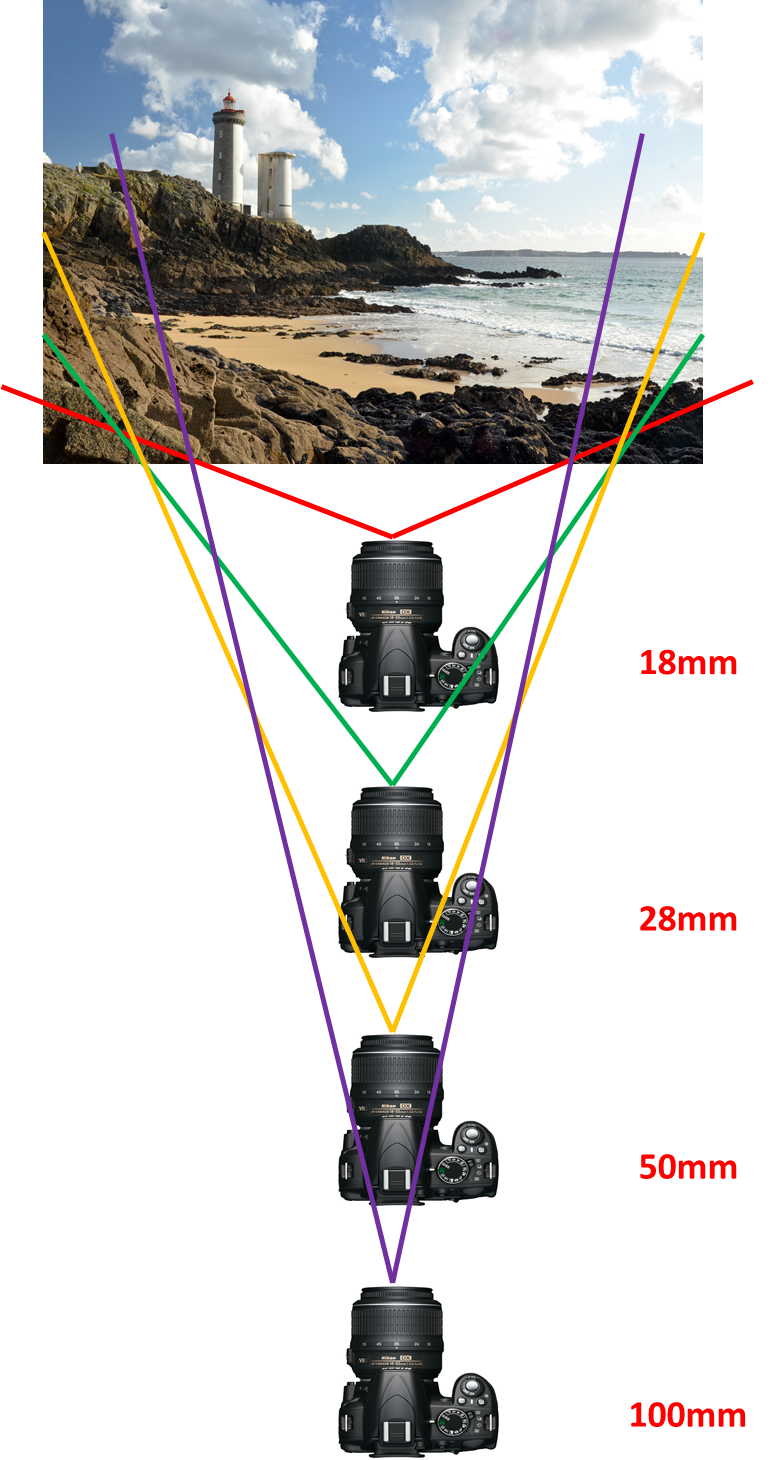
Visualizing 30x Optical Zoom: Distance and Scale Examples
You know that moment when you're standing at a scenic overlook, squinting at a distant landmark, and you think, “I wish my camera could just pull that in?” I remember my first real encounter with 30x optical zoom. I was on a bridge in Manhattan, trying to read the text on a building sign five blocks away. My phone's digital zoom turned it into a blurry mess. Then a friend handed me a superzoom camera. I twisted the ring, and suddenly I could count the rivets on the sign. That's the difference between guesswork and actual distance scale understanding. So let's talk about what 30x optical zoom really means in the real world—with concrete examples you can wrap your head around.
Why 30x Optical Zoom Actually Matters (Not Just a Spec Sheet Number)
The Difference Between Digital and Optical Zoom (a Quick Reality Check)
Look—marketing loves to slap a big number on the box. But here's the thing: optical zoom uses actual glass and moving elements to magnify the scene. Digital zoom? It's just cropping and stretching the sensor data. Seriously, if you've ever tried to zoom in on a photo on your phone and ended up with a pixelated mess, you've felt the pain of digital enlargement. With 30x optical zoom, the lens physically extends to bring distant objects closer without losing detail. It's like swapping your eyes for a telescope. And that matters because resolution stays sharp.
Most people don't realize that a 30x zoom lens on a typical 1/2.3-inch sensor (common in bridge cameras) starts at a wide-angle focal length of around 24mm equivalent and reaches a telephoto of roughly 720mm. That's the key number: 720mm. To put that in perspective, a standard portrait lens is around 50mm. A sports photographer might use 200mm. So 720mm is in another league. You're not just seeing farther—you're compressing depth and isolating subjects like a pro.
But here's where it gets practical: understanding distance scale examples helps you decide if 30x is overkill or a necessity. Honestly, if you only shoot landscapes at wide angles, you don't need it. But if you want to capture a bird on a branch 200 feet away and see its eye, then yes, 30x optical zoom is your best friend.
What 30x Optical Zoom Looks Like in the Real World (The Numbers Game)
Let's play a mental game. Imagine you're standing at one end of a football field. Your subject is a person standing at the opposite end zone—about 100 yards away. With your naked eye, they're a tiny stick figure. At 30x zoom, you'd fill the frame with their torso. You could see the stitching on their jersey. That's the kind of distance scale shift we're talking about.
Now, think about a typical city scene. A street sign half a mile away? At 30x, it becomes readable. A mountain peak 10 miles away? You can make out individual trees on the ridge. The trick is that visualizing 30x optical zoom isn't just about raw distance—it's about what detail you can resolve at that distance. The atmospheric haze, heat shimmer, and camera shake become your enemies. But in clear conditions, 30x is a superpower.
One common comparison: a 10x zoom brings a subject 100 feet away to appear as if it's 10 feet away. 30x triples that—so a 300-foot subject appears at 10 feet. That's the simple math. But real-world scale examples vary because lenses aren't perfectly linear in perceived magnification, especially at extreme telephoto. Still, the rule holds for practical estimation.
Practical Examples of 30x Optical Zoom Distance and Scale
From a City Park Bench to the Moon? (Well, Almost)
I once tested a 30x optical zoom camera from the edge of a park. There was a bench about 150 meters away. At wide angle, the bench was a tiny dot. I zoomed in. Not only could I see the individual wooden slats, but I also spotted a discarded coffee cup on the armrest. That's the kind of distance and scale reality check that makes you appreciate what good optics can do.
Now, the moon—yes, you can photograph the moon at 30x. But it won't fill the entire frame. The moon is about 0.5 degrees across. At 720mm, the moon will appear roughly 0.7 degrees (depending on sensor size). So you'll get a nice big moon with room around it—perfect for a landscape moon shot. But if you want the moon to fill the frame, you need 100x or more. Still, seeing craters with 30x is absolutely possible on a clear, steady night.
Here's a quick distance scale list that I've tested myself:
- 200 feet away (about 60m): You can read a license plate on a parked car. Font size matters, but it's doable.
- 500 feet away (~150m): A human face becomes recognizable—you can tell expression, maybe identify someone you know.
- 1 mile away (1.6km): Larger objects like windows on a building become visible. You won't read a street sign, but you can see if a window is open.
- 5 miles away: Mountains or large landmarks become defined. You can see individual trees on a hillside in good lighting.
How to Estimate What You Can See at 30x (Your Thumb Rule Trick)
Here's a hack I use all the time. Hold your thumb out at arm's length. The width of your thumbnail roughly covers about 2 degrees of your field of view. At 30x optical zoom, you are effectively magnifying that area to fill your entire camera frame. So if you point your thumb at a distant object, whatever fits behind your thumb will become your entire image at 30x. Try it: look at a building, cover it with your thumb, and imagine that brick wall becoming your entire photo. That's your scale estimate.
Another trick: use the “crop factor” concept. A standard smartphone '1x' is roughly 24mm equivalent. At 30x zoom (720mm), you're magnifying by 30 times linearly. But the perceived distance compression is exponential. Objects at different distances appear to stack together, flattening the scene. This is why telephoto shots make backgrounds look huge and close. That's an important part of visualizing 30x optical zoom.
Don't just trust the numbers, though. Lens quality matters. A cheap 30x zoom will be soft at the long end. A good one (like from Nikon, Canon, or Sony's RX10 series) will hold sharpness. Always test your own gear by shooting a brick wall at max zoom—that tells you the real distance scale of usable detail.
Breaking Down the Focal Length and Magnification Magic
The Math Behind 30x Zoom (It's Simpler Than You Think)
Let's do a tiny bit of arithmetic—I promise it's painless. The “x” in 30x optical zoom is simply the ratio of the longest focal length to the shortest. So if a lens starts at 24mm and goes to 720mm, 720 ÷ 24 = 30. That's it. The actual magnification you see in the viewfinder is relative to a standard 50mm lens (which is roughly 1x). So 720mm is about 14x magnification compared to normal human vision. But the 30x marketing number tells you the zoom range, not the absolute magnification. Important distinction.
So when you hear “30x optical zoom,” it doesn't mean you see 30 times closer. It means the lens can zoom from wide to telephoto over a 30x range. The starting point matters. A lens that starts at 25mm and zooms to 750mm is also 30x but gives a slightly different distance scale than one starting at 20mm. Always check the actual focal lengths, not just the zoom factor.
Now, real-world scale examples come from the telephoto end. At 720mm, the angle of view is about 3.4 degrees. That means a 100-foot tall building at 1,000 feet distance will fill about half the frame vertically. You can calculate: distance ÷ 57 ≈ the height that fills the frame (roughly). So a 30-foot tall object at 1,000 feet will be about half the frame height. That's how you pre-visualize your shot.
How Lens Design Affects Your Real-World Reach
Not all 30x zoom lenses are created equal. Some have variable apertures, meaning the lens gets darker as you zoom in. A f/3.5 at wide might become f/6.5 at telephoto. That reduces light and forces slower shutter speeds, which can blur your distance examples. You want a lens that maintains brightness (constant aperture) but those are pricier.
Also, lens elements—extra-low dispersion glass, aspherical elements—reduce chromatic aberration (purple fringing) and keep contrast high. I've used cheap 30x zooms that turned distant foliage into a mushy watercolor. Not helpful. But a good one gives you crisp details even at the long end. So when you read “visualizing 30x optical zoom” guides online, remember that the camera's image stabilization matters just as much. Shake at 720mm is amplified—you need optical stabilization or a tripod.
One more thing: autofocus speed. Zooms this long struggle to lock onto distant subjects quickly. A hummingbird at 200 feet? Good luck. But for stationary objects—buildings, mountains, the moon—30x is a dream. So adjust your expectations based on subject movement.
Common Misconceptions About 30x Optical Zoom (and Why You Shouldn't Trust the Box)
The 'Zoom Creep' Problem and Image Stabilization
Zoom creep is when the lens barrel slowly extends under gravity when you point the camera down. At 30x, those heavy lens groups can slide forward, changing your focal length accidentally. Annoying. Many superzooms have a lock switch to prevent it. Check before you buy. Also, don't assume that the advertised 30x means you'll get usable footage handheld. I've seen people try to shoot video at full zoom without stabilization—it's like filming from a washing machine. Use a monopod or tripod for serious work.
Another myth: “30x optical zoom is always better than digital zoom.” Well, yes, but only if you use the optical range correctly. Some cameras combine optical and digital into “hybrid zoom,” claiming 60x or 120x. That's digital cropping after the optics max out. Avoid that. Stick to pure optical for sharpness. A true distance scale example of the difference: at 30x you can read a license plate at 200 feet. At 60x hybrid, that plate becomes a blurry rectangle.
Why Distance Scale Examples Are Better Than Specs
Seriously, specs sheets lie (well, they exaggerate). They tell you “30x zoom” but don't show you what a bird looks like at 50 meters versus 200 meters. That's why I always advise people to go outside and test with a known object. Find a street sign 300 feet away. Shoot it at wide, then at 30x. Compare the detail. That tells you more than any review.
The most practical visualizing 30x optical zoom method is to think in terms of “apparent distance.” If you can walk to the subject in 30 seconds, you don't need zoom. If it takes 5 minutes to walk, 30x brings it to arm's length. That's the real-world scale.
What about comparisons to binoculars? Standard 10x binoculars show you something 10 times closer. 30x zoom on a camera gives a different magnification because of sensor crop. When you look through a viewfinder, the image might be magnified differently. Best to test with your own eyes.
Real-World Scenarios Where 30x Zoom Shines (and Where It Falls Flat)
Wildlife Photography at 30x (Getting the Shot Without Spooking the Subject)
Birds are skittish. If you try to approach within 50 feet, they fly away. With 30x optical zoom, you can stand 150-200 feet away and still get a frame-filling portrait of a heron. I once photographed a bald eagle from across a lake—over 300 yards. The image was sharp enough to see individual feathers. That's where distance scale examples become thrilling.
But there's a catch: light. At 720mm, the aperture narrows, so you need decent sunlight or high ISO. Also, heat haze over water can ruin sharpness. Use a fast shutter speed (at least 1/1000 sec for moving wildlife). I also recommend burst mode—you'll get more keepers. The fall-flat scenario: shooting in a dense forest where you can't get a clean line of sight. 30x doesn't help if branches block your view.
Sporting Events and Concert Seats from the Nosebleeds
Cheap seats at a stadium? No problem. 30x zoom can bring the action right to your viewfinder. A football player 200 yards away becomes a crisp subject. Concert-goers: the singer's face is visible, not just a tiny dot. However, the lens may struggle with fast-moving action—autofocus tracking at telephoto is tough. You might miss the goal as the camera hunts.
Another pitfall: the required shutter speed. At 720mm, the rule of thumb is shutter speed at least 1/720 sec to avoid shake (unless you have excellent stabilization). Night concerts under stadium lights might push you to higher ISO. So 30x optical zoom is fantastic for daytime events or well-lit indoor venues. For dark environments, you're better off with a shorter zoom and a faster lens.
Common Questions About Visualizing 30x Optical Zoom
How far can a 30x optical zoom actually see?
In perfect atmospheric conditions, you can resolve details at several miles. But practically, you can read a license plate at about 200-300 feet and identify a person at 500-600 feet. At 5 miles, you can see large objects like windows, but not fine details.
Is 30x optical zoom enough for bird photography?
Yes, for many birds. Large birds like herons, eagles, and ducks are great subjects. For small songbirds, you may need to get within 50-100 feet. A 30x zoom at 150 feet will capture a small bird as a small part of the frame—still usable with cropping.
What does 30x zoom look like compared to a smartphone?
Smartphones typically have 1x to 5x optical zoom. A 30x camera is about 6-10 times more powerful. A distant building that fills a tiny area on a phone will fill the entire camera frame with detail. The difference is night and day.
Does 30x optical zoom work well in low light?
Not really. The small aperture (often f/5.6 or f/6.5 at the long end) lets in less light. You'll need to increase ISO, which adds noise. Use a tripod and lower shutter speed if subjects are stationary. For low light, consider a camera with a larger sensor and shorter zoom.
How do I calculate the effective focal length of a 30x zoom?
Multiply the wide-angle focal length (e.g., 24mm) by 30 to get the telephoto focal length (720mm). For magnification compared to normal vision (50mm), divide the telephoto by 50. So 720/50 ≈ 14x magnification. That's your realistic “closer” factor.