
Can You Convert a Transformer to Work with Direct Current?
I once had a client call me in a panic. He’d wired a 12V car battery directly to a small step-up transformer, hoping to get 120V AC for some off-grid gadget. The transformer hummed for about two seconds, then started smoking. He asked me, “Can you convert a transformer to work with direct current?” The short answer is no—not in the way he wanted. But the long answer? That’s a lot more interesting, and it involves some clever engineering workarounds that actually do exist.
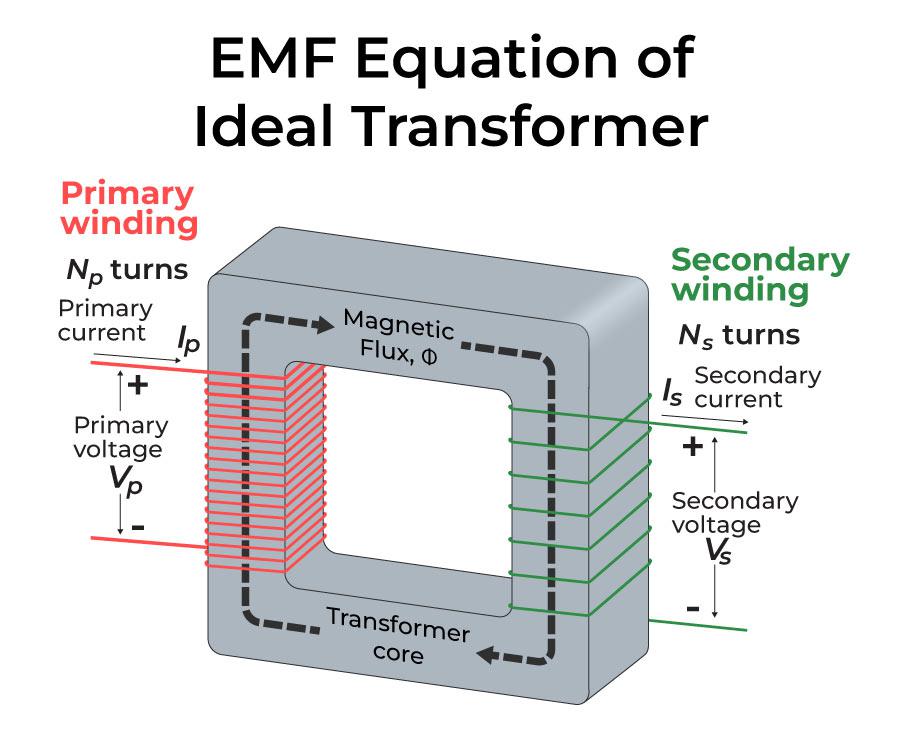
Let’s get the physics out of the way first. A standard transformer relies on a changing magnetic field to transfer energy from one coil to another. Direct current doesn’t change. It’s constant. So if you feed DC into a transformer, the magnetic field in the core doesn’t alternate—it just builds up and stays there. That steady magnetic flux can’t induce voltage in the secondary coil. And worse, it saturates the core, turning your transformer into a very expensive, very hot resistor. Seriously, don’t try it.
But I know what you’re thinking: “What about those devices that say ‘DC transformer’ on the label?” Good question. Let’s unpack that.
The Short Answer: No (And Here's Why)
If you take an off-the-shelf transformer designed for alternating current—the kind you’d find in a wall wart or an old doorbell—there is no simple modification that will let it work on direct current. The core and windings are optimized for AC. Give it DC, and you get saturation, overheating, and possibly a fire. It’s not a matter of swapping a wire or flipping a switch. The entire operating principle is wrong.
What Happens Inside the Core
Think of the core as a magnetic sponge. With AC, the polarity flips 50 or 60 times each second, so the sponge never gets fully soaked. With DC, you’re just pouring magnetic energy in until the sponge can’t hold any more—and then the transformer becomes a short circuit to the DC source. The current skyrockets, the copper windings heat up, and the insulation melts. I’ve seen cores literally crack from thermal stress. Not pretty.
The One Exception (And It's a Cheat)
There is a device called a “DC transformer” in some marketing materials, but it’s not a real transformer. It’s a switching regulator—often a buck or boost converter—that uses a high-frequency AC stage internally. Inside, a small transformer does work on rapidly switched current, which is effectively AC. So yes, the transformer itself still sees alternating current. You’re not converting the transformer to work on DC; you’re building a whole new circuit around it. Honesty matters here.
What Actually Happens When You Feed DC into a Transformer
Let’s get specific. You take a standard 120V-to-12V step-down transformer. You connect a 12V DC battery to the primary winding. The battery is a steady voltage source. The primary winding has very low DC resistance—maybe a few ohms. Ohm’s law says current equals voltage divided by resistance. That means dozens of amps flow instantly. Meanwhile, the core saturates within milliseconds, and the inductive reactance that normally limits AC current is gone. The result? A meltdown.
- Phase 1: Saturation. The magnetic flux hits maximum and stops changing. - Phase 2: Current spike. Without back EMF from the changing flux, the winding acts like a bare resistor. - Phase 3: Thermal runaway. Copper heats up, insulation degrades, smoke appears. - Phase 4: Failure. Open circuit, shorted turns, or fire.
I’ve done this demonstration in a lab (with safety gear, obviously). It’s dramatic. The transformer gets hot enough to burn your hand in under ten seconds. Don’t replicate this at home.
Can You Modify the Transformer Itself?
People ask if you can convert a transformer to work with direct current by rewinding it or adding a magnet. No. The core material—usually silicon steel—is designed for AC hysteresis loops. Even if you used a different core like ferrite, the fundamental issue remains: a steady magnetic field cannot transfer power across coils. You’d need mechanical movement (like a rotary converter) or electronic switching. There’s no passive modification that turns a transformer into a DC device.
Wait—But What About DC-DC Converters? Aren't Those Transformers?
You’ve seen devices labeled “DC-DC converter” that contain a small transformer. Technically, they do use a transformer, but they also include an oscillator that turns the DC into AC at a high frequency—typically tens or hundreds of kilohertz. That AC then goes through the transformer, gets stepped up or down, and is rectified back to DC. It’s a transformer used in a DC circuit, but the transformer itself still sees alternating current. The device as a whole works with DC input and DC output, but the transformer inside is not “converted.”
How Engineers Really Handle DC with Transformers
The industry solution is not to convert the transformer. It’s to build a power electronics stage. Here are the common approaches:
- Inverter + Transformer: Convert DC to AC using an inverter, then feed that AC into a standard transformer. This is how solar panel systems work—DC from panels becomes AC, then steps up through a transformer. - Switching Converter (Flyback / Forward): Use a high-frequency oscillator. The transformer is small and efficient. This is inside phone chargers and LED drivers. - Push-Pull Topology: Two transistors alternately switch the DC to create a square-wave AC across the transformer primary. Works great for medium power. - Rotary Converter (Old School): A motor-generator set that turns DC into mechanical rotation, then AC. Rare today, but historic.
None of these “convert” the transformer itself. They change the input signal so the transformer sees AC. If you need a true transformer for direct current, you’re really asking for a different device entirely.
Practical Advice: Can You Salvage an AC Transformer for a DC Project?
I get emails from hobbyists who have a box of old transformers and want to use them with batteries. My honest recommendation: don’t. Even if you try to limit current with a resistor or a fuse, the core saturation still kills efficiency. You’ll get at best a few percent of the rated VA output, and the transformer will run hot doing nothing useful. Instead, buy a proper DC-DC converter module. They’re cheap, small, and safe.
Look—if you absolutely must use a transformer with a DC source, the only legitimate way is to create an AC waveform. That means building an oscillator and a driver circuit. For low-power experiments, you can use a 555 timer and a MOSFET to switch the transformer primary at a few kHz. But that’s not converting the transformer; it’s building a power stage around it. The transformer still needs AC.
A Humorous Anecdote
I once had a student insist that wrapping a magnet around a transformer would “trick” it into working with DC. He spent an afternoon gluing neodymium magnets to the core. The transformer got hot, the magnets demagnetized, and he ended up with a sticky mess. We still laugh about it in the lab. The moral? Physics doesn’t care about your creativity.
Common Questions About Converting a Transformer for DC
Can I use a transformer with a battery if I connect it through a relay that switches rapidly?
If you switch the DC on and off fast enough—say, with a relay or a transistor—you’re effectively creating a pulsed DC that looks like AC to the transformer. That can work, but only if the frequency is high enough to avoid core saturation and the duty cycle is managed. It’s essentially a crude inverter. A standard relay won’t last long; you need a proper switching circuit.
What about using a center-tapped transformer for DC? Doesn’t a center tap make it work with half-wave?
No. A center tap is just a connection point. The transformer still needs alternating current across the full winding. Feeding DC into a center-tapped primary will still saturate the core. The center tap is useful in full-wave rectifier circuits for AC, but it doesn’t help with DC input.
Is there such a thing as a “true” DC transformer that doesn’t use any switching?
No. Electromagnetic induction requires a changing magnetic field. The only passive way to get that from a steady DC source is to move the transformer physically—like spinning one coil inside another. That’s a generator, not a transformer. Some lab instruments use “DC current transformers” with Hall-effect sensors, but those measure current, they don’t transfer power.
Can I convert a transformer to work with DC by adding a gap in the core?
Adding an air gap reduces saturation effects but doesn’t solve the fundamental problem of no induced voltage. Gapped cores are used in inductors for DC-DC converters, but those inductors are not transformers. You’d need two separate gapped inductors and a switching circuit to transfer energy. Again, you’re building a converter, not converting a transformer.
What happens if I connect DC to the secondary side instead?
Same result, just usually with lower voltage and higher current. The secondary winding has even fewer turns and lower resistance, so the current spike is more severe. The core saturates identically. The transformer will fry just as fast, if not faster.
---
So here’s the truth: you cannot convert a transformer to work with direct current in any straightforward, passive way. The laws of electromagnetism are stubborn. What you can do is use a transformer as part of a larger DC-compatible system by adding an inverter or a switched-mode circuit. That’s what engineers have been doing for decades. Next time you see a “DC transformer” in a product catalog, remember it’s really a switching converter wearing a clever name. And whatever you do, don’t hook a battery straight to an AC transformer. Trust me on this one.