
The Real Difference Between 4K Video and High MP Photography (It's Not Just Resolution)
I remember the first time a client asked me to pull a still frame from a 4K video and print it poster-size. They figured—since 4K is around 8.3 megapixels—it must be close to a standard 12MP photo. Right? Wrong. So, so wrong. That conversation ended with a lot of coffee, a patient explanation, and a very expensive lesson for them. Here's the thing: comparing 4K video to high MP photography feels like comparing a sprinter to a weightlifter. Both are athletes. Both are impressive. But they are built for completely different games.
The core confusion stems from the word "resolution." We see a number—3840x2160 for 4K, or 8000x6000 for a 48MP photo—and we assume the higher number wins. It's a big deal, but it's only the tip of the iceberg. Honestly? The average person looking at a 4K frame thinks they're seeing all the detail. They aren't. And the person with a 100MP camera thinks they can just scale it down for video. They can't, not without a ton of headache.
So let's get into the weeds. Not the dry, textbook weeds. The real weeds. The ones where you trip over a lens cap and realize you've been doing it wrong for years.
The Megapixel Math: Why 8.3MP is Suddenly a Giant
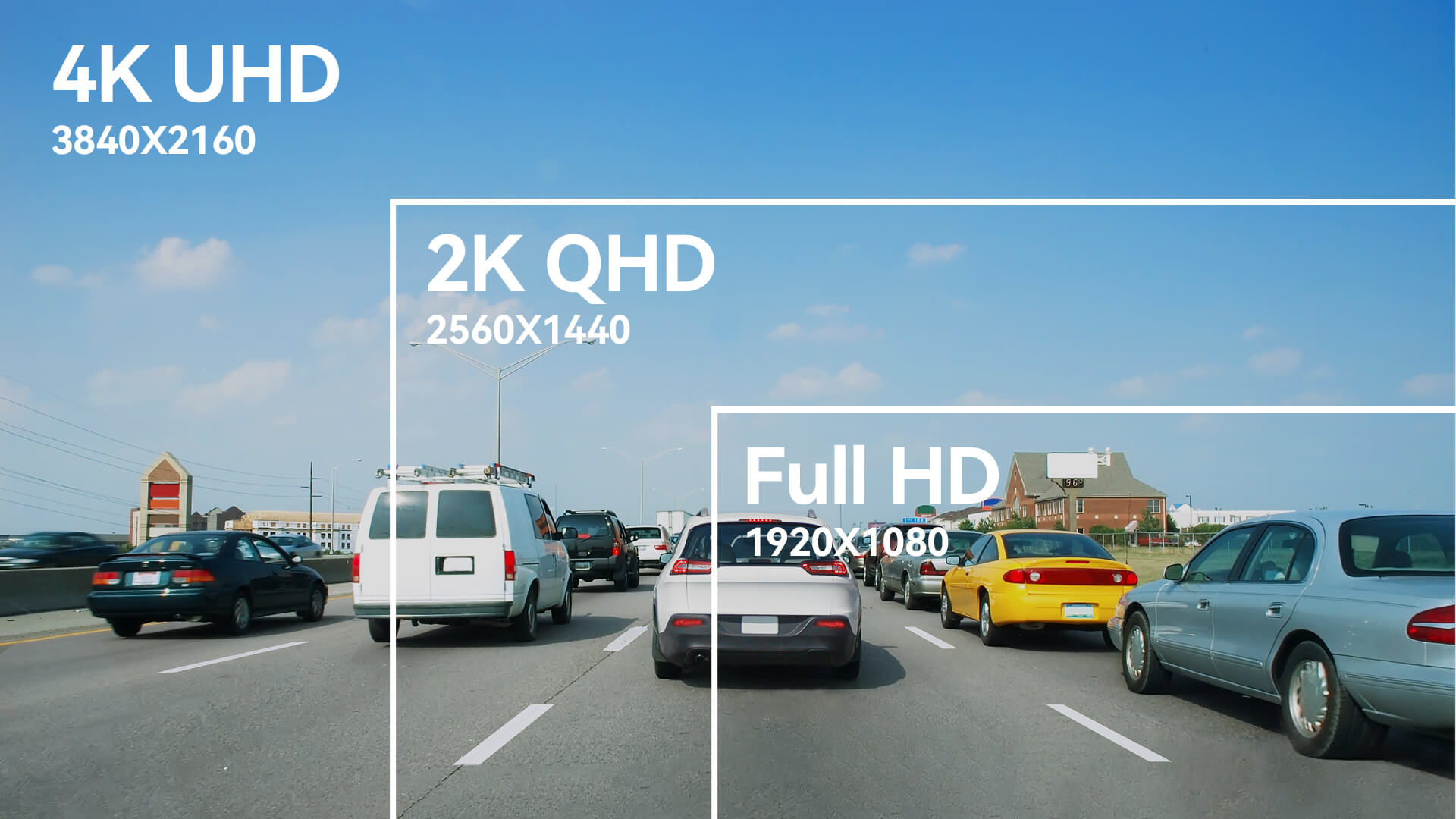
Let's start with the obvious numbers, because they're deceptive. 4K video is typically UHD, which is 3840 pixels wide by 2160 tall. Do the multiplication and you get roughly 8.3 megapixels. That's it. A decent smartphone from five years ago had that. A modern high MP photography camera, like a Sony A7R V or a Fuji GFX, is packing 61MP or even 100MP. In raw pixel count, the photo wins by a landslide. We're talking 12x the data, give or take.
Why Your 4K Frame Looks Like a 2010 Smartphone Photo
But here's the kicker. Pull a single frame from your 4K video. Zoom in. What do you see? Smearing. Artifacts. That 'digital mush' that looks like someone smeared Vaseline on the lens. Why? Because 4K video isn't capturing 8.3 unique, pristine pixels in every frame.
The dirty little secrets of video capture:
- Sub-sampling: Most video cameras skip pixels to achieve high frame rates. They read every 2nd or 3rd line, then interpolate the rest. Result? Less real detail. - Compression: A high MP photo is usually a minimally compressed RAW file. A 4K video frame is often a single slice of a heavily compressed GOP (Group of Pictures) structure. The codec is discarding color and detail you'll never recover. - Rolling shutter and motion blur: The goal of video is smooth motion. You want some blur. For a still, you want a sharp slice of time. These two things are fundamentally at odds.
Look—I've seen people try to freeze a fast-moving car from a 4K video. It's a blurry mess compared to a single, 1/1000th of a second shot from a 20MP DSLR. The difference between 4K video and high MP photography begins right here, at the sensor readout level.
The 100MP Sensation: Bragging Rights or Actual Utility?
Now let's flip the coin. You grab a high MP photography camera—let's say that 61MP beast. You shoot a landscape. The amount of detail is staggering. You can crop into a bird on a branch 200 yards away and count its feathers. It's intoxicating. But it comes with a cost.
- File sizes: A single 100MP RAW file can be over 200MB. Your 4K video file, for a minute of footage, might be 400MB. The still is half the size of the video clip. - Processing power: Editing a 100MP image on an older laptop is like watching paint dry. Editing 4K video? That's a whole other layer of hell if you don't have a good graphics card. - Lens limitations: This is the one people ignore. Slap a cheap lens on a 100MP camera, and you'll see every imperfection. Chromatic aberration, soft corners, distortion—it all becomes painfully obvious. 4K video is far more forgiving of a mediocre lens.
Seriously, the number of people who buy a high MP camera and pair it with a kit lens is painful. The lens becomes the bottleneck much, much sooner than with video.
The Pixel Quality Gap: Readout vs. Refinement
Let's go a layer deeper. We've talked about quantity. Now we talk about quality. A pixel from a 4K video stream is not the same as a pixel from a high MP photo. They share the name; they don't share the soul.
Bit Depth and Color: The 8-Bit vs. 14-Bit Wall
High MP photography is almost always captured at 14-bit or even 16-bit color depth. That means 4,398,046,511,104 possible colors per pixel. It's insane. It allows you to push shadows four or five stops in post without breaking the image.
4K video, especially consumer-level stuff, is often 8-bit. That's 16,777,216 colors. It's an order of magnitude less. Banding in skies? You'll see it. Crushed blacks? Absolutely. You try to pull up a shadow in a 4K frame, and you'll introduce noise that looks like a snowstorm.
The practical truth: A 20MP photo from a good DSLR has significantly more usable color and tonal information than an 8.3MP frame from a 4K video. The photo wins on pixel quality, not just pixel quantity. This is perhaps the most crucial difference between 4K video and high MP photography that beginners miss. They count the dots. They don't count what makes the dots beautiful.
Noise Performance: The Thermal Elephant
Here's a funny thing. A sensor capturing high MP photos gets hot. It's doing a massive readout. A sensor shooting 4K video gets even hotter, because it's reading out the entire sensor 24, 30, or 60 times per second. Heat is the enemy of signal-to-noise ratio.
- For photography: You can use long exposures. You can stack images. You can shoot in cooler conditions. Noise is manageable. - For video: You can't stack frames (well, you can, but it's a pain). The sensor is cooking itself. You'll see more fixed pattern noise and amp glow on long video takes. The noise floor is simply higher.
So if you're shooting a dimly lit scene in 4K video, you're battling a hotter sensor, a lower bit depth, and heavier compression. That single frame will look significantly grainier than a high MP photo taken in the exact same conditions. It's not even close.
Practical Workflows: When to Use Which
Alright, enough theory. You're a professional with a job to do. You need to know when to reach for the video camera and when to reach for the stills body. The answer is rarely 'both work the same.'
For Stills Extraction: Don't Kid Yourself
I get asked this constantly. "Can I just shoot in 4K and pull frames for my website?" The answer is: only if you hate your website. A 4K video frame, even from a high-end cinema camera like an Arri Alexa, is still an 8-bit image (or maybe 12-bit in best cases) with sub-sampling and compression artifacts. It looks flat. It lacks micro-contrast.
- If you need a usable still for social media or a thumbnail? Sure, a 4K frame works. - If you need a printable image, a magazine cover, or a billboard? Use high MP photography. You need that 14-bit depth and the ability to push colors around in post. A high MP photo gives you latitude. A 4K frame gives you a handcuff.
For High-Speed Action: The Video Advantage
Now let's talk about where video wins. Say you want to capture the exact moment a hummingbird's wings change direction. A high MP camera might shoot 10 frames per second. That's good. But a 4K video at 60fps or 120fps? You have 120 chances per second to get the frame. You can scrub through time.
The golden rule: If you need one perfect, printable, finely graded image, go for the high MP photo. If you need a sequence of moments that you can analyze or composite, 4K video gives you temporal resolution that a stills camera can't match. It's a trade-off. Quantity of moments vs. quality of a single moment.
The Hybrid Trap: Cameras That Do Both
Many modern cameras claim to do both. A Sony A1 or a Canon R5 shoots 50MP stills and 8K video. It sounds perfect. And it is, for many uses. But there are compromises. When shooting video, the sensor readout changes. It might crop in. It might reduce bit depth. The cooling fans kick in. The battery life plummets.
My honest take: If you're a professional who shoots video 80% of the time, buy a dedicated video camera or a strong hybrid. If you shoot stills 80% of the time, buy a dedicated high MP photography body. The jack-of-all-trades is master of none, especially when you're being paid for critical work. There is a real, tangible difference between 4K video and high MP photography when it comes to thermal management and processing pipelines inside the camera body.
The Equipment Trap: Lenses and Light
This is where most people burn a hole in their wallet. They buy a high MP camera and a cheap tripod. Or they buy a 4K cinema camera and a lens that can't resolve the detail. Let's avoid that.
The Resolution Double Standard
A lens for a high MP photography camera needs to resolve 100 lines per millimeter. It needs to be sharp edge-to-edge. It needs to have extremely low distortion for stitching panoramas.
A lens for 4K video? The resolution requirement is lower. The sensor is only 8.3MP. Instead, the lens needs to have smooth bokeh, consistent iris operation (no 'click stops' for video), and minimal focus breathing. These are different priorities.
- Photography lens: Sharpness and contrast king. - Video lens: Smoothness and mechanics king.
Mixing them up is a recipe for frustration. A perfect high MP photography lens might have terrible focus breathing, making it unusable for professional video. A perfect video lens might be so soft that it wastes the potential of a high MP photo.
Storage and Backup Nightmares
Let's talk money and logistics. A single day of shooting 4K video can generate 500GB of data. A single day of high MP photography might generate 50GB, but each file is individually precious.
- For video: You need massive, high-speed SSDs. You need a RAID system for backup. You need proxy files for editing. It's a data management job as much as a creative one. - For photography: You need careful culling. You keep the keepers. You back them up three ways. The data is smaller, but the emotional weight per file is higher.
Seriously, think about that. A card of 100MP images might represent 100 unique angles and compositions. A card of 4K video might represent 10 minutes of a single subject. The difference between 4K video and high MP photography flows into your post-production workflow and your wallet.
Common Questions About the Difference Between 4K Video and High MP Photography
Can I use a 4K video frame as a high-quality photo?
Technically, yes. Practically, no. A 4K video frame is compressed, often sub-sampled, and limited to 8-bit color depth. For social media thumbnails or small web use, it's fine. For a 24x36-inch print or professional stock photography? You will see the artifacts. High MP photography is captured with vastly more color information and no motion blur, making it structurally superior for any serious print or editing work.
Which has more detail: 4K video or a 24MP photo?
A single 4K video frame has 8.3MP. A 24MP photo has three times more resolution on paper. But more importantly, the high MP photo has superior sharpness per pixel due to lower compression and higher bit depth. The 24MP photo will visibly resolve more fine detail, especially at longer viewing distances. The 4K frame will look softer and more processed.
Do I need a high MP camera if I mostly shoot video?
Not at all. 4K video only needs about 8.3MP. A 12MP camera is perfectly adequate for 4K output. A high MP camera will actually produce larger files than necessary for video, potentially causing overheating and slower data rates. If video is your primary output, focus on codec quality, frame rates, and color science. If you want to occasionally pull a high-quality still from video, invest in a camera with high-end video processing (like ProRes RAW), not just a high pixel count.
Is printing from a 4K frame possible?
It is possible, but you will be limited. An 8.3MP image prints well up to about 8x10 inches at 300 DPI. If you want a 20x30-inch print, you'll need to upscale, which introduces interpolation artifacts. High MP photography, especially 50MP or above, allows for massive, clean prints without any software trickery. The difference between 4K video and high MP photography for printing is the ability to maintain fine detail at scale.
Does 8K video bridge the gap with high MP photography?
8K video gives you roughly 33MP per frame. It is closer to high MP photography but still falls short on bit depth and compression quality. An 8K frame from a consumer camera is often still 8-bit or 10-bit, whereas a high MP photo is 14-bit. The pixel quantity is getting close, but the pixel quality gap remains. 8K video is better for extraction than 4K, but it still isn't a replacement for a dedicated single-capture still for critical work.