
The Telltale Signs of a Poorly Fitting Suit Jacket in the Chest Area
You’ve just dropped a decent chunk of change on a new suit. You stand in front of the mirror, and something feels… off. Not entirely wrong, but not right either. You can’t quite put your finger on it. Nine times out of ten, that nagging feeling starts in the chest. It’s the area that either makes you look like a million bucks or a guy wearing his dad’s clothes for a costume party. After a decade-plus of fitting men for everything from $300 off-the-rack specials to fully bespoke canvases, I can tell you this: the chest is where most fits go to die. Let’s fix that.
Look—the goal isn’t to look like a sausage casing. You want a jacket that respects your body’s architecture while hiding its flaws. A poorly fitting suit jacket in the chest area betrays itself in obvious and subtle ways. We’re talking about that weird tension you feel when you try to raise your arm, or the way the fabric looks like it’s holding its breath. Seriously, your jacket should not look like it’s in pain. Let’s break down the specific symptoms, because knowing them is the first step to getting a chest fit that actually flatters.
The X-Factor: The Button and Lapel Tug Test
This is the single most common mistake I see. A guy buys a jacket that fits his shoulders perfectly, but he ignores the chest. Bad move. The chest dictates everything from the button stance to the lapel roll. If the chest is off, the whole jacket suffers. The first sign? The button is fighting for its life.
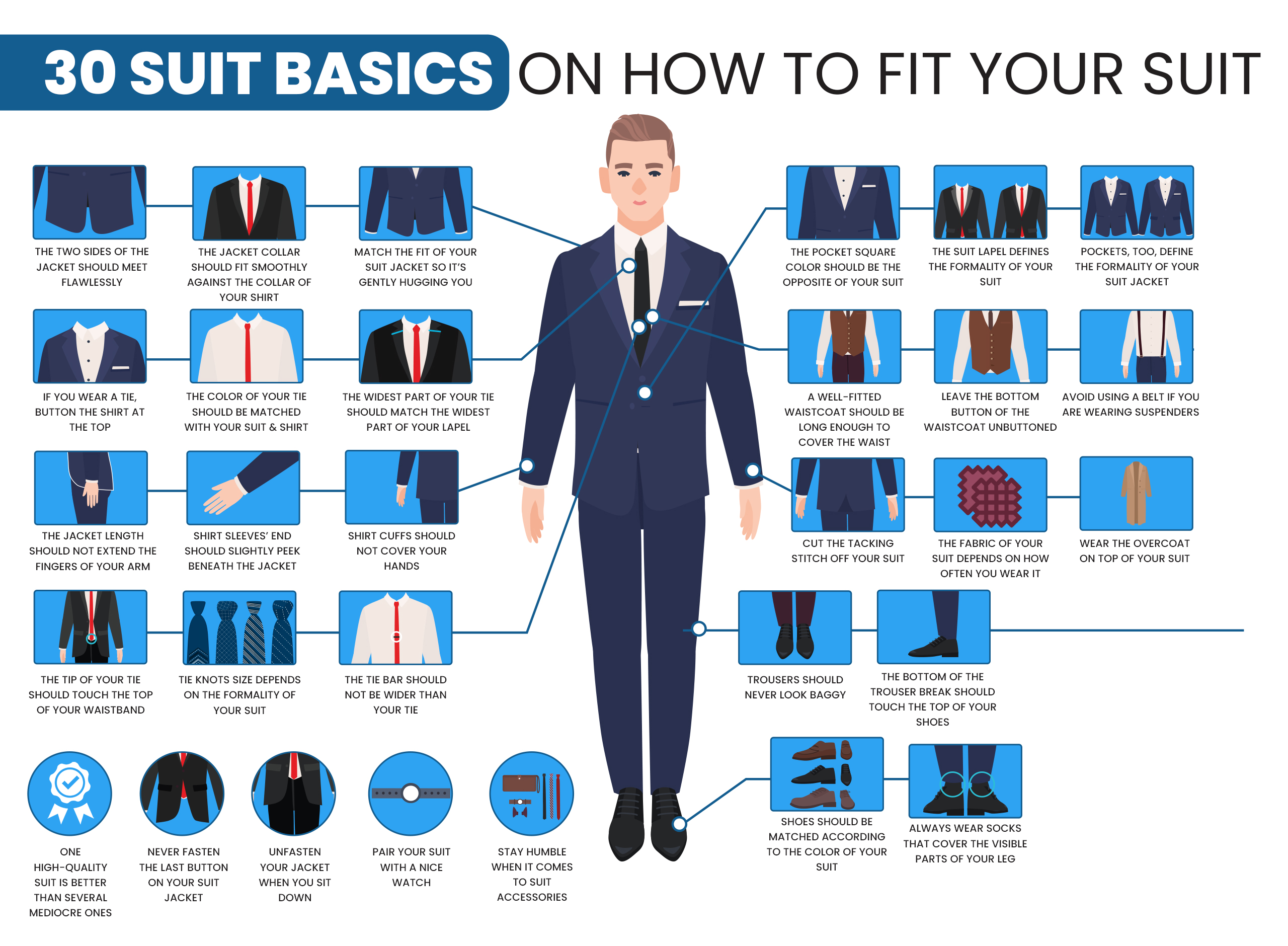
When you button a single-breasted jacket, there should be a very specific geometry at play. The lapels should lie flat against your chest, like they’re glued down. The fabric from the button to the shoulder seam should be smooth, not pulled taut. Signs of a poorly fitting suit jacket in the chest area often start right here. If you see a horizontal pull, or if the lapel starts to flare open like a bird’s wing, you have a problem.
The Single-Breasted Button Strain
Button that top button (for a two-button jacket) and observe. Does the fabric around the button create a star-burst of tension lines? You’ll see little radial pulls heading outward. That’s a clear indicator the chest is too narrow. Your body is essentially trying to break free. Conversely, if the button sits too far away from your body and you can see daylight between the jacket and your shirt? That’s the opposite problem—too much room. The jacket looks like a sail.
Another dead giveaway is the “X” crease. This happens when the fabric right below the buttonhole buckles and creates a diagonal line that crosses over the button. It’s a structural failure. The jacket is telling you that the chest measurement is simply wrong. In my experience, this is almost impossible to fix cheaply. A tailor can let out the side seams an inch, maybe an inch and a half, but if the pull is severe? You’re looking at a full chest reconstruction. That’s expensive and often not worth it for an off-the-rack piece.
Think about your daily life. Can you sit down comfortably? Can you reach for a glass on a high shelf without the button threatening to pop off? If the answer to either is “no,” you’re in a poorly fitting suit jacket in the chest area. The jacket should move with you, not fight you. A proper chest fit allows for a slight hinge at the button when you’re standing, but gives you full range of motion without distortion.
Honestly? If you can’t take a deep breath without feeling the fabric strain your shoulders, it’s a hard pass. Don’t buy it. Don’t let a salesman tell you it’ll “stretch out.” A wool suit will give a little over time, but not that much. You’re not buying a pair of leather boots.
The Lapel Roll Disaster
The lapel is your jacket’s billboard. It should roll smoothly and naturally toward the button, lying flush against your sternum. On a poorly fitting suit jacket in the chest area, the lapels will behave erratically. You might see a gap between the lapel and your chest, especially near the gorge (where the lapel meets the collar). It looks like the jacket is gasping for air.
Here’s a specific test. Stand naturally, arms at your sides. Look down at your lapels. Are they sitting flat? If you can slide a whole hand between the lapel and your chest, the chest is too wide. But if the lapel is buckling outward, curling away from your body, the chest is too tight. This creates a disharmonious line. The jacket looks sloppy and unconfident.
I’ve seen guys with incredible posture get completely let down by a jacket with lapels that stand at attention. It makes you look narrower than you actually are. It’s a visual trick that nobody wants. The lapel should be a clean, continuous line that draws the eye across your chest, not a weird sail that flaps away from your body. This is a hallmark of a jacket chest fit that missed the mark by a mile.
And here’s the kicker: sometimes a tailor can press the lapels down. But that’s a temporary fix at best. The root cause is the chest canvas or the cut. You can’t iron away a structural flaw. The lapel roll is determined by the pattern. If it’s wrong, it’s always going to look a little… sad.
The Fabric Wrinkle Code: Reading Your Jacket Like a Pro
Your jacket holds more secrets than a spy novel. The wrinkles tell a story. I’ve learned to read them like a mechanic reads a spark plug. Different wrinkles point to different problems. When it comes to the chest, we’re looking for specific patterns of distress. Forget the generic “it wrinkles.” We need specifics.
A poorly fitting suit jacket in the chest area creates two primary types of wrinkles: horizontal pulls and diagonal collapses. A horizontal pull means the fabric is stretched too tight across the widest part of your chest. Think of a rubber band around a watermelon. The fabric wants to go one way, your body wants to go another. That’s a size problem.
A diagonal collapse, however, is trickier. This often happens when the chest is too large for you, but the shoulders are too wide. The fabric has nowhere to go but down, creating a diagonal fold from the shoulder blade toward the button. It looks like the jacket is melting off your frame. This is a proportion issue, not just a size issue. Honestly, this is harder to fix than the tight chest.
Horizontal Pulls and The Diamond Crease
Let’s get specific. Button the jacket. Now, look at the area between the top button and the armhole. Do you see tiny, radiating horizontal lines? These are tension wrinkles. They look like a fan that’s been opened halfway. The more severe the wrinkles, the tighter the chest. This is the most classic suit jacket tightness sign. It’s also the one most guys ignore because they think it’s normal.
It’s not normal. It’s your jacket screaming for help.
There’s also the “diamond crease.” This forms right between the shoulder blades on the back of the jacket, but it translates to the chest. When your chest is too tight, the whole jacket rotates. The back fabric gets pulled forward, creating a diamond-shaped tension point between your shoulder blades. You feel it more than you see it, but a good tailor will spot it instantly. It’s a classic signs of a poorly fitting suit jacket in the chest area that manifests in the back.
What about the material itself? A heavier fabric, like a 12oz flannel, will show these pulls more clearly than a light 8oz tropical wool. But the geometry is the same. If you see these pulls, do not buy the jacket. Do not pass go. Find a jacket with a wider chest measurement, or look for a “drop” that accommodates your physique.
I’ll say it again: if the jacket can’t accommodate a full breath, it’s too small. Your suit should be comfortable enough to wear during a business lunch and a commute. It shouldn’t feel like a corset.
Pocket Distortion and Sleeve Head Collapse
This is a more nuanced sign, but it’s incredibly revealing. Look at the welt pockets on the front of the jacket. Are they lying flat? Or are they gaping open? If the pockets are pulling apart, especially the chest pocket (the one you might put a pocket square in), that’s a sign the chest canvas is under extreme tension. The fabric is being stretched sideways, and the pocket opening is the weakest point.
A gaping pocket is a dead giveaway of a jacket chest fit that’s too small. It’s like the jacket is trying to expand but can’t. The pocket shouldn’t look like a sad little mouth. It should be a clean, horizontal slit.
Now, look at the sleeve head. That’s the top of the sleeve where it attaches to the shoulder and chest. On a well-fitting jacket, the sleeve head is smooth and softly rounded. On a poorly fitting suit jacket in the chest area? You might see a wrinkle or a slight collapse right where the sleeve meets the chest. This happens because the chest is too tight, pulling the armhole forward. The sleeve can’t hang naturally.
This is one of those details that 90% of people won’t consciously notice, but they’ll feel something is off. The whole silhouette looks disjointed. The chest looks strained, the sleeve looks weak. It’s a lack of harmony. And it all comes back to that chest measurement being wrong.
- The “Sleeve Hang” Test: Stand relaxed. Look in the mirror. Do the sleeves hang straight down from the shoulder point? Or do they angle forward, toward your belly? If they angle forward, the chest is pulling them.
- The “Pocket Twist” Test: Place a phone in the chest pocket. Does the jacket distort? A well-fitted jacket has structure to hold the pocket shape. A tight chest will cause the entire pocket area to warp.
- The “Arm Raise” Test: Raise your arm to 90 degrees, like you’re hailing a cab. Does the whole jacket ride up your torso? Or does it stay relatively anchored? If it rides up, the chest is too confined.
These tests take 30 seconds total. Do them every single time you try on a jacket. It will save you from bad purchases. It’s a big deal.
The Forgotten Factor: Posture and Chest Interaction
Here’s where things get human. Your posture isn’t a generic template. We all stand differently. Some guys have rounded shoulders. Some have a military straight posture. Some have a “chest forward” stance. A poorly fitting suit jacket in the chest area will ruthlessly expose your postural quirks rather than flattering them.
For example, if you have a forward head posture or rounded shoulders, a standard off-the-rack jacket with a flat chest will often look like it’s pulling backward. The lapels will gap. The chest will look empty. You need a jacket with a slightly smaller chest or a more curved front canvas. Conversely, if you stand tall with a puffed chest, a standard cut will pull tight across your pectorals and create that diamond crease we talked about.
The jacket should act like a good friend: it should have your back. It should accommodate your natural stance, not force you into a different one.
How Posture Distorts the Chest Fit
Let’s talk about the “pigeon chest” or barrel chest. Guys who lift weights or have naturally broad ribcages often struggle. A standard 44 Regular might be perfect in the shoulders but impossibly tight in the chest. The button pulls, the lapels flare, and the whole thing looks like a straitjacket. The solution isn’t to go up a size (which makes the shoulders too wide). It’s to find a jacket with an “athletic” or “sport” cut, which offers more room in the chest without widening the shoulders.
On the flip side, guys with a slouched posture have the opposite problem. The jacket pools at the chest, creating a baggy look. The button pulls downward, and the lapels roll outward. This is a jacket chest fit issue that many tailors miss. They see the length or the sleeves, but they ignore the chest volume. A simple fix here is a dart adjustment. A tailor can take in the chest by adding darts on the front panels, tightening the fabric against the body.
But here’s the reality: a jacket designed for perfect posture will rarely look great on imperfect humans. That’s why bespoke and made-to-measure services exist. They force the pattern to follow your spine and your chest shape. Off-the-rack is a gamble. It’s like buying a one-size-fits-all t-shirt. It works for some, but not for all.
I’ve seen guys spend thousands on a suit that feels amazing on the hanger but just looks “meh” on them. The culprit? They ignored the chest-to-posture relationship. Don’t be that guy.
When the “Chest Canvas” is the Problem
Not all suits are created equal. The structure inside the chest matters massively. A fused jacket (cheap, glued construction) will feel stiff and cardboard-like. A half-canvassed jacket has a floating piece of horsehair in the chest that moves with you. A fully canvassed jacket is the holy grail. The canvas provides the structure. If the chest canvas is poorly cut or too stiff, it can create fitting issues that mimic a poorly fitting suit jacket in the chest area.
With a stiff, fused chest, you might get a weird hollow sound when you tap it. That’s not good. The fabric won’t drape. It will stick out like armor. This creates a visible gap between the jacket and your shirt. Even if the measurements are technically correct, the suit looks cheap and ill-fitting because it lacks the natural follow-through of a canvassed chest.
Honestly, I’d rather have a simple, well-made half-canvassed suit that fits my chest well than a fully canvassed Armani that fights my torso every step of the way. The canvas isn’t magic. It’s just better engineered. But it can still be wrong for your body.
Always ask: is it canvassed or fused? A fused jacket can be altered, but the chest structure is limiting. A canvassed jacket can be manipulated greatly by a skilled tailor. The chest is the heart of the jacket. The canvas is its skeleton.
Common Questions About Signs of a Poorly Fitting Suit Jacket in the Chest Area
How can I tell if the chest is too tight if I can’t see a lot of pulling?
It’s the feeling. If you button the jacket and feel a constant, low-level pressure across your ribcage, it’s too tight. You shouldn’t have to adjust your breathing. Also, check the back of the jacket. If you see a “X” crease between your shoulder blades, that’s the chest pulling the fabric backward. It’s a classic sign. Even if the front looks passable, the back tells the truth.
Is it better to have a jacket that is slightly loose or slightly tight in the chest?
Loose, no question. A slightly loose chest can be taken in by a tailor. It’s a simple procedure involving the side seams or adding darts. A tight chest is a nightmare to fix. You can let out the side seams maybe 1–1.5 inches, but you’re robbing Peter to pay Paul. The armhole position might shift, and the whole balance of the jacket can get messed up. Buy for the chest and shoulders. Those are the hardest to alter.
Can a tailor fix a chest that is too wide?
Yes, easily. That’s a standard alteration. A tailor will remove fabric from the side seams, or more aggressively, from the center back seam. They can also reshape the chest canvas a bit. It’s one of the most cost-effective alterations you can get. It costs far less than letting out a tight chest. So if you’re between sizes, always take the larger size and have the chest taken in.
Do different lapel styles affect how a poor chest fit looks?
Absolutely. A wide notch lapel can sometimes mask a slightly tight chest because it gives the illusion of more width. A skinny lapel, on the other hand, will exaggerate every pull and gap. A peak lapel (on a double-breasted jacket) can be more forgiving because the structure is inherently different. But generally, a poorly fitting suit jacket in the chest area will show on any lapel style if the fit is truly bad. The lapel is just the messenger.
What about the “sleeve head puff” – is that a chest issue?
Often, yes. A puff or a wrinkle right where the sleeve meets the shoulder can be a sign that the chest canvas is tight, pulling the armhole forward. It can also be a sign of a bad sleeve set. But in my experience, if the chest is too tight, the sleeve head will lose its clean silhouette. It will look “pulled.” A proper chest fit allows the sleeve to hang with zero distortion at the top. If that area looks messy, it’s a red flag for the whole chest area.