
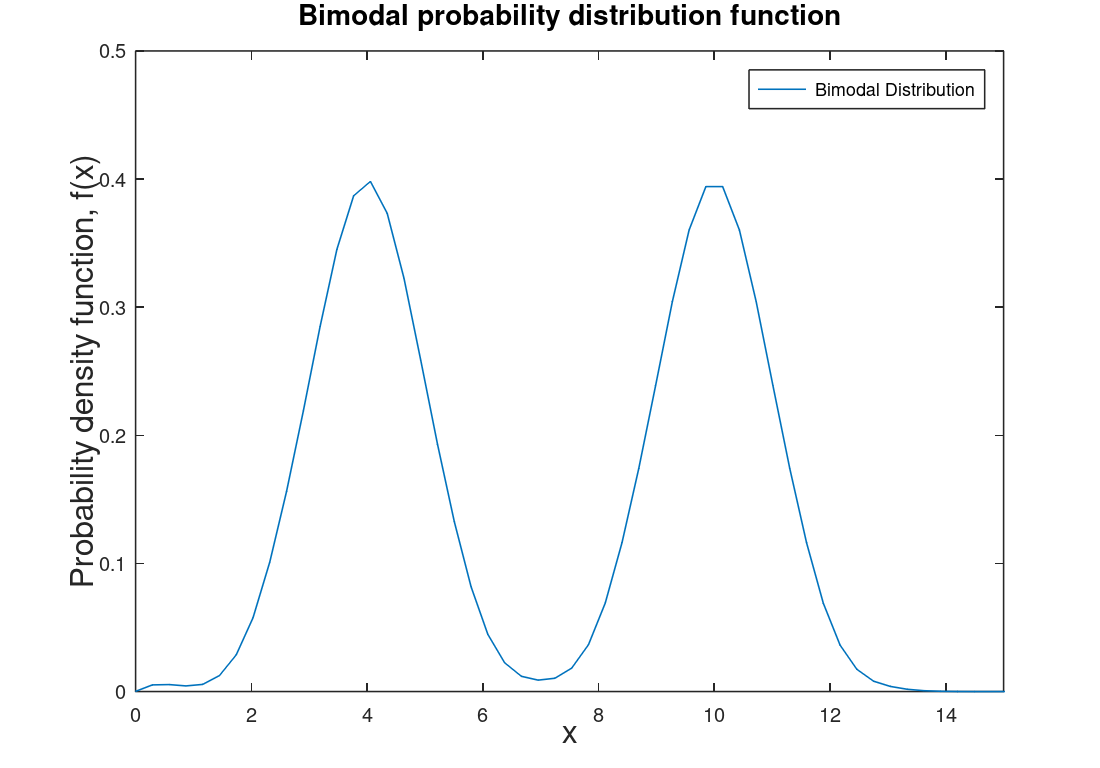
How to Write a Statistical Report Describing Normal and Bimodal Curves
You just ran your analysis, and there it is on your screen: a histogram that looks like a perfect bell. Or maybe it looks like a camel with two humps. Either way, you have to write it up. Honestly? Most people screw this up. They either over-explain the obvious or gloss over the interesting parts like a politician at a press conference. I've been writing and reviewing these reports for over a decade, and I've seen it all Forgetting to check assumptions, confusing bimodal with noisy data, and writing conclusions that sound like they were generated by a 1990s chatbot.
Look—describing a distribution isn't just about saying “it looks normal” or “it has two peaks.” It's about telling a story. A statistical report is a narrative about the data's soul. A normal curve tells you about homogeneity and stability. A bimodal curve tells you about hidden groups, thresholds, or a process that's fundamentally split. You need to write both with the same level of rigor, but the way you frame them is completely different.
So let's get our hands dirty. We're going to move past textbook definitions and into the real-world mess of writing a report that actually matters. No fluff. No unnecessary jargon. Just the stuff that works.
Understanding the Core Narrative of Normal and Bimodal Curves
Before you write a single word of your statistical report, you need to internalize what these curves are actually saying. This isn't academic navel-gazing. It's the difference between a report that gets ignored and one that drives a decision.
The Normal Curve: Why Boring is Beautiful
A normal curve is the statistical equivalent of a well-behaved dog. It follows the rules. It's symmetric. Most of the data clusters around the mean, and the frequency drops off predictably in both directions. In a statistical report, describing a normal distribution should be straightforward, but people get cute with it. Don't.
When you see a normal curve, you are looking at a unimodal distribution where the mean, median, and mode are essentially the same number. This tells you there's no major subgroup fighting for attention. The process or population is homogenous. Seriously. Pay attention. If you're reporting on a manufacturing process and the part dimensions form a normal curve, that's a win. It means variation is random and predictable.
The key here is to avoid treating a normal distribution as boring. It's not boring. It's informative. It tells stakeholders that the system is under control. Your job is to write about the implications of that stability. For example, you can talk about the standard deviation and what percentage of observations fall within certain ranges. Don't just state the shape. State what the shape means for the business question at hand. That's where the value is.
The Bimodal Curve: The Plot Thickens
Now, a bimodal curve is where things get interesting. This is the statistical equivalent of a cat. It does what it wants, and it often means you haven't found the real story yet. A bimodal distribution shows two distinct peaks. This is a massive signal, not noise. In your statistical report, you cannot treat this like a failed normal curve. You must call it out as a discovery.
A bimodal curve almost always indicates a mixture of two populations. Imagine measuring the strength of steel from two different suppliers but mixing the batches. You wouldn't see a single smooth bell curve. You'd see two humps. Write that. Explain that the data is being pulled in two different directions by some underlying factor. That factor is more interesting than the curve itself.
The creative part of writing here is identifying what that hidden factor might be. Is it a categorical variable like gender? Is it a temporal split like before and after a machine calibration? Is it a measurement artifact? Your statistical report needs to guide the reader through this investigative process. Don't just say “it's bimodal.” Say “the data suggests two distinct processes are at play, and here's where we should look next.”
Step-by-Step: Writing the Report Sections That Matter
Alright, let's structure this thing. You have your data, you've identified the shape, and now you need to write. We'll break it down into the sections that actually carry the weight of the argument.
Starting with the Descriptive Statistics and Visual Confirmation
Every good statistical report starts with the numbers that set the stage. For normal and bimodal curves, you need to present specific descriptive statistics. Mean is fine, but the median and mode become critical witnesses. In a normal distribution, they are all friends. In a bimodal distribution, the mean is often a liar. It sits in the valley between the two peaks, representing almost no actual data point. Call that out. It's a fantastic illustrative point.
You should also report the variance and standard deviation. For a normal curve, these are well-behaved and directly interpretable. For a bimodal curve, the standard deviation is inflated because it's trying to measure spread across two separate clusters. Write a sentence like: “The large standard deviation is expected here, as the data is not clustered around a single central value but rather around two distinct points.”
Your visual is non-negotiable. Include the histogram or density plot. But here's the trick: don't just throw the graph in. Write the caption as a mini-conclusion. For example: “Figure 1: Histogram of customer wait times exhibiting a bimodal distribution, with one peak at 3 minutes (express lane) and one peak at 12 minutes (standard checkout).” That caption does more work than two paragraphs of body text. It marries the visual to the interpretation instantly.
Interpreting the Shape: From Histogram to Hypothesis
This is the heart of the report. This is where you earn your keep. The shape is just a shape until you tell people what it implies. For a normal curve, the interpretation is about predictability. You can use the empirical rule (68-95-99.7) to make concrete statements. Write about confidence intervals. Write about the probability of extreme values. This is the part where you connect the normal distribution to practical risk assessment.
For a bimodal curve, the interpretation is a detective story. You need to form hypotheses. Let's say you're looking at test scores. A bimodal distribution might mean the test was too easy for one group and too hard for another, or it might mean the test was poorly designed, or it might mean you have two distinct skill levels in the room. Your report should list these possibilities.
I always structure this section with a short list to keep things crystal clear for the reader. For instance:
- Hypothesis A (Subgroup): A latent categorical variable is splitting the data into two populations. - Hypothesis B (Threshold): A physical or behavioral threshold causes a shift in the data generation process. - Hypothesis C (Artifact): Measurement error or a change in data collection methodology created the split.
Don't just pick one. Acknowledge the uncertainty. Then, recommend the next step. For a bimodal curve, the best conclusion is often “we need to segment this data and analyze each peak separately.” That's a concrete action item. That's a useful report.
The Role of Sample Size and Outliers
I can't overstate this enough: sample size ruins everything if you ignore it. With a small sample, a bimodal curve might just be a normal curve with gaps. With a huge sample, a tiny bump might look like a second peak but be statistically insignificant. Your statistical report must address the sample size explicitly. It's a credibility move.
For a normal curve, small samples can look anything but normal. You need to state whether you had enough data to assess the shape reliably. I usually write something like, “With an N of 300, the assessment of normality is robust; however, the slight skew observed is likely a random fluctuation.” That shows you're thinking.
Outliers are a different beast. A true normal distribution has very few outliers by definition. If you have them, investigate. For a bimodal distribution, what looks like an outlier might actually be the start of a third peak. Don't just apply a blanket rule and remove data. In your report, acknowledge the outliers visually on the plot and discuss them. Did a machine malfunction? Did someone enter a wrong value? Or is the data telling you something new? Write that discussion. It shows deep thinking.
Common Pitfalls and How to Avoid Them in Your Statistical Report
I've read hundreds of these reports. The mistakes are depressingly consistent. Let's bullet proof your writing so you don't make the same errors.
- Forcing normality: Stop pretending every curve is normal. If it's bimodal, say it. If it's skewed, say it. Forcing a normal curve analysis on a bimodal distribution creates meaningless p-values and misleading conclusions. - Ignoring the valley in bimodal data: The valley (antimode) between the peaks is just as important as the peaks themselves. Write about it. It represents a gap in the data, a threshold, or a natural boundary. - Using the wrong average: If you report the mean for a bimodal distribution without explaining that it sits in a low-frequency zone, you are misleading your audience. Use the modes or report the means of the individual subgroups instead. - Over-reliance on p-values: A statistical report isn't just about significance. The shape of the distribution is descriptive. Sometimes a significant test for normality is pointless with a large sample because it will always be “significant” for minor deviations. Look at the plot. Trust your eyes within reason.
Avoid vague language. Don't say “the data appears somewhat normal.” It either is normal enough for your purposes, or it isn't. If you need to be cautious, say “the data is approximately normally distributed, with minor deviations in the tails that are not expected to affect the primary analysis.” That's precise. That's honest.
Common Questions About How to Write a Statistical Report Describing Normal and Bimodal Curves
What is the most critical element to describe first for a bimodal curve in a report?
Always start with the visual confirmation and the location of the two peaks. State the approximate values of the modes. Then immediately discuss the sample size to establish credibility. Only after these fundamentals should you dive into hypotheses about what caused the bimodality.
How do I handle a curve that looks both normal and bimodal?
This often happens with small sample sizes or overlapping groups. You need to be transparent. State that the shape is ambiguous. Run a formal test for unimodality if you can, but in the report, write: “The distribution does not clearly identify as a single normal curve or a clean bimodal curve. Further data collection is recommended to resolve this ambiguity.” Honesty is better than a false conclusion.
Should I transform bimodal data to make it normal for analysis?
Generally, no. A bimodal distribution is telling you something structural about your data. Transforming it to force a normal curve destroys that information. Instead, segment the data. Analyze each peak as its own unimodal distribution. Your statistical report will be far more insightful.
How many words should the interpretation section be for these curves?
There is no magic number, but a rule of thumb: the interpretation section for a normal curve can be concise (5-7 sentences focused on parameters and predictability). For a bimodal curve, the interpretation should be longer and more speculative (10-15 sentences covering hypotheses, subgroup identification, and next steps). The complexity of the shape dictates the length of the writing.
What statistical tests should I reference in the report for these distributions?
For a normal curve, you can reference the Shapiro-Wilk test or a Q-Q plot. For a bimodal curve, formal tests like the Hartigan dip test for unimodality are useful. But remember to frame the test results in plain language. Don't just report a p-value. Explain what it means for the shape of your data and the conclusions of your statistical report.