
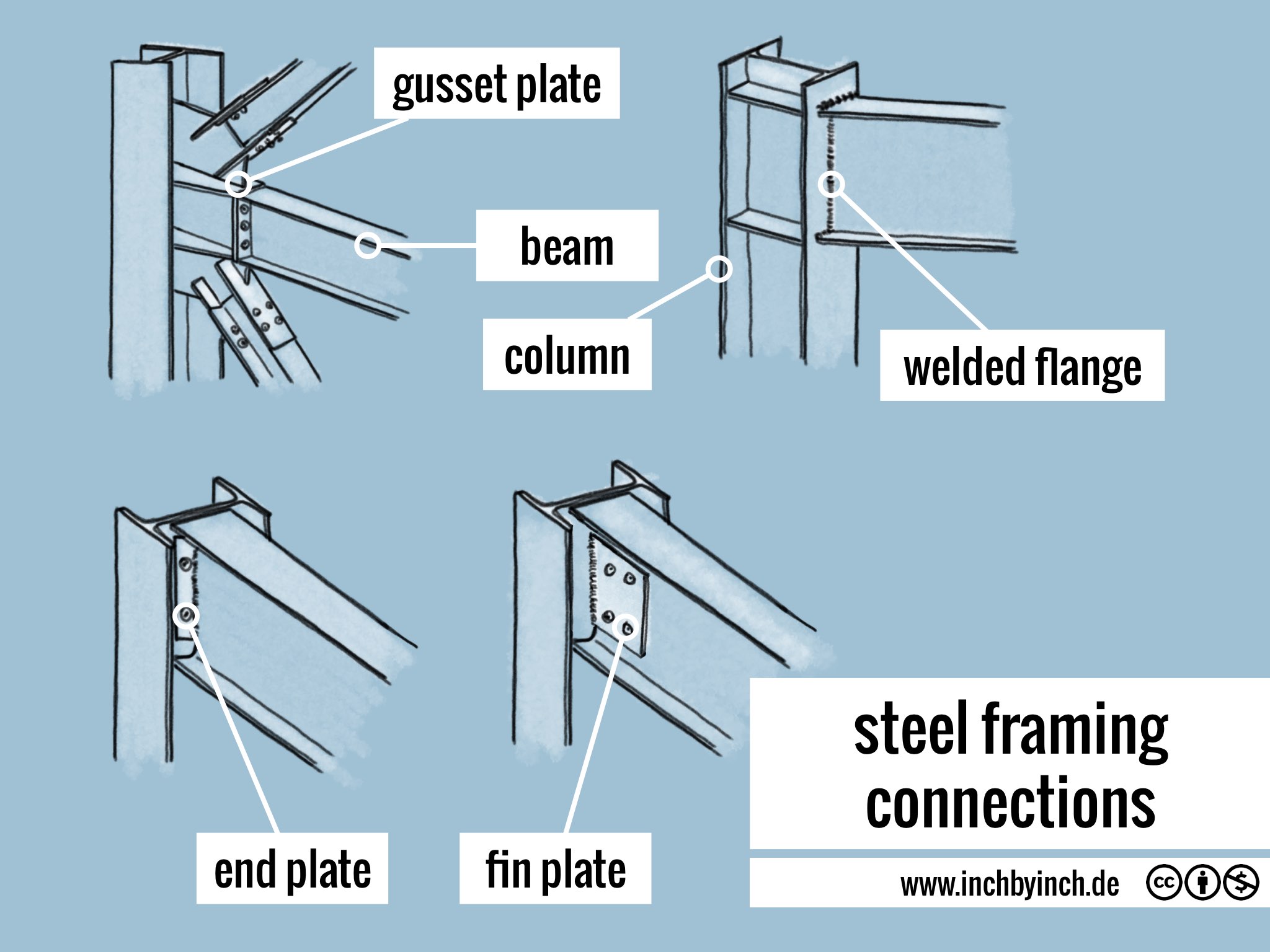
Gusset Plates vs Stiffeners in Structural Steel: Don't Get Them Twisted
You ever walked a steel frame and seen a massive plate bolted to a beam, then a separate little fin welded inside the web? Look—I've been doing this for over a decade, and I still see engineers mix up gusset plates and stiffeners. It's an easy mistake, but it can wreck a connection. Seriously. I've watched a shop fabricator nearly scrap a 20-ton truss because someone called a stiffener a gusset plate on the dwg. So let's clear this up once and for all.
We're talking about two very different pieces of steel. Both are flat plates. Both add strength. But they serve completely different masters when it comes to load path, design philosophy, and even how you weld them. Grab your coffee—we're getting into the weeds, but I promise to keep it practical.
What They Actually Do (And Why It Matters)
The Gusset Plate: The Connector
A gusset plate is a transfer hub. Think of it as a steel intersection where multiple members—truss chords, braces, beams—come together to swap forces. You'll see them at the ends of cross-bracing, at truss panel points, or where a brace meets a column. Its whole job is to collect tension, compression, and shear from incoming members and pass those loads cleanly to the supporting element (beam, column, or another plate).
Here's the kicker: a gusset plate is not there to prevent buckling in the beam web. That's not its role. It's there to handle load transfer through a plane of connection. In fact, most gusset plates are designed for combined axial and shear forces, often using a Whitmore section or a block shear check. Seriously—if you slap a gusset plate somewhere just to stiffen a web, you're wasting steel.
- Handles force transfer between two or more members - Designed for axial tension/compression and shear interaction - Usually located at joints or brace-to-frame intersections - Thickness driven by bolt bearing, weld size, and net section fracture
The Stiffener: The Reinforcement
Now, a stiffener is fundamentally different. It's a reinforcement element. Its entire purpose is to prevent local buckling, control excessive web crippling, or redistribute concentrated loads into a beam or column. You weld a stiffener to a web or flange to change the local plate slenderness.
I've seen guys confuse these two in the field because both look like flat rectangles of steel. But a stiffener is a different animal. It lives inside the section—between flanges, or on top of a web—and it does not typically transfer load between separate structural members. It stiffens. That's it. Examples: web stiffeners under a column base plate, bearing stiffeners over a reaction point, or intermediate transverse stiffeners on a plate girder to control shear buckling.
Look—stiffeners fight local deformation. They don't connect a brace to a beam. That's the gusset plate's job.
- Prevents web or flange crippling under concentrated loads - Controls local buckling in slender sections - Often designed for compression (bearing and buckling resistance) - Usually welded directly to the web and/or flanges
Where You'll Find Each (And Why It Spells Trouble If You Swap Them)
Gusset Plate Applications
If you're working on braced frames, trusses, or moment connections with diagonal members, you're in gusset plate territory. I've detailed dozens of these for seismic applications. In high-seismic zones, the gusset plate has to allow for ductile yielding—meaning you design for the brace capacity, not just the applied load. That plate needs a clearance zone, often called the "gusset plate fold line," to avoid tearing out under cyclic loads.
Common places you'll see them: - End connections of concentrically braced frames (CBFs) - Eccentrically braced frame link-to-column connections - Heavy truss chord and web member intersections - Steel bridge truss panel points
I once had a junior engineer try to replace a missing stiffener on a beam web with a thick gusset plate laid flat. It didn't fit because the stiffener was supposed to be between flanges. The gusset plate would have stuck out, blocked the fireproofing, and created a stiff spot that attracted unwanted moment. Bad news.
Stiffener Applications
Stiffeners show up wherever a steel section is thin relative to its load. They're the unsung heroes of heavy industrial buildings and long-span bridges. If you have a deep plate girder with a high web slenderness ratio, you're going to add transverse stiffeners at regular intervals. That's not to connect anything—it's to stop the web from buckling in shear.
Here's a short list of stiffener roles: - Bearing stiffeners at beam supports (think: a W14x730 beam resting on a column flange) - Intermediate transverse stiffeners on built-up plate girders - Longitudinal stiffeners to split large web panels - Flange stiffeners at heavy concentrated loads (like where a crane runway beam sits)
A stiffener is almost always designed for bearing and buckling resistance. It needs to be wide enough to engage the flange, but not so wide that it interferes with welding or bolting. And here's a pro tip: if you're welding stiffeners to a girder web, stagger the welds to avoid a built-in stress raiser. I learned that one the hard way on a bridge repair.
Design Philosophy: Load Path vs. Local Stability
When you design a gusset plate, you're doing a connection design. You check edge distances, bolt group eccentricity, block shear, net section rupture, and often the plate's own buckling in compression (looking at you, slender brace connections). The load path is critical—where does the axial force from the brace go? Into the beam or column through the gusset plate. Sometimes you need to add a stiffener behind the gusset plate to keep the supporting flange from crippling. See? They work together, but they're not the same.
Stiffeners, by contrast, are usually a stability check. You compute the required bearing area, check the stiffener width-thickness ratio against AISC Table B4.1a, and ensure the weld between stiffener and web can transfer the vertical component of the concentrated load. No load path to multiple members. Just a local reinforcement.
Honestly? One of the best ways to remember the difference: gusset plates connect things; stiffeners strengthen things.
Real-World Failures: When Confusion Costs You
Let me tell you about a job I did a few years back. A warehouse roof truss connection was designed with a gusset plate at the peak. Shop drawings showed a gusset plate, but the field crew called it a stiffener. They decided to notch it to fit between flanges. That notch cut right through the critical Whitmore section. We had to replace it.
Another case: a plate girder bridge was built with intermediate stiffeners mis-labeled as gusset plates on the erection drawings. The erectors tried to bolt diagonal cross-frames to them. Cross-frames need a gusset plate to transfer lateral loads. The stiffeners couldn't take the out-of-plane moment. Cracks formed within six months.
So yeah, it matters. Use the right name, design the right check, and you'll keep steel in one piece.
FAQ: Common Questions About Gusset Plates vs Stiffeners
Can I use a stiffener instead of a gusset plate in a brace connection?
No. A stiffener reinforces a web or flange against local buckling. It doesn't have the needed edge distance, bolt hole patterns, or load transfer geometry for a brace connection. You'll get local failure at the weld or a punching shear tear in the beam web.
Do I always need a stiffener behind a gusset plate?
Not always, but often. If the gusset plate transfers a large compressive force into a beam flange, the web below might need a bearing stiffener to prevent crippling. Run the check using AISC J10. A stiffener behind the gusset plate distributes the vertical component of the brace force.
How do I know if a plate on the drawing is a gusset plate or a stiffener?
Look at the connection detail. If the plate connects two or more separate members (brace to beam, truss chord to web), it's a gusset plate. If it's welded inside a section between flanges, touching only that one beam or column, it's a stiffener. Check the drawing title block—engineers usually call them out by name (GPL or STF).
Can I weld a gusset plate directly to a column flange without a stiffener?
Yes, if the column flange is thick enough and the load is centered. But if the brace force is eccentric or high, you might need a stiffener inside the column to prevent web local yielding. AISC Specification Section J10 covers this. I always check both the flange bending and web crippling.
Are gusset plates and stiffeners ever the same thickness?
Coincidentally, they could be the same nominal thickness, but the design checks are different. A gusset plate thickness is often driven by bolt bearing and net section fracture. A stiffener thickness is driven by width-to-thickness ratio and bearing stress. Don't assume one thickness fits both.