
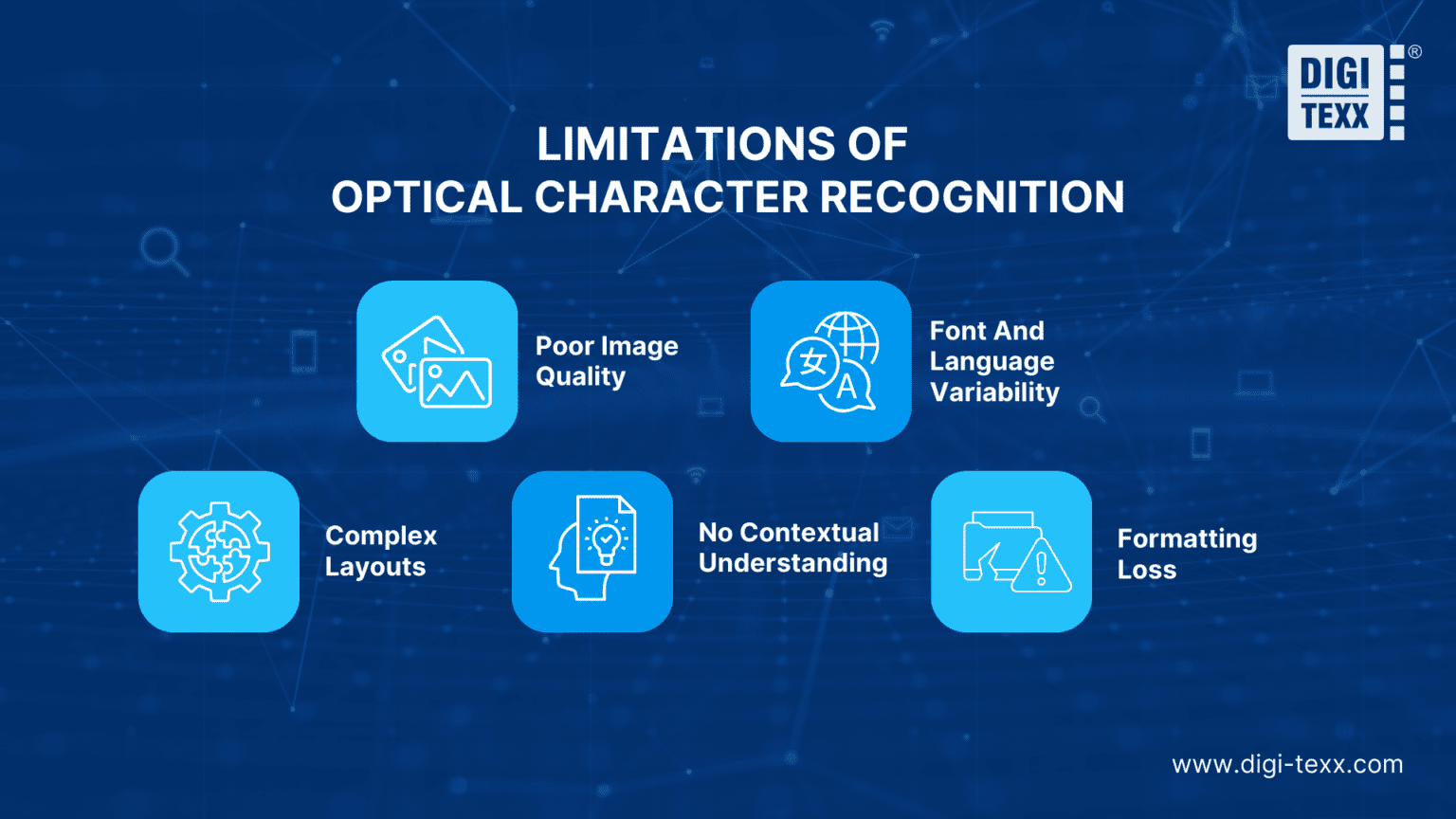
How Dot Matrix Printing Affects Optical Character Recognition
Let me paint you a picture. It's 2024, and you just unearthed a stack of invoices from 1992—the gold era of dot matrix printing. They're faded, crispy, and smell like a dusty server room. You need to digitize them for your accounting software. You run them through a flatbed scanner, crank up the optical character recognition (OCR) engine, and... you get garbage. Random characters. Missed numbers. The word 'Invoice' interpreted as '1nvo1ce'. Honestly? I've been there. And it's not your scanner's fault. It's the dot matrix printer.
See, impact printing leaves a very specific kind of mark on the paper. It's not like the smooth, solid lines you get from a laser or inkjet. Instead, you get a matrix of tiny dots—hundreds of them per character. And those dots? They're the absolute bane of a modern OCR engine. We're talking about a fundamental disconnect between how a machine prints text and how a machine reads text. It's a big deal.
Over the last decade plus, I've watched companies lose thousands of dollars trying to automate the digitization of old dot matrix printouts. They buy the fanciest OCR software, they tweak every setting, and they still get a 30% error rate. The problem isn't the software. The problem is physics. And a little bit of history. So let's tear this apart, starting with the ugly truth.
The Ugly Truth About Impact Printing and Your OCR Pipeline
Dot matrix printing is a brute-force mechanical process. A print head, loaded with pins, slams an ink ribbon against the paper. Each pin creates a dot. The character 'A' is just a pattern of those dots. There is no continuous outline. There is no anti-aliasing. There is just a peppering of ink where the pins hit. And that pepper pattern is impact printer output that looks like noise to a sophisticated OCR system.
Here's the kicker: optical character recognition software is trained on smooth, continuous strokes. Think about the font on this page. The curves are solid. The lines are unbroken. When a scanning system processes a dot matrix character, it sees holes. It sees gaps where dots don't connect. It sees rough edges. The algorithm has to guess whether that broken shape is an 'e' or a 'c'. And guesswork, in data entry, means errors.
I remember a client who ran a warehouse full of aging inventory records. They were printed on a 9-pin dot matrix from 1987. The pins were misaligned, the ribbon was dry, and every character looked like it had been shot with birdshot. We ran the documents through a high-end OCR suite. The word 'Quantity' came back as 'Quan++tty'. Look at that. A plus sign inside the word. That happened because the print quality was so poor that the OCR engine decided two faint dots next to each other must be a plus symbol instead of the letter 't'. Insane, right?
The core issue comes down to character recognition thresholds. OCR software uses something called a confidence score. If it's 95% sure a shape is an 'R', it outputs an 'R'. But with dot matrix printing, the confidence drops to 60-70% on a good day. Below that threshold, the engine either substitutes a different character or flags it as unknown. That's why you get random symbols in your data. That's why you can't just scan and walk away.
Why Your Scanner Hates That Old Dot Matrix Receipt
Grab a magnifying glass and look at an old dot matrix printout. Seriously. Do it. You'll see tiny circles of ink, not solid lines. The spaces between those circles are paper white. Now, imagine your scanner's sensor detecting those white gaps. The image capture process turns those gaps into noise. The darker the ink spot, the more contrast you get against the white paper. But if the ribbon is worn, those spots are gray, not black. Gray spots on white paper? That's a recipe for confusion.
Most modern scanners use a threshold algorithm to decide what is black and what is white. They average out the light levels in a small area. If the average is dark enough, they call it black. But impact printing creates uneven ink distribution. Some dots are dense. Some are faint. Some are missing entirely because the pin didn't hit hard enough. The scanner then has to make a binary decision based on incomplete data. And it often gets it wrong.
Think about the letter 'O'. In a laser print, it's a perfect circle. In a dot matrix printer, it's a ring of dots. If those dots aren't close enough, the scanner sees a broken circle. The OCR engine then has to decide: is this a 'U'? Is it a 'C'? Or is it just a smudge? Nine times out of ten, it picks the wrong option. That's how 'Order' becomes 'C rder'. It's infuriating.
This is why I always tell people: document scanning of dot matrix originals requires a completely different approach than scanning standard documents. You can't use the default settings. You have to override the system. And even then, you're fighting an uphill battle against the fundamental nature of the medium.
The Pin Alignment Nightmare
This is where things get deeply technical. A 9-pin dot matrix printer has nine pins in a vertical column. A 24-pin printer has, you guessed it, twenty-four. But those pins never hit the paper in a perfectly straight vertical line. They bounce. They wobble. Over time, the print head assembly gets loose. The result? Characters that lean. Characters that are squished. Characters where the top half doesn't align with the bottom half.
I once worked with a logistics company that had a massive archive of shipping manifests. Every single one was printed on a 9-pin printer with a bent wire in the print head. That meant the third pin from the top was hitting 0.5mm to the left of where it should be. Every character had a tiny ghost dot on its left side. The OCR system interpreted that ghost dot as part of the character. So the letter 'n' looked like an 'h'. The letter 'm' looked like two characters next to each other. It was a disaster.
Matrix printer output is also highly susceptible to something called 'ribbon shadowing.' When the ribbon is old, it leaves a ghost image on the paper even when the pin isn't striking. That ghost image creates a low-contrast haze around every character. For an OCR engine, that haze is just random black pixels. It tries to connect those pixels to the main character shape. Suddenly, a '1' has a horizontal line attached to it, and the engine thinks it's a 'L'. No joke.
So the alignment issue isn't just cosmetic. It fundamentally alters the geometry of the text. And optical character recognition is, at its core, a geometry-matching problem. If the geometry is warped from the start, you're toast. Burn the toast. Start over with better pre-processing.
How Dot Matrix Printing Actually Works (And Why It Betrays You)
Let's strip this down to basics. A dot matrix printer builds characters using a grid of pins. The pins fire in a specific sequence as the print head moves horizontally across the paper. The pattern of dots is defined by a character map stored in the printer's ROM. This map tells the printer: for the letter 'A', fire pins 1, 3, 5, 7 at position one, then pins 2, 4, 6, 8 at position two, and so on.
Now here's the dirty secret: those character maps were designed in the 1970s. They were built for speed and readability on a screen or a crude printout. They were never, ever designed for OCR input. The spacing between the dots was chosen to make the characters legible to the human eye at a distance. Human eyes are amazing at filling in gaps. We see a circle of dots and our brain says 'yeah, that's an O.' But a machine? A machine sees the gaps and says 'nope, that's an incomplete shape.'
Impact printer technology also has a quirk called 'print head overshoot.' As the print head moves, it doesn't stop instantly at the end of a character. It coasts a tiny bit. That means the last column of dots for one character can end up closer to the first column of dots for the next character. When that happens, the OCR software merges two separate characters into one blob. The word 'rn' becomes 'm'. The word 'cl' becomes 'd'. It's a linguistic nightmare.
And let's not forget paper feed issues. Dot matrix printers use tractors to pull paper through. Those tractors have little teeth that dig into the paper. If the paper slips even 0.1mm, the entire line of text skews. The document recognition system then tries to deskew the page, but it can't fix localized skew within a single line. So you get characters that lean left at the start of the line and right at the end. Good luck matching that against any font database.
The Physics of Ink on Paper: A Messy Affair
I need you to understand the physical impact—pun intended—of a pin hitting a ribbon. When the pin strikes, it compresses the ribbon against the paper. The ink is forced out through the ribbon's fabric. But it doesn't stay in a perfect circle. It bleeds along the paper fibers. This is called ink bleed. With a wet ribbon, the bleed is significant. With a dry ribbon, the dot is smaller and lighter. The variability is huge.
For image processing algorithms designed for OCR, consistency is everything. They want every pixel to be either perfectly black or perfectly white. They want the edges of the character to be sharp and defined. But ink bleed creates fuzzy edges. Fuzzy edges mean the algorithm has to make a judgment call about where the character boundary actually is. And every judgment call is a potential error.
There's also the issue of the ribbon's width. The ink ribbon on a typical dot matrix printer is about half an inch wide. As the printer uses the ribbon, it wears out in the middle first. The top and bottom of the ribbon are still fresh. This means the same printer can produce wildly different print quality depending on where the ribbon is positioned. A document printed on a fresh ribbon section might be readable. A document printed on an old ribbon section might be illegible. And you can't tell the difference by looking at the paper.
I once had a client bring me a box of dot matrix forms that looked identical to the naked eye. Under a microscope, half of them had significant ink spread and half didn't. The OCR results were completely different for the two sets. We had to create two separate processing pipelines for what appeared to be the same document. That's the kind of hidden variability that kills automated data capture projects.
Character Spacing: The Unpredictable Variable
In a perfect world, every character on a printed line would be spaced exactly the same distance apart. That's called monospaced or fixed-width font rendering. Most dot matrix printers use monospaced fonts because it's simpler for the hardware. But the spacing is only as good as the printer's mechanical timing.
When the print head moves, it uses a stepper motor. Stepper motors are great at getting close to the right position, but they're not perfect. Over the course of a line, small errors accumulate. The first character might be perfectly placed, but the fiftieth character might be 0.2mm off from where it should be. That tiny distance changes the width of the character as far as the OCR engine is concerned. And character width is a key feature used to distinguish between letters like 'i' and 'l'.
Why does this matter? Because optical character recognition often uses something called a 'bounding box.' It measures the height and width of each connected shape on the page. If the character 'm' is wider than expected, the engine might try to split it into two characters. If the character 'n' is narrower than expected, the engine might merge it with the next character. Dot matrix printing introduces so much mechanical variation that the bounding box method becomes unreliable.
List of common spacing-related OCR errors from dot matrix originals:
- 'r' and 'n' merge to become 'm' because there's no gap between them.
- 'v' and 'v' merge to become 'w'.
- 'c' and 'l' merge to become 'd'.
- A space between words disappears because the printer skipped too fast.
- A single character like 'H' splits into two vertical bars because the center gap is too large.
Can You Fix a Dot Matrix Document for OCR? (Spoiler: It's Tricky)
Look—I'm not going to tell you it's impossible. I've done it. But it requires a specific toolkit and a willingness to accept that some documents are just too degraded. The first step is always the document scanning process itself. You cannot use generic scanner settings. You need to scan at a minimum of 300 DPI, and honestly, 600 DPI is better. Higher resolution gives the image processing software more data points to work with. It doesn't fix the dots, but it gives you more pixels to analyze.
Next, you need to apply a pre-processing filter. A common technique is called 'morphological dilation.' This basically expands the dots until they touch each other. It fills in the gaps in the character. The result is a blob that looks more like a solid character. But you have to be careful. If you dilate too much, characters start bleeding into each other. Then you've swapped one problem for another. Finding the right threshold value for dilation is an art form. I usually start with a kernel size of 2x2 pixels and adjust from there.
There's also the option of using specialized OCR systems that are trained on dot matrix fonts. Some enterprise-level scanners come with a 'dot matrix mode' that adjusts the recognition algorithms. But those modes aren't magic. They're trained on clean, well-maintained printer output. If your document was printed on a printer that's been beaten to hell, the mode won't help you much. You're better off using generic OCR with strong pre-processing.
The most effective approach I've found is to use a combination of image binarization and adaptive thresholding. Instead of applying a single black-or-white cutoff to the entire image, the software looks at small regions and applies a local cutoff. This handles the uneven ink distribution much better. But it's computationally expensive. You need a decent machine to run it. And even then, you'll have to manually verify every single page. No shortcuts.
Pre-Processing Tactics That Actually Work
Here's a list of the pre-processing steps I use in production. These are battle-tested. They won't fix everything, but they will significantly improve your character recognition accuracy on dot matrix originals.
- Despeckle first. Remove all single-pixel noise. Dot matrix ribbons often leave tiny ink flecks that aren't part of the character. Those flecks confuse the OCR engine into thinking there are extra features. A simple median filter works wonders.
- Apply a blur. Yes, blur. A Gaussian blur with a radius of 1 pixel will soften the edges of the dots. This makes the character outline smoother. It also reduces the impact of minor pin alignment errors. You lose a tiny bit of sharpness, but the OCR engine will thank you.
- Use morphological closing. This is dilation followed by erosion. It fills small holes inside characters (like the center of an 'e' or an 'a') while keeping the overall character size roughly the same. This is the single most effective step for dot matrix text.
- Deskew aggressively. Even a 0.5-degree skew can ruin recognition. Use an automatic deskew algorithm that looks for horizontal lines in the text. If there are no clear lines, draw a bounding box around the block of text and rotate it until the box is perfectly horizontal.
- Increase contrast. Map the grayscale values so that the darkest parts become pure black and the lightest parts become pure white. This eliminates the gray haze from worn ribbons. It's aggressive, but necessary.
I cannot stress enough that these steps must be applied in this order. If you blur after you binarize, you're just smudging the black pixels. The sequence matters. Also, keep a copy of the original scan. You will mess up the settings on your first try. Everyone does. It's part of the learning curve.
After pre-processing, you run the OCR software. Do not expect perfect results. You will still see errors with numbers. The digit '0' and the letter 'O' are virtually indistinguishable in a dot matrix font. You'll have to use context—like whether the character appears in a numerical field or a text field—to decide which one is correct. That means you need a post-processing step that applies business rules. It's a pain. But it's the only way.
When to Give Up and Use a Human
I have a hard rule. If the printing quality is so poor that you can't read the document with your own eyes from a distance of 12 inches, do not waste time with OCR. Just hire a data entry person. It will be cheaper and faster in the long run.
I've seen companies spend weeks tweaking image processing pipelines for documents that were printed on a printer with a broken pin. One missing pin means every character has a missing row of dots. The character '8' looks like '3'. The character '9' looks like '4'. No amount of pre-processing will fix that. The data is fundamentally corrupted at the source.
Another red flag is carbon copies. Dot matrix printers were often used with multi-part forms. The third or fourth copy is almost always unreadable by a machine. The ink is too faint, the paper is too thin, and the dots barely register on the scanner. Don't even try. Just have a human transcribe it.
And honestly? If the document was printed on a 9-pin printer before 1995, you're probably better off just extracting the key data points manually. The pin sizes were larger, the dot spacing was coarser, and the character maps were simpler. Modern OCR engines were not trained on that kind of output. The error rate will be above 40%. At that point, the time you spend correcting errors exceeds the time it takes to type the data fresh.
Common Questions About How Dot Matrix Printing Affects Optical Character Recognition
Can any OCR software handle dot matrix prints, or do I need special software?
Standard OCR software like Adobe Acrobat or Tesseract can handle dot matrix prints, but the accuracy will be