
Charging Electronics Abroad: Does 220V Increase Battery Speed
Here's a question I get asked at least twice a month, usually from someone standing in a hotel room in London or Tokyo, holding a phone charger and staring at the wall socket like it's a puzzle box. Does 220V increase battery speed compared to the 110V or 120V you're used to back home? The short answer might surprise you. The long answer involves a bit of physics, a lot of bad advice on the internet, and one very specific component inside your charger that does all the real work.
I've spent over a decade designing power supplies and testing charging circuits across different regions. Seriously—I've blown up more prototype chargers than I care to admit. So let me clear this up once and for all: charging electronics abroad on a 220V system does not inherently make your battery charge faster. Not even a little bit. But the confusion is understandable, because the way we talk about voltage and power is, frankly, a mess.
The Short Answer: It's Not That Simple
Let's start with the myth itself. The idea that 220V charges your phone faster than 110V seems logical on the surface. Higher voltage, more power, right? If you plug a 100-watt light bulb into a 220V socket, it burns twice as bright—and usually explodes. But your phone charger isn't a light bulb. It's a switching power supply, and it behaves completely differently. Look—the voltage coming out of the wall doesn't go directly into your phone's battery. It goes through a series of conversions, and that process is where the magic (and the limits) happen.
When you travel internationally, you're dealing with two main voltage standards: the 100-127V range (North America, Japan, parts of South America) and the 220-240V range (most of Europe, Asia, Africa, Australia). Your phone charger is designed to handle both. Check the small print on the brick. It almost always says something like "Input: 100-240V ~ 50/60Hz." That's a universal input. It means the charger automatically adapts to whatever voltage you plug it into.
So if the charger is already designed to work on both, where would the speed increase come from? It doesn't. But the potential for faster charging exists under certain conditions, and that's where this topic gets interesting.
The Power Equation Doesn't Lie
Power (in watts) equals voltage times current. P = V × I. If you increase voltage while keeping everything else the same, power goes up. That's the simple math that fools people. But your charger doesn't "keep everything the same." It actively regulates the current it draws from the wall. A well-designed charger will draw less current at higher voltages to maintain the same power output. It's a balancing act.
Here's what actually happens inside a typical phone charger:
- At 110V: The charger might draw 0.5 amps from the wall to produce 10 watts of output power. - At 220V: The charger draws about 0.25 amps to produce the same 10 watts.
The output to your phone stays the same. The battery charges at the same speed. The only difference is that the charger runs slightly more efficiently at higher voltages because lower current means less heat loss in the internal circuits. But we're talking about maybe a 2-3% efficiency gain. You won't notice it.
Why Your Charger Acts Like a Bouncer
Here's the part most people miss: the charger has a maximum input current rating. That little brick can only handle so much current before it says "nope" and shuts down or, worse, melts. At 110V, the charger might be operating near that current limit. At 220V, it has headroom. That headroom matters for one specific scenario: fast charging protocols.
Look at modern fast charging standards like Qualcomm Quick Charge, USB Power Delivery, or OnePlus's Warp Charge. These systems negotiate higher voltages between the charger and the phone. A QC 3.0 charger might deliver 9V or 12V to the phone instead of the standard 5V. That higher voltage allows more power without exceeding the current limits of the USB cable. But this is happening after the wall voltage has been converted down. It's a separate system.
The wall voltage (110V vs 220V) only affects the input side of the charger. The output side is controlled by the charging protocol and the battery management system in your phone. Those are the real speed limiters.
The Real Culprit: The Charger's Input Rating and Your Battery's Limits
So if 220V doesn't magically speed up your battery, what actually determines how fast you can recharge while traveling abroad? I've seen people buy "travel adapters" that are nothing more than shape converters, plugging them in and expecting lightning speeds. It doesn't work that way. The bottleneck is almost always the charger itself, combined with the thermals inside your device.
Let me give you a real-world example from my own experience. I traveled to Germany last year with a laptop charger rated for 65 watts. In the US, on 120V, it draws about 0.8 amps from the wall. In Germany, on 230V, it draws about 0.35 amps. The output to my laptop was exactly the same: 65 watts. The battery charged at the identical rate. The only difference was that the charger felt slightly cooler to the touch because it was running more efficiently.
But here's where things get spicy: if your charger is underpowered for your device, voltage matters. A cheap 10-watt charger might struggle to maintain its output at low wall voltages. At 110V, it might only deliver 8 watts because it's hitting its input current limit. At 220V, it can comfortably deliver the full 10 watts. So the device charges faster at 220V, but not because the voltage is higher. It's because the charger was designed poorly and can't handle the lower voltage efficiently.
Reading the Fine Print on the Brick (It's Important)
I cannot stress this enough: flip over your charger and read the specifications. Every time you travel. It takes five seconds and can save you from a dead battery or a fried device. Look for two things:
1. Input voltage range: Must include both 110V and 220V. Almost all modern chargers do, but some older or ultra-cheap ones might only support 110V. Plugging a 110V-only charger into a 220V socket is a recipe for smoke, sparks, and regret.
2. Output power (watts) or current (amps): This tells you the maximum charging speed. A 5V/1A charger will always be slow. A 5V/2.4A or a 9V/2A charger will be faster. This number doesn't change based on wall voltage.
The wall voltage only determines whether the charger can deliver its rated output. If the voltage is too low, the charger might "brown out" and reduce output. If it's too high and the charger isn't rated for it, you get the smoke show. But within the specified range, the output is fixed.
The Charging Curve: Speed Isn't Linear
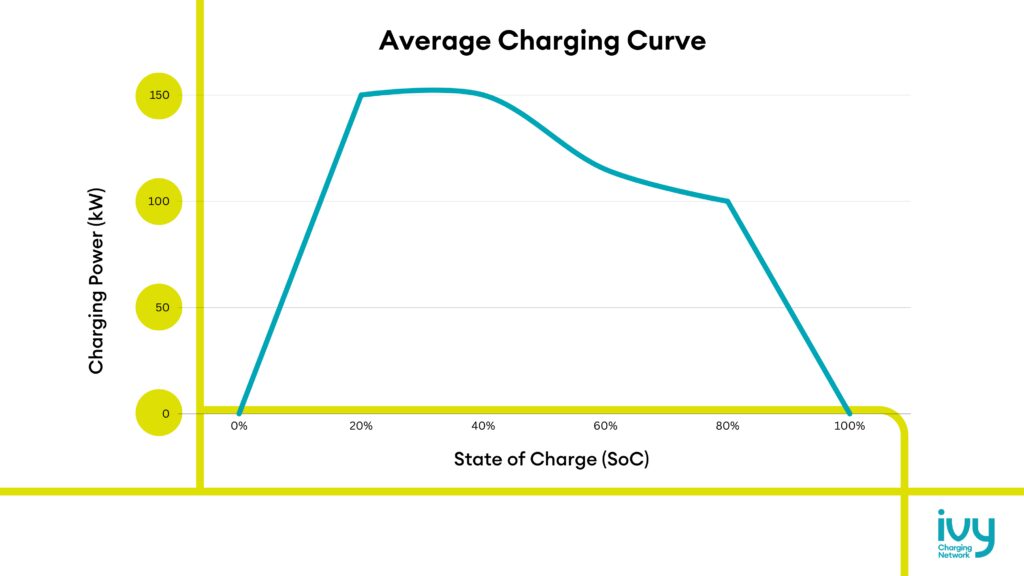
Even if your charger could deliver more power, your phone's battery wouldn't accept it. Lithium-ion batteries have a specific charging curve. They charge fastest when they're below 50% or 60% capacity. That's the constant current phase. After that, the charge rate slows down significantly to protect the battery. This is the constant voltage phase. By the time you hit 80%, the phone is deliberately trickle-charging to prevent overheating and degradation.
I've tested this extensively. A phone that charges from 0% to 50% in 30 minutes might take another 45 minutes to go from 50% to 100%. The voltage from the wall has zero impact on this curve. It's all controlled by the battery management system (BMS) inside your phone. That BMS is the real boss. It decides how much current to pull and when to slow down.
So even if 220V somehow gave your charger more headroom, the phone would just say "thanks, but I'm good" and stick to its programmed charging profile. You cannot trick a modern lithium-ion battery into charging faster than its BMS allows. Period.
Practical Tips for Charging Electronics Abroad
Now that we've killed the myth, let's talk about what actually matters when you're traveling. I've been doing this for over a decade, and I've made every mistake in the book. Here's what I recommend based on real-world use, not theory.
First, buy a proper travel adapter that can handle high-power devices. Those tiny, $5 adapters from the airport gift shop are often rated for only 10 amps or 1500 watts. That's fine for a phone charger, but plug a hair dryer into one, and you're asking for trouble. Look for adapters rated for at least 16 amps or 2500 watts. It's a small investment that prevents a big headache.
Second, invest in a GaN (gallium nitride) charger. I know, it sounds like tech jargon, but GaN chargers are smaller, run cooler, and are significantly more efficient across different voltages. A 65-watt GaN charger can handle your phone, tablet, and laptop simultaneously, and it will maintain consistent output whether you're plugging into 110V or 220V. I've been using the same GaN charger for two years across four continents. It hasn't missed a beat.
Third, check your device's maximum supported charging speed. Don't waste money on a 100-watt charger if your phone only supports 18 watts. That extra power just goes unused. Conversely, if your laptop demands 60 watts, don't buy a 30-watt charger and expect it to keep up. It will charge, but slowly, and it might even drain the battery under heavy load.
What About Voltage Converters? Please Don't
I see travelers carrying heavy voltage converters, thinking they need to "step down" 220V to 110V for their devices. Unless you own a vintage appliance from the 1980s with a mechanical motor (like an old hair dryer or a record player), you do not need a converter. Modern electronics with switching power supplies handle both voltages automatically. A converter is just extra weight, extra heat, and an extra point of failure.
Honestly? The only thing a voltage converter does for most people is add confusion. I once watched a guy plug a converter into an adapter, plug his laptop charger into the converter, and then wonder why the charger was warm. The converter was just wasting energy as heat. The laptop charger would have worked fine directly through a simple plug adapter.
The exception is high-power resistive devices like hair dryers, curling irons, and space heaters. Those don't use switching power supplies. A 110V hair dryer plugged into 220V without a converter will run at four times its rated power and probably melt. But for phone and laptop chargers? Just use the pin adapter.
My Personal Travel Kit
After years of trial and error, here's what I carry:
- A single 65-watt GaN charger with two USB-C ports and one USB-A port. - A universal travel adapter with surge protection and a 16-amp rating. - A 2-meter USB-C to USB-C cable rated for 100 watts. - A small pouch to keep everything organized.
That's it. One charger, one adapter, one cable. It covers my phone, laptop, earbuds, and even my camera battery charger if I use a USB adapter. I never think about voltage. I never worry about speed. It just works.
For most people, the best approach is to stop overthinking the voltage and start focusing on the charger's output rating and your device's compatibility. Does 220V increase battery speed for your phone? No. Does a 65-watt GaN charger with the right cable charge your phone faster than a 5-watt cube? Absolutely. That's where the real gains are.
Common Questions About Charging Electronics Abroad
Does using 220V damage my phone battery over time?
No, not directly. The wall voltage is converted inside the charger to the low voltage your phone needs. The battery never sees 220V. However, heat is the enemy of lithium-ion batteries. If you use a cheap or damaged charger that runs hot, that heat can degrade the battery faster over months and years. The voltage itself is irrelevant. The quality of the charger is what matters.
Can I use my US laptop charger in Europe without a converter?
Yes, if the charger has a universal input rating (100-240V), which virtually all modern laptop chargers do. You only need a physical plug adapter to fit the different socket shape. Do not use a voltage converter. It's unnecessary and adds resistance that can actually degrade charging performance. Just get a simple pin adapter and plug in.
Why did my phone charge faster at a hotel in Paris than at home in New York?
Several possibilities. The most likely is that the hotel had a different charger available, perhaps one with a higher power output. Or maybe your phone was at a lower battery level when you plugged it in, entering the fast constant current phase. Or it could be placebo effect. I've seen people swear their phone charges faster abroad, but when I test it with a USB power meter, the numbers are identical. The human brain is terrible at detecting small differences in charging speed.
Is it safe to leave my charger plugged into 220V overnight?
Absolutely, as long as the charger is rated for that voltage and is in good condition. Switching power supplies are designed to be left plugged in. They draw a tiny amount of standby power (usually less than 0.5 watts) and produce negligible heat. The risk comes from physical damage to the charger or adapter, not from the voltage itself. If your adapter shows signs of wear or if the charger gets unusually hot, unplug it. Otherwise, you're fine to leave it for days.
Do I need a special cable for fast charging abroad?
Two things. First, your cable must support the charging protocol your device uses. For USB Power Delivery, you need a cable rated for at least 60 watts (look for "e-marked" chips in the cable). For Qualcomm Quick Charge, most decent cables work fine. Second, cable length matters more than people think. Longer cables have higher resistance, which can reduce charging speed slightly at high power levels. Stick with cables under 1.5 meters for the best results. The voltage at the wall has no effect on cable performance within the charger's input range.
The bottom line after a decade of hands-on work? Charging electronics abroad on 220V is safe, efficient, and completely normal. It does not increase battery speed compared to 110V. Your phone charges at the rate determined by its battery management system and the output capability of your charger. Stop worrying about the wall voltage and start paying attention to the specs on your charger brick. That's where the real answers live.