
The Real-World Guide to Converting W/mK to R-Value Using Material Thickness
So you're staring at a spec sheet for some new insulation, and it says thermal conductivity is 0.035 W/mK. That's nice. But you need the R-value because your building inspector isn't fluent in metric physics. Or maybe you're trying to compare a foam board from Germany with a fiberglass batt from the local hardware store. I've been there. It's confusing, and honestly, most online calculators just spit out a number without explaining what's really happening. Let's fix that.
Here's the simple truth: converting W/mK to R-value is not magic. It's a straight division problem once you get the units straight. The missing link is always material thickness. Without that, you're just staring at a material property that tells you how conductive something is, not how well a specific piece of it will resist heat flow. The difference is crucial. Think of it like this: a sheet of copper is incredibly conductive (high W/mK), but a really, really thin sheet of copper doesn't insulate much at all. Thickness changes everything.
Look—I've literally spent years in labs testing this stuff and on job sites where the wrong conversion cost someone a lot of money. This isn't an academic exercise. It's about keeping a building warm in winter, cool in summer, and saving cash on energy bills. Let's break down exactly how to do this conversion, why the math works, and the common traps that trip up even experienced engineers. Get your calculator ready, or just your brain.
The Core Formula: Why Thickness is the Secret Sauce
The fundamental relationship is deceptively simple: R-value equals thickness divided by thermal conductivity. In formal terms, R = L / k, where L is the thickness of the material (in meters) and k is the thermal conductivity (in W/mK). That's it. Seriously. If you have a slab of foam that is 0.1 meters thick and a k-value of 0.035 W/mK, then your R-value is 0.1 / 0.035, which equals about 2.86. But wait—that number is in SI units (m²K/W). In the US, we usually use imperial R-values (hr·ft²·°F/Btu). So the game is knowing which R-value conversion you need.
Why does this matter so much? Because material thickness is the dial you can turn. You can take a material with a mediocre conductivity and make it perform well just by piling on the inches. Conversely, a fancy aerogel with a tiny k-value can be ruined if you only apply it as a thin coating. I've seen architects specify a high-end thermal insulation board and then install it at half the recommended thickness to save money. The resulting R-value was laughable. The math doesn't lie.
Now, here's where people get tripped up: units. If your material thickness is in inches (common in the US) and your thermal conductivity is in W/mK, you have to convert. An inch is 0.0254 meters. So a 2-inch thick board is 0.0508 meters. Then you divide by the k-value. That gives you the SI R-value. To get the imperial R-value (the one happy with ft² and °F), you multiply that SI number by 5.678. Yes, it's an extra step. Yes, it's annoying. But forgetting that factor is how you end up with a building that feels like a sieve.
Step-by-Step: From Spec Sheet to Real R-Value
Alright, let's walk through a real example. You have a data sheet for a rigid polyisocyanurate foam. It says k = 0.022 W/mK. You plan to use a board that is 3 inches thick. First, convert thickness to meters: 3 inches × 0.0254 = 0.0762 meters. Second, calculate the SI R-value: 0.0762 / 0.022 = 3.46 m²K/W. Third, convert to imperial: 3.46 × 5.678 = 19.67. So that board gives you roughly an R-20. That's a solid number for a wall cavity.
But here's the kicker—manufacturers often list an 'aged' or 'long-term' R-value. The numbers above assume a perfect, fresh sample. In reality, blowing agents leak out of foam over time, and the conductivity goes up. I always recommend using a derating factor of about 10-15% for foam insulation unless the manufacturer explicitly provides aged data. So your sweet R-20 might actually be closer to R-17 or R-18 after a few years. That's a real-world bite.
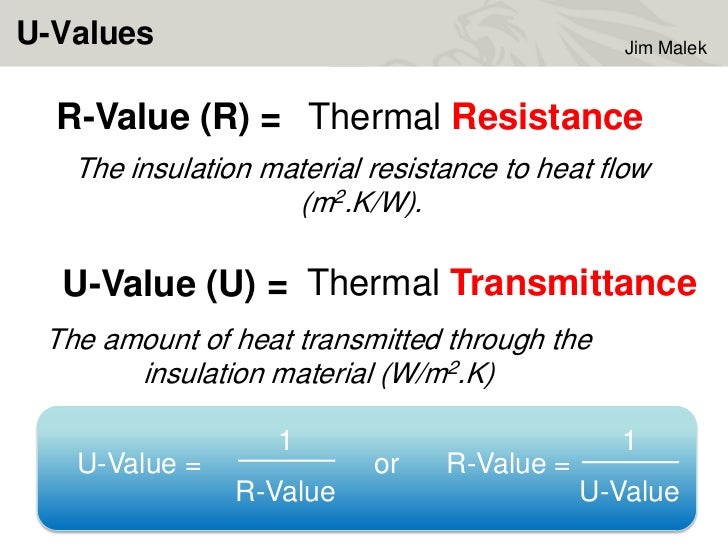
Another thing: don't mix R-value and U-value (which is the thermal transmittance, or 1/R). I've had clients who proudly showed me their 'R-30' attic insulation, but they had calculated the U-value by accident. Talk about a cold shower. Double-check your division. If your result seems way too high or too low, go back to the formula. Thickness divided by conductivity. Plaster it on a sticky note if you have to.
Why You Can't Just Trust the Label (And What to Check)
I've tested insulation boards from big-name brands that didn't match their claimed R-value. It happens more than you think. The label might say R-25 for a 6-inch thick mineral wool batt, but if the thermal conductivity of that specific batch is slightly higher, your actual R-value is lower. This is why I always tell people: get the k-value from the technical data sheet, not the generic marketing material. And measure the actual material thickness yourself. Don't assume the nominal thickness—some products compress or sag during installation, especially fibrous ones like fiberglass.
Here's a practical checklist I use on the jobsite:
- Always request the tested k-value at the mean temperature you expect (usually 24°C or 75°F).
- Measure the material thickness with a caliper or ruler at multiple spots. Average them.
- Perform the R-value conversion using the actual thickness, not the spec sheet claim.
- Apply a safety factor. For building code compliance, aim 10% higher than the minimum requirement.
A quick story: I once consulted on a passive house project in Vermont. The contractor installed 12 inches of cellulose in the attic, thinking it would hit R-50 based on the manufacturer's generic number. When I measured the settled thickness two weeks later, it was actually 10.5 inches. The settled density changed the conductivity, too. We recalculated using the real thickness and the adjusted k-value. The R-value dropped to R-42. Still good, but not R-50. That difference matters for certification. So measure twice, insulate once.
Advanced: When W/mK Isn't Constant (It Almost Never Is)
Here's where a lot of online guides fall flat. They treat thermal conductivity like a fixed number. It's not. Conductivity changes with temperature, moisture content, and even the direction of heat flow. For most building materials, the k-value goes up as temperature goes up. So the R-value of your insulation on a scorching summer day is actually lower than on a mild spring day. That's a problem if you're designing for peak loads.
For example, closed-cell spray foam has a k-value of roughly 0.024 W/mK at 24°C. But at 50°C (like an attic in July), that can climb to 0.028. That 17% increase in conductivity means your R-value drops by the same percentage. So your R-20 foam becomes R-17 on a hot afternoon. I've seen HVAC designs fail because the designer used the 'room temperature' k-value for a roof assembly that bakes in the sun. The conversion formula still works; you just need to use the correct k-value for the operating condition.
Moisture is another beast. Wet insulation conducts heat like a champion, because water has a high conductivity (about 0.6 W/mK). If your material thickness is saturated, your R-value plummets. I can't tell you how many times I've seen a retrofit project where old fiberglass batts were soaking wet and the calculated R-value was essentially zero. The formula R = L / k still works, but k is now the composite value of the wet material. There are more complex models for that, but the simple takeaway is: keep your insulation dry if you want the R-value conversion to mean anything.
Multi-Layer Assemblies: Stacking Your R-Values
What if you have a wall with drywall, an air gap, insulation, and siding? You can't just convert the whole stack using a single k-value. You convert each layer individually using its own material thickness and thermal conductivity, then add them up. The total R-value is the sum of the individual R-values. This is straightforward but tedious. I keep a spreadsheet for this because doing it by hand for a complex assembly is a recipe for mistakes.
Let's do a quick example. Layer 1: 0.5 inch drywall (k ≈ 0.17 W/mK). Thickness in meters: 0.0127. R = 0.0127 / 0.17 = 0.075. Layer 2: 5.5 inches of fiberglass batt (k ≈ 0.04 W/mK). Thickness: 0.1397. R = 0.1397 / 0.04 = 3.49. Layer 3: 0.75 inch plywood siding (k ≈ 0.12 W/mK). Thickness: 0.01905. R = 0.01905 / 0.12 = 0.159. Total SI R-value = 0.075 + 3.49 + 0.159 = 3.724 m²K/W. Multiply by 5.678 to get imperial: about R-21.1. Notice how the drywall and siding contribute almost nothing compared to the insulation. Yet people obsess over their k-values. Focus on the thick, low-conductivity layers.
One more nuance: thermal bridging. If you have wood studs every 16 inches, the conductivity of wood (around 0.1 W/mK) is much higher than insulation. You can't just take the insulated cavity R-value and call it a day. The actual whole-wall R-value is lower. There are methods like the parallel path method or the zone method to account for this. But at its core, you're still doing the same basic conversion: thickness divided by conductivity for each path, then weighted by area. It's more work, but it reflects reality.
Common Questions About Converting W/mK to R-Value Using Material Thickness
What if my material thickness is in centimeters and my k-value is in W/mK?
Easy. Convert centimeters to meters first. Divide the centimeter value by 100. So 15 cm becomes 0.15 meters. Then use the formula normally. If you forget this, your R-value will be off by a factor of 100. I've done it. It's embarrassing. Don't skip the unit check.
Can I convert R-value back to W/mK if I know the thickness?
Absolutely. That's just algebra. If R = L / k, then k = L / R. But be careful with the units. If you have an imperial R-value, you need to convert it back to SI first (divide by 5.678). Then divide the thickness in meters by that SI R-value. This is useful if you're trying to reverse-engineer what k-value a manufacturer is actually using for their claimed R-value. I've caught a few inflated claims this way.
Why does the R-value change if I use different units for thickness?
Because the formula isn't unit-agnostic. Material thickness in meters gives the SI R-value in m²K/W. Thickness in inches gives a completely different number if you don't convert. The thermal conductivity value is fixed in W/mK. So you must match the length units. Always convert thickness to meters before dividing. It's the only way to ensure the R-value conversion is mathematically sound.
Does this formula work for reflective insulation or multi-foil products?
Short answer: no, not directly. Reflective insulation relies on emissivity and air gaps, not pure conduction. The conductivity of the foil itself is high, but the system works by reflecting radiant heat. They often market an 'equivalent R-value' based on assembly tests. Don't try to calculate it using R = L / k. You'll get a nonsense result. For those products, rely on ASTM C1371 or equivalent test data, not the formula you now know so well.
Is a higher k-value always bad for insulation?
Yes, for thermal insulation, a lower k-value is better because it means less heat flows through. But in some applications like heat exchangers or underfloor heating, you want high conductivity. The formula itself is neutral. It just describes the physics. You pick the material that gives the desired R-value at the practical material thickness you can afford. Sometimes a slightly higher k-value material is fine if you have the space to add thickness. It's a trade-off, and now you have the tool to evaluate it.
Xe's currency converter tool makes it easy to check live exchange rates, as well as convert your money with currency exchange across 130+ currencies! The intent of this site is to provide a convenient means to convert between the various units of measurement within different systems, as well as to provide a basic understanding of the systems. Pdf to word conversion is fast, secure and almost 100% accurate. Convert wav, aac, flac, mp4, and more to mp3 format at the highest quality. Convert pdf to editable word documents for free. Convert scanned pdf to doc keeping the layout. More than 309 different document, image, spreadsheet, ebook, archive, presentation, audio and video formats supported. No software to install and free. Html to pdf convert webpages in html to pdf. Free and secure conversion without installation or account creation.