
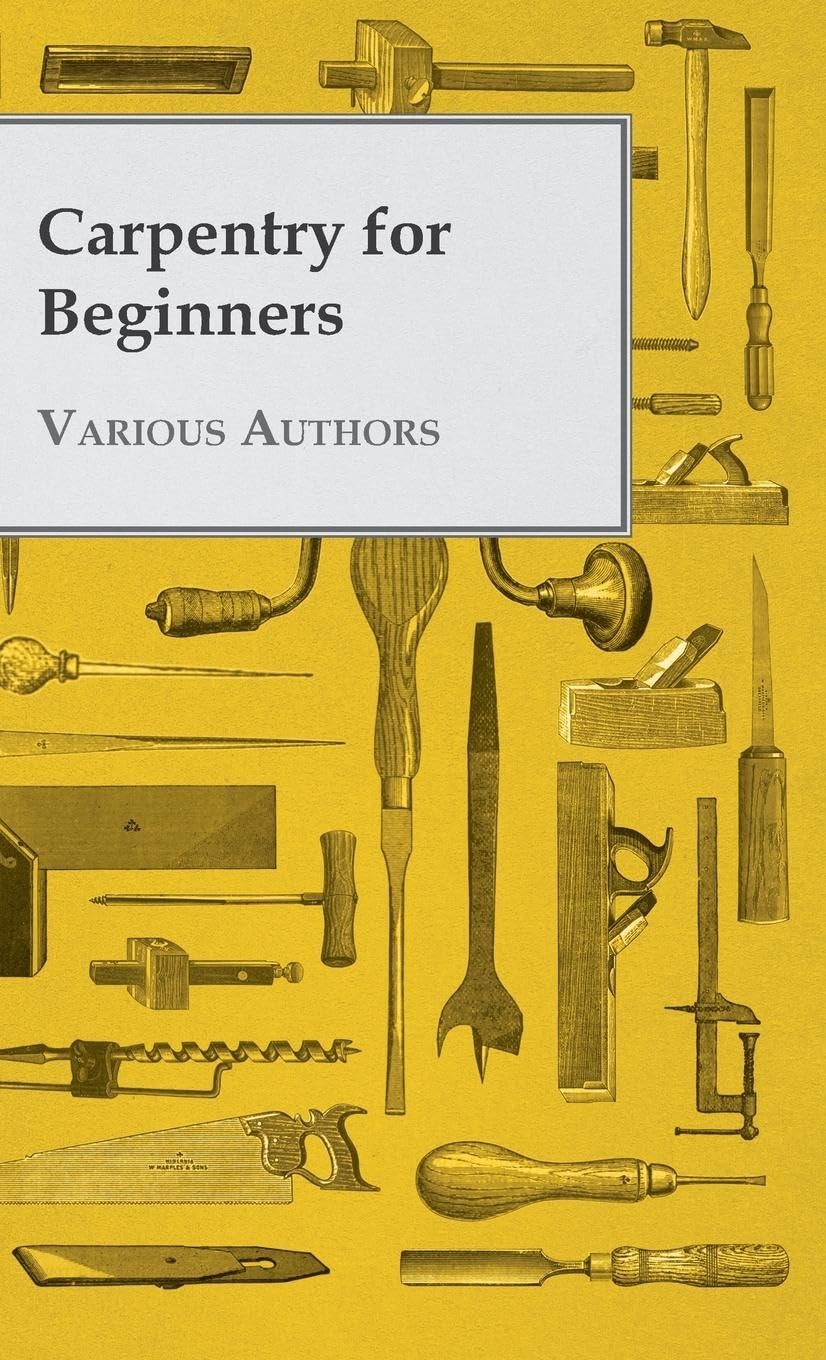
Essential tools and books for the self-taught carpenter
Look—I’ve been where you are. Standing in a big-box hardware store, staring at a wall of shiny tools, sweating because you’re not even sure what a 'chisel' is supposed to do. You want to build something real. A table. A shed. Maybe a freaking bookshelf that doesn’t wobble. But the noise of advice is deafening. Everyone says you need a $5,000 table saw before you can cut a straight line.
They’re wrong.
I’ve spent over a decade in this field, making mistakes, collecting scars, and learning what actually matters. Trust me when I say this: essential tools and books for the self-taught carpenter are not about the flashiest gear. They are about the right foundation. Measurement. Sharpening. The mental model that turns a pile of lumber into something your grandkids will fight over. Let’s strip the noise and get to the core.
The Foundation: Hand Tools That Define the Self-Taught Carpenter's Journey
You cannot power-tool your way out of bad habits. It's a fact. A self-taught carpenter who skips the hand-tool basics ends up with projects that look good from ten feet away and terrible under a level. There is a reason old-timers kept a block plane within arm's reach. It's not nostalgia. It's precision.
Let's talk about the absolute non-negotiables. Your first tool purchase should make you feel capable, not broke. Forget the cordless nail gun for now. Forget the domino joiner. Start with three things, and I mean really invest in them. A low-angle jack plane. A set of four chisels (1/4, 1/2, 3/4, and 1 inch). A combination square. That's it.
Seriously.
With those three items and a sharpening setup, you can square a board. You can fit a joint. You can fix the mistakes that a power tool will amplify. The essential tools for a self-taught carpenter are the ones that teach your hands what 'flat' feels like. Your hands need that memory before you touch a router.
The Unholy Trinity of Sharpening
Here is the single biggest mistake I see in beginners: they buy a cheap chisel set and never sharpen it. They blame the tool for being dull. Self-taught carpenters often underestimate the ritual of sharpening, but it's the difference between frustration and flow. A sharp chisel cuts end grain like butter. A dull one slips, and that slip is how you get a trip to urgent care.
You need three things. A set of diamond stones (coarse, fine, extra-fine). A strop with green compound. And a honing guide. The guide seems like cheating, but it's teaching you the angle until you can do it by feel. It's a big deal.
Every project you start should begin with ten minutes of sharpening. Make it a rule. You will not use a tool that hasn't been touched up. This habit alone will lift your work above 80% of hobbyists. It's not sexy. It's essential.
The Measuring and Marking Setup
Measure twice, cut once is a cliche because people ignore it. But the real secret is marking, not measuring. A self-taught carpenter needs to understand that a pencil line is fat. It represents the width of a saw kerf, and if you guess which side of the line to cut, you lose a millimeter. Do that a few times, and your project is angry and crooked.
Get a marking knife. A simple one with a flat back. Use it to score your cut lines. The knife line is precise; the pencil is for notes. Pair this with a good combination square—the kind with a locking mechanism that doesn't wobble—and a folding rule. Yes, a folding rule. Tape measures drift. A folding rule locks into place and doesn't bend when you're reaching across a sheet of plywood.
These essential tools for carpentry cost less than a tank of gas. They will prevent more mistakes than any power tool can fix.
The Power Tools That Save Your Sanity (and Your Back)
Alright, the hand tools give you the feel. The power tools give you the speed. But I have a rule: don't buy a power tool until you've used the hand-tool version enough to appreciate why the power tool exists. That sounds preachy, I know. But a self-taught carpenter who learns on a circular saw before a handsaw never learns how the teeth actually cut. They just push a button and hope.
That said, you don't need a workshop the size of a garage. A self-taught carpenter working out of a driveway or a spare bedroom needs portable, versatile, and repairable tools. Let's cut through the marketing.
Here is the list that I would hand to my younger self:
- A track saw — This replaces a table saw for most beginners. It breaks down plywood like a dream and cuts straight without a massive machine. Brands like Festool and Makita have great ones, but even a guide rail for a circular saw works.
- A plunge router with a 1/2-inch collet — This is your joinery multitool. Dadoes, rabbets, mortises, flush trimming. It does it all. Buy a good one; the cheap ones burn out in a year.
- A cordless drill/driver combo — Two batteries minimum. Impact driver for screws, drill for holes. Do not buy the absolute cheapest set. The clutch will stop working on the third project.
- A random orbital sander — Leave the belt sander alone until you know what you're doing. The ROS is forgiving. It won't gouge a divot into your workpiece because you looked away for a second.
The Saw That Does It All
I want to linger on the track saw for a moment. It is, in my opinion, the single most important power tool for the self-taught carpenter who doesn't have a dedicated shop. You can break down a 4x8 sheet of plywood on a pair of sawhorses. You can make repeatable rip cuts. You can even do joinery with a track saw and a square jig.
Compare that to a table saw. A table saw demands space. It demands infeed and outfeed support. It demands dust collection. It can bite you if you sneeze at the wrong moment. The track saw is safer. It's portable. It's forgiving. And it gives you the same straight cut.
Honestly? I built my first six furniture projects with nothing but a track saw and a drill. No jointer. No planer. No table saw. It works. The trick is learning to use the tracks and the splinter guard. That's where the books come in.
The Glue-and-Screw Department
Don't overthink this. You need a good carpenter's glue—Titebond II or III, depending on whether the project will see moisture. You need screws, but not just any screws. You want GRK or Spax cabinet screws. They have a self-drilling tip that doesn't split the wood. Use them for shop jigs and carcasses.
Beware the temptation to screw everything together. A self-taught carpenter often defaults to screws because they're fast. But glue is stronger than the wood itself if the joint fits well. Screws hold things together while the glue dries. They are clamps, not structural salvation. Learn that difference early.
The Bookshelf of a Builder: Required Reading for the Self-Taught Carpenter
You can watch a thousand YouTube videos. I have. They are great for showing a technique. But they rarely teach you the system. You get a snippet—a guy doing a dovetail in four minutes—but you don't see the setup, the tuning, the recovery from a mistake. That's where books win.
I own over forty woodworking books. I have read maybe fifteen cover to cover. The rest sit there, good for reference, but not for a deep change in how I think. The essential books for the self-taught carpenter are the ones that change how you see wood and joinery.
The Bibles of Joinery and Theory
Start with "The Anarchist's Tool Chest" by Christopher Schwarz. It is about philosophy as much as tools. It will make you question every purchase you've made. It will teach you to buy for life. It's funny. It's angry. It's right.
Next, get "Understanding Wood" by R. Bruce Hoadley. This is not a light read. It's a textbook. But it explains why wood moves, why it cracks, and how to plan for it. A self-taught carpenter who skips the science ends up with tables that split in the winter. Don't be that person.
Then, for pure technique, "The Complete Manual of Woodworking" by Albert Jackson and David Day. It's the reference you keep near your workbench. It shows you every joint, every tool, every process. It's not sexy. It's indispensable.
The Practical, Dog-Eared Reference
You also need a project book. Something with plans that work. "The Minimalist Woodworker" by Vic Tesolin is excellent for the self-taught carpenter with a small space. It focuses on essential tools and efficient workflow. It will show you how to build a workbench that then makes every other project easier.
Another one I keep coming back to: "The Joiner and Cabinet Maker" by Anonymous. It's a 19th-century book that was republished. It walks you through three projects of increasing difficulty. It teaches hand-tool joinery the way it used to be taught. It is humbling. It is rewarding.
Make notes in your books. Dog-ear the pages. Spill glue on them. A book that sits pristine on a shelf has done nothing for you. A book that is stained and scribbled in has taught you something.
Common Questions About Essential Tools and Books for the Self-Taught Carpenter
What is the first power tool a self-taught carpenter should buy?
A track saw. It provides the most versatility for breaking down sheet goods and making straight cuts. A table saw is great, but a track saw is safer and requires less space. Pair it with a quality guide rail and a sharp blade.
Can I learn carpentry purely from books without YouTube?
Yes, but it's harder. Books give you the theory and the system. YouTube gives you the visual for a specific technique. The best approach is to read a chapter, then watch a video on that skill, then go to the shop. The combination accelerates learning.
How much should I budget for essential tools?
If you buy used and focus on hand tools, you can start for under $200. For a decent power tool setup including a track saw, router, and drill, budget $800 to $1,200. Do not buy cheap chisels and expect them to hold an edge. It's never worth it.
Do I need chisels if I own a router?
Absolutely. A router does not clean out corners. It does not pare a tenon cheek to a scribe line. A self-taught carpenter who relies only on power tools for joinery often ends up with sloppy fit. A chisel is your finishing tool. It is also your diagnostic tool for checking square and flat.
What's the one book that separates hobbyists from professionals?
"Understanding Wood" by Hoadley. The difference between a piece that lasts and one that fails is almost always related to wood movement. Professionals plan for it. Hobbyists blame the wood. That book will make you a professional in your thinking.