
Understanding Conventional Current vs. Electron Flow Theory: Why Your Electronics Teacher Lied to You
Remember that first moment in physics class when someone told you electricity flows from positive to negative? Feels clean, right? Simple. Almost elegant. Well, I've got news for you, and after spending over a decade in the trenches of circuit design and diagnostics, it's the kind of news that makes you question everything you thought you knew about the universe.
Here's the thing—that neat little story about conventional current flow is wrong. Like, factually, physically wrong. But here's where it gets weird: we still use it. Every day. In every circuit board, every schematic, every textbook. The entire electrical engineering world runs on a lie that happens to work perfectly.
So before you throw your multimeter across the room, let me walk you through why this contradiction exists, what actually happens inside that wire, and why understanding electron flow theory might just save your sanity when you're debugging a tricky circuit at 2 AM.
The Great Benjamin Franklin Conspiracy
Look, I don't want to throw the Founding Fathers under the bus, but Ben Franklin kind of started this whole mess. Back in the 1700s, old Ben was messing around with static electricity and Leyden jars (think primitive capacitors), and he had to make a call.
When charge moved between objects, something clearly flowed. Franklin guessed it was some kind of 'electric fluid' moving from the positive terminal to the negative terminal. It was a reasonable hypothesis for the time. The problem? He guessed completely backward.
Why Franklin's Model Stuck Around
Honestly, the man was respected, his idea was simple, and nobody had a better explanation for nearly 150 years. By the time J.J. Thompson discovered the electron in 1897 and proved that negative charge carriers were the actual moving particles, the conventional current model was already baked into every textbook, every engineering curriculum, and every piece of electrical infrastructure on the planet.
You can't just flip a switch on global education overnight. Seriously, imagine telling every electrical engineer, every technician, every textbook publisher: "Hey, remember all those arrows you drew? Point them the other way." Chaos. Pure chaos.
The Physical Reality of Electron Flow
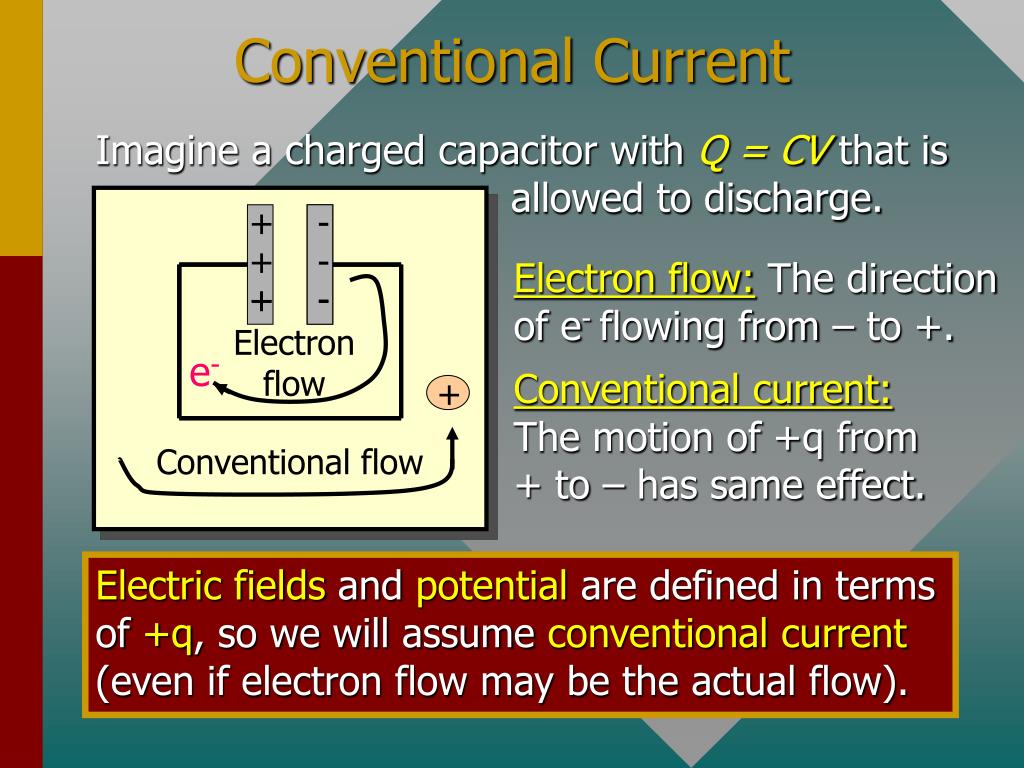
Here's what actually happens inside a copper wire. When you connect a battery, the negative terminal pushes electrons into the wire. These negatively charged particles repel each other (because like charges repel), creating a domino effect through the conductor. The actual electron flow moves from the negative terminal, through the circuit, and back to the positive terminal.
The speed of individual electrons? Surprisingly slow—we're talking millimeters per second for drift velocity. The signal propagation? That's near light speed, because the electromagnetic field travels through the wire almost instantly, pushing all those electrons along like a wave.
Why We Still Use Conventional Current Despite Knowing Better
Here's where my years of practical experience come in. I've taught this stuff to junior engineers, and I've watched their brains melt when they realize the contradiction. But here's the professional secret: for 95% of practical circuit analysis, conventional current theory works exactly the same as electron flow theory.
The math doesn't care which direction you pick, as long as you're consistent. Current is defined as the rate of flow of charge. If you flip the sign, you flip the direction, but all the calculations (voltage drops, power dissipation, Kirchhoff's laws) come out identical.
When It Actually Matters
But don't let me give you the impression that this is purely academic. There are specific scenarios where understanding the difference between conventional current and electron flow theory becomes critically important:
- Semiconductor physics: Inside diodes, transistors, and integrated circuits, the behavior of electrons and holes (the absence of electrons) is fundamental. Hole flow moves in the direction of conventional current, which is exactly what you'd expect if you understand both models. - Electrochemistry: In batteries, electrolysis, and corrosion analysis, the actual movement of ions and electrons determines chemical reactions. Get the direction wrong here, and you'll predict the wrong plating or the wrong corrosion site. - Cathode ray tubes and vacuum tubes: These old-school devices literally shoot electrons through a vacuum. Understanding that electrons come from the cathode (negative) and travel to the anode (positive) is essential. - High-frequency design: When you're working with RF circuits and signal integrity, the physical location of charge carriers influences impedance and transmission line behavior.
The Cognitive Dissonance Solution
After a decade of teaching this, I've found that the best approach is to develop a kind of bilingual fluency. Think of conventional current as the language of schematics and analysis. Think of electron flow as the language of physical reality.
When you look at a circuit diagram, all those arrows pointing from positive to negative? That's conventional current. When you're debugging a circuit and wondering why the transistor isn't switching properly? That's when you need to think in terms of actual electron flow to understand what the semiconductor material is doing.
Practical Implications for Circuit Analysis
Let me give you something concrete. Open any textbook and you'll see Kirchhoff's Current Law: the sum of currents entering a node equals the sum of currents leaving. This works beautifully with conventional current theory because we've defined everything consistently.
But here's the thing—if you're building circuits and troubleshooting, the mental model that clicks for you is the right one. I've worked with engineers who swear by conventional current for everything, and I've worked with brilliant technicians who think exclusively in electron flow. Both groups can design and debug effectively.
A Simple Rule of Thumb
If you're just starting out or if you've been confused for years, here's my practical advice:
1. Use conventional current for all schematic analysis and circuit calculations. This keeps you aligned with every textbook, every datasheet, and every other engineer on the planet. 2. Switch to electron flow thinking when dealing with semiconductor behavior, batteries, or any situation where the physical movement of charge carriers matters. 3. Remember that battery symbols: the long line is positive, the short line is negative. Electrons come from the short line. 4. When in doubt about diode direction: the arrow in the symbol points in the direction of conventional current flow (from positive to negative), but electrons actually move against the arrow.
Why This Confusion Persists
Honestly? Because the education system keeps kicking this can down the road. Many introductory physics classes teach conventional current because it's simpler. Advanced courses introduce electron flow, but by then the foundational wiring in students' brains is already set.
And look, I get it. Teaching two competing models simultaneously is confusing. But pretending the discrepancy doesn't exist creates engineers who can calculate current but don't understand what's actually happening in their circuits.
Common Questions About Understanding Conventional Current vs. Electron Flow Theory
Why can't we just switch to electron flow in all textbooks and schematics?
The short answer is cost and chaos. Every existing schematic, every textbook, every engineering software package, and every standardized test uses the conventional current convention. The transition would cost billions and create a generation of engineers who can't read legacy documentation. Plus, the math works either way, so there's no functional benefit to switching.
Does my multimeter measure conventional current or electron flow?
Your multimeter measures actual electron flow, but it displays the reading according to conventional current convention. When you connect the red probe to the positive terminal and the black probe to negative, the meter shows a positive reading for current flowing from positive to negative, even though electrons are moving from negative to positive. This is why getting the probe connections backward gives you a negative reading—the meter is telling you the electrons are flowing opposite to its internal reference.
How do I explain this to a beginner without confusing them?
Start with the history. Tell them Ben Franklin got it wrong, but we're stuck with it. Then teach conventional current as the "engineering model" and electron flow as the "physics model." Use the analogy of a crowd moving through a hallway: you can describe the wave of people moving forward (conventional current) or track the actual motion of individual people (electron flow). Both descriptions are valid, but they emphasize different aspects of the same phenomenon.
Does conventional current vs. electron flow affect AC circuits?
In AC circuits, the direction of both conventional current and electron flow reverses periodically, so the distinction becomes even more abstract. The actual charge carriers (electrons) oscillate back and forth around a fixed position rather than moving consistently in one direction. The conventional current model handles this perfectly well because it's a mathematical framework, not a physical description. The real complexity in AC isn't the direction of flow but the phase relationships and impedance characteristics.
Which model do electrical engineers actually use in practice?
Most professional electrical engineers use conventional current for circuit analysis, schematic design, and communication with colleagues. It's the universal language of the field. However, any engineer working with semiconductor physics, battery chemistry, or plasma physics must understand electron flow to grasp the underlying mechanisms. In my own career, I'd say I use conventional current 90% of the time, but that 10% where I switch to electron flow thinking has saved me countless hours of debugging.
The whole debate around understanding conventional current vs. electron flow theory boils down to one simple truth: physics doesn't care about our naming conventions, but engineering requires consistency. Learn both, understand when each applies, and you'll never be confused by a circuit again.