
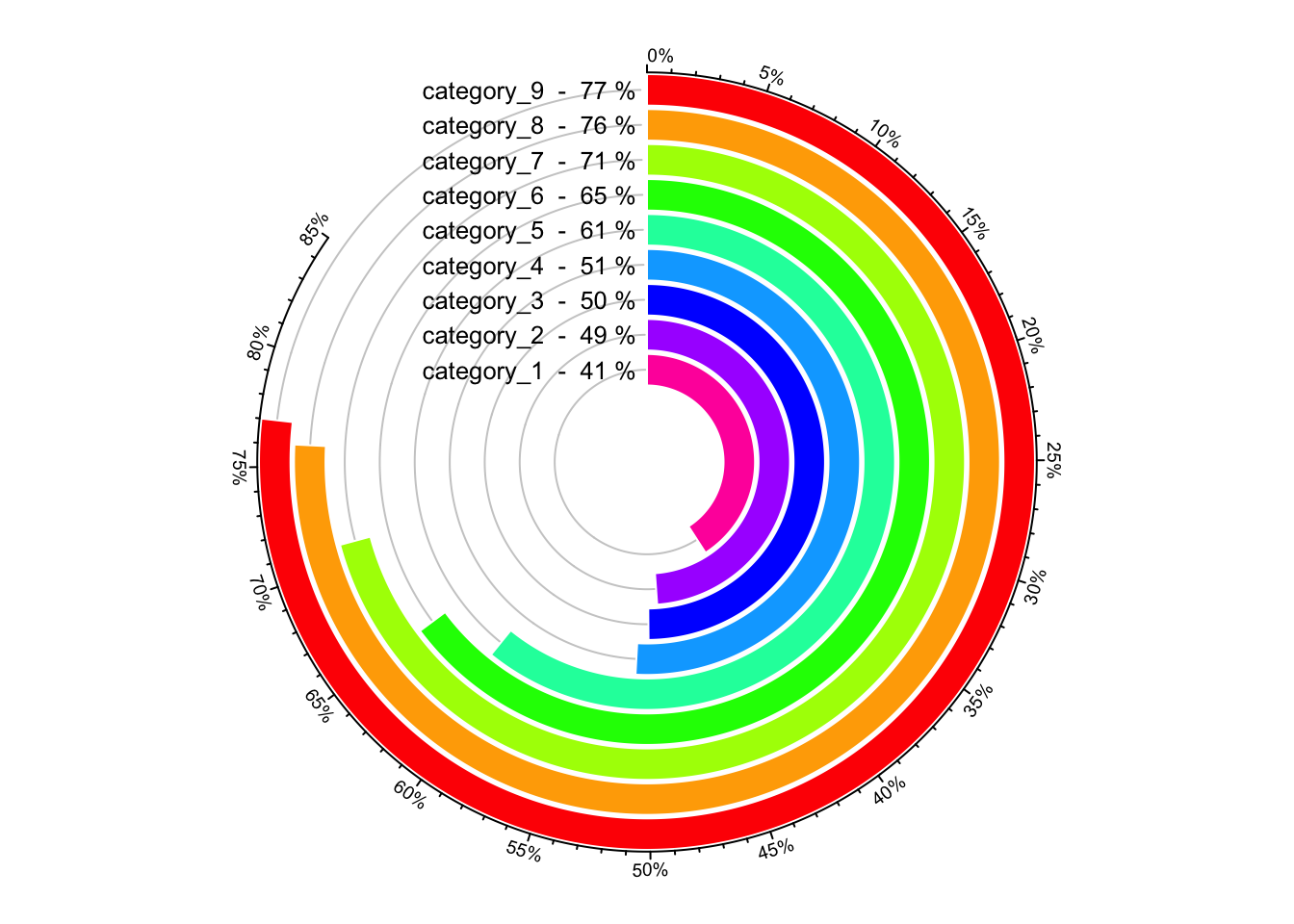
Waarom ik bar plots verkies boven cirkeldiagrammen
I'll never forget the first time a client looked at a pie chart I'd made and said, "Wait, which slice is bigger?" I had three categories, each with clearly different values. Yet there we were, squinting at angles and guessing. That was ten years ago. And honestly? That moment stuck with me. It's why I now swear by bar plots for almost everything.
Look—pie charts aren't evil. They're just… lazy. Or maybe misunderstood. But after a decade of building dashboards, reports, and presentations for everyone from startups to Fortune 500s, I've learned one hard truth: bar plots communicate more, faster, and with less cognitive friction. Period.
This isn't about taste. It's about how our brains process visual information. And once you see the science (and the real-world fails), you'll probably ditch those circular slices too. Seriously.
The Fundamental Flaw of Pie Charts
Here's the thing: pie charts rely on angle and area perception. Human eyes are terrible at comparing angles, especially when slices aren't stacked in a standard order. A 30-degree slice versus a 40-degree slice? Your brain has to guess. And it often guesses wrong.
Bar plots, on the other hand, use length. And length is something we're hardwired to compare. A bar that's twice as tall as another? That's instantly obvious. A slice that's twice as big? Not so much—especially when the pie is tilted, shadowed, or colored weirdly.
Why Our Brains Struggle with Angles
Research in perceptual psychology—specifically the work of Cleveland and McGill back in the 80s—showed that angle and area judgments are among the least accurate. Position along a common scale (like a bar's height) is near the top. That's not a random finding; it's a fundamental property of our visual system. We evolved to judge distances and lengths, not to estimate polar coordinates over coffee.
When you see a cirkeldiagram, you're asking your audience to perform a mental calculation: What fraction of 360 degrees is this weirdly shaped wedge? Even with labels and percentages, the emotional impact is lost. A bar plot shows the whole picture in a glance.
And don't get me started on 3D pie charts. Those are a crime against data. The perspective distortion makes the front slices look bigger. It's a trap, plain and simple. I've seen executives make multi-million-dollar decisions based on a 3D pie chart that exaggerated one category by 20%. Not cool.
The Comparison Problem: Multiple Pies vs. Grouped Bars
Now imagine you need to show how proportions change over time. You could make three pie charts side by side. But comparing angles across different pies? That's a nightmare. Your eyes dart back and forth, trying to remember which slice was blue and where the 30% mark was in the first chart.
Grouped bar plots solve this beautifully. You can line up categories along the x-axis and see the height changes across time. The trend pops out. The outliers scream. Nothing is hidden. It's a big deal—especially when you're presenting to a room full of people who didn't sleep well.
And if you need to show parts of a whole? Stacked bar plots do that too. They still use length, so the total bar height is what matters. The sub-sections are easier to compare than pie slices because they share a common baseline. Honestly, after you've used both, going back to cirkeldiagrammen feels like driving a car with square wheels.
Bar Plots: The Clear Winner for Data Comparison
Let's talk about what bar plots do right. First, they scale. Need to show 5 categories? No problem. 50? You can have a horizontal bar chart with labels that don't overlap. Try putting 50 slices in a pie. It'll look like a multicolored dartboard—completely unreadable.
Second, bar plots handle negative values gracefully. A pie chart can't show a negative slice (unless you get creative with donut holes, but don't). Bars can go below the zero line. That matters for financial data, temperature anomalies, or any data with direction.
Easy to Read and Compare Heights
One thing I love about bar charts is how they make outliers obvious. A single tall bar stands out immediately. In a pie chart, a very small slice might be invisible, and a very large slice just dominates. The nuance gets lost. Bars give every category the same visual weight—they just differ in height. That's fair.
Also, you can sort bars descending by value. That's a game-changer for storytelling. Show the biggest category first, then the rest. Your audience can see the ranking in seconds. With a pie, sorting doesn't help much because the eye still has to trace around the circle to compare sizes. It's slower, every single time.
And let's be honest: annotations are easier on bars. You can put the exact value right at the top. On a pie, you have to draw leader lines that often cross into other slices. It gets messy fast. I've spent way too many hours cleaning up pie chart label overlaps. Never again.
Flexibility with Stacked and Grouped Bars
Grouped bar plots let you compare multiple series within each category. Stacked bar plots show composition and total simultaneously. You can even do a 100% stacked bar to show proportions without losing the absolute context. Try that with a pie chart—you can't. A pie is stuck showing one dimension.
Another trick: use a bar plot with a dual y-axis (carefully) to combine different units. Not recommended for beginners, but possible. Pie charts have no second axis. They're one-trick ponies. And that trick is often misleading.
Look—I'm not saying bar plots are perfect for everything. But for 90% of the data visualization problems I've faced, they're the best tool in the box. They're honest, straightforward, and let the data speak without visual noise.
When Pie Charts Actually Work (and When They Don't)
I know what you're thinking: So are pie charts ever okay? Yes, but only under strict conditions. Think of a pie chart as a dessert—enjoy it occasionally, not as the main course.
The Only Acceptable Use Cases
Here are the rare scenarios where a pie chart might be okay:
- Two categories only. A simple 70/30 split? A half-pie (or donut) can work because you're just comparing one angle to the other. Still, a bar would be clearer.
- Showing parts of a well-known whole. For example, budget allocation for a small set (3-4 items) where the total is intuitive. But even then, a stacked bar is safer.
- When the audience expects a pie. Some executives love them. I once kept a cirkeldiagram in a slide just because the CEO thought they looked "friendlier." I added a bar plot as backup. Compromise.
That's basically it. If you have more than 5 categories, any similar-sized slices, or need to compare across multiple pies—stop. Use a bar plot. Your audience will thank you silently.
Common Pitfalls Even Experts Make
I see these mistakes all the time in published reports:
- Using a pie chart to show data that doesn't sum to 100%. A pie implies a whole. If you show market share of three companies but exclude "others," the chart is visually incomplete.
- Exploding a slice. Pulling one slice out adds a 3D effect that distorts area perception. It's attention-grabbing but dishonest.
- Overloading with too many slices. More than 5? You need a bar chart. Period. I've seen 15-slice pies that look like a rainbow sunset—impossible to read.
- Using a pie chart for time series. Someone actually did this to show quarterly revenue over four years. Four pies. I cried a little inside.
Even experienced data scientists fall into these traps. Why? Because pie charts are default options in many tools like Excel or Google Sheets. The software makes them easy, so people click without thinking. Don't be that person.
Real-World Examples from My 10+ Years of Data Analysis
Let me give you a concrete story. I was working with a marketing team to present survey results: "Which feature do you love most?" They had 8 features, and the top answer had 23%. The rest were between 8% and 15%. My colleague insisted on a pie chart because "it shows the whole picture."
I built both versions. The pie looked like a color wheel—every slice was nearly the same size. The meeting attendees couldn't tell which slice was the 23% one without checking the legend and squinting. Then I showed the bar plot. Immediately, one person said, "Oh, Feature A leads, but barely." That insight took 2 seconds.
A Story of Misleading Pie Charts
Another time, a client gave me a pie chart showing their revenue breakdown by region. Three regions: 45%, 42%, and 13%. The 42% and 45% slices looked almost identical on the pie. The client thought their regions were equal. I re-plotted as a bar plot, and the 3% difference became obvious. That 3% was worth $2 million. They adjusted their strategy.
It's not that the pie chart was wrong—it was technically accurate. But it hid the signal. A good bar plot amplifies signal. That's why I prefer them. It's not about aesthetics; it's about truth.
Practical Tips for Choosing the Right Chart
If you're still on the fence, here's a quick decision framework I use:
- Need to compare a few categories (2-5)? A bar plot is always safer. Use a sorted bar for extra clarity.
- Need to show proportions of a whole? Stacked bar plot or a 100% bar. Only use a pie chart if you have exactly 2-3 categories and the whole is obvious.
- Need to show trends over time? Bar plots (or line charts, but that's another topic). Never pies.
- Need to show part-to-whole for multiple groups? Side-by-side bar plots or small multiples. No pies.
- Need to add context like error bars? Bar plots handle them easily. Pie charts don't.
One more rule: if your chart requires a legend to understand which slice is which, you've already lost. Bar plots let you label directly next to the bar. Pie charts need a legend because slices are circular and you can't fit text in a thin wedge. That's an extra cognitive step. Avoid it.
Common Questions About Waarom ik bar plots verkies boven cirkeldiagrammen
Isn't a pie chart better for showing fractions of a whole?
Not really. A stacked bar plot does the same job but gives you a common baseline for comparison. The only advantage a pie has is that it's circular and "different." That's not a functional advantage. If you absolutely need a circle, use a donut with a label in the middle—but even then, a bar is better.
What about donut charts? Are they better than pie charts?
Donut charts remove the center, which reduces the area distortion slightly. But they still rely on angle perception. The same problems apply. I'd only use a donut if the middle hole holds a total number. Even then, a bar with a total annotation is more effective.
How do I convince my boss to stop using pie charts?
Show them the same data in both formats. Ask a trivia question like "Which category is the largest?" Time how long it takes to answer with a pie versus a bar. The difference is usually dramatic. Then explain the science: our brains process length faster than angle. That usually works.
Are there any data visualization tools that force you to use pies?
Most modern tools (Tableau, Power BI, Python libraries) let you choose. But defaults in Excel and Google Sheets often suggest pies. Don't accept the default. Change the chart type. It takes one click to switch to a bar. Do it.
Isn't a pie chart more visually appealing?
Beauty is subjective. But if the chart confuses the viewer, it's not beautiful—it's deceptive. A clean bar plot with a consistent color palette can be just as elegant. And it's honest. I'd rather have an honest chart that looks "okay" than a pretty one that misleads.
At the end of the day, data visualization is about communication, not decoration. Bar plots communicate clearly. Pie charts communicate ambiguously. That's why I've made the switch, and why I recommend you do too. Trust the length, not the angle.