
A Comparison of LED Failure Modes vs Simple Polarity Errors
I once watched a junior engineer spend three hours troubleshooting a single LED array. He swapped drivers, checked resistors, even replaced the entire power supply. The whole time, the LEDs were sitting there, perfectly fine, just wired backward. Polarity error. Took me five seconds to spot. But here's the thing—if he’d actually damaged one of those LEDs, the symptoms would have looked almost identical. So how do you tell the difference between a dead LED and a backwards LED? You need to understand LED failure modes first, then contrast them with the simpler, reversible problem of polarity errors. Honestly? It’s not as obvious as you think.
The Real Cost of Misdiagnosing LED Failure
When an LED stops working, your first instinct is to blame the component itself. And sure, LED failure modes are real—thermal runaway, die degradation, bond wire fatigue, the whole nine yards. But over my decade-plus of hands-on work, I’ve seen far more time wasted chasing ghosts that were just simple polarity errors. One mis-wired cathode and you’re convinced the entire batch is defective. Let’s break this down so you never fall into that trap.
Thermal Overload vs. Reverse Bias: Two Different Worlds
Think about heat. An LED pushed beyond its current rating will slowly cook its own semiconductor junction. You’ll see a gradual dimming, maybe a color shift toward blue or yellow. That’s classic thermal LED failure. Compare that to a polarity error: the LED simply doesn’t light. No heat, no drama. But here’s the kicker—if you leave it reverse-biased for too long, especially with a higher voltage, you can actually cause a reverse breakdown failure. That’s when a simple mistake becomes a permanent fault. So the boundary between “temporary polarity issue” and “catastrophic LED failure” is blurry. Seriously, don’t assume all non-lightning LEDs are dead.
A quick test: swap the leads. If it lights up, you’ve got a polarity error. If it still stays dark, you’re looking at a genuine failure mode. That’s the diagnostic gold standard. But even that isn’t foolproof—I’ve seen LEDs that survived a reverse voltage spike only to fail hours later due to latent junction damage. That’s the sneaky part. LED failure modes can manifest long after the initial stress.
Visual Symptoms: What Your Eyes Can Tell You
Let’s talk about the physical appearance. A dead LED often shows a tiny dark spot on the phosphor, or a cracked dome. That’s mechanical or thermal damage. A polarity error leaves the LED pristine—no scorch marks, no discoloration. Look—if the LED looks perfect but doesn’t glow, always check the wiring first. It’s the cheapest fix. I can’t count how many times I’ve seen folks replace an entire lighting module when all they needed was to flip the connector.
Another clue: flickering. Polarity errors in AC-driven LED circuits (like those with bridge rectifiers) can cause intermittent operation because the reverse half-cycle gets blocked. That’s not a failure mode; it’s a design flaw. True LED failure from overcurrent tends to be permanent dimming or total blackout. If you see a pattern—works when cold, dies when hot—that’s thermal failure, not polarity.
- Polarity error: No light, but LED looks perfect; lights up when leads are reversed.
- Thermal LED failure: Dimming, color shift, sometimes a black spot on the die.
- Reverse breakdown failure: LED may appear damaged (short circuit) after prolonged reverse voltage.
- Bond wire fatigue: Intermittent operation, especially after mechanical stress—not polarity related.
How to Differentiate With Simple Test Equipment
You don’t need a fancy lab. Grab a multimeter with a diode test function. For a working LED, you’ll see a forward voltage drop (usually 1.8V to 3.3V depending on color) and it will light up dimly. That’s your baseline. If you get an open circuit reading in both directions, you’ve got a dead LED failure—most likely an open bond wire or a fried junction. If you get a short circuit (near zero ohms) in both directions, that’s a failure mode caused by thermal runaway or reverse breakdown. But if you get a normal forward voltage in one direction and an open in the other… congratulations, your LED is fine. You just had a polarity error in your circuit.
The Hidden Danger of Reverse Voltage Spikes
Here’s where experience bites you. In a typical DC circuit, reversing the power supply just means no light. But in inductive environments—motor drivers, long cable runs—you can get voltage spikes that exceed the LED’s reverse breakdown rating (often 5V to 15V). That spike can instantly kill the LED, turning a polarity error into a permanent failure. So if you’ve ever seen an LED die after you accidentally reversed the battery for a split second, you’ve witnessed this transition. The LED didn’t “fail on its own.” You helped it fail.
To protect against this, always use a reverse-polarity protection diode (or a series diode) in the circuit. It’s cheap insurance. And never assume a reversed LED is safe to leave reversed. It’s not. Even if the datasheet says the reverse current is microamps, the voltage stress can still degrade the junction over time. I’ve seen LEDs that worked for months after a polarity mistake, then suddenly died in thermal LED failure because the reverse bias weakened the internal layers.
- Check the input power polarity first—before swapping the LED.
- Use a multimeter diode test to verify the LED itself.
- If the LED reads fine, inspect solder joints and wiring for polarity errors.
- If the LED reads short or open, consider LED failure modes like thermal damage or ESD.
Common Failure Modes vs. Simple Polarity—A Side-by-Side
Let’s put it bluntly: LED failure modes are often gradual and physics-driven. Polarity errors are binary—the light is either on or off. But here’s the confusion: both can present as “no light.” The difference is in the root cause and the aftermath. A polarity error leaves the LED unharmed; a failure destroys it. So when you’re debugging, always default to the cheapest hypothesis first. Check polarity. Then move to failure analysis.
Common Failure Mode #1: Thermal Runaway
This happens when you drive an LED with too much current. The junction heats up, its forward voltage drops, which lets even more current flow, and poof—you get a short circuit or an open. This is the most common LED failure in poorly designed circuits. It’s insidious because it can happen within seconds. A polarity error never causes thermal runaway because no current flows in reverse (unless you exceed breakdown). So if the circuit gets hot and the LED dies, it’s a failure mode, not polarity.
Common Failure Mode #2: Electrostatic Discharge (ESD)
LEDs are static-sensitive. A snap from your finger can kill a bare die. The symptom: the LED either fails partially (dim, off-color) or opens completely. Polarity errors don’t involve ESD. So if you handle LEDs without wrist straps and they mysteriously stop working, suspect ESD failure. But if you just swapped the wires and nothing happened, don’t assume ESD—check polarity first.
Common Failure Mode #3: Bond Wire Fatigue
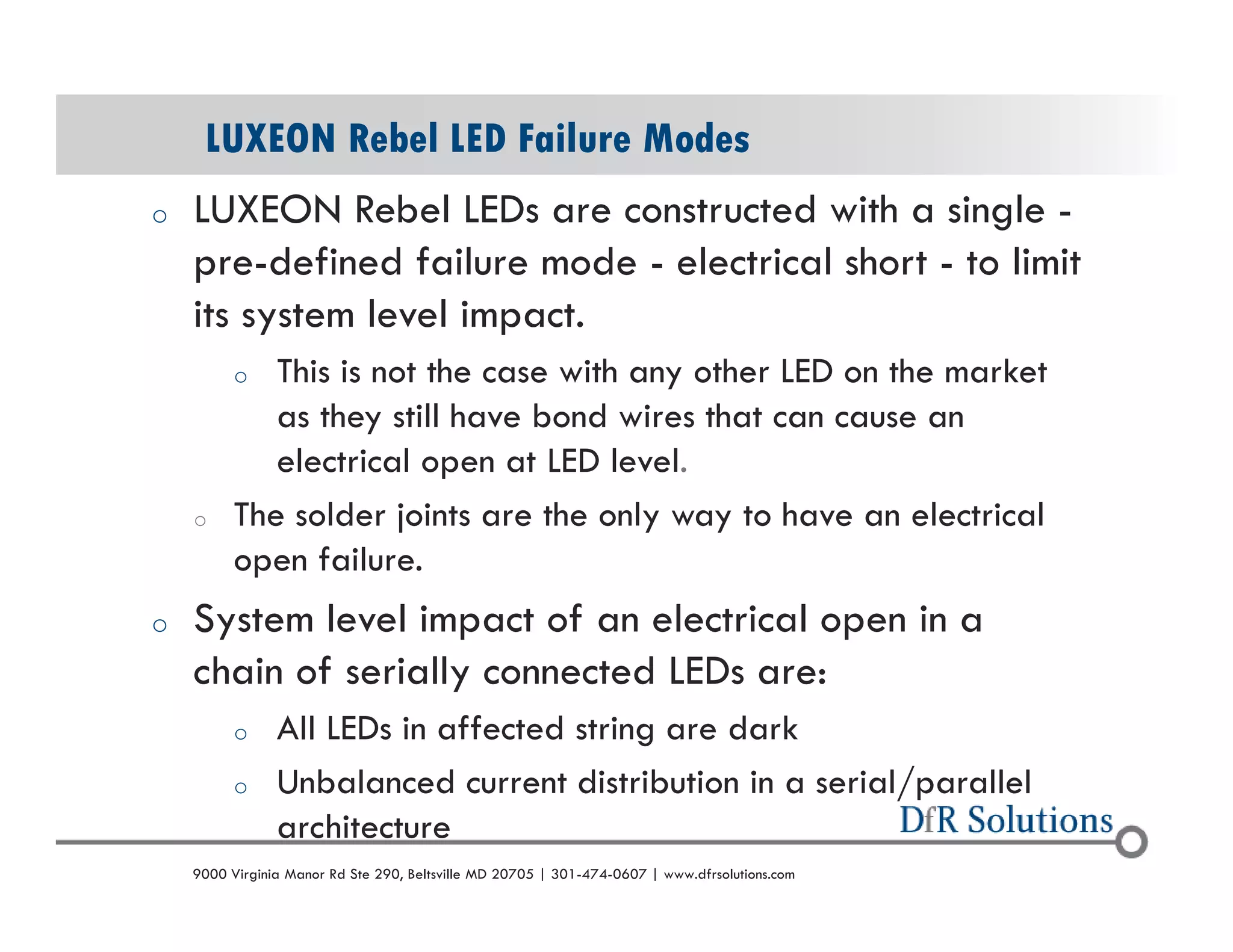
Mechanical stress from vibration or thermal cycling can break the tiny gold bond wires inside the LED package. The result: intermittent operation, then total failure. This looks nothing like a polarity error because the LED might work when you wiggle the board. But if it fails completely, it’s easy to confuse with a dead LED from reversed voltage. The fix? X-ray inspection or a continuity test across the LED terminals (with the LED removed from circuit). If you measure open in both directions, it’s bond wire failure—not polarity.
Common Questions About the Comparison of LED Failure Modes vs Simple Polarity Errors
Can a polarity error permanently damage an LED?
Yes, but only if the reverse voltage exceeds the LED’s breakdown rating (typically around 5V to 15V). In low-voltage DC circuits (3.3V or 5V), reverse bias is usually safe. But in automotive or industrial systems with higher voltages, a simple polarity error can instantly cause a reverse breakdown failure. So treat every reversal as potentially destructive.
What’s the fastest way to test if an LED is dead or just wired backward?
Use a multimeter in diode test mode. Measure across the LED in both directions. If you get a forward voltage reading (around 1.8–3.3V) in one direction and an open in the other, the LED is good—you have a polarity error in your circuit. If both directions show open or short, the LED has suffered a failure mode.
Why do some LEDs fail after being reversed for a long time?
Prolonged reverse bias can cause reverse leakage current that slowly degrades the junction. Even if the voltage is below the breakdown rating, the constant stress can weaken the semiconductor, leading to premature LED failure later. That’s why you should never leave an LED reversed in a powered circuit for more than a few seconds of testing.
Are flickering LEDs always a sign of a failure mode?
Not necessarily. Flickering can be a polarity error in an AC circuit (like a rectifier missing a diode) or a loose connection. But if the flickering is accompanied by dimming or color shift, it’s likely a thermal LED failure or bond wire fatigue. Start by checking supply polarity and wiring before replacing the LED.
Can a polarity error cause other components to fail?
Absolutely. Reversing the power supply to an entire circuit can fry drivers, capacitors, and ICs. The LED itself might survive (if reverse voltage is low), but the surrounding components may not. So when troubleshooting, look at the whole system. A polarity error may hide a failure mode in the driver, not the LED.