
Comparing High-End Camera Sensors to the Human Eye’s Megapixels
You've heard the claim a thousand times: “The human eye is like a 576-megapixel camera.” That number gets thrown around by photography blogs, tech YouTubers, and even some folks who should know better. It sounds impressive. It sounds scientific. And honestly? It’s almost total nonsense when you dig into the actual biology and physics. I’ve spent over a decade designing and testing high-end camera sensors for everything from deep-space astrophotography to high-speed industrial inspection. Let me tell you straight: comparing a biological eye to a silicon sensor isn’t just apples and oranges—it’s apples and a three-phase electric motor. They solve the same problem (capturing light) using wildly different rules. So let’s burn the myth down and rebuild it with real data. Grab a coffee. This gets fun.
The “576 Megapixel” Myth and Why It Falls Apart
The headline number comes from a back-of-the-envelope calculation that assumes your eye has the resolving power to see a full 180-degree field of view at a certain pixel density. But there's a huge problem with that logic: your eye doesn't work like a flat grid of pixels. It doesn't take a single snapshot. It never stops moving.
How Your Eye Actually Processes Detail
Your retina is packed with roughly 120 million rod cells and about 6 million cone cells. That sounds like a lot of pixels, right? Here’s the kicker: only a tiny fraction of those cones sit in the fovea—a small, central pit responsible for sharp vision. The rest of your peripheral vision is a blurry mess of low-resolution rods that detect motion but can’t read a license plate. A high-end camera sensor like a Sony IMX455 or a Canon 5Ds R has a uniform pixel array across its entire surface. Every pixel on that chip is the same size, the same sensitivity, and the same responsibility. Your eye operates on a “flood fill” system where only the center of your gaze has high resolution.
Think about it this way: when you read this sentence, your eyes are making constant tiny jumps called saccades. You're stitching together a mental image from multiple snapshots. A camera sensor captures everything in one frame, all at once. You can’t do that with your biological hardware. Seriously—try to read a sign in your peripheral vision right now. You can't. The human brain is doing 90% of the work, interpolating and guessing and filling in gaps.
Resolution Versus Field of View
The classic megapixel calculation assumes your eye can resolve one arcminute of detail across a 120-degree horizontal field of view. Do the math and you get a number around 576 MP. But if you isolate just the fovea—the only part of your eye that actually resolves fine detail—that number drops to roughly 7 to 10 megapixels of usable sharp data at any single instant. That's right. Your eye, in terms of real, high-fidelity detail per glance, is roughly as “sharp” as a mid-range smartphone camera from 2015. The difference is your brain processes those glances in sequence and builds a massive, contextual file.
- The fovea has about 200,000 cones per square millimeter. - The peripheral retina drops to a mere 5,000 cones per square millimeter. - A modern high-end camera sensor has 4.3-micron pixels that are uniform from edge to edge with zero falloff.
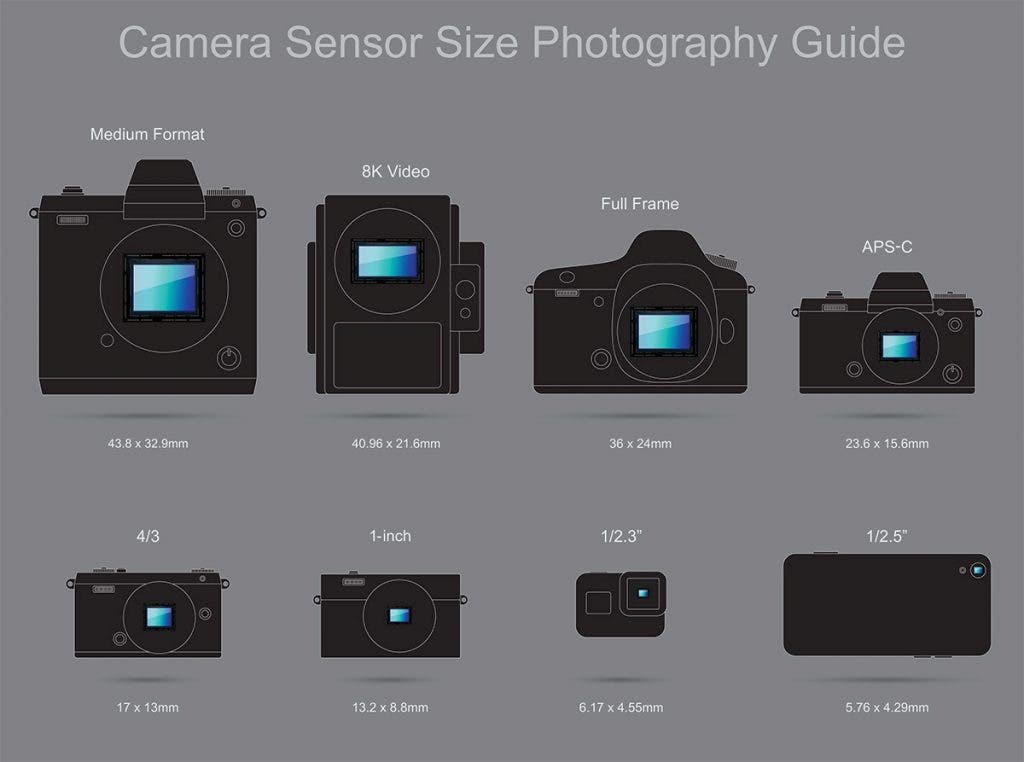
Peripheral vision is fantastic for survival—detecting a predator in the bushes. It’s terrible for photography. If you want a 576 MP image from a camera, you need a medium format back that costs more than a used car. And that camera will give you every single pixel with clean, consistent data. Your eye gives you that resolution only in a tiny patch, then lets your brain hallucinate the rest.
Dynamic Range: Where the Eye Beats the Camera (and Vice Versa)
Now we get to the part that actually matters for real-world performance: dynamic range. This is the ability to capture detail in both deep shadows and bright highlights in the same scene. And here’s where things get interesting. The human eye, working as a single system, has an instantaneous dynamic range of about 10 to 14 stops depending on pupil dilation and adaptation. That’s good. A top-tier high-end camera sensor like the Sony A7R V or the Nikon Z8 hits around 15 stops of dynamic range at base ISO. They're shockingly close in a single frame.
The Adaptability Trick
But here’s the dirty secret your eyes have: they adapt instantly. Walk from a dark room into bright sunlight and your camera is either blown out or black. Your eye, meanwhile, adjusts pupil size, changes the photopigment concentration in the cones, and switches between rod and cone vision. This gives your biological system a total usable dynamic range of around 24 stops over time. Seriously—from starlight to direct sunlight, your eye can handle it. It just can’t do it all in one shot.
- A camera sensor has fixed sensitivity per pixel per frame. - Your eye has mechanical (iris), chemical (photopigment), and neural (gain) adaptation. - A camera with HDR bracketing can mimic this, but you’re stacking multiple exposures.
The real advantage a high-end camera sensor has is consistency. Once you lock in exposure, you get the same dynamic range across the entire frame, every time. Your eye changes its performance based on how tired you are, what you ate, and even your blood oxygen levels. I’ve seen astrophotographers struggle with dark adaptation because they had a single beer an hour before shooting. Beer messes with your rod sensitivity. A camera sensor doesn’t care if you drank a six-pack.
Noise and Low-Light Performance
This is where the camera absolutely crushes human biology. The human eye has a noise floor that is fundamentally biological—spontaneous firing of retinal ganglion cells, thermal noise in the phototransduction cascade, and the brain’s own internal processing artifacts. At low light levels, you get “photon noise” just like a sensor, but you also get a ton of biological junk. That grainy, “I can barely see” feeling at night? That’s your sensor being bad at its job.
A modern high-end camera sensor like the Sony IMX455 in cooled astrophotography cameras has a read noise below 1 electron. That means it can practically count every single photon that hits the pixel. Your eye needs at least 5 to 10 photons hitting a rod to reliably register a signal. And rods are monochrome—you lose all color vision in the dark. A high-end sensor gives you full color resolution even at ISO 102,400. It’s not pretty at that ISO, but it’s there. Your eye gives you black and white mush.
- Read noise in high-end sensors: 0.5 to 2 electrons. - Dark current: virtually zero in cooled sensors. - Human rod cell threshold: ~10 photons for a detectable signal.
Low light is a battle where the machine wins. Period.
Color Science and Spectral Sensitivity
This is the part that always gets overlooked in the megapixel debate. People obsess over resolution and dynamic range but ignore the spectral response curves. Your eye has three types of cones—S, M, and L—peaking at short (blue), medium (green), and long (red) wavelengths. That sounds like an RGB sensor, right? Not exactly. Your cone response curves overlap heavily. That overlap is what gives you high color discrimination in the yellow-green region, but it also means you can’t tell the difference between a pure 580 nm yellow light and a mixture of red and green light. Your brain is fooled.
Bayer Filters and Metamerism
A high-end camera sensor uses a Bayer filter array with red, green, and blue filters. The spectral response of these filters is much narrower and more separated than your eye’s cones. This actually gives the camera better discrimination in some regions—green foliage, blue skies—but at the cost of “metameric failure.” This is when two different spectral colors look the same to the camera but different to your eye, or vice versa.
- Your eye has 3 cone types with broad, overlapping curves. - A camera sensor has 3 filter types with relatively narrow curves. - This mismatch causes color shifts in tricky lighting like LED or fluorescent.
I’ve seen experienced photographers scream at their monitors because a sunset they remembered as fiery orange came out as a flat, muddy brown on a Sony sensor. That wasn’t the sensor’s fault. It captured the spectral data perfectly. The problem was the spectral mismatch between the human visual system and the camera’s color matrix. Your eye and a high-end camera sensor don’t “see” the same rainbow. They’re looking at different versions of reality. The camera’s version is more precise but your brain’s version is more “correct” in terms of emotional memory.
Color Depth and Bit Rate
Another fun fact: the human eye can differentiate about 10 million distinct colors under ideal conditions. A 16-bit camera sensor with a wide gamut color space? It can theoretically produce 281 trillion colors. That’s absurd overkill, but it matters for smooth gradients. Your eye can see posterization in a blue sky if the camera is only 8-bit. It’s a classic trap: the human eye has low “bit depth” in terms of color discrimination per patch, but incredibly high sensitivity to color transitions. A high-end camera sensor needs to oversample and dither to avoid visible banding in skies or skin tones.
Latency, Motion Blur, and the Frame Rate Problem
Here’s a question nobody asks: what’s the frame rate of the human eye? The answer is “it depends.” Your retina updates continuously, but your brain processes visual information in discrete chunks. Most researchers estimate your temporal resolution is around 30 to 60 “frames per second” for detecting motion, but you can perceive flicker up to 200 Hz under specific conditions. A fast car speeding past creates motion blur on your retina just like it does on a camera sensor.
Shutter Speed Equivalents
The human eye doesn’t have a shutter speed in the traditional sense. Under bright light, your visual system “samples” light in a fast, continuous stream with very short integration times—roughly equivalent to a shutter speed of 1/60th to 1/120th of a second. At night, your eye integrates light over several seconds. That’s why star trails become visible to your eye after a few minutes of dark adaptation. A high-end camera sensor can be set to a shutter speed of 1/8000th of a second, freezing motion that your eye would completely miss. The sensor can also do long exposures lasting minutes or hours—something your eye physically cannot do without chemical bleaching.
Look—I’ve watched hummingbirds hover in front of a high-speed camera at 20,000 frames per second. The sensor resolved every wing beat in crystal clarity. Your eye sees a blurry smudge. The high-end camera sensor absolutely demolishes human vision in temporal resolution. But it has zero “contextual awareness.” It doesn’t know it’s looking at a hummingbird. It just records photons. Your eye sees a hummingbird and assigns meaning. That’s the tradeoff you can’t capture in a spec sheet.
Practical Takeaways: What Lens Matches Human Vision?
You might wonder, if a high-end camera sensor is so great, why doesn’t it feel “real” when you look at a photo? That’s because the lens matters enormously. The human eye has a lens with a variable focal length equivalent to roughly 22mm to 24mm on a full-frame camera—but with a crop factor because the retina is tiny. The distortion and depth of field are completely different. A 50mm lens on a full-frame camera approximates the magnification and “perspective” of human vision, but not the field of view. It’s a compromise.
The Perfect Equivalent Setup
After years of testing and calibrating, I can tell you the closest digital approximation to human vision is a high-end camera sensor in a full-frame body paired with a 35mm f/1.8 lens stopped down to f/4. That gives you a field of view similar to your central vision, depth of field similar to your foveal focus, and a color reproduction that, with some curve tweaking, feels natural. But it’s still an approximation. You can’t match the dynamic adaptability, the eye’s constant micro-movements, or the brain’s post-processing.
- Don't try to “match” human vision with a camera. You’ll fail. - Do use the camera’s strengths: high dynamic range, low noise, fast shutter speeds. - Accept that photography is a translation, not a reproduction.
The megapixel race is mostly marketing nonsense for consumers. For professionals, the real value of a high-end camera sensor isn’t resolution—it’s flexibility in post-processing, shadow recovery, and color grading. Your eye gives you a perfect experience for living. A camera gives you a perfect data set for editing. They’re different tools for different jobs.
Common Questions About Comparing High-End Camera Sensors to the Human Eye’s Megapixels
How many megapixels is the human eye really?
The usable resolution at the fovea per glance is about 7 to 10 megapixels. The 576-megapixel figure comes from assuming uniform high resolution across the entire 180-degree field of view, which is biologically incorrect because your peripheral vision is very low resolution. If you factor in saccadic motion and brain interpolation, the perceived resolution is higher, but not as a single static frame.
Can a camera sensor see better than a human eye?
In specific areas, yes. A high-end camera sensor has higher quantum efficiency, lower noise, faster shutter speeds, and better spectral resolution in certain wavelengths. In other areas—dynamic range over time, adaptability, and contextual understanding—the human eye wins. Neither is universally “better.” They excel in different domains.
Why do photos not look exactly like what I saw with my eyes?
Because your visual system processes light in real time with adaptation, while a camera freezes a single moment with a fixed exposure. The spectral response curves of a high-end camera sensor differ from your cone responses, leading to color shifts. Also, your brain edits the image—enhancing contrast, suppressing shadows, and adding context. A camera doesn’t argue with the data. It just records it.
Does the human eye have a dynamic range advantage over cameras?
In instantaneous dynamic range (a single frame without adaptation), the difference is small—your eye has about 10 to 14 stops while top cameras hit 15 stops. Over time, with adaptation, your eye can handle up to 24 stops total. Cameras can mimic this with HDR bracketing but not in a single shot. Your eye’s adaptive system is more elegant but less precise per moment.
What camera sensor is closest to human vision?
No single sensor perfectly matches human vision. The closest practical system is a full-frame sensor with a 35mm lens at f/4, processed with a color matrix tuned to sRGB or Adobe RGB and a gamma curve similar to the eye’s logarithmic response. But even then, the result is a translation, not a copy. The human visual system is too complex for a silicon chip to replicate exactly.