
The Real Difference Between a Riser and a Lateral in Construction: A No-Nonsense Breakdown
I remember standing on a job site a few years back, staring at two pieces of pipe that, to the untrained eye, looked exactly the same. The young apprentice next to me asked, "So, what's the difference between a riser and a lateral? Aren't they just pipes going different directions?" I smiled, because that question is the kind that separates someone who just lays pipe from someone who actually understands the logic behind the system. Look—if you get this wrong, you're not just breaking code; you're setting yourself up for a world of backflow, drainage failure, and costly rework. Seriously, it's a big deal.
The confusion is understandable. Both are conduits for fluids. Both are made of the same materials. But in the construction trades—specifically plumbing, fire protection, and HVAC—a riser and a lateral serve fundamentally different functions in both design and physics. We're talking about vertical versus horizontal orientation, pressure dynamics, and how the entire system communicates with the ground. Let's break it down so you never have to guess again.
Let's Start With What a Riser Actually Is (And What It Isn't)
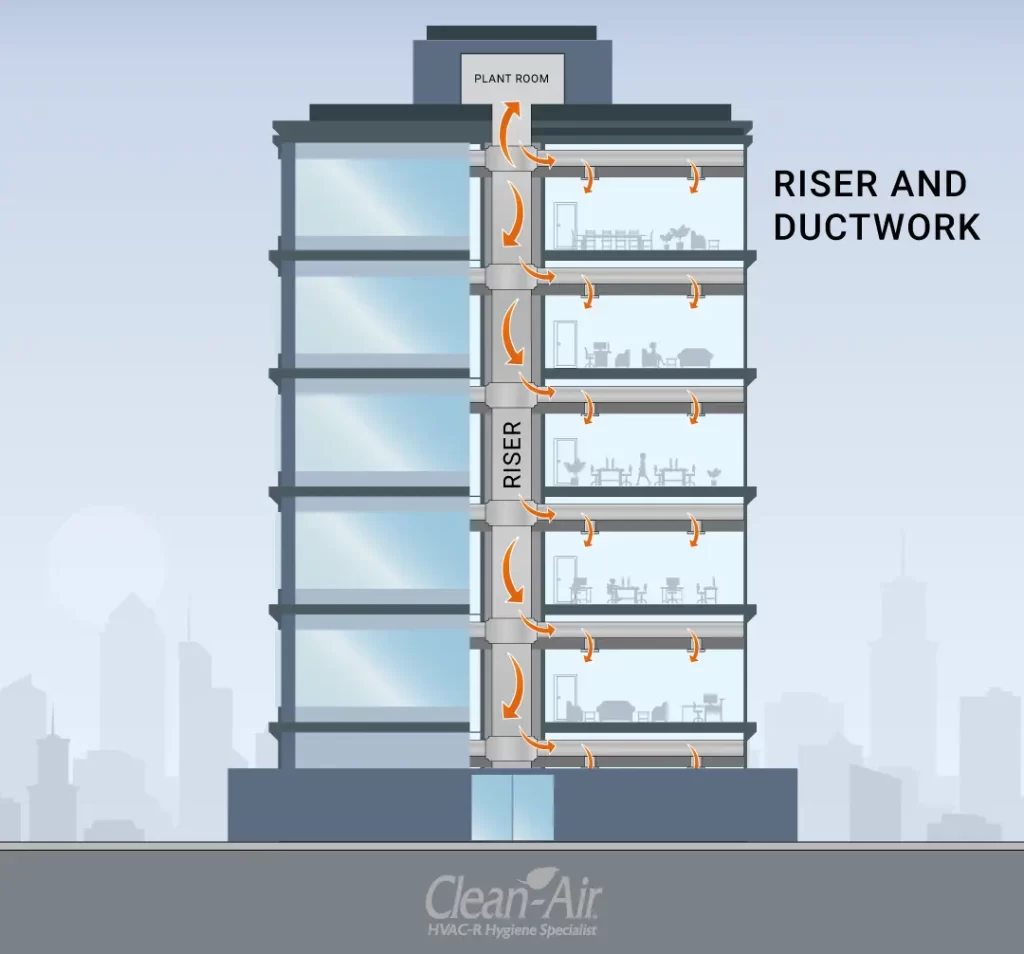
In the simplest terms, a riser is any vertical pipe that carries fluid—water, waste, gas, or even fire-suppression foam—from one floor to the next. It's the spine of the building's plumbing system. Think of it like the vertical backbone. If you're working on a high-rise, the riser is what brings potable water up to the 20th floor or carries sewage down from the penthouse. It's vertical, it's continuous, and it's under very specific pressure conditions that change with every foot of elevation.
Now, here's where the nuance kicks in. A riser isn't just any vertical pipe. It has to be part of a designated system. A fire protection riser, for instance, has its own set of code requirements for material thickness, hanger spacing, and seismic bracing. A plumbing waste riser needs proper venting to prevent siphoning. Honestly? One of the biggest mistakes I see on mid-sized commercial jobs is treating a riser like a vertical extension of the lateral. That's a recipe for noise, vibration, and eventual joint failure.
Material selection matters here, too. Copper, cast iron, schedule 40 PVC, or steel—the choice depends on the service and the building height. A riser running through a chase in a 15-story building will experience thermal expansion and static head pressure that a horizontal pipe on the ground floor simply doesn't see. So when I see someone trying to use thin-wall tubing on a tall riser, I cringe. It's a structural risk as much as a fluid dynamic one.
Another key point: risers are typically continuous through the building core. They don't change direction until they terminate at a fixture, a roof vent, or a horizontal branch. This continuity is critical for maintaining consistent flow velocity. If you put a 90-degree elbow in the middle of a tall waste riser, you're creating a potential clog point and changing the hydraulic profile. Keep it straight, keep it vertical, and respect the physics.
The Vertical Workhorse: How a Riser Manages Pressure and Flow
When water moves vertically, gravity is either your best friend or your worst enemy. In a supply riser, you're fighting gravity to push water upward. That means every 2.31 feet of elevation adds 1 PSI of pressure loss. So if you have a riser that goes 50 feet tall, you've lost over 21 PSI just from the height alone. You don't face this issue with a lateral because it's horizontal. This pressure differential is the single most concrete difference between a riser and a lateral in terms of system design.
For waste and drainage risers, the physics reverses. Gravity is pulling the water down, so you get acceleration. This creates what we call "slugs" of water in the pipe. If the riser isn't properly vented, that slug can create a vacuum behind it, which sucks the water out of adjacent fixture traps. Ever walk into a bathroom and smell sewer gas? That's often a riser vent issue. A lateral doesn't typically have this problem because the flow is slower and more laminar on the flat.
You also need to think about expansion loops. In a tall riser system, especially with copper or steel, the pipe can grow or shrink by inches due to temperature changes. If you anchor it rigidly at every floor, you'll get stress fractures. I've seen it happen. Laterals, being short and horizontal, rarely need this kind of engineering consideration. So when you're designing, treat the riser as a dynamic component, not just a static pipe.
Finally, let's talk about testing. A riser is usually hydrostatically tested in sections as the building rises. You can't just test the whole thing at once because the pressure at the bottom would be massive. Laterals, on the other hand, are typically tested locally in a single shot. Understanding this test protocol is another practical difference between a riser and a lateral that affects scheduling and labor.
Why Material and Support Matter Here (and How They Differ from Laterals)
The hanger and support requirements for a riser are no joke. Every floor level, you need a riser clamp that can bear the vertical load of the pipe above it. Think about it: a 6-inch cast iron riser 50 feet tall weighs thousands of pounds. That weight is sitting on the clamps at each floor. If you use a standard horizontal pipe hanger, it'll fail. Laterals, by comparison, are supported with clevis hangers or strut straps every 6-8 feet. That's a huge difference in hardware costs and installation labor.
Material degradation also behaves differently. A riser carrying hot water experiences more cycles of thermal expansion, which accelerates corrosion at weld joints and threaded connections. I've pulled out risers from old buildings where the bottom section was completely rotted out from condensation dripping down the interior wall of the pipe. Laterals, especially those in slabs, tend to fail from external corrosion like soil contact or concrete chemistry. Two different failure modes, two different inspection approaches.
Seismic design is another area. In earthquake-prone zones, a riser needs seismic braces every floor to prevent it from swaying and snapping. These braces are heavy-duty, engineered assemblies. A lateral in the same building might just need a simple sway brace every 40 feet. The code recognizes that the riser is a more vulnerable element because of its height and mass. So if you're doing takeoffs for a seismic project, you'll see a major cost split between the two.
And let's not forget about firestopping. Every riser penetration through a floor slab requires a firestop assembly rated for the specific pipe material and size. Laterals, penetrating walls rather than floors, often use a different type of sealant or collar. This is a small detail that gets missed constantly, leading to failed inspections. Pay attention to the difference.
The Lateral: The Unsung Hero of Horizontal Flow
Now let's talk about the lateral. This is any pipe that runs horizontally, typically underground or in a slab, and connects to the main sewer or storm drain. A lateral can be as short as a few feet from a sink drain to the wall, or it can be hundreds of feet long running from a building to the city sewer main. The defining characteristic is its slope. A lateral must have precise pitch—usually 1/4 inch per foot for drainage—to ensure solids don't settle.
The difference between a riser and a lateral in terms of slope is absolute. A riser has no slope; it's vertical. A lateral lives and dies by its grade. If you get the slope wrong—too flat and solids settle, too steep and liquids outrun solids leaving the debris behind—you'll have a clogged system within months. I've seen brand-new hospital buildings have to rip out entire slab portions because someone misread the laser level on a lateral. It's one of the most avoidable yet common mistakes in our trade.
Laterals also face unique environmental stresses. Being underground, they deal with soil settlement, frost heave, tree root intrusion, and hydrostatic pressure from groundwater. A riser inside the building is protected from these elements. So the backfill and compaction around a lateral must be done meticulously. You can't just throw dirt on top and call it a day. Proper bedding material, inspection at the trench, and sometimes encasement in concrete are required.
From a code perspective, laterals are often governed by separate parts of the plumbing code than risers. For example, the minimum size for a building sewer lateral is typically 4 inches, while a riser might be 3 inches depending on fixture units. And cleanout placement is different: laterals need cleanouts at every change of direction over 45 degrees and at the building wall. Risers need cleanouts at the base of the stack only. Small rule, huge implication for maintenance.
Slope, Gravity, and the Art of the Drop
The golden rule for a lateral is that water and waste must move fast enough to stay suspended but slow enough not to leave solids behind. The ideal velocity is about 2 to 4 feet per second. This is achieved through proper pipe diameter and slope. A 4-inch lateral at 1/4 inch per foot slope achieves this. If you increase the pipe size thinking bigger equals better, you might lower the velocity and cause settling. Bigger pipe does not mean better drainage—that's a common misconception about laterals.
Trench depth is a major consideration. Every foot you drop the lateral increases excavation costs and potential conflict with other utilities. But you can't fudge the slope. If the building is far from the city main, the lateral might be 20 feet deep by the time it connects. That depth affects everything from trench shoring to dewatering to safety. A riser doesn't have this problem because it stays within the building envelope.
Also, think about connection points. A lateral usually starts at the building foundation wall with a cleanout, then runs to the main. The connection between the horizontal lateral and the vertical riser at the base of the stack is a critical junction. This is called the "base fitting," and it's typically a long sweep 90-degree elbow, not a regular short turn. Using the wrong fitting here causes blockages. I can't tell you how many times I've seen a short 90 used at the base of a stack—that's an immediate code violation and a future call-back.
And here's a pro tip: never install a lateral with a flat section before the vent. If you run a horizontal pipe for 10 feet before connecting to a vent stack, you've created a potential trap arm issue. The code limits the length of the horizontal pipe between the fixture trap and the vent. Ignoring this creates siphoning and gurgling fixtures. That's a purely horizontal issue—risers don't have this problem because the vent is usually integral.
When a Lateral Goes Wrong (And How to Avoid a $10,000 Mistake)
The worst lateral failure I ever saw was at a multi-family project. The contractor ran a 6-inch lateral under the parking lot, but they didn't compact the bedding properly. Over two years, the pipe settled, creating a "belly"—a low spot where water and solids pool. That section eventually filled with debris and cracked under the weight of a delivery truck. The repair required cutting through the asphalt, digging out the failed section, and reconnecting with new pipe. That's a $15,000 mistake that could have been avoided with 30 minutes of proper compaction work.
Root intrusion is another lateral-specific nightmare. If you have a cast iron or clay tile lateral, tree roots will find the smallest crack or loose joint. PVC is better in this regard, but not immune. The solution is either a root barrier during installation or annual hydro-jetting. Risers rarely have root issues unless there's a leak through a foundation wall. So when you're deciding material for a lateral, consider the landscaping around the run.
Also, check your local code for cleanout spacing. Some jurisdictions require a cleanout every 100 feet for laterals, others every 50. If you skip them, you're gambling that the pipe will never clog. Spoiler: it will clog. I always recommend adding extra cleanouts at major changes in direction, even if the code minimum is less. It's cheap insurance compared to the cost of a sewer camera service and a cutting crew later.
One last thing: when tying a new lateral into an existing main, you must use a wye fitting, not a tee. A tee creates a turbulent flow that can cause backups in the main. This is a basic difference from riser connections, where tees are common for branch lines. The orientation matters: horizontal connections demand wyes, vertical connections can accept tees. Remember that rule and you'll save yourself a lot of grief.
Putting It All Together: The Side-by-Side Comparison You Actually Need
If you're still with me, here's the practical summary. The difference between a riser and a lateral isn't just about direction—it's about how that direction changes everything: physics, code, installation, materials, and long-term performance. Let me lay it out in a no-nonsense list.
- Orientation: A riser is vertical (0 degrees from plumb). A lateral is horizontal (or near horizontal, with a slope of 1/4 to 1/2 inch per foot).
- Pressure Dynamics: Risers experience static head pressure that increases with height. Laterals experience minimal static pressure but rely on gravity for flow velocity.
- Support Systems: Risers need riser clamps at every floor to carry vertical load. Laterals need hangers every 6-8 feet for horizontal support.
- Venting Requirements: Risers require continuous venting to prevent siphoning. Laterals require trap arms and individual vents for each fixture.
- Failure Modes: Risers fail from thermal expansion stress, joint corrosion, or seismic damage. Laterals fail from settling, root intrusion, or improper slope.
- Code Sections: Risers are covered under stack and vent code sections. Laterals are covered under building sewer and drainage sections.
- Testing: Risers are hydrotested in vertical sections. Laterals are typically air-tested or water-tested in a single run.
This table in your head is worth a hundred hours of field confusion. Memorize these points and you'll be able to walk any job site and spot design errors before they become problems. Honestly, this is the kind of knowledge that separates a foreman from a laborer.
One more practical note: in fire protection systems, the riser includes the main vertical pipe plus the angle valves, pressure gauges, and flow switches. The lateral in a fire system is the horizontal branch feeding the sprinkler heads. Same naming convention, different components. Just keep that in mind if you're working on a fire line instead of a drainage line.
The Code, The Friction, and the Real-World Gotchas
If you think codes are just bureaucratic red tape, you haven't dealt with the aftermath of a failed system. The International Plumbing Code (IPC) and the Uniform Plumbing Code (UPC) both have very specific language about risers and laterals. For instance, the IPC requires that every riser have a cleanout at its base. It also requires that laterals have cleanouts at intervals depending on pipe size. These aren't suggestions—they're minimum requirements for maintaining the system over its lifespan.
Friction loss is another concept that trips people up. In a riser, friction loss is relatively low because the water is moving vertically with gravity in drainage, or against it in supply. In a lateral, friction loss is higher because the pipe is longer and horizontal, so the water has to push against wall friction over the entire run. This affects pump sizing for supply systems and drain size for waste systems. Ignoring friction loss in a long lateral will result in slow drains and gurgling fixtures.
I also want to mention that in multi-story commercial buildings, you often have a "main" riser and "branch" risers, while the laterals are the horizontal pipes on each floor. Understanding this hierarchy helps with load calculations. The main riser carries all the flow from the branch risers, which then distribute to laterals. If you undersize the main riser, the whole system is compromised. It's a classic cascading failure.
And don't forget about expansion and contraction. A 100-foot copper lateral can expand by nearly 2 inches if the water temperature swings from 50 degrees to 140 degrees. That movement has to be accommodated with expansion loops or sliding fittings. Many contractors ignore this on horizontal runs, thinking only risers expand. Wrong. A long lateral under a slab can heave and crack the concrete if it expands without relief. So treat both types with respect.
Finally, always check local amendments. Some cities require laterals to be sleeved under foundations, others allow direct burial. Some require risers to have seismic bracing above a certain height, others don't. The difference between a riser and a lateral in terms of code jurisdiction is that risers are often inspected by both plumbing and fire marshals, while laterals are typically a plumbing-only inspection. Know your jurisdiction.
Common Questions About the Difference Between a Riser and a Lateral in Construction
Why is a pipe called a riser instead of just a vertical pipe?
The term riser specifically refers to a pipe that serves as a primary vertical conduit in a system, connecting multiple floors or levels. It implies a function beyond just being vertical—it's the backbone of the system. A random vertical pipe connecting a single fixture to a drain is usually called a "branch" or "drop," not a riser. The distinction is about system hierarchy and continuous service.
Can a lateral ever be vertical?
No. By definition, a lateral is a horizontal run. If you see a vertical section in what you thought was a lateral, you're actually looking at either a riser or a branch fitting. The confusion often happens at the base of a stack where a lateral turns vertical to connect to the riser. That vertical piece is still part of the riser system, not the lateral. Keep the terminology clean to avoid design errors.
Does the material differ between a riser and a lateral?
Often, yes. Risers in high-rises are frequently made of cast iron for noise dampening and fire resistance, while