
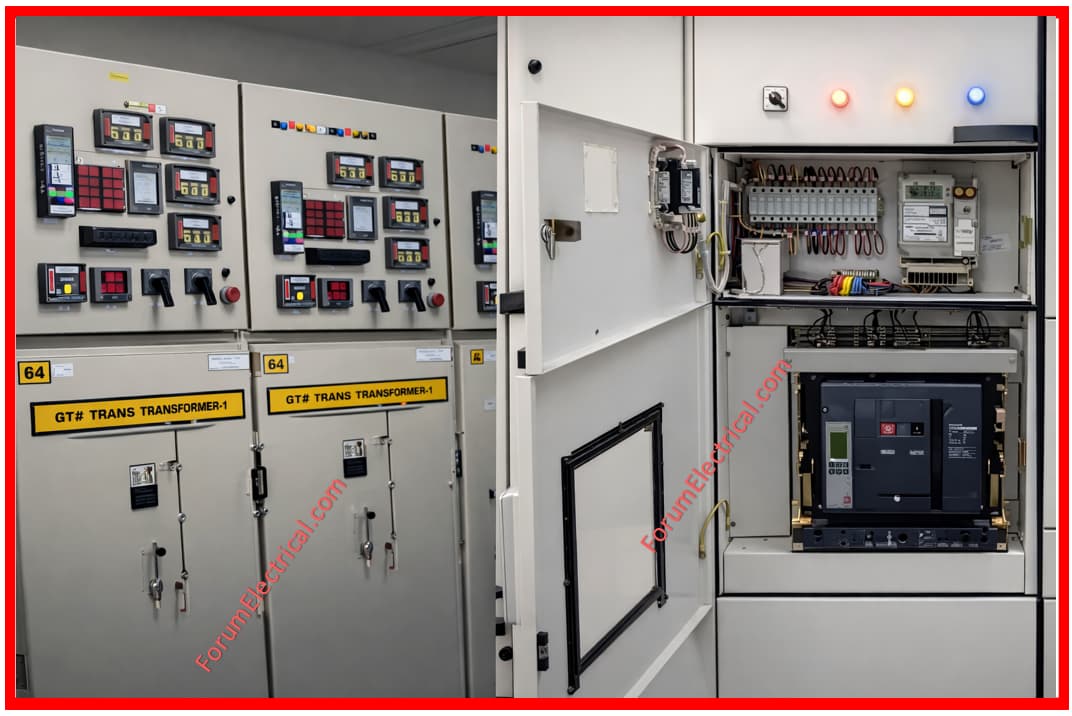
Key Differences Between Low Tension (LT) and High Tension (HT) Motors
You ever walk into a plant and see a motor that looks like it belongs in a monster truck rally, then turn around and notice a sleek, compact one humming away on a conveyor belt? That's the difference between High Tension (HT) motors and Low Tension (LT) motors staring right at you. And honestly? Mixing them up can cost you a lot more than just a blown fuse.
I've spent over a decade in motor shops and on factory floors, watching engineers scratch their heads over why a motor kept tripping or why their power bill was through the roof. Nine times out of ten, the answer lies in choosing the wrong voltage class. Look—this isn't just academic trivia. It's the difference between a system that runs like a dream and one that becomes a recurring nightmare for your maintenance team.
So let's cut the fluff. If you're designing a system, replacing an old unit, or just trying to understand why your electrician keeps muttering about "that damn 6.6 kV beast," you're in the right place. We're going to break down the real, gritty differences between LT and HT motors that actually matter when you're holding a wrench or a purchase order.
Voltage Levels and Insulation Systems: The Core Divide
Seriously, this is where everything starts. You can't just slap any motor on any supply line and hope for the best. The world of electric motors is split right down the middle by voltage, and the line is typically drawn at 1,000 volts. Anything below that is Low Tension (LT) . Anything above? That's your High Tension (HT) territory.
Now, in most industrial contexts, your LT motors are running at standard voltages like 230V, 415V, or 480V. Think of your everyday pump motor or a small fan unit. On the flip side, HT motors usually start at 3.3 kV and go up to 6.6 kV, 11 kV, and sometimes even higher for massive applications. It's a big deal because the physics changes completely once you cross that threshold.
Why Voltage Dictates Everything
You can't just take an LT motor and feed it 6.6 kV. It's not like turning up the volume on a radio. The insulation system inside the motor has to be designed specifically for the voltage it will experience. LT motors use standard enameled wire with a basic insulation thickness. HT motors? They use mica tape, specialized varnishes, and layer upon layer of insulation to prevent the voltage from literally punching through the copper.
Think of it like this: LT insulation is like a rain jacket. HT insulation is a deep-sea diving suit. Both keep the water out, but one is built for a fundamentally different pressure environment. The motor design for HT units also requires special attention to slot liners, creepage distances, and the way the end windings are supported. Honestly, if you try to run an LT motor at HT voltages, you'll get a firework display. Not the fun kind.
The Insulation Wall
This isn't just about thicker wire. It's about a complete insulation class upgrade. For LT motors, you usually see Class F or Class H insulation, which handles heat fine but isn't built for the electrical stress of high voltage. For HT motors, the entire winding is vacuum-pressure impregnated (VPI) to remove all air gaps. Air is a terrible insulator, and at high voltages, any tiny void becomes a corona discharge point. That corona eats away at the insulation over time.
Look—I've seen plant managers try to save a few bucks by rewinding a failed LT motor with "heavy-duty" wire. It doesn't work. The slot design, the core material, and the grounding system are all different. Voltage levels dictate the entire construction philosophy, from the type of stress grading tape used on the coil ends to the distance between the phase groups. It's a whole different manufacturing world.
Current, Starting Torque, and Power Supply Requirements
Here's where the rubber meets the road for your electrical infrastructure. The same power output at a higher voltage means lower current. That's the beauty of HT motors. If you need a 500 kW motor, running it at 415V means you're pulling nearly 800 amps. That's a cable thicker than your arm and a switchgear that costs a fortune. Run that same motor at 6.6 kV, and the current drops to about 50 amps. Massive difference.
But lower current isn't always a free lunch. The starting current in HT motors can still be brutal, and the way you manage it changes. For LT motors, you often use Direct-On-Line (DOL) starters for smaller units, or star-delta starters for bigger ones. For HT motors, you almost always need a soft starter, a VFD, or a reactor to limit the inrush. The utility company will not be happy if you slam a 6.6 kV motor directly across the line.
The Supply Infrastructure Problem
You want to know the biggest headache I see? People buy an HT motor because they like the efficiency numbers, but their factory doesn't have an HT supply. You can't just plug a 6.6 kV motor into a 415V panel. You need a step-up transformer, dedicated HT switchgear (which is expensive and requires specialized safety interlocks), and proper cable terminations that won't create partial discharge.
For LT motors, the infrastructure is everywhere. 415V is standard. You can buy a VFD off the shelf for a few hundred bucks. The cabling is simpler, and the safety clearances are smaller. With HT, everything gets bigger, more expensive, and more dangerous. The power supply has to be treated with absolute respect. That said, for very large loads (typically above 200 kW), the cost of the HT switchgear and transformer is often offset by the savings in copper cable and reduced power losses over long distances.
Torque and Speed Characteristics
Here's a subtle one that catches people off guard. For the same frame size and power rating, an HT motor often has a different torque curve than an LT motor. This is because the number of turns in the winding changes drastically. High voltage means fewer turns of thicker insulated wire, which changes the reactance of the motor.
The starting torque of an HT motor is often a bit lower relative to its full-load torque compared to an equivalent LT design. This isn't a rule written in stone, but it's a design characteristic you need to check on the performance curve. If you're driving a high-inertia load like a centrifuge or a crusher, you might find that an LT motor with a VFD gives you better control over the start-up than a direct-on-line HT unit. It's counterintuitive, but I've seen it happen.
Practical Maintenance, Cost, and Application Selection
Alright, let's talk about the stuff that keeps plant engineers up at night. The total cost of ownership for LT vs HT motors is not just about the purchase price. It's about what happens when something goes wrong at 2 AM on a Sunday.
Maintenance on an LT motor is straightforward. Any competent electrician can Megger it, change the bearings, and maybe even rewind it. The tools are standard, and the risk is manageable. An HT motor is a different beast. You need high-potential testing equipment, corona detection gear, and a team that understands the dangers of working with voltages that can arc across a gap of several inches. The motor maintenance costs are simply higher for HT units.
The Physical Footprint
This is simple physics. Higher voltage requires more insulation. More insulation means the coils are physically larger. Larger coils mean a bigger stator and a bigger frame. For the same power rating, an HT motor is typically heavier and bulkier than an LT motor. It also generates more heat per unit of surface area, so the cooling system (often a dedicated air-to-air heat exchanger or a water cooling jacket) is more complex.
I've stood next to an 11 kV motor that was the size of a small car, producing the same shaft power as a 415V motor that would fit in a compact car trunk. The LT version just couldn't handle the current without massive cables and a huge frame, but the HT version was a literal giant. You have to plan your foundation and your crane capacity accordingly. Seriously, don't forget the foundation.
Where Do You Use Which?
The golden rule in the industry is simple, but it has exceptions. The selection criteria boil down to power and distance.
- Use LT motors for: Small to medium loads (under 200 kW typically), especially when you have a standard 415V or 480V supply readily available. They are perfect for pumps, fans, compressors, and conveyor drives where the cable run from the panel is short. - Use HT motors for: Large loads (typically 200 kW and above), or when the motor is located far from the power source. The lower current means much smaller cable sizes, which saves a fortune on copper. They are the standard for large chillers, ball mills, crushers, large ID fans, and mainline conveyor drives in mining.
But here's the twist. With the falling cost of VFDs and advanced power electronics, some applications are shifting back to LT. A 350 kW motor running on a 690V LT VFD system is becoming more common in marine and industrial applications because it simplifies the motor control and eliminates the need for HT switchgear. The lines are blurring.
Efficiency and Power Factor
You'll often hear salespeople claim that HT motors are inherently more efficient. That's not exactly true. For a given power rating and design technology (like IE3 or IE4), the efficiency difference between a well-designed LT and HT motor is often negligible. The real efficiency gain comes from the system, not the motor itself.
Because HT motors have lower current, the I²R losses in the cables between the switchgear and the motor are significantly lower. If your motor is 500 meters from the substation, the savings in cable losses alone can justify the move to HT. The power factor of an HT motor is typically similar to an LT motor, though the lower current can sometimes require larger capacitor banks for correction if the motor runs unloaded frequently. It's all about the system view, not just the nameplate.
Common Questions About the Key Differences Between Low Tension (LT) and High Tension (HT) Motors
What is the exact voltage limit that separates LT and HT motors?
There isn't a universal global standard, but the most common industry boundary is 1,000 volts AC. Motors rated for 1,000V and below are generally considered Low Tension (LT) . Motors rated for voltages above 1,000V, such as 3.3 kV, 6.6 kV, or 11 kV, are considered High Tension (HT) . Some regions might use 600V or 750V as a lower boundary, but 1kV is the de facto line for most industrial motor applications.
Can I use an LT motor with a VFD to run on a higher voltage supply?
No, absolutely not. You cannot change the supply voltage to an LT motor without risking immediate failure. The motor insulation is designed specifically for the rated voltage. Running a 415V motor on a 6.6 kV supply, even with a VFD that steps up the voltage, will destroy the winding insulation instantly. The VFD would need to output the correct voltage for the motor. If you want to use an LT motor on an HT supply, you must use a step-down transformer, which defeats the purpose.
Are HT motors more dangerous to work on than LT motors?
Yes, significantly. The risk of arc flash and electrocution is much higher with HT motors due to the higher voltage levels. The flash protection boundary is larger, the arc blast energy is extreme, and the electrical clearance requirements are much stricter. Working on HT motors requires specialized training, high-voltage rated tools, and specific safety interlocks. An LT motor at 415V can kill you, but an HT motor at 11 kV can kill you from several feet away without even touching it. Respect the voltage.
Do I always need a step-down transformer for the control circuits of an HT motor?
Typically, yes. The control circuits for HT motors (like the starter control, protection relays, and status lights) operate at a safe low voltage, usually 110V or 230V. You need a control power transformer (CPT) to step down the incoming HT supply to a safe level for the control logic and the contactor coils. This is a standard requirement in any HT motor starter panel design.
Which type of motor is more expensive to repair if it fails?
An HT motor is almost always more expensive to repair. The materials are more specialized (mica tape, high-temperature varnishes), the rewinding process is more complex (VPI cycles, stress grading), and the testing required after repair is far more involved (partial discharge testing, tan delta testing). You also need a repair shop that is certified and equipped for high-voltage work. A simple LT motor rewind might cost a few thousand dollars. An HT motor rewind can easily run into the tens of thousands, plus significant downtime.