
What Does Flashing an SD Card Mean
You just bought a new Raspberry Pi. Or maybe you're trying to revive an old router with custom firmware. Everyone in the forums keeps saying the same thing: 'Just flash the SD card.' You stare at the card in your hand. It looks like any other memory card. You're pretty sure you know how to drag and drop files onto it. So what gives? Honestly? Flashing an SD card isn't about writing files in the normal sense. It's a completely different beast.
I've been doing this for over a decade. I've flashed cards for embedded Linux systems, for digital cameras running custom firmware, and for retro gaming rigs. And I have definitely bricked a few devices because I didn't understand the difference between formatting and flashing. So let me save you that headache. Flashing an SD card means overwriting the entire raw storage space of the card with a complete disk image. It's a bit-by-bit copy. You aren't moving individual photos or documents. You are replacing the very structure of the card itself. It's a big deal.
Think of a normal SD card like an empty notebook. Formatting it just gives you fresh, clean pages. But flashing an SD card is like taking a pre-printed book and gluing it directly into that notebook. You don't get to choose what goes on each page. The whole content—the layout, the table of contents, the index—is delivered as a single package. That's the image file you download. And the tool you use to write it? That's the flasher.
Look, I've seen people try to copy an operating system image file to a card the same way they would copy a vacation photo. It doesn't work. The card ends up looking like a mess. The device won't boot. And you're left wondering why technology hates you. It doesn't. You just need the right method. So let's break this down, no corporate nonsense, just the practical truth about the SD card flashing process.
The Simple Truth Behind the Term 'Flashing'
Words matter. And in tech, we borrow words from other places. 'Flashing' comes from the world of programmable microchips. In the old days, you literally blasted a memory chip with a strong voltage to erase it. That was called 'flashing' the ROM. We don't use voltage spikes anymore (mostly), but the name stuck. So when someone tells you to flash the SD card, they are talking about a destructive write process. It isn't gentle. It doesn't care about your existing data.
Why is this distinction so important? Because a standard file copy preserves the file system structure above the data. You copy a file, the operating system decides where to put the bits. But when you flash an SD card, you are writing a raw image that includes the master boot record, the partition table, and every single byte of data in a specific order. It bypasses the operating system's normal file management entirely. Seriously, this is the part most beginners screw up.
I remember a client who tried to install a security camera OS onto an SD card. He formatted the card, unzipped the image file, and dragged the folder onto the card. The camera refused to boot. He was frustrated. He thought the camera was broken. I asked him one question: 'Did you use Etcher or Win32 Disk Imager?' He looked at me like I was speaking Martian. That's when I realized he had no frame of reference for what flashing an SD card actually involves.
The core takeaway here? Flashing an SD card is a low-level operation. It ignores any existing partitions. It ignores safety checks. It writes raw binary data directly to the physical sectors. This is why you can accidentally create a tiny 1GB partition on a 128GB card if the image you flash is small. The rest of the space becomes unallocated. That's a common gotcha we'll cover later.
It's Not the Same as Formatting (Trust Me)
Let's get this straight. Formatting an SD card is like sweeping the floor. You remove the dust, but the room is still there. Flashing an SD card is more like demolishing the room and rebuilding it from scratch with a new blueprint. When you format, you create a fresh filesystem (FAT32, exFAT, NTFS). You can still read the disk. You can see the capacity. It is an ordinary storage device.
When you flash, the card often becomes unrecognizable to Windows or macOS immediately after the process. You'll put it back in your card reader, and a popup will say 'You need to format this disk.' Don't panic. That is normal. The card now contains a root filesystem that your desktop OS doesn't understand. It might be Ext4, or UFS, or something even weirder. It is not corrupt. It is just specialized.
I've seen IT professionals fall into this trap. They flash a Linux image for a headless server. They pop the card into their Mac 'just to check.' The Mac says the card is unreadable. They think the flash failed. They reformat it immediately. Then they wonder why their Raspberry Pi doesn't boot. Look—if you reformat a card you just flashed, you have destroyed the bootable image. You have to start over.
The golden rule is this: flashing an SD card is the first step. Do not insert it into a standard computer expecting to browse files. That comes later, after the device boots and you set up network sharing or whatever. The card is now a system disk, not a USB thumb drive. Treat it with respect.
Where You'll Actually Run Into This Task
You won't flash an SD card for storing your vacation photos. That is overkill. You do it for specific, single-purpose operating systems. The most common scenario is the Raspberry Pi ecosystem. Every Pi OS image, from Raspberry Pi OS to RetroPie to Lakka, requires you to flash the SD card before you can use it. It is the only way.
But it doesn't stop there. Embedded electronics, like 3D printer controllers or custom router firmware (OpenWrt, DD-WRT), often use SD cards as their primary boot media. You flash the image to the card, insert it into the device, and power on. The device reads the raw sectors and loads the operating system. No installation wizard. No EULA to click through.
Another huge area is digital cameras and video equipment. Some high-end cinema cameras allow you to load custom color profiles or firmware updates by flashing an SD card. Seriously, I know a cinematographer who had to flash a specific LUT image onto an SD card to get a Arri camera to accept a new look profile. It's a common procedure in professional media workflows.
Even some modern dashcams and handheld GPS units use this method. Instead of a complicated update tool, they just want you to flash a firmware image onto a blank SD card. The device detects the raw image on boot and updates itself. It's elegant, but only if you understand that flashing an SD card is different from copying a file.
Why You Can't Just Copy-Paste Your Files
I get asked this all the time. 'Why can't I just unzip the file onto the SD card? It has the same files in it.' This question comes from a logical place. If you unzip an image file, you see folders like 'boot' and 'rootfs'. Why can't you just copy those over? Because the magic isn't in the files themselves. It's in the partition table that lives before those files.
Think of a house. The image file contains the blueprints, the foundation, the framing, and the furniture. Copying a zip file is like picking up the furniture and dropping it on an empty lot. You have a sofa sitting on dirt. No house. No foundation. Flashing an SD card lays down the entire foundation first, including the exact position of every wall.
The boot process of most small computers is extremely rigid. The CPU looks for a specific signature at a specific byte address on the card. If that signature isn't exactly where it expects it, the device won't even try to load anything. It just sits there, dead. A file copy does not preserve byte-level offsets. It just puts the data wherever the file system wants.
Let me put it in practical terms. A Raspberry Pi's bootloader looks for a partition with a specific type code (0xEBD0A0A2-B9E5-4433-87C0-68B6B72699C7 if you're curious). This partition must start exactly at sector 8192 on the card. If you copy files, the partition might start at sector 2048, or sector 65536. The Pi looks at 8192. It finds nothing. It panics. That's why you flash the SD card with the image—to guarantee that sector 8192 contains exactly what the device needs.
The Boot Sector & Partition Layout (The Unseen Magic)
I'm going to get a tiny bit technical here, but I promise it's useful. When you flash an SD card with an image, the image contains a Master Boot Record (MBR) or a GUID Partition Table (GPT). This is the first 512 bytes or so of the image. It tells the hardware: 'Here are the partitions, here is their size, here is where they start.' This header is absolute.
This partition layout is not negotiable. If the image expects two partitions—a 512MB boot partition and a 4GB root partition—that is exactly what you get. Even if your card is 64GB, the flashed image only defines those partitions. The rest of the card becomes 'free space' that the OS can later expand into. But initially, it looks like a tiny disk.
I've seen people flash a 2GB image onto a 256GB card, look at the 'disk size' in Windows, and assume the card is defective. No. The card is fine. The image is just small. You often need to run a 'resize filesystem' command after the first boot to use the full capacity. This is standard for Raspberry Pi OS, for example.
So when you ask what does flashing an SD card mean, remember it means imposing a rigid, pre-defined partition layout onto the card. You are giving up flexibility for reliability. The device knows exactly where to look for its kernel, its device tree, and its root filesystem. It trusts that layout implicitly.
File System Choices: FAT32, exFAT, or Ext4?
Here's where things get interesting. The image you flash dictates the file system. You don't choose. If the image contains an Ext4 partition, your Windows PC won't see it without special drivers. If the image uses FAT32 for a boot partition, you might be able to read that part on any computer. But the root partition? Locked away.
Many modern boot images use a dual-partition setup. A small FAT32 partition holds the bootloader and the kernel. A larger Ext4 or Btrfs partition holds the operating system. This is why you can sometimes see a 'boot' drive appear in Windows after flashing. That tiny partition is readable. The rest is not. People get confused and think only 100MB of their 32GB card is usable.
I've had to explain this to a friend who thought he destroyed his card. He flashed an Ubuntu image for his laptop and saw a 'System Reserved' partition on Windows. He deleted it. The laptop stopped booting. The partition was essential. The moral of the story? After you flash an SD card, leave it alone. Don't poke at it with Windows Explorer. Trust the process.
If you absolutely need to modify files on an Ext4 partition after flashing, use a Linux VM or a tool like Linux Reader on Windows. But honestly? The best practice is to flash the card, boot it in the target device, and do all your configuration there via SSH or keyboard. Messing with the card after flashing is asking for trouble.
The Step-by-Step Reality Check (How to Do It Right)
Alright, enough theory. Let's talk about the actual act of flashing an SD card. You need three things: a source image file (usually with a .img or .iso extension), an SD card that is at least as big as the image, and a flashing tool. That's it. No special drivers (usually). No complicated commands.
The tool you choose matters. I have strong opinions here. Don't use the Windows built-in disk management for this. Don't use the 'Format' option. Use a purpose-built tool. My personal recommendation for beginners is Balena Etcher. It is free, it works on Windows, macOS, and Linux, and it validates the write after flashing. It is idiot-proof. I use it constantly.
For advanced users, I sometimes prefer Rufus (Windows) or the good old `dd` command on Linux. But `dd` is dangerous. One wrong command and you overwrite your main hard drive. Seriously, I have done that. It's not fun. Stick with a GUI tool until you are very comfortable with the concept. Flashing an SD card is about precision, not speed.
Let me walk you through the flow quickly. Insert the SD card. Open Etcher. Select the image file. Select the target drive (double check it!). Click 'Flash'. Go make a cup of coffee. The process takes a few minutes depending on card speed and image size. When it's done, Etcher will verify the write. That verification step is gold—it catches most errors.
Picking the Right Tool for the Job
- Balena Etcher: Best for beginners. Cross-platform. Beautiful UI. Includes write verification. Slow on very large images, but reliable.
- Rufus: Best for Windows. More advanced options. Can create bootable USB drives as well. Supports persistent storage for live Linux images.
- Win32 Disk Imager: Old school, but lightweight. No verification. I use it only when I need to read an image from a card.
- `dd` command: The raw power tool on Linux/Mac. Unforgiving. If you misspell the device name (e.g., `/dev/sdb` vs `/dev/sda`), you lose data. Use with extreme caution.
- Raspberry Pi Imager: Specific to Pi boards, but excellent. It downloads images automatically and flashes them. Very convenient for beginners.
Every single one of these tools does the same fundamental job: it opens the image file and writes the binary data, sector by sector, onto the card. The choice comes down to your comfort level and your operating system. Look—I've used all of them. Etcher is the most forgiving if you accidentally select the wrong drive. It will ask you for administrative permissions and make you confirm.
One pro tip: Always use a dedicated SD card reader, preferrably USB 3.0. Internal card readers on laptops can be slow and flaky. A good reader can cut your flash time in half. Also, avoid using a card that is nearly full. You want a blank card or one you are willing to completely erase. Flashing an SD card is destructive. There is no undo button.
The Moment of Truth (And the 'Brick' Fear)
After the flash completes, you eject the card properly. Then you insert it into your device. You power it on. And you wait. This is the moment where most people panic. The screen stays black. The fan might spin. Nothing seems to happen. Is it bricked? Probably not. The first boot of a freshly flashed system can take up to two minutes. The image is often expanding the filesystem in the background.
I flashed a card for a friend's NAS project. He waited 30 seconds, thought it failed, pulled the power. Then he did it again. And again. He called me frustrated. I told him to go make a sandwich. He came back, and the login prompt was waiting. Patience is a virtue when you flash an SD card for the first time.
If the device truly doesn't boot after five minutes, double-check the compatibility of the image. Did you download the correct version for your board? A Raspberry Pi 3 image won't boot on a Raspberry Pi 5. An image for a 64-bit processor won't work on a 32-bit one. Also, check the power supply. Many boot failures are caused by insufficient current, not a bad flash.
But if you followed the steps correctly and used verification, the flash is almost certainly good. Trust the tool. Trust the process. Flashing an SD card is a solved problem. There are millions of successful flashes happening every day. You won't be the outlier who fails for no reason.
Common Mistakes That Will Ruin Your Day (and Your Card)
I've made almost every mistake in the book. Let me save you the pain. The absolute number one error? Selecting the wrong drive to write to. You think you selected the 32GB SD card, but you selected the external 1TB backup drive. The flashing tool writes the image over your backup, and your vacation photos are gone forever. Seriously. Double-check the drive letter or device name. Remove all other USB drives before you start.
The second mistake is using a cheap, counterfeit SD card. There are fake cards out there that report a larger capacity than they actually have. You try to flash an SD card that claims to be 64GB but is actually a 16GB card with corrupted firmware. The flash will fail, or worse, succeed partially and then corrupt later. Buy from reputable brands (SanDisk, Samsung, Kingston) from authorized sellers.
Third mistake: interrupting the process. Do not yank the card out halfway through. Do not close the laptop lid. Do not let the battery die. An interrupted flash leaves the card in an undefined state. It might not be repairable without a full low-level format tool. And yes, formatting it in Windows might not fix it if the partition table got partially overwritten.
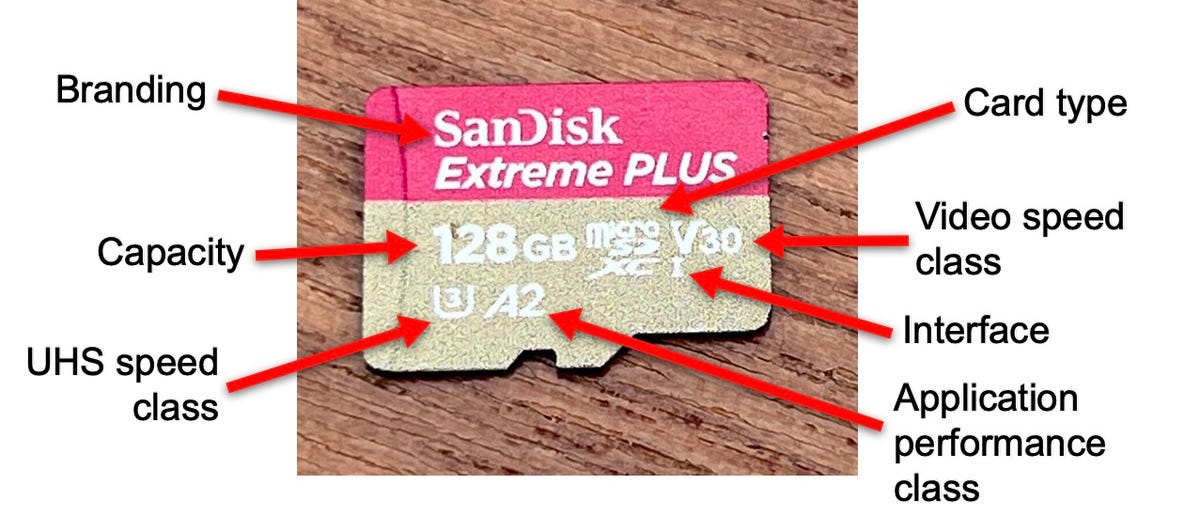
Fourth mistake: ignoring the card's speed class. For running an operating system (like Raspberry Pi OS), you want at least a Class 10 or UHS-I U3 card. A slow card will make your device feel sluggish and can cause random crashes. The flash process itself will also take forever. Don't skimp on the card. It's the cheapest performance upgrade you can make.
Pulling the Plug Too Early
I'm going to repeat this because it is so common. Flashing an SD card takes time. The tool writes data, then often does a verification pass. You see the progress bar at 99% and you think, 'Close enough.' You eject the card. You are wrong. That last 1% is often writing the final sector or the checksum. Pulling the card early corrupts the image.
I had a client who did this three times in a row. He was in a hurry. He blamed the software. He blamed the card. He blamed me. Finally, he waited for the full 100% and the 'Flash Complete' message. It worked. The look on his face was priceless. Patience. It's a virtue. Seriously.
Also, do not use the 'Safely Remove Hardware' option in Windows while the flash tool is still writing. Some tools use write caching. The OS might report the write is finished, but the data is still in a buffer. Give the tool a full ten seconds after it says 'Done' before you physically remove the card. Let the drive cache flush.
Using the Wrong Image for Your Hardware
This one is subtle and infuriating. You can flash an image perfectly. The tool reports success. You put it in the device. The device does absolutely nothing. Not even a blink. This often means the image architecture doesn't match the device's CPU. For example, an ARM64 image will not work on an ARMv6 CPU (Raspberry Pi Zero).
Check your hardware revision. Check the image description carefully. Many project webpages have a download section with multiple variants. Read the compatibility notes. I can't tell you how many times I've seen someone try to flash an SD card with a desktop Ubuntu image meant for AMD64 onto a Raspberry Pi. It simply will not work. The CPU can't execute the instructions.
Also