
Comparing Continuous vs Broken Line Graphs in Business Data
Picture this. You're in a Monday morning board meeting, and the VP of Operations slides a chart across the table. It shows quarterly sales rising smoothly, like a ski slope in January. Everyone nods. Then the head of Logistics points at a gap in the line and asks, "What happened in July?" The room goes quiet. That's the moment you realize it: the continuous vs broken line graphs debate isn't academic. It's about whether your business data tells the truth or just a convenient story.
I've spent over a decade building dashboards and fixing reports for companies that, quite frankly, should have known better. And the single biggest mistake I see? People picking the wrong line graph. They treat every data series like it's a smooth river, when sometimes it's really just a series of puddles. Look—this choice matters more than you think. A broken line graph isn't just a stylistic quirk; it's a signal. It says, "Hey, the story changes here." A continuous line, on the other hand, whispers, "Everything is connected."
So let's cut through the noise. I'm going to walk you through the nuts and bolts of comparing continuous vs broken line graphs in real-world business scenarios. We'll cover when to use each, how to avoid misleading your audience, and a few tricks that will make you look like the smartest person in the room. Seriously, by the end of this, you'll never look at a sloping line the same way again.
The Core Difference: Flow vs. Disruption in Data Visualization
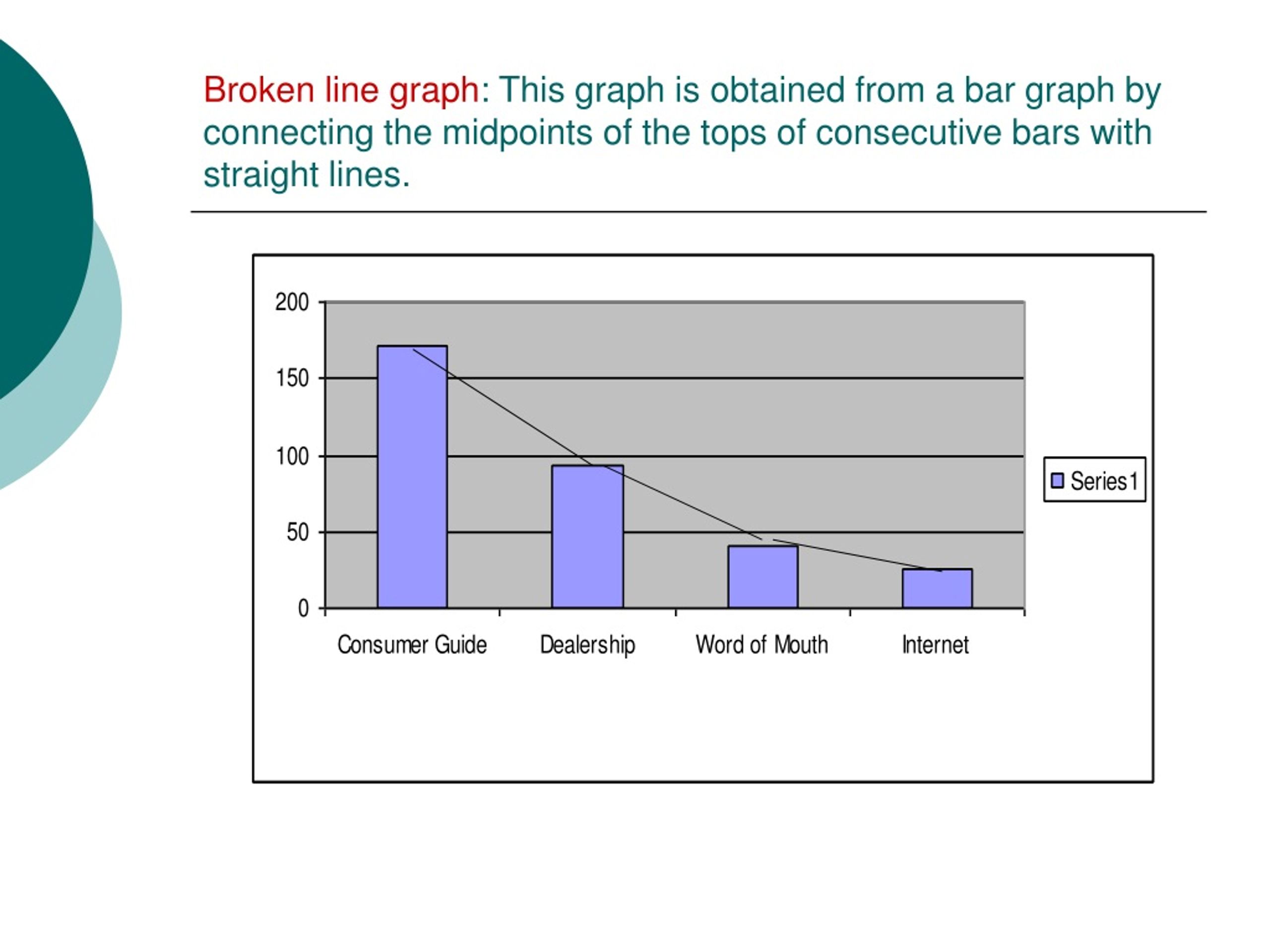
The heart of the matter is simple. A continuous line graph connects every data point in a single, unbroken segment. It implies a relationship between each point and the next. Think of it like walking a tightrope—you're moving from one moment to the next without a break. A broken line graph, however, introduces a visual gap, a literal break in the line. This break can represent missing data, a change in measurement methodology, or a deliberate separation between distinct data sets.
In business data analysis, this distinction is absolutely critical. Why? Because your stakeholders will subconsciously interpret a continuous line as a trend. They'll assume that if the line goes from 10 to 20, every point in between was on that same trajectory. That's fine if your data is time-series and the gaps are small. But what if you're comparing sales from Q1 to sales from Q3, and you deliberately skipped Q2 because you changed your pricing model? A continuous line would tell a lie. It would imply a gradual slope that never happened.
Honestly? I've seen executives make multi-million dollar decisions based on a continuous line graph that had a hidden data gap. It's a classic mistake. They saw a straight line going up, assumed steady growth, and greenlit a warehouse expansion. Turns out, the "growth" was just one huge spike from a single contract, followed by a plateau. Had they used a broken line graph, the visual pause would have forced them to ask, "Why is there a gap here?" That question saves money.
When Continuous Lines Shine: The Flow of Time-Series Data
If you're tracking monthly web traffic, daily sales, or weekly production numbers, a continuous line graph is your best friend. Why? Because time is, by nature, continuous. Your data points follow a logical sequence. Monday leads to Tuesday, Tuesday leads to Wednesday. A broken line graph in this context would look bizarre, like a heart monitor that suddenly flatlines for no reason.
But here's the nuance—continuous lines work best when your data intervals are equal. If you have data for January 1st, February 1st, and March 1st, the slope between those points is meaningful. You can calculate the rate of change. You can forecast. You can say, "We're growing at 5% month over month." The continuous line reinforces that narrative. It's intuitive. Our brains are wired to see lines as paths.
However, I will warn you about one trap. Don't use a continuous line graph to connect data points that have irregular gaps. Let's say you have sales data for January, then nothing until March, then a huge jump in June. If you connect those three points with a single line, you're inventing data that doesn't exist. The line will mislead everyone. It's data fraud by omission. Trust me, I've had to explain this to marketing teams who thought they could just "smooth things over." You can't. The line is not a smoothing tool.
When Broken Lines Win: Highlighting Gaps and Category Shifts
Now, let's talk about the broken line graph. This is your go-to when you have missing data, a change in data collection, or when you're comparing different categories that shouldn't be mathematically connected. I love using a broken line graph when I'm showing pre-pandemic vs. post-pandemic metrics. There's a literal historic break in the data. The world changed. Why would you draw a continuous line through that cataclysm? You wouldn't.
Another perfect use case: comparing performance across different, non-contiguous time periods. Say you have sales data for the first quarter of 2022 and then again for the first quarter of 2023, but you have no interest in what happened in between. A broken line graph visually separates these two blocks. It tells the viewer, "These are two separate stories. Don't try to connect the dots." This is incredibly useful for annual reviews where you're comparing "before" and "after" scenarios.
There's also a technical, almost psychological advantage. A broken line forces the viewer to slow down. They see the gap, and their brain asks, "Why?" That question alone can lead to deeper analysis. Compare that to a continuous line, which encourages a quick, superficial glance. If your goal is to provoke thought and encourage investigation, the broken line graph is far superior. It's a visual nudge. Use it wisely.
Practical Rules for Choosing the Right Graph for Your Business Data
Over the years, I've boiled this down to three rules. I keep them written on a sticky note on my monitor. They're not fancy, but they work. First, ask yourself: "Is the X-axis a measure of time or a sequence?" If yes, lean towards a continuous line graph, but only if your data points are equally spaced. If the answer is no—if the X-axis is a category, like a product name or a region—then a broken line graph is almost always the right call.
Second, consider the story you want to tell. Do you want to show a smooth trend, like quarterly revenue growth? Go continuous. Do you want to highlight a drastic change, like the effect of a new pricing policy? Go broken. The visual narrative of your line graph changes dramatically based on this choice. I can't stress this enough: your graph is a story, not a spreadsheet. The line type is a character in that story.
Third, and this is the one most people forget: think about your audience's level of sophistication. A room full of data scientists will understand a broken line. They get the nuance. But the sales team? They might see a gap and think it's a bug. If you're presenting to a general business audience, sometimes the safer play is a continuous line with annotated markers for the breaks. You can draw a continuous line but add a vertical dashed line and a note: "Data collection method changed here." That gives you the best of both worlds.
Here's a quick checklist I use with clients. I bet it'll help you too.
- Rule of Thumb #1: If every interval on your X-axis has a data point, use a continuous line. It's clean and efficient.
- Rule of Thumb #2: If you have blank periods (no data, zero sales, or a system outage), use a broken line. Don't fake the curve.
- Rule of Thumb #3: If you're comparing apples and oranges—like revenue vs. cost on the same scale—consider separate broken lines for each category.
- Rule of Thumb #4: Always, and I mean always, label the break. A gap without an explanation is a red flag.
Common Pitfalls: When Line Graphs Lie to You
I've seen some beautiful graphs that were, frankly, full of trash. The most common pitfall is using a continuous line graph to connect categorical data. Let me explain. Imagine you're comparing the average sale price of a product across five different regions: North, South, East, West, and Central. The X-axis is not a sequence. It's a list of categories. Yet, some people draw a continuous line through those five points. What does that line mean? Nothing. It's a visual fiction. The slope between North and South is meaningless. The line just implies a relationship that doesn't exist.
Another huge mistake is hiding a broken axis. This is when you take a broken line graph but you remove the visual break itself. You just scale the axis so that the gap disappears. That's a deliberate misrepresentation. I've seen it done to make a mediocre sales quarter look like a dramatic increase. It's dishonest. If you need a broken line graph, own it. Show the break. Let the audience see the missing data. If you hide it, you're not a data analyst—you're a creative writer.
Finally, be careful with overusing broken line graphs when you have multiple series. It can get visually noisy very quickly. Imagine a chart with six different product lines, each with a broken line indicating quarterly data. The page becomes a mess of dashes and gaps. In that scenario, consider a faceted chart (multiple small graphs) or simplify to three key lines. Less is more. I always say, a confused audience doesn't learn. A clear audience takes action.
How to Handle Missing Data Without Breaking Your Graph
Missing data is a fact of life in business. Someone didn't update the CRM. A server went down. A holiday weekend happened. You have to deal with it. The worst approach? Just draw a continuous line through the missing points. The second worst approach? Use a broken line graph with a tiny gap that nobody notices. You need to be obvious.
Here are three practical strategies I use all the time. First, if the missing data point is a single, isolated event (like a holiday with no sales), I sometimes replace that point with an average of the surrounding points and add a note. But only if the context is clear. Second, I use a dashed line segment to connect across the missing data. This is a middle-ground between continuous and broken. The dashed line says, "We're guessing here." Third, I use a true broken line graph with an explicit label. I'll write, "Data Unavailable" right on the gap. That's transparent. It builds trust.
Honestly? The best solution is to fix your data collection, not your graph. But if you can't fix the data, at least be honest about the holes. Your stakeholders will appreciate the candor. And it saves you from having to defend a misleading slope later. I've seen careers derailed over a single bad chart. Don't let that be you.
Advanced Techniques: Dual Axes and Hybrid Graphs
Once you've mastered the basics, you can start getting creative. I use hybrid line graphs when I have two datasets that need different treatments. For example, imagine you want to show monthly revenue (continuous, steady growth) and also show the months when you ran a major advertising campaign (discrete events). You can use a continuous line for the revenue, and then overlay a broken line graph for the campaign periods. The break in the campaign line signals when the campaign was active. It's a powerful visual contrast.
Another advanced move is using a dual y-axis with a broken line on one side. This is tricky. I don't recommend it for beginners. But done right, it can compare two metrics that have different units and different data continuity. For instance, you could use a continuous line for "Total Revenue" (in dollars) on the left axis, and a broken line graph for "Number of Returns" (in units) on the right axis. The return data might have gaps—maybe they only track returns in specific months. The broken line handles that gracefully.
One warning: don't use a broken line graph just because it looks "cool" or "modern." I see this in startup pitch decks all the time. They break the line everywhere to make their hockey-stick growth look more dramatic. It's a visual gimmick. A broken line should have a reason. If you don't have a gap in time or a category shift, just use a continuous line. Simplicity wins.
Common Questions About Comparing Continuous vs Broken Line Graphs in Business Data
Can I use a broken line graph for daily sales data?
Yes, but only if you have missing days. If you have data for every single day, a continuous line graph is the standard. A broken line would imply there is a gap, which would be confusing if there isn't one. If you have missing days due to a holiday or a system outage, use a broken line or a dashed segment to indicate the missing period.
What is the difference between a broken line graph and a segmented line graph?
This is a subtle but important distinction. A broken line graph has physical gaps in the line to indicate missing data or a category change. A segmented line graph shows different line segments for different groups (e.g., red line for revenue, blue line for costs) but each segment may be continuous within its own group. Segmented lines are used for comparisons; broken lines are used for discontinuity.
Does a broken line graph affect trend calculations like moving averages?
Absolutely. If you calculate a moving average across a broken line graph, you need to be careful. The gap creates a discontinuity in the data series. The moving average will "jump" across the gap, which can distort the trend. My advice? Calculate your moving average separately for each "segment" of data before and after the break. Don't let the formula cross the void.
Are there any software limitations for creating broken line graphs?
Some older versions of spreadsheet software make it difficult. You often have to manually insert blank rows or use a separate data series. Modern visualization tools like Tableau, Power BI, and even newer versions of Excel handle broken line graphs more gracefully. In Python's Matplotlib, you can use NaN values in your data to create breaks. The key is knowing your tool. Don't let software limitations force you into a misleading continuous line.
When is it acceptable to use a broken line graph without a label?
Rarely. If the break is visually obvious and the context is unmistakable (for example, a clear seasonal break between December and January data), you might get away without a label. But I always add a label anyway. It takes two seconds and prevents confusion. Trust me, your audience will appreciate the clarity. A good rule: if the break is small, label it. If the break is large, definitely label it.