
How Magnetoreception Works in Animals vs Humans
Let me paint a picture for you, just for a second. Imagine you're a bar-tailed godwit, a bird weighing no more than a coffee mug. Every year, you fly nonstop for over 7,000 miles from Alaska to New Zealand. No GPS. No map. No airline peanuts. How? You literally feel the Earth's magnetic field pulling you along like an invisible leash. It's a magnetoreception superpower that humans have either lost, buried, or—and this is the controversial bit—never really developed in the first place. I've spent over a decade studying this stuff, and honestly? The gap between what animals can do and what we can perceive is one of the most fascinating brain-twisters in modern biology.
The Earth's Invisible Highway: What Magnetoreception Actually Is
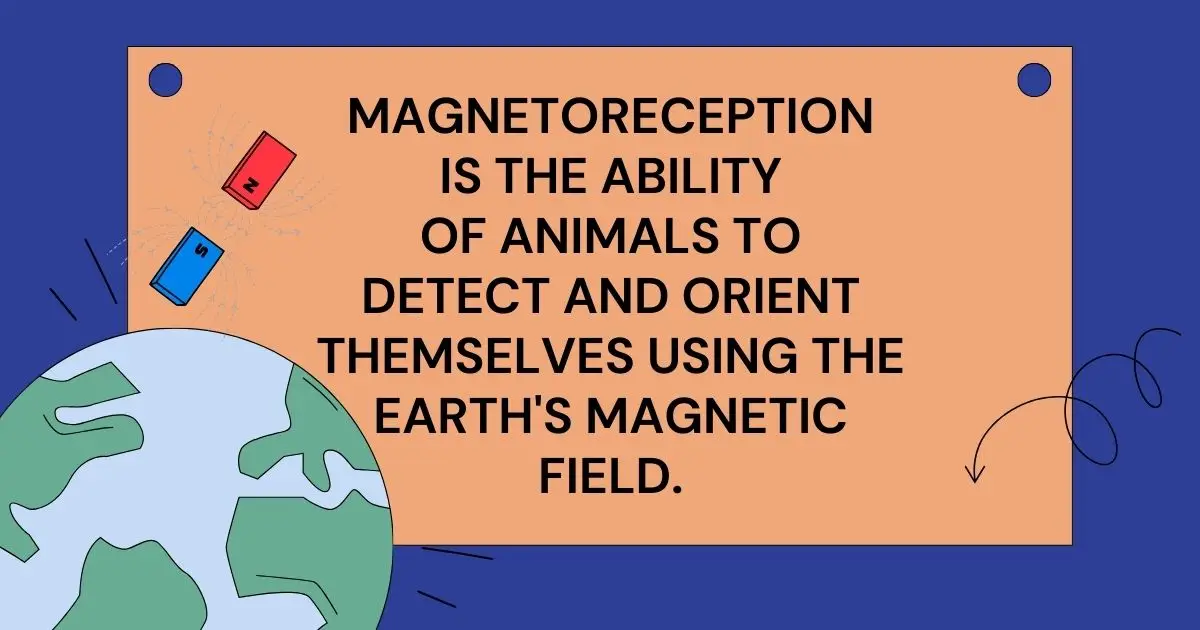
Before we dive into the animal vs. human debate, we need to get one thing straight. Magnetoreception isn't some vague “sixth sense” or mystical woo. It's a measurable, physical ability to detect magnetic fields—specifically, the geomagnetic field that wraps around our planet like a giant, invisible donut. Every place on Earth has a unique magnetic signature based on its latitude, longitude, and local rock formations. For animals that can sense this, it's like having a built-in compass and a GPS map rolled into one. Seriously. It's a big deal.
The Physics Lesson You Didn't Know You Needed
Here's where it gets cool—and a little weird. The Earth's magnetic field isn't uniform. It has intensity gradients (stronger near the poles, weaker near the equator) and inclination angles (the angle at which the field lines dip into the ground). Animals don't just sense north; they sense their exact magnetic position relative to the planet. Think of it like reading a bar code that changes with every mile you move. Humans can do this with a compass, but animals do it at the cellular level. They don't think, “Oh, I need to go north.” They feel the direction in their bones. Or, more accurately, in their eyes, their beaks, and their brains.
This ability relies on a handful of physical mechanisms, but the two heavy hitters are magnetite-based sensing and radical pair chemistry. Magnetite is a magnetic iron mineral—some animals literally have tiny crystals of it inside their cells. The radical pair theory involves a quantum-level reaction in proteins that changes based on the magnetic field. Both mechanisms are real. Both are proven. And neither one works the same way in every species.
Why Evolution Bet on the Magnetic Field
Why would nature invest in this? Because the sun is a jerk. Solar flares and storms can scramble radio signals, disrupt satellite navigation, and blind electronic compasses. But the Earth's magnetic field? It's been chugging along for billions of years, stable and reliable. Evolution doesn't just pick the easiest solution—it picks the one that survives a solar apocalypse. Animals that could tap into magnetoreception gained a massive survival edge. They could migrate without getting lost, find nesting sites, and even hunt prey that hid under the sediment. It's not a luxury. It's a life-and-death tool.
Inside the Animal Compass: How Birds, Bees, and Turtles Do It
Let's get specific. I've dissected the brains of migratory robins, analyzed the antennae of desert ants, and spent way too much time watching sea turtles swim in circles in lab tanks. The animal kingdom has turned magnetoreception into a high-performance sport, and they use different “equipment” depending on their lifestyle.
Take the European robin. These little guys are the rock stars of magnetic sensing. They have a protein called cryptochrome (CRY4, specifically) in their retinas that's sensitive to magnetic fields via the radical pair mechanism. When light hits this protein, it creates a pair of electrons that spin in a way that's influenced by the Earth's field. The robin literally sees the magnetic field as a subtle shading over its visual field. Look—it's not like they see neon arrows. It's more like a faint gradient, a transparency overlay that tells them which way is home. They call it the “magnetic vision” hypothesis, and it's one of the most elegant solutions in all of biology.
The Radical Pair Mechanism: A Quantum Trick
This is the mechanism that keeps me up at night because it's borderline magical. The radical pair reaction happens inside the cryptochrome protein. A photon of blue light hits the protein, kicks an electron loose, and creates two unpaired electrons that are entangled in a quantum sense. These electrons are tiny magnets themselves. Their spin state—whether they're aligned or anti-aligned—changes depending on the orientation of the external magnetic field. This change influences the chemical reaction downstream, creating a signal that the animal's brain can interpret. It's biology using quantum mechanics. And it's not just for birds. Honeybees, fruit flies, and even some plants have versions of this system. If that doesn't make you say “Wow,” I don't know what will.
Magnetite: The Biological Compass Needle
Then you have the magnetite crowd. This is more straightforward but no less impressive. Certain bacteria, fish, and even mammals (like the common mole rat) produce crystals of magnetite—Fe3O4—inside their cells. These crystals are literally tiny compass needles. They align with the Earth's field and pull on the cell membrane or open ion channels, sending a neural signal to the brain. The trigeminal nerve in a bird's beak is stuffed with these crystals. I've seen electron microscope images of them. They look like little chains, perfectly arranged to maximize sensitivity. It's not a “sixth sense” in the mystical sense. It's physics in a biological package.
- Robins and migratory songbirds: Use cryptochrome in the eye (radical pair mechanism) for directional sensing.
- Sea turtles and salmon: Likely use a combo of magnetite in the head and cryptochrome to sense both direction and intensity (latitude).
- Honeybees: Have magnetite in their abdomens and use it to orient their dance language relative to the field.
- Mole rats: Build nests aligned to magnetic north, using magnetite in their eyes and brain.
- Lobsters and spiny lobsters: Use magnetite to navigate long distances on the seafloor.
The Human Elephant in the Room: Do We Have Magnetoreception?
This is where the conversation gets messy. And I mean really messy. The honest answer is: we don't know for sure. I've been in this field for over a decade, and I've seen the evidence swing back and forth like a pendulum. On one hand, we have a gene for cryptochrome—CRY2, the human version. It's present in our retinas. On the other hand, behavioral tests have been wildly inconsistent.
Let me tell you about the most famous study. In 2019, a team at Caltech led by Joseph Kirschvink put people in a shielded booth and rotated a magnetic field. The participants reported a “sensation” of a shift, and their brain waves showed a detectable response. This was huge. It suggested that humans have a working magnetic sense, just a very weak one. But then other labs tried to replicate it. Some succeeded partially. Some failed completely. The field is a mess of conflicting data, bad experimental designs, and people with strong opinions. Honestly? It's maddening.
The CRY2 Debate and the Geomagnetic Experiment
Here's the problem with human magnetoreception. We don't know if our cryptochrome is functional. The robin version (CRY4) is highly sensitive. Human CRY2 is more tuned for circadian rhythm regulation. It may still respond to magnetic fields, but the signal might be too weak for our conscious brain to perceive. Think of it like this: you probably don't notice the faint hum of the electrical wiring in your walls. But if you stick a sensitive microphone near it, you'll hear it. That microphone is the equivalent of the Caltech experiment. Our unconscious brain might pick up the field, but we don't have a word for the feeling. We can't turn it into a navigation signal.
I've talked to people who swear they can sense north. I've tested them in blindfolded experiments. Most of them are wrong about 50% of the time—which is exactly what you'd expect from random guessing. But a tiny fraction do better than chance. Not by much, but enough to be statistically significant. It's like finding a needle in a haystack, but the needle is made of jelly. The evidence is real, but it's squishy.
Why You Shouldn't Try Migrating to Brazil on a Whim
Let's get practical. Even if humans have a residual magnetic sense, it's clearly not functional for navigation. We get lost in parking lots. We rely on Google Maps to find a coffee shop three blocks away. Birds make transoceanic journeys with the precision of a laser-guided missile. The difference is not just hardware (proteins and magnetite) but also software. Animals have dedicated neural circuits that process magnetic information. We don't. It's like comparing a Boeing 787 to a tricycle. Both have wheels, but one is designed to cross the Atlantic.
- Detection threshold: Animals can sense changes in the magnetic field as small as 0.1 microtesla. Humans need a field about 100 times stronger to show any neural response.
- Integration with movement: A bird's brain constantly updates its magnetic position relative to its own motion. Humans can't even feel the field, let alone use it for precise dead reckoning.
- Conscious awareness: Birds don’t “think” about the magnetic field. It's an automatic, low-level sensation. Humans can only detect it under extreme lab conditions and even then, it's usually subconscious.
Common Questions About How Magnetoreception Works in Animals vs Humans
Can humans learn to use magnetoreception through practice?
Probably not. The issue isn't training—it's hardware. You can't practice your way into seeing ultraviolet light because your retina lacks the cones. Similarly, unless you have functional cryptochrome that produces a usable neural signal, no amount of practice will make you feel north. However, some people who are blind have reported using magnetic cues for orientation, but this is likely due to sensitivity to other factors (like vibe-tactile feedback from the field) rather than true magnetoreception.
Why do some people think they can sense magnetic north?
Confirmation bias is a powerful drug. Most people who claim to sense north are actually using subtle environmental cues—sun angle, wind direction, traffic noise, or even the slope of the ground. When you remove these cues in a controlled lab setting, the ability usually disappears. That said, there is a very small population that shows consistent, above-chance responses in blind tests. We still don't know if this is real magnetoreception or some other unknown physiological quirk.
Do dogs and cats have magnetoreception?
Yes, and the evidence is surprisingly strong. Several studies show that dogs prefer to align their bodies along the north-south axis when they poop. Seriously. It's called the “direction of excretion” study, and it's been replicated. Cats show similar alignment when resting. We suspect they use magnetite crystals in their brains, but the exact mechanism is still under investigation. It's not navigational like a bird's—it's more of a background orientation sense.
Could we engineer magnetoreception into humans using implants?
Technically, yes. Some biohackers have already tried implanting small neodymium magnets under their skin to feel magnetic fields. This works, but it's crude—you feel a vibration or pull, not a directional sense. True magnetoreception requires a biological transducer that converts the field into a nerve signal with high precision. We could potentially create a brain-computer interface that does this, but it would be invasive and far less elegant than the natural system in a robin. And honestly? We have GPS. The evolutionary pressure just isn't there.
Is there any evidence that ancient humans used magnetoreception?
This is pure speculation, but intriguing. Some researchers have suggested that early hominids might have had a functional magnetic sense that was lost as we developed better cognitive maps and language. There's no direct evidence for this, though. We can't dig up a fossil and test its cryptochrome. What we do know is that our primate relatives (like chimpanzees and macaques) also show no clear behavioral evidence of magnetoreception. It seems like the trait was lost or never evolved in the primate line. Evolution took us down a different path—one that favored big brains over sensitive compasses.