
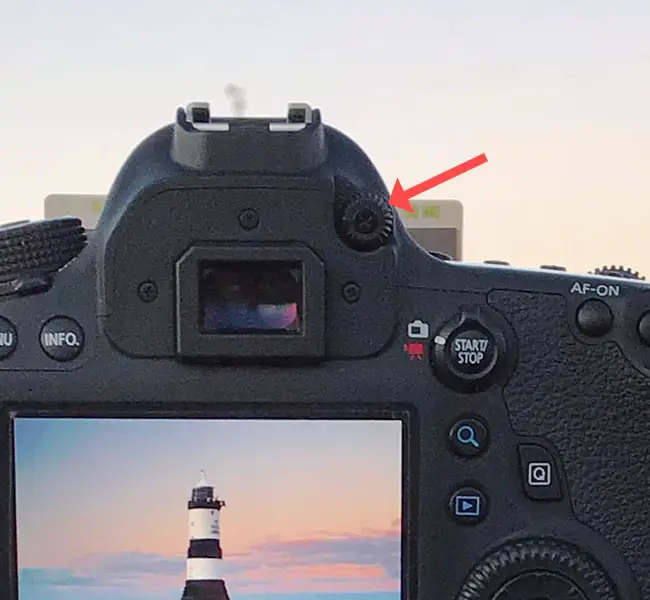
How the diopter adjustment affects camera focus
I remember the first time I spent an entire afternoon chasing a "soft" lens, swapping glass, checking calibration, and blaming the camera body. The culprit wasn't the lens. It wasn't the camera. It was the tiny little wheel next to my eye that I had accidentally nudged while shoving the camera into my bag. Honestly? It happens to everyone. And if you've ever felt that gnawing doubt about whether your autofocus is actually working, let me tell you—you need to check your diopter first. This isn't some advanced technique reserved for pros. It's the single most overlooked control on any camera, and misunderstanding how the diopter adjustment affects camera focus can sabotage your entire workflow.
Look—your camera's viewfinder is a tiny optical instrument. It has a ground-glass screen or a digital panel that displays the image coming through the lens. But your eye is the final piece of that optical chain. And just like you wouldn't shoot with a smudged rear element, you absolutely cannot shoot with an eyepiece that isn't dialed in for your specific vision. The diopter adjustment doesn't change what the lens or sensor records, but it changes what you see. If you see a blurry viewfinder, you'll chase a ghost. Your brain will insist the image is off, you'll tweak the focus ring, and you'll miss the shot. It's a big deal.
The Anatomy of the Eyepiece: Why Your Eye is the Real Lens
Most people grab a camera, look through the viewfinder, and assume that if the scene looks sharp, they're good to go. That's a trap. The diopter adjustment is a small lens element inside the viewfinder that moves closer to or farther from your eye. This mimics the effect of prescription glasses. If you are nearsighted or farsighted, your eye naturally bends light incorrectly. The diopter compensates for that, making the viewfinder screen appear perfectly crisp without requiring you to wear corrective lenses.
Seriously, think about it. Your camera has no idea how good or bad your vision is. It will lock focus perfectly on the subject, but if the diopter adjustment is set wrong, that perfect focus will look slightly off to you. You'll then manually override a perfectly good autofocus lock, or you'll blame the lens and send it back for calibration. I've seen it happen a hundred times. The camera body ends up on a repair bench, the lens gets recalibrated, and the entire time, the little diopter wheel was just one click off.
How the Mechanism Actually Works
Inside the viewfinder assembly, there's a sliding or rotating mechanism that shifts a corrective lens element. This element sits between the rear of the prism (or the EVF screen) and your eye. When you turn the dial (or slide the lever), you're changing the optical distance. A positive (+) setting compensates for farsightedness. A negative (-) setting compensates for nearsightedness. Zero is for people with perfect 20/20 vision, which, let's be honest, is almost nobody over the age of thirty.
What's tricky is that the mechanism can be delicate. On some cameras, it's a stiff dial that can be bumped accidentally. On others, it's a flimsy slider that moves the second you put the camera against your face. I've had cameras where the diopter adjustment drifted over time due to vibration in a backpack. If your viewfinder suddenly looks a little off and you haven't changed anything else, check that wheel. It's almost always the culprit.
Who Needs to Adjust This? (Hint: Probably You)
If you wear glasses, you definitely need to adjust the diopter. But you don't need glasses to have a problem. Many people have a slight astigmatism or a minor refractive error that they never notice in daily life. However, when you're looking through a tiny viewfinder and trying to nail critical focus on a single eyelash, that minor error becomes a massive issue. The diopter adjustment exists precisely because your eye's focus is part of the system. Ignoring it is like using a tripod on soft ground.
Even shooters who use glasses often struggle. Some glasses have progressive lenses or bifocals, and the part of the lens you look through while holding a camera might be the wrong zone. In that case, adjusting the diopter so you can shoot without glasses is a game-changer. It frees you from that awkward head tilt and lets you see the entire frame clearly. Honestly? It's one of the best quality-of-life upgrades for any photographer.
How a Misadjusted Diopter Sabotages Your Autofocus (and Your Sanity)
This is the part that drives me nuts. Photographers will spend thousands of dollars on a lens with lightning-fast autofocus, and then they'll look through a viewfinder that is blurry because of the diopter. They'll see the focus point light up, indicating a lock, but the image inside the frame still looks soft. So they assume the AF missed. They half-press again. They switch to manual focus. They turn on focus peaking. They fiddle.
All of that is wasted effort. The camera focus system did its job perfectly. The lens moved the elements to the exact plane of focus. But your eye, looking through a misadjusted diopter, is seeing an artificially unsharp image. You're fighting a ghost. Your brain is receiving conflicting data: the camera says "lock," but your eye says "blurry." That cognitive dissonance is exhausting. It slows you down and destroys confidence.
The Neural Disconnect Your Brain Creates
There's a psychological effect here that's rarely discussed. When you look through a viewfinder and the image doesn't snap into sharpness, your brain starts to distrust the camera. You begin to second-guess everything. You might start overshooting, taking ten frames instead of one, just to "make sure." You might abandon autofocus altogether. I've talked to photographers who switched to mirrorless cameras entirely because they thought their DSLR's phase-detection AF was broken. It wasn't broken. Their diopter adjustment was off.
Your eye muscles will try to compensate for a bad diopter setting. You'll squint. You'll strain. Your eye will try to "pull" the image into focus, just like it would if you were trying to read a sign without your glasses. This causes eye fatigue, headaches, and a slower reaction time. Over a long wedding shoot or a day in the field, that strain adds up. You're not just missing focus—you're physically draining yourself.
Troubleshooting the "Soft" Viewfinder
So how do you know if the diopter adjustment is the problem? Here's a quick checklist you can run through in about thirty seconds:
- Look at the information display in your viewfinder (the shutter speed, aperture, battery icon). Is that text sharp? If the camera's own internal overlay is blurry, the diopter is wrong. Period. The overlay is a fixed digital element that cannot be out of focus.
- Turn the camera to manual focus. Point it at a high-contrast subject like a brick wall or a printed page. Rotate the focus ring slowly. Does the sharpest point in the viewfinder look truly crisp, or does it still seem a little soft? If it never gets razor-sharp, adjust the diopter.
- Take a test shot. Zoom in on the LCD screen. If the image file is sharp but the viewfinder looked soft, your diopter is the problem. The sensor caught the focus; your eye didn't.
If you find yourself constantly micro-adjusting focus even when the camera indicates a lock, stop and reset that diopter wheel. It will save you from returning a perfectly good lens.
How to Calibrate Your Diopter Adjustment in 90 Seconds
Let's get practical. You don't need a chart or a special tool. You just need a few seconds of quiet and a surface with some texture. I do this on every new camera I pick up, and I recheck it if I've traveled to a different climate or if I'm feeling particularly tired. Your eyes change over the course of a day, and they change with age. The diopter adjustment isn't a "set it and forget it" thing. It's more of a periodic tune-up.
First, point the camera at a plain wall or a sky. You don't want any distracting details. Switch the lens to manual focus. Rotate the focus ring until the image is intentionally blurry. Now, look through the viewfinder and rack the diopter adjustment back and forth. You should see the viewfinder information display (the numbers) get sharp and then blurry. Find the point where that text is clearest. That's your starting point.
Next, find a subject with fine detail—a tree branch against the sky, a sign with small letters, or even a patterned shirt. With the lens still in manual focus, adjust the lens focus ring to get the subject as sharp as possible. Do not touch the diopter yet. Once the lens is focused, look at the viewfinder. If the subject doesn't look as sharp as you know it should be, tweak the diopter again. The goal is to make the viewfinder image match what you know is optically possible.
A pro tip here: do this at the beginning of every shooting session, especially if you share your camera or if it's been rattling around in a bag. The diopter adjustment on many cameras is not lockable, and it can drift. I've seen a photographer bump the diopter wheel while pulling the camera out of a tight backpack, and they spent the next two hours swearing at their gear. Don't be that person.
Common Mistakes During Calibration
People make a few classic errors when trying to set the diopter. The first is doing it with glasses on, then taking the glasses off, or vice versa. Pick one mode and stick with it. If you always shoot with glasses, adjust the diopter while wearing them. If you don't wear glasses, you're fine—but remember that your eye's natural acuity might shift slightly with fatigue.
Another mistake is trying to adjust it while the lens autofocus is hunting. The lens will be moving in and out, making the image blurry for reasons unrelated to the diopter. Always set the diopter with the lens locked at a known focus point, or better yet, use manual focus. Finally, do not try to "over-correct." If you spin the diopter to the far positive or negative extreme, you'll just get a different kind of blur. The sweet spot is a narrow range where the viewfinder snaps into crispness.
The Common Myths About Diopter Adjustment
There's a surprising amount of bad advice floating around about this topic. Let me clear up the most damaging myths right now.
- Myth: Diopter adjustment only matters for manual focus. Wrong. It affects your perception of every focus confirmation indicator. If the viewfinder is blurry, you'll distrust the AF confirmation dot or the focus peaking highlights. It matters for autofocus just as much.
- Myth: A high-end camera doesn't need diopter calibration. Nonsense. The fanciest $6,000 body still has a mechanical diopter adjuster that can be nudged out of position. There is no "auto-diopter" that reads your eyesight. You have to set it.
- Myth: You only adjust it once, when you buy the camera. Your vision changes. I need a slightly different setting at the end of a long day than I do in the morning. Temperature and humidity can also affect the optics slightly. Check it regularly.
- Myth: If you wear contacts, you don't need to adjust it. Not necessarily true. Contacts can dry out or shift, and your eyes might still have a residual refractive error that the contacts don't fully correct. The viewfinder will still show you the truth.
These myths persist because the diopter adjustment is such a small, seemingly insignificant part of the camera. But honestly? It's the difference between feeling like your gear is broken and feeling like an extension of your own vision. It's a big deal.
Common Questions About How the Diopter Adjustment Affects Camera Focus
Does the diopter affect the actual image file, or just the viewfinder?
It only affects the viewfinder. The diopter adjustment is purely an optical compensation for your eye. It does not change what the sensor records. However, because it influences how you see the focus, it can indirectly cause you to take unsharp photos if you override the autofocus based on a blurry viewfinder.
Can a bad diopter setting cause camera focus to be consistently off in photos?
Indirectly, yes. If you are manually focusing, you will consistently mis-focus because your eye is seeing a false representation of sharpness. With autofocus, the camera will still lock correctly, but you might manually "fix" it and throw it off. The camera focus system itself is not damaged, but your judgment is compromised.
What happens if I ignore the diopter adjustment entirely?
You'll likely experience eye strain, slower shooting speed, and a nagging feeling that your lenses are soft. Many photographers live with this for years without realizing it, assuming their gear is the problem. The diopter adjustment is a simple fix for a frustrating issue.
How often should I check my diopter setting?
I recommend checking it every time you pick up the camera after a break, or any time you share your camera with someone else. Also check it if you feel eye fatigue or if the viewfinder suddenly looks different. It takes ten seconds and can save you hours of frustration.
Is the diopter adjustment the same for mirrorless and DSLR cameras?
The concept is identical, though the mechanism differs slightly. On a DSLR, you're adjusting the optical viewfinder's rear element. On a mirrorless camera, you're adjusting the EVF's eyepiece lens. The effect on camera focus perception is exactly the same—if the EVF is blurry to your eye, you'll miss the shot.