
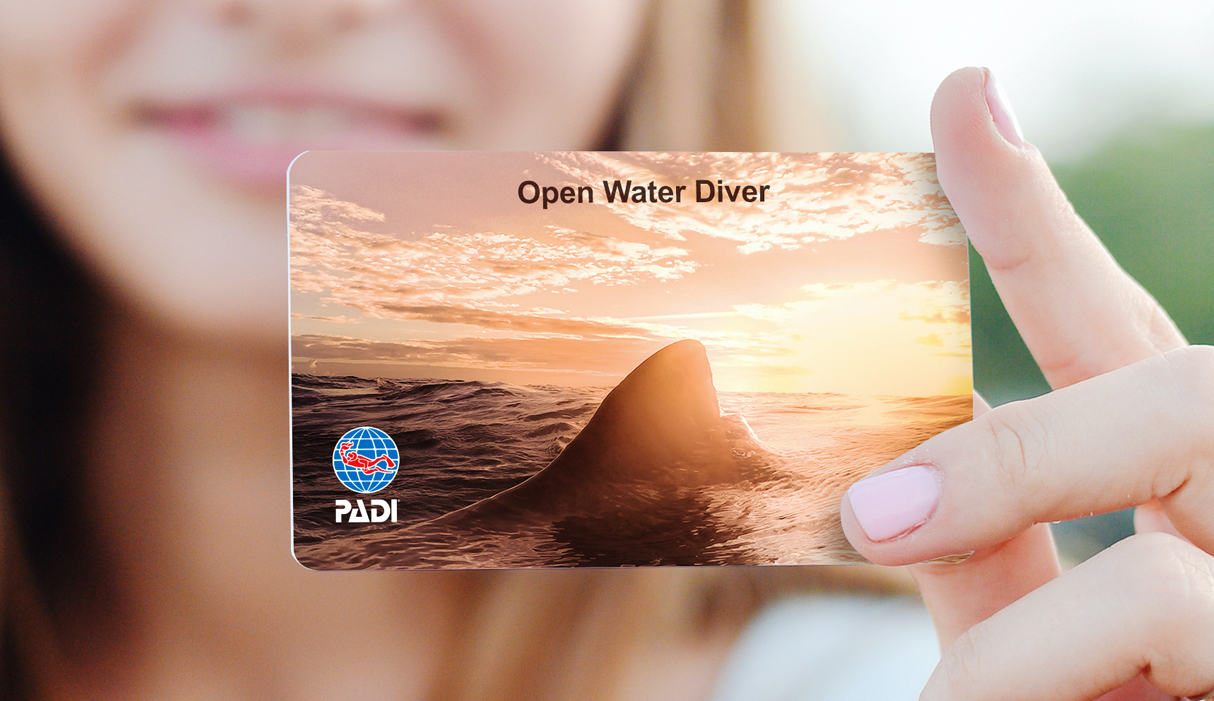
How to Renew Your PADI Certification After Years of Inactivity
When was the last time you felt the weight of a tank on your back? For most of us returning to the water after a long break, it's been years. Seriously. Life gets busy—kids, careers, mortgages—and suddenly that dusty dive log from your 1998 Open Water course feels like an artifact from a past life. You want to dive again, but there's one nagging question: can you even renew that thing?
Let me cut the suspense. Yes, you can absolutely renew your PADI certification after years of inactivity. But the path isn't the same for everyone. I've seen divers walk in after a 25-year hiatus and nail their Scuba Review in one afternoon. I've also seen people assume they could just jump back into a deep wreck dive with no prep. Don't be that second person. Look—your muscle memory for buoyancy might be gone, your knowledge of modern dive computers likely rusty, and your cardio fitness? Let's just say the couch hasn't been kind.
Honestly? The process is simpler than you think. PADI doesn't want to make you suffer; they want you to be safe and have fun. So whether you're a card-carrying diver from 2010 or an old-school PADI instructor from the 90s, this guide covers everything you need to know to renew your PADI certification and get back underwater.
Why You Shouldn't Panic About Your Expired PADI Card
First, let's clear up a massive misconception. PADI certifications don't actually expire. Your Open Water Diver card is valid for life. I'll repeat that—your PADI certification never technically dies. The issue is that dive centers, insurance companies, and liveaboards often impose their own time limits. Most shops won't let you rent gear or charter a boat if your last logged dive was more than 12 months ago. It's a liability thing. They need proof you can still handle yourself.
So what do you do? That's where the Scuba Review program comes in. It's essentially a refresher designed for divers who've been inactive. Think of it as a tune-up for your brain and body. It covers all the core skills—mask clearing, regulator recovery, buoyancy control—in a pool or confined water setting. Most people complete it in a few hours. It's not a re-test, it's a confidence builder.
But here's the thing: the longer you've been out, the more likely you'll need to step back further. Thirty years of inactivity? You might not be able to just breeze through a Scuba Review. Your skills are toast. The muscle memory for a proper fin pivot or a controlled ascent? Gone. That's okay—better to face it now than 60 feet down.
The key is to be honest with yourself. Are you the diver who remembers your buddy's name but not the hand signal for 'low on air'? If yes, take the full Scuba Review. If you can't even find your old logbook, the answer is still yes. The process isn't punishment; it's your insurance policy against a panicked ascent.
The Scuba Review: Your Golden Ticket
The Scuba Review is PADI's official answer to the problem of inactivity. It's a one-day program that includes a quick knowledge review (usually an online module or a chat with your instructor) and a confined water session. You'll practice five core skills: mask removal and replacement, regulator recovery, alternate air source use, hovering, and a controlled emergency swimming ascent. Sounds intense? It's not. It's methodical and guided.
Here's the best part: you don't need to redo your entire Open Water course. No endless classroom lectures. No sitting through videos about Boyle's Law for the fiftieth time. The Scuba Review is designed to be efficient. You'll spend maybe two hours in the pool, then get a new certification card—often a sticker for your existing card or a temporary digital record. Most instructors will also let you tag along on a supervised open water dive afterward if you ask nicely.
But don't expect to just show up and have the instructor hold your hand. You need to have your gear—or rent it from the shop. If you've gained or lost significant weight since your last dive, make sure your wetsuit still fits. A baggy suit will flood and make buoyancy a nightmare. Trust me, I've seen a 50-year-old diver pop up like a cork because his new 3mm was two sizes too big.
One more thing: the cost. Expect to pay anywhere from $75 to $150 for a Scuba Review, depending on your location and whether it includes a supervised dive. Is that expensive? No, considering a panic attack at depth can cost you your life (or at least a very embarrassing boat ride back).
When You Might Actually Retake the Full Open Water Course
I'll be blunt: some people shouldn't bother with the Scuba Review. If you've been inactive for more than 10 years and never dove again after your initial certification, you might be better off retaking the entire PADI Open Water Diver course. Why? Because the sport has changed. Dive computers are now standard. Buoyancy control techniques have evolved. Safety protocols have tightened. Jamming a rusty diver into a Scuba Review and hoping for the best is a recipe for stress.
Also, consider your age and health. If you were 18 when you got certified and now you're 45 and haven't exercised in a decade, your body will react differently to the pressure and exertion. Renew your PADI certification by starting over might actually be safer. You'll get fresh instruction, modern equipment training, and a medical form that forces you to check your health honestly.
Another scenario: lost paperwork. If you can't find your old certification card or digital record, some shops will let you do the Scuba Review with a simple card replacement request. But if they can't verify your training in PADI's system (unlikely but possible for very old certifications), you may have to redo the course. It's rare, but it happens. I've had students from the 80s whose records were literally paper files in a warehouse. In those cases, just sign up for Open Water again. You'll enjoy it more than fighting bureaucracy.
Finally, the cost-benefit. A Scuba Review costs around $100. A full Open Water course is $300–$600 depending on location. If you're planning to dive regularly again, the full course is a better investment. You'll come out more confident and with a stronger foundation. If you just want one vacation trip to the Bahamas next year, the Scuba Review is fine.
The Step-by-Step Process to Get Your Card Active
Let me walk you through what actually happens when you walk into a dive shop or sign up for a course online. I've done this literally hundreds of times with students, so here's the real timeline—not the brochure version.
First, call your local PADI dive center. Tell them you have an inactive PADI certification and want to do a Scuba Review. They'll ask for your certification number if you have it. If you don't, they can look you up by name and date of birth in PADI's database. If nothing shows up, they'll ask about your original instructor or shop. It takes 10 minutes. Then they'll schedule a date for the confined water session. You'll get an online link for the knowledge review—about 20 minutes of multiple-choice questions covering dive physics, gear, and safety.
Second, show up on the day. Bring your gear. If you don't have any, rent it. Try it on beforehand. Nothing kills a Scuba Review faster than a leaky mask or fins that give you blisters. The instructor will do a brief dive planning session with you, covering the skills you'll practice. Expect to spend about 2-3 hours in the water. I usually run through the skills twice: once slowly to reacquaint, once at a normal pace to test memory.
Third, after the pool session, you'll get a new card or sticker. That's it. You're now active again. Many shops will offer a guided open water dive the same weekend. Take it. The real test isn't in a pool—it's in 40 feet of water with current and a bottom time limit. If you pass the Scuba Review, you're good to go. If you struggle, the instructor might recommend a few more practice sessions or a partial retake of the course.
Medical Requirements You Cannot Ignore
This is where most divers trip up. The PADI Medical Statement is a legal document. You must answer every question honestly. If you have asthma, heart issues, diabetes, or take certain medications, you may need a doctor's clearance before you can do the Scuba Review. I've seen divers show up, lie on the form, and then panic underwater because they forgot their inhaler. Not fun.
The good news? Most people can get cleared. You just need a physician who understands dive medicine. Some dive shops have a list of local doctors who are familiar with the requirements. The Divers Alert Network (DAN) also offers a medical screening service online. Do not skip this step. If you're over 45 and inactive, get a checkup anyway. Your heart might not be ready for the stress of a rapid ascent or a strong current.
Remember: even if you renew your PADI certification successfully, you are responsible for your own fitness to dive. The card doesn't protect you from a heart attack at 30 feet.
What If You Want to Jump to Advanced or Rescue?
Common question: "Can I just sign up for the Advanced Open Water course after renewing my basic cert?" Yes, but with a condition. Most dive centers require you to have completed a Scuba Review (or a recent dive) within the last 12 months before starting Advanced. You can't just show up after 5 years off and expect to do a deep dive with a computer you haven't touched. It's a safety issue for you and your buddy.
If you're aiming for Rescue Diver or higher, you definitely need to refresh the basics first. Rescue involves stress management, and a rusty diver is a stress test in motion. I've taught Rescue courses where someone who hadn't dived in 3 years ended up needing rescuing themselves. Embarrassing and dangerous. Do the Scuba Review first. Then take Advanced. Then Rescue. The progression is there for a reason.
Common Questions About Renewing Your PADI Certification
Is my PADI certification forever expired after 10 years?
No. PADI certifications are lifetime. They never expire. What expires is a dive center's willingness to let you dive without retraining. After 12 months of inactivity, most shops require a Scuba Review. After 10 years, that's mandatory. But your card itself is still valid. You just need to prove you can still dive safely.
Can I do the Scuba Review online without a pool session?
No. The confined water session is required. You cannot renew your PADI certification entirely online. The knowledge review can be completed digitally, but the skills assessment must be in person. Anyone offering a purely online refresher is not following PADI standards—run away.
How much does it cost to renew a PADI certification?
A Scuba Review typically runs $75–$150. This includes the knowledge review, pool session, and a new certification card or sticker. If you need to retake the full Open Water course, expect to pay $300–$600. Card replacement fees are separate and usually under $50 if you lost your original card.
Do I need to buy new gear for the Scuba Review?
No. You can rent everything from the dive shop. But if you plan to dive regularly after, consider buying a mask, fins, and a dive computer. Those are personal items and worth the investment. Your rental wetsuit might smell like a wet dog, but it works for a one-day review.
What if my old PADI instructor can't be found?
Not a problem. PADI has a central database. As long as you were ever issued a certification, the system has a record. Your new dive shop can look it up. If for some reason it's not found (very old paper records), you may need to provide proof like an old logbook or a photo of your card. Worst case, you start over with Open Water—it's honestly not as bad as it sounds.
The water has been waiting. Go get your feet wet again. Just make sure you do it the smart way.
To begin doing something again: Renew, renovate, repair, restore suggest making something the way it formerly was. To increase the life of or replace something old: Renew, a leading decarbonization solutions company listed on nasdaq (nasdaq: Meaning, pronunciation, picture, example sentences, grammar, usage notes, synonyms and more. Renew means to bring back to an original condition of freshness and vigor: Temukan semua terjemahan renew yang telah diterjemahkan dari bahasa indonesia ke dalam bahasa inggris seperti #trans dan banyak lagi yang lainnya. In 2022, renew helped india avoid 0.5% of its annual carbon emissions and generated 14,263 gwh of clean electricity, enough to power around 4 million indian households. Renew, restore, refresh, renovate, rejuvenate mean to make like new. Renew becomes the first renewable energy ipp to cross 1gw commissioned capacity.