
Have you ever looked at an onion and just thought, “That’s a root”? You wouldn’t be the first, and you definitely wouldn’t be the last. But here’s the thing: calling an onion a “root” is like calling a tomato a vegetable. Technically? Botanically? It’s a bit more complicated. And that’s exactly where the fun begins.
I’ve spent over a decade elbow-deep in the world of plant science and culinary work, and I can tell you this: the botanical definition of an onion is not the same as the culinary definition of an onion. They live in two different worlds—one dictated by biology and strict taxonomy, the other by flavor, texture, and how we actually use the thing in a frying pan. Seriously, understanding this split will change how you look at every single allium in your kitchen.
Let’s cut into it, layer by layer.
The Botanical Reality: An Onion is Not a Root (It’s a Modified Leaf Structure)
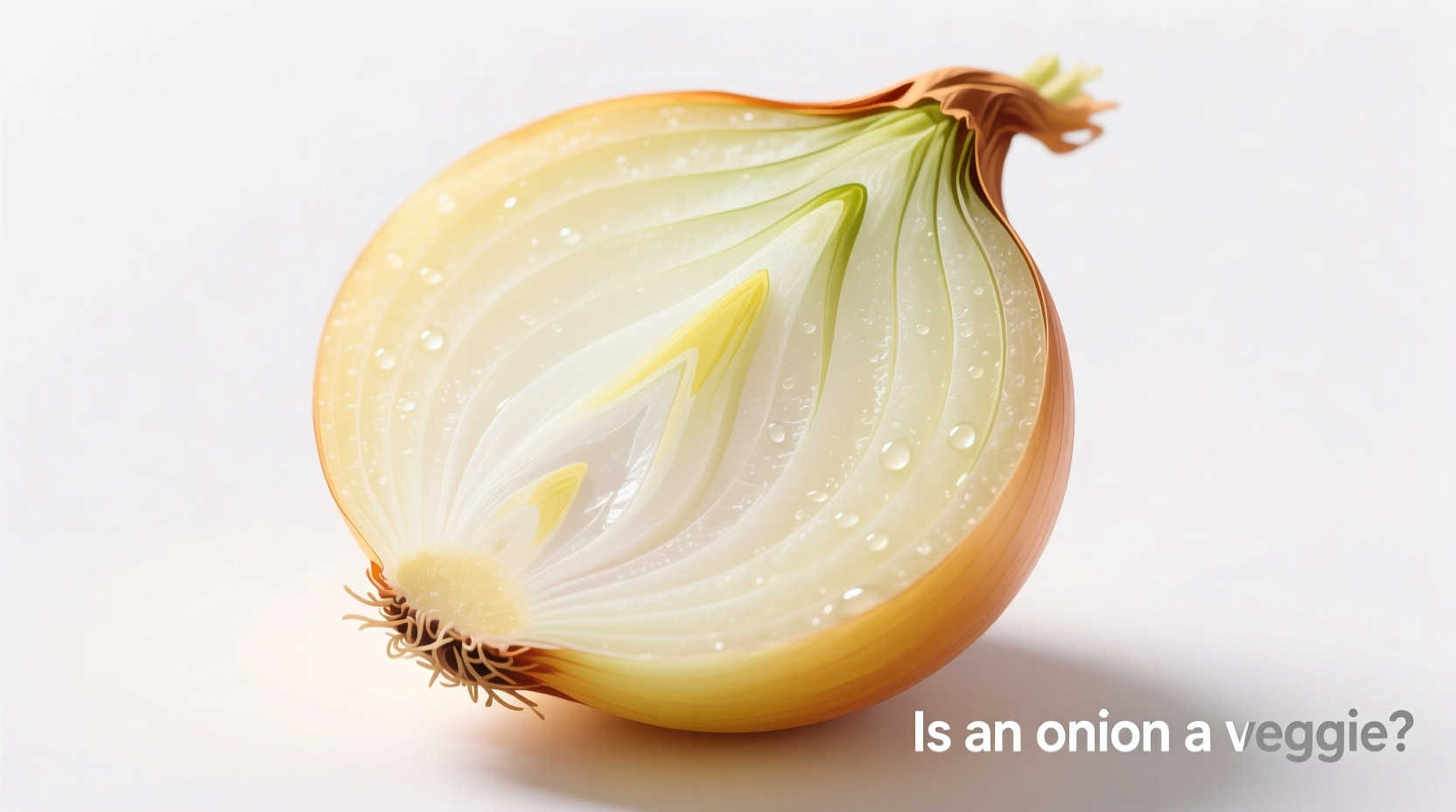
If you took a biology textbook and asked it, “what is an onion?” it wouldn’t say “root vegetable.” It wouldn’t even say “bulb” in the way you think. The botanical definition of an onion focuses on the plant species Allium cepa. And here’s the kicker: the part we eat is actually a tunicate bulb. That means it’s a short, compressed stem surrounded by fleshy, modified leaves.
Think about it. When you peel an onion, those papery skins aren’t “skin” in the way a potato has skin. They are dry leaf bases. The juicy, crunchy layers you slice? Those are the swollen, fleshy leaf bases that store energy for the plant. The root part is the tiny, scraggly bit at the bottom—the basal plate—which you usually chop off and throw away.
“So what?” you ask. Well, this matters because it defines how an onion grows, stores its sugars, and even why it makes you cry. The plant is a biennial, meaning it lives for two years. In the first year, it stores all that energy in the bulb (the onion). In the second year, it would send up a flower stalk. Honestly? If you think of an onion bulb as a giant, swollen leaf, you start to understand why it’s so crisp and full of water. It’s not a root. It’s a storage organ made of leaves. That’s the pure, unadulterated botanical definition.
The Confusion with Scallions and Spring Onions
This is where the botanical world gets even trickier. A scallion or a green onion is often just an immature Allium cepa. Botanically, it’s the same species as a bulb onion. You just harvested it before the bulb had a chance to swell up. But look at a bunch of scallions—do you see a bulb? Sometimes a slight swelling, but not a big, round ball. That’s the botanical classification in action. It’s a matter of growth stage.
However, some “spring onions” are actually a different species, Allium fistulosum, the Welsh onion. It never forms a bulb. So when you hear “green onion,” you could be dealing with two totally different plants that happen to look similar. That’s why the botanical definition is so strict. It doesn’t care if you put it on a baked potato. It cares about the DNA, the flower structure, and the leaf arrangement. It’s a bit pedantic, I know, but it’s the truth.
Why This Matters for the Home Gardener
If you’re planting onions from seed or “sets” (small bulbs), you need to understand the botanical definition. The amount of daylight triggers bulbing. A “short-day onion” is genetically programmed to start forming its swollen leaf bases when the days are shorter. A “long-day onion” waits for summer. Mix them up, and you get puny bulbs. That’s botany dictating your dinner.
The plant is also telling you something about its storage. A root, like a carrot, stores sugars in a taproot. An onion stores its sugars (and those tear-inducing sulfur compounds) in those leaf bases. This is why an onion’s flavor is so volatile and why it changes so dramatically when cooked. The leaf structure breaks down differently than a true root does. It’s a whole different biological game.
The Culinary Definition: If it Tastes Like an Onion, it’s an Onion
Now, let’s walk into the kitchen. Throw the textbook out the window. The culinary definition of an onion is brutally simple and entirely pragmatic: it’s any allium that provides a pungent, savory, or sweet base flavor to a dish. It doesn’t care about species. It doesn’t care about leaf morphology. It cares about taste, texture, and how it behaves when you sweat it in butter.
Look—a culinary definition lumps together things that a botanist would keep separate. A leek? Botanically, Allium ampeloprasum. But in the kitchen? It’s just a mild, sophisticated onion cousin. A shallot? Allium cepa variety ascalonicum, but we treat it as a separate, more delicate onion. Garlic? Allium sativum. It’s a completely different species, but we group it with onions because they serve a similar purpose in flavor building.
The culinary definition is user-driven. It’s about the experience:
- Yellow onions: The workhorse for soups and stews (high sulfur content, great for caramelizing). - Red onions: Raw in salads for color and bite (milder, more anthocyanins). - White onions: Sharp, clean taste for salsas and Mexican cooking. - Sweet onions (like Vidalia): Low sulfur, high sugar, amazing raw or grilled. - Leeks: Must be washed carefully (dirt!), but add subtle sweetness to stocks. - Scallions: The universal garnish, used both white and green parts. - Shallots: The refined choice for vinaigrettes and delicate sauces.
A chef doesn’t stop to think, “Is this a true bulb of Allium cepa?” They think, “Is this onion sweet enough? Is it too hot? Will it melt into the sauce or stay crunchy?” That is the pure essence of the culinary definition. It’s a functional classification, not a scientific one. It’s a big deal for recipe writing because substituting a Spanish onion for a Walla Walla sweet onion will give you a wildly different result.
The “Onion Family” in Practice
You’ll often hear cooks talk about the “onion family” or “alliums.” This is the perfect middle ground. It’s a loose grouping that respects the botanical relationships (they all belong to the genus Allium) but acknowledges the culinary definition that we actually use. Honestly? This is the most useful way to think about it. You know that garlic and onions go together. You know leeks can replace onions in a pinch, though the texture will be different. The culinary world groups them by flavor profile and cooking behavior.
This also explains why some plants are considered “onions” in one culture but not another. The Welsh onion (Allium fistulosum) is common in East Asian cuisine as a scallion, but you rarely see it bulbing. In the West, we often call it a “bunching onion.” Same plant, different name, but in both kitchens, it plays the same role. That’s the pure power of the culinary definition—it transcends botanical nitpicking.
What About Onion Powder and Flakes?
Let’s get even messier. When you use dehydrated onion powder, you’re using a product made from the bulb. But the culinary definition stretches to include the flavor essence of the onion itself. We even have “onion salt.” That’s not a plant part; it’s a seasoning blend. But we all accept it as an “onion” product. A botanist would laugh. A chef would just shake a little more into the pot. The culinary world defines the onion by its chemical signature—those thiosulfinates and sulfoxides that make your eyes water—rather than its physical structure.
The Big Blur: Where Botany and Cooking Collide
So where does the rubber meet the road? You’re standing in the grocery store, looking at a bag of onions. Do you need the botanical definition or the culinary definition? Usually, you need the culinary one. But sometimes, knowing the botany can save your recipe.
For example, if a recipe calls for “one onion,” the culinary definition assumes you’re using a medium bulb onion. That works 90% of the time. But if you’re dealing with a specific ethnic dish, you might need a specific variety. A Thai curry might call for a “purple onion” (red onion botanically) for its specific color and mild bite. That’s a culinary cue that has a botanical answer.
Another major collision point is the “root” debate. I can’t tell you how many times I’ve heard someone argue, “But it grows underground, so it’s a root vegetable!” Botanically, that’s wrong for an onion, but for a potato? A potato is a stem tuber (also not a root!). The culinary world doesn’t care. It’s easier to say “root vegetables” for onions, potatoes, carrots, and parsnips. But if you ever call an onion a “true root” in front of a botanist, be prepared for a long, passionate lecture. It’s a big deal for the science nerds, but for dinner, it doesn’t matter.
Common Questions About the botanical vs culinary definition of an onion
H3: Is an onion a root vegetable or a bulb?
In the culinary definition, it’s almost always called a root vegetable or a bulb vegetable. But in botanical definition, it is a tunicate bulb, not a root. The edible part is made of modified leaf bases, not root tissue. The true roots are the scraggly fibers at the bottom that you cut off.
H3: What is the difference between a scallion and a bulbing onion?
Botanically, a scallion is often just an immature Allium cepa (the same species as a bulb onion) harvested before the bulb swells, though it can also be a different species like Allium fistulosum. In the culinary definition, scallions are treated as a separate ingredient prized for their mild flavor and edible green tops, while bulb onions are used for their stronger, sweeter mature layers.
H3: Can you eat the green part of a regular onion?
Yes, absolutely. The botanical definition tells us the green tops are just leaves. In the culinary definition, they are perfectly edible and taste similar to a very strong scallion. However, most commercial bulb onions don’t come with the greens attached because they wither or get cut off for storage. If you grow your own, don’t toss those green shoots—use them!
H3: Is garlic considered an onion?
Botanically, no. Garlic (Allium sativum) is a different species from the common onion (Allium cepa). It has a different shape (compound bulb made of cloves) and a different chemical profile. However, in the culinary definition, garlic is almost always grouped with onions as part of the “allium family” because it serves a similar aromatic and flavor-building role in cooking.
H3: Why do some onions make you cry more than others?
This comes down to the botanical definition of the onion’s chemistry. The amount of syn-propanethial-S-oxide—the chemical that makes you cry—varies by variety and growing conditions. Yellow and white onions typically have higher levels (more tear-inducing), while sweet onions like Vidalias have lower levels due to lower sulfur content in the soil. The culinary definition just notes that some onions are “hotter” (good for cooking) and some are “sweeter” (good for eating raw).