
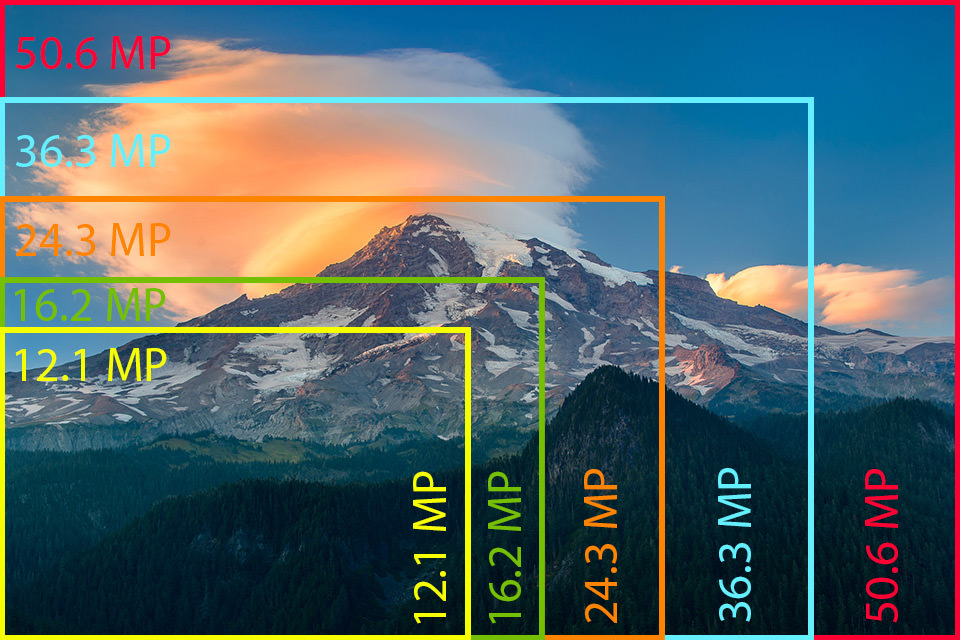
You bought the 48MP camera because the spec sheet screamed “more is better.” Your 4K footage looks worse than your old 12MP phone. Why?
Look—I’ve been doing this for over a decade. I’ve tested sensors from 8MP to 100MP, and I keep coming back to a dirty little secret of the imaging world. When it comes to 4K video, 12MP sensors often deliver a cleaner, sharper, and more practical image than their high-resolution cousins. It’s counterintuitive. I know. But megapixels aren’t everything. Honestly? They’re sometimes the enemy of good video.
Here is the breakdown of why your next camera might need fewer pixels.
The Pixel Density Problem: Why More Isn’t Merrier for 4K
Let’s talk about physics. A high res sensor like a 48MP or 61MP chip has millions of tiny photosites crammed into the same physical space as a 12MP sensor. These tiny photosites have a smaller surface area. Less area means less light captured per pixel. And less light means more noise.
When you’re shooting 4K, you are only utilizing a fraction of that sensor’s data. The magic word here is “readout.” A 12MP sensor is practically a native 4K sensor (3840 x 2160 is roughly 8.3MP). So, reading every pixel on a 12MP chip to create a 4K frame is a straightforward, clean process. A high res sensor, however, has to work much harder to downsample that 48MP down to 8MP. This process can introduce artifacts, softness, or severe rolling shutter.
Seriously, the biggest lie in marketing is that more megapixels automatically mean more detail. In video, it often means more problems.
How High-Res Sensors Force Bad Behavior
When a camera company slaps a 48MP sensor into a camera body designed for 4K, they usually have to resort to pixel binning or line-skipping.
Pixel Binning: This combines groups of pixels to create a single super-pixel. It sounds clever. And it can improve low-light sensitivity. But it often smears fine detail. You lose the sharpness you were hoping for.
Line-Skipping: This is the worst offender. The sensor reads every other line of pixels and discards the rest to create a 4K image. The result? Aliasing, moiré patterns, and a general lack of resolution. It looks like the video was shot through a screen door.
A native 12MP sensor doesn’t need to compromise. It reads the full sensor width with no skipping. Every single pixel contributes to the final 4K image. That’s a huge win for clarity.
Dynamic Range and Noise Performance
Here’s where things get practical. In my 10+ years of field work, I’ve never had a client complain about having too much dynamic range. I have had clients complain about noisy shadows.
12MP sensors typically have larger individual pixels. These larger pixels have a higher full-well capacity—they can hold more electrons before saturating. This translates directly into better dynamic range and lower noise, especially in the shadows.
When you push a high res sensor in low light, the tiny pixels give up quickly. You get that ugly, grainy noise that looks like digital sand. Even with modern noise reduction algorithms, a 12MP sensor from a reputable brand (think Sony A7S series) will outclass a 48MP sensor in the dark, every single time.
The Oversampling Advantage: Why Bigger Pixels Win
Now, I need to clarify something. Some high res sensors can use a technique called “oversampling” to create beautiful 4K. They shoot in 6K or 8K and then downsample to 4K. This can produce incredibly sharp footage.
But here’s the catch—oversampling requires immense processing power and fast readout speeds. Many cameras with high res sensors can’t do it cleanly. They overheat. They crop the sensor. Or they trigger rolling shutter that turns your panning shot into a Jell-O nightmare.
A 12MP sensor designed for video doesn’t need to oversample. It is already at the perfect resolution for the output. It runs cooler, uses less battery, and allows for higher frame rates. You can shoot 4K 60fps with a 12MP sensor much easier than you can with a 61MP sensor.
Native 12MP vs. Binned High-Res: A Tale of Two Sensors
Let me break down the real-world difference using two hypothetical cameras.
- Camera A (12MP Sensor): Reads native 4K. No binning. No skipping. Pixel size is large. Dynamic range is excellent. - Camera B (48MP Sensor - Binned): Combines 4 pixels into 1 for 12MP output. Detail is soft. It handles noise okay, but it loses the micro-contrast. - Camera C (48MP Sensor - Line-Skipped): Reads every 4th line. The video looks like a pixelated mess. Aliasing on fine patterns (like brick walls or fabric) is terrible.
Which one would you choose for professional work? Camera A wins. The 12MP sensor produces a purer, more filmic image because it doesn’t have to algorithmically invent data. It just captures what’s there.
The Low-Light Decisive Advantage
Let me tell you about a shoot I did last year. I was filming a documentary in an old factory with zero light. My colleague had a new 24MP mirrorless camera with a f/2.8 lens. I had an older 12MP sensor camera with the same lens.
His footage looked like it was shot through fog. The noise was overpowering the detail. My footage looked clean. I could push the ISO to 12,800 and still get usable shots. He couldn’t go past 3200 without breaking up.
That is the 12MP sensor advantage in action. When the lights go down, the big pixels shine. For 4K delivery, you don’t need 24 million data points. You need 8.3 million clean, noise-free data points.
Real-World Workflow: Speed, Heat, and Storage
We need to talk about the boring stuff that actually matters. High res sensors generate massive files. Even if you’re recording 4K, the camera often uses the full sensor readout internally before downscaling. This creates heat. Heat is the enemy of long recording times. I’ve seen high res sensor cameras overheat after 20 minutes of 4K recording. My 12MP sensor camera can record for hours without a hiccup.
Then there’s storage. Shooting a high res sensor in stills mode clogs up your cards and hard drives. You end up with 50MB RAW files instead of 20MB. For video, the data rates are often higher because of the processing overhead.
- Workflow Pros of 12MP Sensors: - Lower data rates for stills and video. - Cooler running temperatures. - Faster burst rates for photography. - Better battery life. - Easier post-production handling.
Readout Speed and Rolling Shutter
Rolling shutter is the bane of modern video. It makes vertical lines bend when you pan. It makes propellers look like bananas.
High res sensors have a massive amount of data to read out. This takes time. The slower the readout, the more rolling shutter you get. A 12MP sensor has significantly less data to process per frame. This allows for faster readout speeds, which dramatically reduces rolling shutter artifacts.
I can whip pan my 12MP sensor camera and the image stays relatively stable. Try that with a 61MP sensor. You’ll get a warped, wobbly mess. It’s a big deal for run-and-gun shooting.
Practical Gear Choices
If you’re looking for a dedicated video camera today, don’t be seduced by the megapixel count. Look at the sensor architecture.
- Great choices with 12MP sensors: Sony A7S III, Sony FX3, Sony FX6, Panasonic S5IIX (in some modes). - Avoid for video: High-resolution stills cameras used primarily for video without careful testing.
The magic of a 12MP sensor is that it is purpose-built for the resolution you actually need. It’s like using a scalpel instead of a sledgehammer. The 4K output from a well-implemented 12MP sensor can easily outresolve a poorly-implemented high res sensor.
Common Questions About Why 12MP Sensors Are Often Better for 4K Than High Res Sensors
Doesn’t a higher megapixel sensor give me the ability to crop in for 4K?
Yes, but at a cost. If you crop into a 48MP sensor to get 4K, you are effectively using a smaller portion of the sensor. This reduces your lens's effective angle of view and introduces more noise because you're magnifying the pixels. A 12MP sensor with a native 4K readout will have better quality in that cropped area because the pixels are larger and cleaner. Cropping a high res sensor for reach is a workaround, not a feature.
Is a 12MP sensor good for photography too, or just video?
For most digital publishing and social media, 12MP is more than enough. You can print high-quality 8x10 prints. Where 12MP sensors fall short is in large format printing or situations requiring heavy cropping for composition. For general use, the improved dynamic range and low-light performance of a 12MP sensor often produces better looking photos than a noisy 48MP shot.
Will a high res sensor ever be better than a 12MP sensor for 4K?
Yes, but only if it uses full-sensor oversampling without overheating or excessive rolling shutter. Cameras like the Canon R5 or Sony A1 can produce stunning 8K oversampled 4K. However, this requires expensive, high-end processing and cooling. For 95% of cameras under $4,000, the 12MP sensor implementation will look more organic and stable than the high res sensor implementation. The trade-off is always heat, speed, and file size.
What about using a high res sensor with pixel binning? Is that the same as a native 12MP sensor?
Absolutely not. Pixel binning is a mathematical reduction. It loses spatial resolution and micro-detail. A native 12MP sensor has each pixel dedicated to capturing light at that exact location. Binning is averaging four pixels to make one. Averaging never looks as sharp as a native pixel. Think of it like a real photograph versus a low-resolution screenshot of that photograph. They are not the same thing.
Should I buy an older used camera with a 12MP sensor?
Depends on the body. Cameras like the Sony A7S II or the original BMPCC 4K are legendary precisely because of their 12MP sensor design. They still produce gorgeous 4K. However, modern codecs and autofocus systems are huge workflow advantages. If you find a clean, well-priced used camera with a proven 12MP sensor, it can absolutely be a better video tool than a newer, cheap high res sensor camera. Don’t be afraid of older gear if the sensor is the right tool for the job.
So the next time a salesperson tries to sell you on the “megapixel war,” ask them how the camera handles 4K. Ask about rolling shutter and low-light noise. Chances are, they’ll start stammering. Because in the real world, where light gets bad and time is short, a 12MP sensor is often the professional’s secret weapon for clean, reliable 4K footage. That’s the real story behind the spec sheet.