
How to Use Rhythm and Meter in Non-Rhyming Poetry
I remember the first time a student handed me a piece of so-called “free verse.” It was flat. Lifeless. A list of line breaks pretending to be a poem. She said, “But it doesn't need to rhyme, right?” And she was right—it doesn't. But here's what she missed: non-rhyming poetry still needs a pulse. Without rhyme, your rhythm and meter become the skeleton of the piece. The breath. The heartbeat. Lose that, and you lose the reader before the second stanza.
Let's get real for a second. Most people think free verse means “anything goes,” but that's like saying a jazz musician can just bang on random keys. A jazz musician knows theory inside out before they break the rules. Same goes for rhythm and meter in non-rhyming poetry. You need to understand the engine before you can drive off-road.
So today, I'm going to walk you through the practical, hands-on way to build a rhythmic structure in your poems without relying on a single rhyme. No fluff. No academic jargon you'll forget by tomorrow. Just the stuff that works.
Why Rhythm Matters When You Ditch Rhyme
Rhyme is a crutch. Seriously. It gives the ear a predictable landing spot, a sonic payoff that makes a poem feel complete. Take that away, and suddenly every line has to earn its keep through meter, word choice, and pacing. You're not just writing anymore—you're conducting.
Look at the greats. Think about Mary Oliver's “Wild Geese.” No rhymes to speak of, yet the poem hums with a primal, almost breathing rhythm. How? She understood that rhythm doesn't live in end-words. It lives in the rise and fall of stressed and unstressed syllables, the length of phrases, the pause at a comma. It's a big deal.
Without a rhyme scheme, the reader's ear is free to follow the cadence of your voice. But that also means any stutter, any accidental clunk, stands out like a sore thumb. You can't hide behind a clever rhyme. Your meter has to be intentional, or the poem falls apart.
The Silent Engine of the Poem
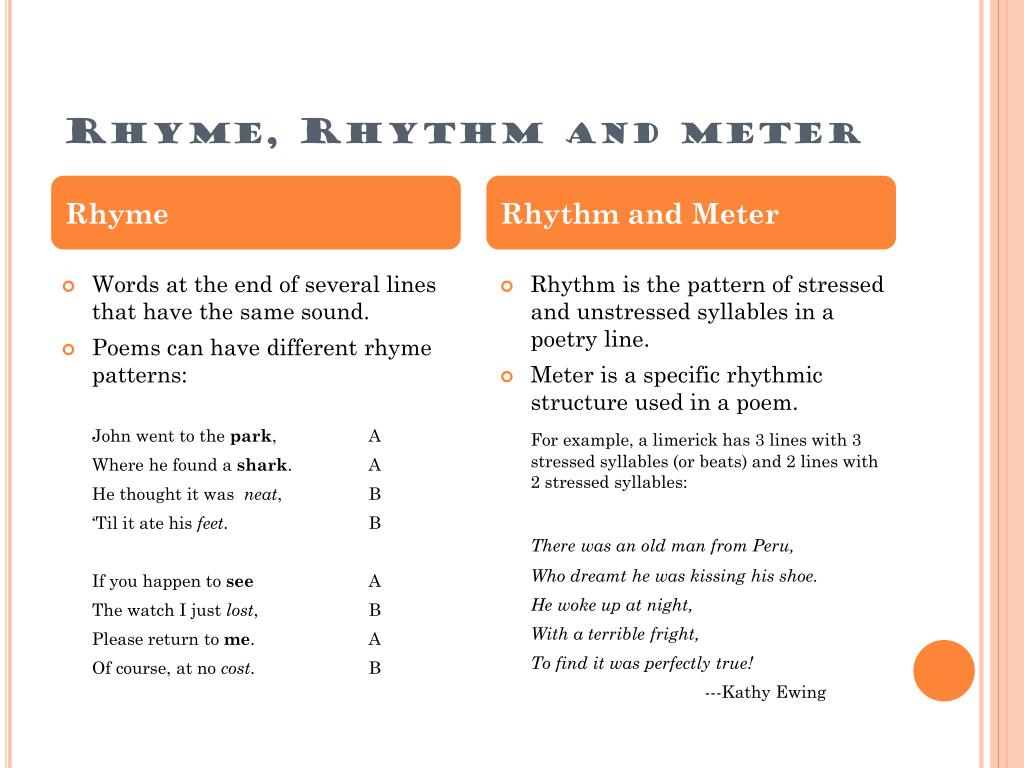
Let me put it bluntly: meter is the engine. Rhythm is the ride. Meter is the pattern of stressed and unstressed syllables you set up, even if you're not consciously counting beats. The best non-rhyming poets establish a metrical norm early on, then break it for effect.
For example, you might start a poem in iambic pentameter—that familiar “da-DUM da-DUM da-DUM da-DUM da-DUM” rhythm—but without the rhyme at the end. Your reader's ear settles into that groove. Then, mid-poem, you switch to a trochaic foot (DUM-da). The shift creates tension. Arrests attention. You just used meter to manipulate emotion without a single rhyme.
It's not about being rigid. It's about being deliberate. Every line should have a reason for its length, its stress pattern, its pauses. Honestly? Most bad free verse fails because the writer thought “free” meant “no rules.” Poetry always has rules. You just get to choose which ones apply.
It's Not Just About the Beat
Here's where people get tripped up: they obsess over metrical feet but forget about breath. A poem is spoken aloud—even if you only read it in your head, you “hear” it. Your rhythm has to match the natural way we breathe.
Short, clipped syllables feel urgent, panicked, or sharp. Long vowel sounds feel languid, dreamy, or heavy. Pause at a period, and you create a silence that can say more than words. Use enjambment—carrying a sentence over a line break—and you create a forward momentum that keeps the reader gasping for the next line.
Think of it like a conversation. You don't speak in monotone. Your voice rises and falls. You speed up when you're excited, slow down when you're emphasizing something. That's your rhythm and meter in non-rhyming poetry at work. Capture that natural speech pattern, but refine it. Polish it until it's more musical than ordinary talk, but still feels human.
The Tools: Meter Without a Rhyme Scheme
Let's get into the nuts and bolts. You don't need a degree in prosody to use meter effectively. You just need to know a few basic tools and how to apply them.
First, learn to identify the four most common metrical feet:
- Iamb (da-DUM): the most natural English rhythm. Think “to-DAY” or “re-PORT.”
- Trochee (DUM-da): the reverse. “HAP-py” or “NEV-er.”
- Anapest (da-da-DUM): galloping, energetic. “In-ter-VENE” or “on the BEACH.”
- Dactyl (DUM-da-da): weighty, Homeric. “HAP-pi-ness” or “GRAV-i-ty.”
Now, here's the trick: you don't have to stick to one foot for the whole poem. In fact, please don't. A poem written entirely in perfect iambic pentameter without rhyme sounds like a robot reciting a shopping list. Vary it. Start with iambs to establish a baseline, then drop in a trochee to reverse expectations, or stretch a line with an anapest to create urgency.
Iambic Pentameter… Naked
Blank verse is your best friend. That's unrhymed iambic pentameter, and it's been the backbone of English poetry for centuries. Milton used it. Shakespeare used it in his plays. You can use it, too.
The beauty of blank verse is that it gives you a structure without the clang of rhyme. The iambic pulse keeps the reader moving forward, line after line, while the lack of rhyme lets the content breathe. It's a five-beat line, roughly ten syllables. But—and this is crucial—you can vary it. Add an extra syllable. Drop one. Let the line run into the next with enjambment.
Try this exercise: write a passage about something ordinary—washing dishes, walking to work—in blank verse. Don't force it. Just let the iambs come naturally. Read it aloud. If it sounds like natural speech with a slight lilt, you're on the right track. If it sounds like a march, soften it.
Dactyls, Trochees, and Anapests
Now, let's get a little wilder. Not every poem needs the steady heartbeat of iambic meter. Some subjects demand a different foot.
Consider loss. A poem about grief might favor the trochee—the falling rhythm mimics a sigh or a drop in energy. “NEV-er LET go OF that MOM-ent” feels heavier, more downward than an iambic line. Or consider joy and speed: anapests gallop. “In the blink of an eye and the rush of the street” pushes the reader forward, breathless.
The key to rhythm in non-rhyming poetry is matching the foot to the emotion. Don't just pick one because it sounds fancy. Pick one because it feels right when you say it aloud. Test it. Breathe it. If it makes your chest tighten or your shoulders relax, you've found your meter.
A quick list of things to watch for:
- Don't over-correct. If every line lands perfectly on a stressed syllable, it feels rigid. Let a few unstressed beats slip in.
- Use monosyllabic words for punch. “I am the dark. I am the cold.” Short words hit harder.
- Polysyllabic words for flow. “Extraordinary circumstances” slows the pace, stretches the breath.
- Read it backwards. Seriously. Read the last word, then the second-to-last. Check if the stress pattern holds up.
Putting It All Together in Your Own Work
Alright, enough theory. Let's talk about how you actually sit down and write a poem with strong rhythm and meter and zero rhymes.
Start with a single sentence. Just one. Speak it aloud. Where do the natural stresses fall? Write it down. Now, break it into lines based on where you pause when you speak. That's your first draft. It won't be perfect, but you've just established a baseline.
Now, go back and look for patterns. Do you have a lot of iambs? Good. Are there three lines in a row that all start with an unstressed syllable? Maybe mix one up. Start a line with a stressed syllable to break the monotony. Use a short line after a long one for emphasis. Use a long line after a short one to expand.
Remember: meter is a guide, not a prison. You are allowed to break it. In fact, you should break it. The breaking is what creates emphasis, surprise, and emotional weight. If your poem is all rules and no rebellion, it sounds stiff. If it's all rebellion and no rules, it sounds chaotic. Find the balance.
Line Breaks Are Your Secret Weapon
Here's where most people underestimate the power of rhythm in non-rhyming poetry: the line break itself is a rhythmic device. Every time you end a line, you create a pause—even if it's microsecond-long. That pause is like a rest in music.
End-stop a line (with a period, comma, or semicolon), and the pause is full. Enjamb the line, and the pause is a breathless leap into the next line. Use this to control pacing. Short lines with end-stops feel staccato, almost like a drumbeat. Long lines with enjambment feel fluid, river-like.
I like to think of line breaks as the poem's choreography. Where you place the break tells the reader how to dance through the lines. Put the break on a powerful word, and that word echoes. Put it on a weak word, and the line feels deflated. Always put your strongest words at the end or beginning of a line.
The Caesura: The Art of the Pause
A caesura is a strong pause within a line, often marked by punctuation. Think of it as a heartbeat's rest between beats. It can create drama, hesitation, or a sudden shift in tone.
Example: “I loved her. She didn't care.” The period in the middle stops the momentum cold. That silence says more than any rhyme could. Use caesurae deliberately. Don't just scatter commas everywhere—place them where you want the reader to hesitate, rethink, or breathe.
In non-rhyming poetry, the caesura often replaces the sonic payoff of a rhyme. Instead of a rhyming word giving you closure, a well-placed pause gives you emotional closure. It lands the line without a bell.
Common Questions About Using Rhythm and Meter in Non-Rhyming Poetry
What's the difference between meter and rhythm?
Meter is the structure—the pattern of stressed and unstressed syllables you establish. Rhythm is the actual feel—how fast or slow the poem moves, where the pauses land, how the words flow. Think of meter as the blueprint and rhythm as the living house you walk through. You can have a regular meter but a varied rhythm through enjambment, caesurae, and word choice.
Do I need to count syllables for every line?
Not necessarily. Counting syllables can help you train your ear, but it shouldn't become an obsession. The goal is naturalness. Read your work aloud. If it sounds forced or singsongy, you're probably over-counting. Trust your ear first, then check the math later. A rough count of beats per line is often more useful than a strict syllable tally, especially in non-rhyming work.
Can I mix different meters in the same poem?
Absolutely, and it's often a good idea. A poem that stays in one meter the whole time can feel monotonous without rhyme to break it up. Shifting meters—say from iambic to anapestic—creates energy and signals a change in tone or subject. Just make sure the shift feels intentional, not accidental. Your reader's ear will notice a clunky transition.
How do I know if my rhythm is working?
Read it aloud. Record yourself. Listen back. If you stumble over a phrase, if your breath runs out at an awkward place, if a line feels flat—that's your cue to revise. Better yet, read it to someone else without telling them the content. Watch their face. Do they lean in? Fidget? Relax? Their body language will tell you more than any rulebook. Also, try tapping your finger as you read. If the taps feel chaotic or random, your rhythm needs work.
Is free verse really just prose chopped up into lines?
No, and if it looks like that, it's bad free verse. True free verse—the kind that works—has an internal rhythmic logic. It may not follow a strict meter, but it has a cadence, a pattern of phrasing, a musicality that prose lacks. The line breaks create meaning. The rhythm carries emotion. If you can turn your poem into prose without losing anything, your rhythm isn't doing its job.
This is where the real work begins. Not in memorizing iambic pentameter like a textbook, but in feeling the pulse of language beneath your words. Your rhythm and meter in non-rhyming poetry are invisible threads that connect your voice to your reader's breath. Pull them tight enough to hold, loose enough to let the poem breathe.