
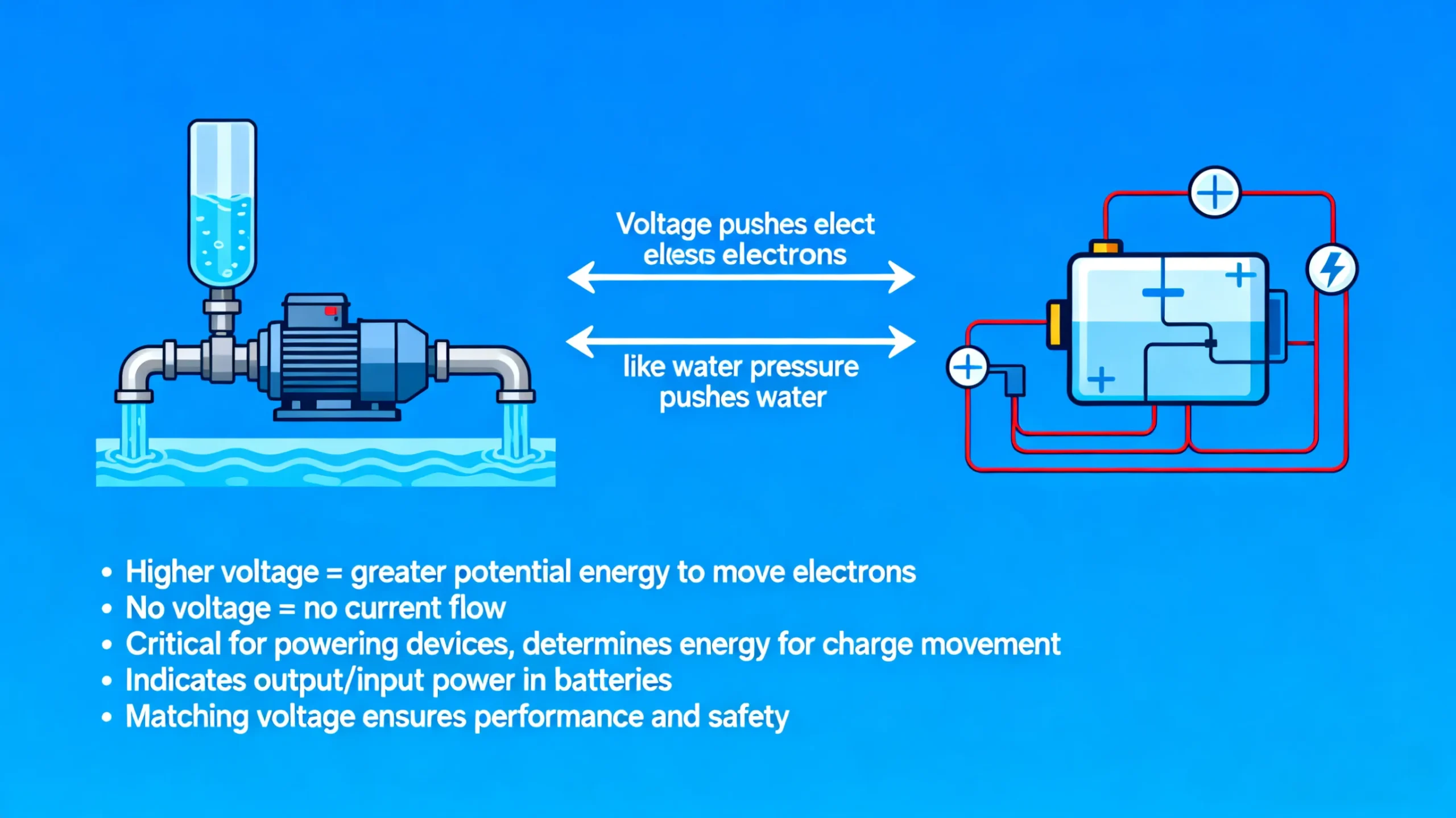
Voltage Pressure vs Amperage Current: The Water Pipe Analogy Explained
Ever wondered why a 9V battery can zap your tongue but a 12V car battery feels completely harmless unless you touch both terminals? Or why your phone charger has a tiny block that gets warm? I remember my first electronics mishap as a kid—I shorted a 9V across a paperclip. The clip got red-hot in seconds. That's the difference between voltage pressure and amperage current. And the best way to wrap your head around it? The water pipe analogy. Honestly, it's not just for beginners. I've used this framework to explain complex circuit failures to seasoned engineers who got stuck overthinking a weird noise in a motor drive. It cuts through the noise.
Look—electricity is invisible. That's why it feels like magic until it bites you. The water pipe analogy makes it tangible. Imagine a city water system. You've got a reservoir, pipes, and a faucet. The voltage pressure is the water pressure pushing the liquid through the pipe. The amperage current is the actual flow rate—how many gallons per minute come out of the faucet. Without pressure, you get no flow. Without flow, pressure just sits there, doing nothing. This relationship governs everything from wiring your house to designing a power supply for a server farm.
But here's where most people trip up: they think voltage is the 'strength' and amperage is the 'danger.' That's half-truth territory. Let me walk you through the real mechanics, the gotchas, and why this analogy breaks down in exactly one interesting way. Seriously, by the end of this, you'll be able to spot a bad water pipe analogy from a mile away.
Voltage as Water Pressure: The Driving Force
Voltage is the potential energy difference between two points. In the water world, that's the height of the water tower. The higher the tower, the greater the pressure at ground level. You don't get any useful flow without this voltage pressure behind it. It's the kick-starter, the motivator. In a circuit, voltage is measured in volts (V), and it's the force that pushes electrons through a conductor.
Think of a standard alkaline AA battery: it sits at about 1.5V. That's a tiny pressure. Now compare that to a car battery, which is 12.6V when fully charged. Bigger pressure. But here's the kicker—pressure alone doesn't tell you the whole story. You could have a massive water tower with a pipe the size of a needle. The pressure is huge, but the actual flow (current) is pathetic. That's why you can touch a 9V battery with dry fingers and feel nothing. The pressure is there, but the resistance of your skin limits the flow to microamps.
Think of a Water Tower
A tall water tower stores gravitational potential energy. When you open a valve at the base, that potential converts into kinetic energy as water flows. The height difference between the water level in the tower and the outlet is your voltage pressure. In electronics, we call that potential difference, or voltage drop across a component. If you have a long pipe with a narrow section (a resistor), the pressure drops as the water squeezes through that restriction.
I once worked with a guy who insisted voltage was 'just a number.' Then he accidentally touched the terminals of a 350V capacitor bank after a power supply repair. The arc burned a hole in his screwdriver. That's 350V of pressure looking for a path. The low amperage current of that capacitor discharge was still enough to vaporize metal. Why? Because pressure can push current through almost anything if the resistance is low enough. That's why you respect high voltage even if the available current is small.
Another practical angle: in your home, you get 120V (or 230V, depending on where you live). That's a fixed pressure from the utility transformer. Your toaster, your phone charger, your washing machine—all different devices that require different flow rates. They all see the same voltage pressure from the wall. The device itself determines how much amperage current it draws based on its internal resistance. More on that in a moment.
Why Voltage Matters More Than You Think
Voltage determines insulation requirements, safety distances, and material choices. A wire rated for 300V will break down if you slap 1000V across it. That's like using a garden hose designed for 50 PSI on a fire hydrant rated at 200 PSI. The hose bursts. In electronics, that's called dielectric breakdown. It's a spectacular failure. And it usually involves smoke, noise, and a sudden need to clean your desk.
Here's a real-world breakdown of voltage ranges in typical systems:
- Low voltage (3.3V to 24V): Common in logic circuits, microcontrollers, and automotive electronics. Touch it with dry skin? You won't feel a thing. The voltage pressure is too low to punch through the outer layer of your skin.
- Medium voltage (48V to 600V): Industrial equipment, electric vehicle batteries, and mains power. This range can bite you. 120V AC from a wall outlet feels like a sharp buzzing buzz. It's enough pressure to force current through your body.
- High voltage (1kV and above): Power transmission lines, X-ray machines, and particle accelerators. You don't need to touch it. It can arc through air. That's serious pressure.
One more thing: voltage is relative. You always measure it between two points. The classic analogy is a cliff. The height of the cliff is the voltage difference. You can stand at the bottom (0V), or at the top (50V). The drop is the same regardless of where you measure your ground reference. That's why ground is a concept, not a physical constant.
Amperage as Current Flow: The Volume of Water
If voltage is pressure, amperage current is the flow rate. It's measured in amperes (amps), and it represents the number of electrons passing a point per second. Think of a wide river versus a narrow stream. The river might have slow-moving water with huge volume (high flow). The stream might be fast and shallow (lower volume). In electrical terms, amps tell you how much charge is moving. And it's the moving charge that does work—lights a bulb, spins a motor, charges a battery.
Now here's the part that surprises people: the wire itself doesn't carry the current like a pipe carries water. The electrons inside the metal drift slowly—like a crawl. But the signal propagates at nearly the speed of light. It's more like pushing a snake through a tube. You push one end, and the other end moves almost instantly, even though the snake itself is barely wriggling. The amperage current is the rate of that push.
Flow Rate and Pipe Size
Pipe diameter is analogous to wire gauge (thickness). A thick pipe can carry a high amperage current because it offers low resistance to flow. A skinny pipe restricts flow. That's why your toaster uses thick internal wiring—it draws 10 to 15 amps. A desk lamp with a thin cord draws maybe 0.5 amps. If you try to push 15 amps through a lamp cord, the wire gets hot, the insulation melts, and you start a fire. I've seen that happen. It's not dramatic—just a smelly, smoky mess.
Here are three key factors that affect current flow in a circuit:
- Voltage pressure (potential difference): More voltage means more push. For a given resistance, higher voltage pressure results in higher amperage current. This is Ohm's Law in its simplest form: I = V / R.
- Resistance (pipe restrictions): Every component, every wire, every connection has some resistance. Think of it as the kinks in the hose, the narrow elbows, or the sediment clog. Higher resistance reduces current.
- Conductor material and cross-section: Copper is great (low resistance). Steel is mediocre. Aluminum is okay but oxidizes. Thicker wire = more lanes for electrons = higher current capacity.
In my years of field work, I've seen people choose wires based on voltage rating only. That's like picking a pipe based on what color it is. You need to consider the current. A 12V system running a 1000W inverter pulls about 83 amps. That requires wire the thickness of your pinky finger. Using thin wire there is a recipe for voltage drop, overheating, and a dead battery.
Why Current Kills, Not Voltage
You've probably heard the saying: 'It's not the volts that kill you, it's the amps.' That's 90% true. The amount of amperage current flowing through your heart determines whether you survive an electrical shock. A current as low as 10 milliamps (0.01 A) crossing your chest can disrupt heart rhythm. At 100 milliamps, your heart can go into fibrillation. At 1 amp, muscle contractions can be so severe you can't let go—and internal burns occur.
But here's the twisted part: voltage makes current happen. Without enough voltage pressure, you can't push enough current through the high resistance of your dry skin. A 12V car battery can deliver hundreds of amps—enough to melt a wrench. But touch the terminals with dry hands? You feel nothing. Why? Because 12V isn't enough pressure to overcome the 10,000 to 100,000 ohms of your skin. The resulting current is maybe 1 milliamp. Harmless. Slap 120V on the same skin, and you get 12 milliamps right through your body. That hurts. It can kill.
So the real danger is a combination: high voltage pressure that can punch through your skin resistance, combined with a power source capable of delivering a lethal amperage current. A static spark might have 10,000V of pressure but almost zero stored charge—so no sustained current. That hurts like a pinch, but it won't stop your heart. A wall outlet has both high voltage and unlimited current capability. That's the deadly duo.
Applying the Water Pipe Analogy to Real Circuits
Let's wire it all together—pun intended. Say you have a pump (battery) connected to a closed loop of pipe (circuit). The pump creates a pressure difference: high pressure on the outlet side, low pressure on the return side. That pressure difference is your voltage pressure. The water circulates around the loop. The flow rate (gallons per minute) is your amperage current. To measure flow, you cut the pipe and insert a flow meter (ammeter). To measure pressure difference, you tap into the pipe at two points and compare (voltmeter).
Now add a restriction in the pipe—a partially closed valve. That valve is a resistor. It resists flow. You can still have high pressure on one side and low pressure on the other, but the flow rate is limited by the valve opening. This is exactly how an LED works. The LED has a built-in resistance (not linear, but for simplicity, think of it as a special valve). You need enough voltage pressure to push current through that valve. Too much voltage? The valve blows open—the LED burns out. Too little? No flow, no light.
Here's where the analogy gets stretched, and I want to be honest with you. In a water pipe, the water itself is incompressible. In a wire, the electrons are more like a crowd of people shoving. When voltage is applied, the electric field propagates through the wire at near light speed, causing a coordinated push. The water pipe analogy can't fully capture that instant field effect. It also doesn't handle alternating current (AC) well—AC is like reversing the pump direction 50 or 60 times per second. But for understanding basic DC circuits and the relationship between pressure and flow? The analogy is gold.
Common Mistakes People Make
I see the same three errors in forums and even in some textbooks. First, people treat voltage as 'stored' inside a battery like water in a tank. Voltage is not a thing you store. It's a potential. A battery stores energy, but the voltage is the pressure it can exert. Second, beginners think a 'high current' battery will force current through a load even if the load has high resistance. No. The load decides the current based on its resistance and the voltage applied. A 100-amp battery hooked to a 10,000-ohm resistor will only push 1.2 milliamps at 12V. The battery doesn't 'push' amps—the load draws them.
Third, people confuse power (watts) with current. Power is the product of voltage pressure and amperage current (P = V x I). A device can draw high current at low voltage (like a car starter motor) or low current at high voltage (like a fluorescent lamp). The amount of work done depends on both. That's why the analogy works: the energy carried by the water is pressure times flow rate. More pressure and more flow equals more power to do work.
To cement your understanding, here's a quick cheat sheet for the water pipe analogy:
- Voltage = Pressure (PSI). Measured in volts. Think of the height of the water tower or the setting on a pressure regulator.
- Current = Flow rate (GPM). Measured in amps. Think of how many gallons come out of a hose per minute.
- Resistance = Pipe restriction. Measured in ohms. A kinked hose, a narrow section, or a partially closed valve.
- Power = Work rate. Measured in watts. The product of pressure and flow. How much energy the water delivers per second.
- Wire gauge = Pipe diameter. Thicker pipe (lower gauge number) handles more flow (higher current) safely.
One more practical insight: voltage drop. In a long run of wire, the resistance of the wire itself acts like a small restriction. The voltage pressure at the far end is lower than at the source because some pressure is 'used up' pushing current through that wire resistance. That's why you might get dim lights at the end of a long extension cord. The pressure drops along the pipe. The solution? Thicker wire (larger pipe) or higher voltage at the source.
Common Questions About the Water Pipe Analogy for Voltage and Current
Why can't I just use the water pipe analogy for everything in electronics?
Because it breaks down when you get into magnetic fields, capacitance, and AC behavior. For example, a capacitor in DC blocks current but stores charge—like a flexible diaphragm in a pipe that stores pressure but stops flow. That analogy works okay. But an inductor resists changes in current—like a heavy waterwheel with inertia. That one works too. However, radio frequencies, skin effect, and semiconductor physics? The water pipe can't help you there. Use it for basic DC circuits and safety understanding. It's a tool, not a law.
Does higher voltage always mean higher current?
Not unless the resistance stays the same. If you increase the voltage pressure and keep the load resistance constant, yes—current goes up proportionally (Ohm's Law). But in real circuits, many loads are designed to change their resistance to maintain constant power. A switching power supply will actually draw less current when you give it higher voltage, because it needs to deliver the same wattage. That's like having a variable valve that adjusts automatically to keep the water flow at a constant gallons-per-minute regardless of the pressure. Counterintuitive, but true.
Can I use a higher voltage battery to get more current out of a device?
Only if the device can handle the higher voltage pressure. If you plug a 12V bulb into a 24V source, you're applying double the pressure. The bulb's resistance is fixed, so current doubles. Power quadruples (remember P = V x I). The bulb will shine brilliantly for a fraction of a second before the filament vaporizes. The water analogy: you doubled the pressure on a hose that was rated for a certain PSI. The hose bursts. Always check the voltage rating of your load.
Why do some wires get hot and others don't?
Heat in a wire is caused by amperage current flowing through the wire's resistance. The power dissipated as heat is I²R (current squared times resistance). So doubling the current quadruples the heat. A thin wire has higher resistance than a thick one, so for the same current, the thin wire gets hotter. That's why you need proper wire gauges for high-current circuits. In the water analogy, a narrow pipe creates friction, which heats up the water and the pipe. Ever felt a garden hose on a hot day? The friction from the water flow warms the hose slightly. Same idea.
Is the water pipe analogy good for teaching kids?
Absolutely. It's still the first thing I show to anyone new to electronics. It demystifies the relationship between voltage and current instantly. Just be sure to mention the limitations I covered earlier. And don't let anyone think water is compressible like the electromagnetic field in a wire. That's the one spot where the analogy misleads. But for grasping why you need pressure to get flow, and why a thick pipe (big wire) handles more flow, it's unbeatable. It's a big deal because it builds intuition—and intuition is what saves you from making dangerous mistakes.