
Why Your ISP Might Cache DNS for 1800 Minutes
So you change a domain's IP address, wait what feels like a reasonable amount of time, and yet you're still staring at the old website. You flush your local DNS cache. You restart your router. Nothing. The culprit? Your internet service provider might be holding onto that old DNS record for a full 30 hours.
Seriously. 1800 minutes. That's not a typo. That's a conscious choice made by engineers who are balancing network performance against your sanity. Let me walk you through why this happens, how it works, and what you can actually do about it. Look—I've been deep in the weeds of network infrastructure for over a decade, and this specific topic trips up even seasoned sysadmins. It's a big deal.
The Unseen Middleman: How ISP DNS Caching Works
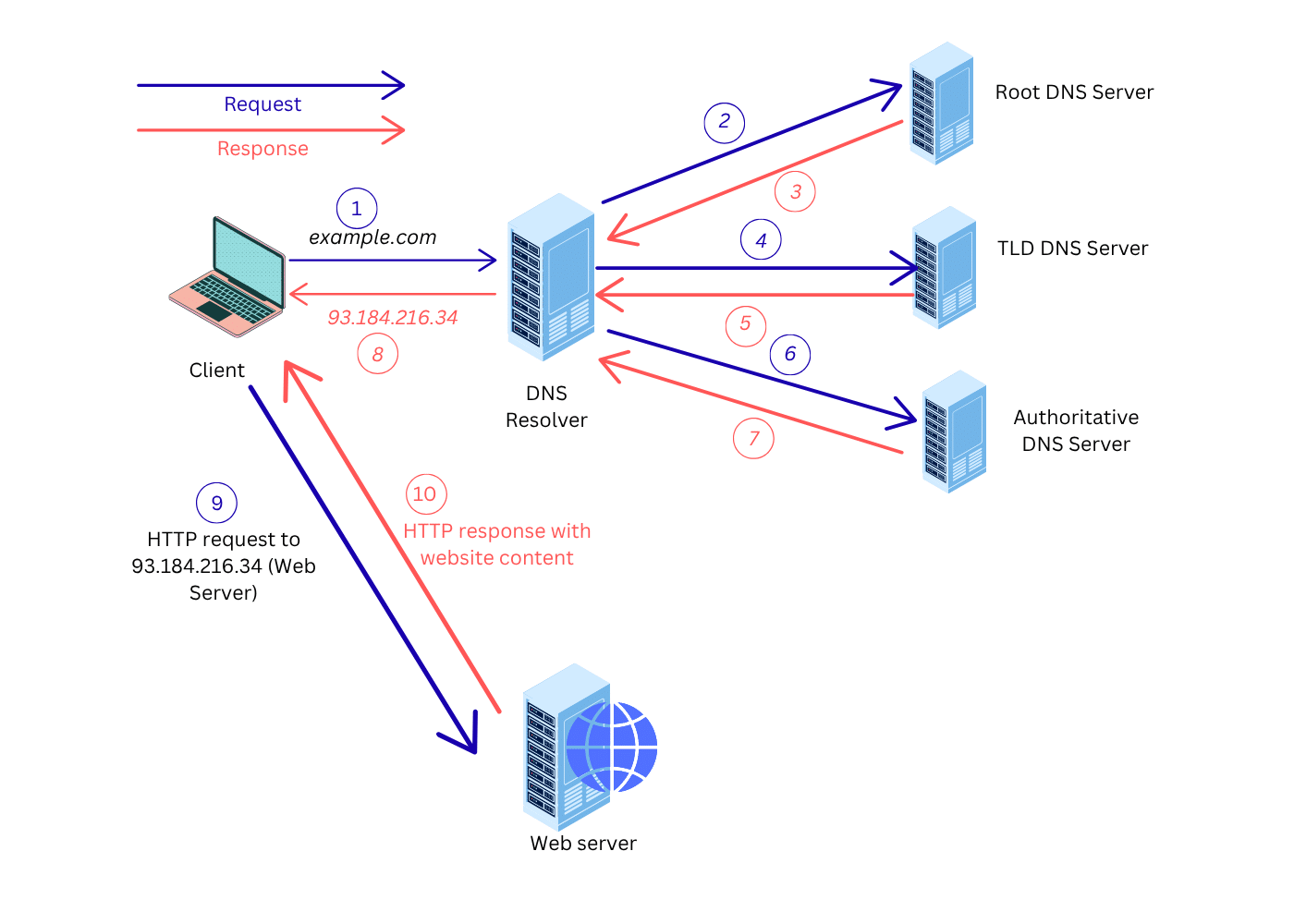
When you type a website name into your browser, your computer asks a DNS resolver for the corresponding IP address. More often than not, that resolver belongs to your ISP. And that resolver doesn't just fetch the answer and hand it over. It keeps a copy. This is called DNS caching, and it's done for one very practical reason: speed.
Every time your ISP's DNS server gets a request for google.com, it doesn't want to climb the entire domain hierarchy again. That takes time and server resources. Instead, it stores the answer for a period known as the Time To Live (TTL). The TTL is set by the domain owner, usually in seconds. 1800 seconds is 30 minutes, which is common. 1800 minutes? That's 30 hours.
Honestly? Most domain owners set their TTL to something reasonable, like 300 or 600 seconds. But here's the kicker: many ISPs simply ignore the TTL, or they have a minimum caching time configured that overrides the domain's instructions. If an ISP has a policy of caching DNS records for a minimum of 1800 minutes, then even a record with a five-minute TTL gets stuck in their caches for half a day. It's a deliberate trade-off.
Let me be blunt. This isn't always malicious or lazy. ISPs cache aggressively to protect their own network from being hammered by constant recursive lookups. A single popular website like Netflix might get millions of queries per hour. By caching that DNS data for a very long time, the ISP reduces the load on its own infrastructure. It's efficiency at the cost of agility.
The TTL Ignorance (Or Intentional Override)
One of the most frustrating situations I've encountered is when an ISP's resolver simply doesn't respect the authoritative TTL. I once migrated a client's entire website to a new hosting provider. The domain's TTL was set to 60 seconds for the change. We waited. And waited. The old site was still serving content three hours later. A quick lookup with a tool like `dig` confirmed the horror: the ISP had cached the old DNS record with a remaining TTL of 100,000 seconds.
Why do they do this? Three main reasons:
- Network stability: Frequent DNS changes can cause temporary outages if the records are stale but vanishing fast. A long cache smooths that over.
- Cost reduction: Every outbound query from their resolver costs a tiny amount of bandwidth and CPU. Caching longer means fewer outbound queries. Multiply that by millions of users and the savings are real.
- Security paranoia: Some ISPs argue that a longer cache window protects against DNS cache poisoning attacks. If you don't look up the record as often, you have fewer opportunities for a bad actor to slip in a fraudulent reply. It's a controversial take, but it's one they use.
The bottom line? Your ISP's caching server is not your friend when you need quick DNS propagation. It's a gatekeeper, and it operates on its own schedule.
When 1800 Minutes Becomes a Nightmare
Think about scenarios beyond a simple website move. Email server migrations are brutal when DNS is cached for 30 hours. You change your MX records, and suddenly half your users are sending mail to the old server, which is now offline. The bounce-backs are endless.
Or consider a security incident. Your domain gets hijacked. You regain control and change the DNS immediately. You set the TTL to 60 seconds. But if your ISP ignores that and caches the malicious IP address for 1800 minutes, your users are still being redirected to the attacker's server for an entire day.
Here's a dirty little secret: some enterprise networks have their own recursive resolvers that do the exact same thing. I've seen corporate DNS servers with a minimum cache time of 1440 minutes. The reason? The IT department didn't want to troubleshoot DNS issues on a Friday afternoon. They'd rather the cache be wrong than have to deal with a flood of queries. It's lazy, but it's real.
So what do you do when you're stuck with an ISP that treats 1800 minutes as a floor? You have options, but they're not all equal.
Breaking Free: How to Bypass Your ISP's DNS Cache
If you need your DNS changes to propagate instantly, the first and most reliable solution is to stop using your ISP's DNS entirely. I know, it sounds drastic. But it works.
Configure your router or computer to use a public authoritative DNS resolver like Cloudflare (1.1.1.1), Google (8.8.8.8), or Quad9 (9.9.9.9). These providers are famous for respecting TTL values and maintaining short cache durations. Cloudflare, for instance, has a policy of caching nothing longer than the TTL says. If you set a record to 60 seconds, Cloudflare will purge it in 60 seconds.
However, there's a catch. If you change your computer's DNS but your router is still using the ISP's DNS, your requests might still go through the ISP's cache. You have to change it at the router's DHCP settings. And even then, some ISPs intercept DNS traffic and redirect it to their own resolver anyway. That's called transparent DNS, and it's a whole other level of frustration.
Let me give you a step-by-step breakdown for testing:
- Check your current resolver: Use a tool like `nslookup` or `dig` to see which server is answering your queries. It should be an IP you recognize.
- Query a specific record: Use `dig example.com +ns` to see the authoritative nameservers. Then query one directly: `dig @ns1.example.com example.com`. This bypasses any cache.
- Force a flush (if you can): Some ISPs allow you to request a cache flush for a specific domain. Call their support and ask nicely. Sometimes they'll do it manually. Sometimes they won't. It's a gamble.
The Hidden Layer: Edge Caches and CDNs
Here's something that catches people off guard. Even after you bypass your ISP's DNS resolver, you might still hit a cached response from a Content Delivery Network (CDN). CDNs like Akamai or Cloudflare have their own DNS resolution mechanisms at the edge. The behavior of these systems can vary wildly.
For example, if you're using Cloudflare as your DNS provider, and you're also proxying traffic through Cloudflare, the CDN's edge servers will cache DNS responses internally. They might have their own TTL overrides. I've seen Cloudflare cache a DNS response for 30 minutes even when the TTL was 120 seconds. The system is complex, and there are multiple layers of DNS resolution happening between your browser and the final server.
Another frustrating layer is the operating system itself. Windows has a DNS cache that can hold entries for days if not configured properly. MacOS has mDNSResponder. Linux has systemd-resolved. You can flush all of these, but if the upstream resolver is still caching for 1800 minutes, flushing your local cache is like spitting into the wind.
The key takeaway? When you're troubleshooting a DNS propagation delay, don't just blame the ISP. Check the entire chain: your browser cache, your OS cache, your router cache, the ISP resolver, and any CDN in the middle. The cached response you're seeing could be stuck at any one of those points.
Why 1800 Minutes is Actually a Conservative Choice
Let me play devil's advocate for a second. From the ISP's perspective, caching for 1800 minutes is not the extreme end of the spectrum. I've consulted for smaller ISPs that used a default cache time of 7 days. Yes, seven days. Their reasoning was almost entirely about support costs.
Think about the average user. They don't change DNS records. They don't migrate websites. They just want to load Facebook. By caching everything for a week, that ISP drastically reduced the number of outbound DNS queries. Their resolver could serve millions of requests from memory with zero latency. The downside? If a domain owner changed their IP, it would take a week for that ISP's users to notice. That's a nightmare, but it's a conscious business decision.
So 1800 minutes, or 30 hours, is actually a compromise. It's long enough to provide significant network performance benefits, but short enough that most routine DNS changes (like for a blog or a static site) will get picked up within a day. It's not user-friendly for sysadmins, but it's a politically safe middle ground for the ISP.
I'm not defending it. I'm explaining the logic. Understanding the 'why' helps you pick the right battle. If you need real-time DNS changes, you're swimming against the current if you rely on your ISP.
Common Questions About ISP DNS Caching for 1800 Minutes
What does '1800 minutes' actually mean for my DNS cache?
1800 minutes is exactly 30 hours. It's the maximum time to live that some ISPs set as a default cache duration for DNS records. Even if the domain owner sets a shorter TTL, the ISP's resolver will hold onto that record for the full 1800 minutes before it checks for an update. This means DNS changes you make might not be visible to users on that ISP for up to 30 hours.
Is it dangerous if my ISP caches DNS for 30 hours?
It can be, especially in security-sensitive situations. If a domain is compromised and you fix the DNS to point to a safe IP, users stuck with the cached malicious IP are still at risk. For normal operations, it's more of an inconvenience than a danger. But in a fast-moving incident, 30 hours of stale DNS information is a serious liability.
How can I check if my ISP is caching DNS for a long time?
Use the `dig` command on a domain you control. Run `dig example.com +ttlid` to see the remaining TTL reported by your resolver. Then immediately check the authoritative nameserver directly: `dig @ns1.example.com example.com +ttlid`. If the remaining TTL from the ISP is much higher than the authoritative TTL, your ISP is overriding it. A difference of several hours is a clear sign of aggressive caching.
Will changing my DNS to 8.8.8.8 fix the 1800-minute problem?
In most cases, yes. Public resolvers like Google DNS and Cloudflare DNS are designed for accuracy and low latency, not for caching aggressively. They generally respect TTL values. However, if your ISP uses transparent DNS interception, your queries might still be routed to their cache. You can test by pinging a domain after switching DNS and watching the TTL reported. If it stays suspiciously high, your ISP is hijacking your traffic.
Can I force my ISP to clear their DNS cache?
Sometimes. You can contact your ISP's technical support and ask them to flush the DNS cache for a specific fully qualified domain name. Some ISPs have internal tools for this. Most don't or won't do it for individual users. Your best bet is to switch to a third-party resolver or wait out the 1800 minutes. Seriously, calling support is often a waste of your time unless you have a business relationship with them.
Information and translations of why in the most comprehensive dictionary definitions resource on. You use why with 'not' in questions in order to express your annoyance or anger. 30.7m subscribers 156k 15m views 8 years ago provided to youtube by universal music group why · shawn mendes.more How to use why in a sentence. The meaning of why is for what cause, reason, or purpose. Let's explore the meaning of why, how we use it in different situations, see some why questions examples, and why it's essential to ask questions. Definition of why in the definitions.net dictionary. Used to express surprise or anger: (full episode) nonton series indonesia. The word why serves as a fundamental tool in language for seeking explanations, expressing surprise, or delving into the reasons behind actions or phenomena.