
How to Minimize Static Pressure in Long Flex Duct Runs
You know that feeling when you install a long flex duct run, fire up the system, and get barely a whisper of airflow at the register? Yeah, I’ve been there more times than I care to count. It’s frustrating. It’s wasteful. And honestly, it’s completely avoidable. After more than a decade of wrestling with HVAC systems in everything from cramped attics to sprawling commercial builds, I’ve learned that minimizing static pressure in long flex duct runs isn’t just a nicety—it’s the difference between a system that works and one that just runs. The problem is, most people treat flex duct like it’s magic. It’s not. It’s a tool with very specific limits. Let’s fix that.
Why Static Pressure Creeps Up in Long Flex Duct Runs – The Real Culprits
Look—air is lazy. It wants to take the path of least resistance. When you force it through a long, winding, wrinkled tube of flex duct, you’re fighting against friction, turbulence, and sheer physics. Static pressure is the resistance your blower has to overcome to move that air. The higher it climbs, the less airflow you get. It’s simple math, but the execution gets messy.
The Physics of Airflow Restriction
Every foot of flex duct adds friction. That’s unavoidable. But the kicker is that flex duct is not smooth like sheet metal. Those ribbed surfaces? They create turbulence. A lot of it. In fact, a properly installed flex duct run can have two to three times the pressure drop of a comparable metal duct. So when you’re running 30 feet of flex through a hot attic, you’re already starting with a handicap. Throw in a couple of sharp bends or crushed sections, and you’re basically choking the system.
I’ve seen brand-new installations where the static pressure was over 1.0 inches of water column at the air handler. That’s borderline catastrophic. The blower was screaming, the energy bills were through the roof, and the homeowner couldn’t figure out why the second floor was always hot. It was the flex duct. Always the flex duct.
Flex Duct’s Hidden Friction Factor
Here’s something most people don’t know: flex duct has a “fully stretched” rating and an “installed” rating. They are not the same. When you stretch flex duct tight, the internal ridges smooth out a bit, reducing friction. But if you leave it sagging, bunched up, or kinked, you’re adding massive resistance. The airflow restriction from a single crushed section can double the total pressure drop of the entire run. Honestly? I’d rather install a slightly undersized metal duct than a long, poorly run flex duct. At least I know what I’m getting.
Mastering Duct Sizing and Layout to Minimize Static Pressure
This is where theory meets reality. You can’t just grab a random piece of flex duct and hope it works. The sizing and layout decisions you make before you even pull the duct out of the box are the most critical steps. Get this wrong, and nothing else matters.
Get the Diameter Right (Or Pay the Price)
The number one mistake I see is undersizing. People think “Oh, it’s just a 6-inch duct for a small room.” But then they run it 40 feet with a couple of turns. That 6-inch round flex duct at 40 feet has a static pressure loss that will make your blower weep. You need to use a duct sizing calculator or at least reference a friction loss chart. For long runs, you almost always need to jump up one diameter size. A 7-inch or 8-inch flex duct will have dramatically lower resistance than a 6-inch at the same length.
- General rule: For runs over 25 feet, increase the diameter by one inch if possible. - Don’t forget the fittings: Each 90-degree bend in flex duct adds more resistance than a metal elbow. Count them. - Check the design CFM: Overloading a small duct is a recipe for high static pressure and poor performance.
Seriously, if you’re running flex duct longer than 30 feet, stop and rethink the layout. Can you move the air handler? Add a junction box? It’s usually worth the extra labor.
The Straightest Path Is Your Best Friend
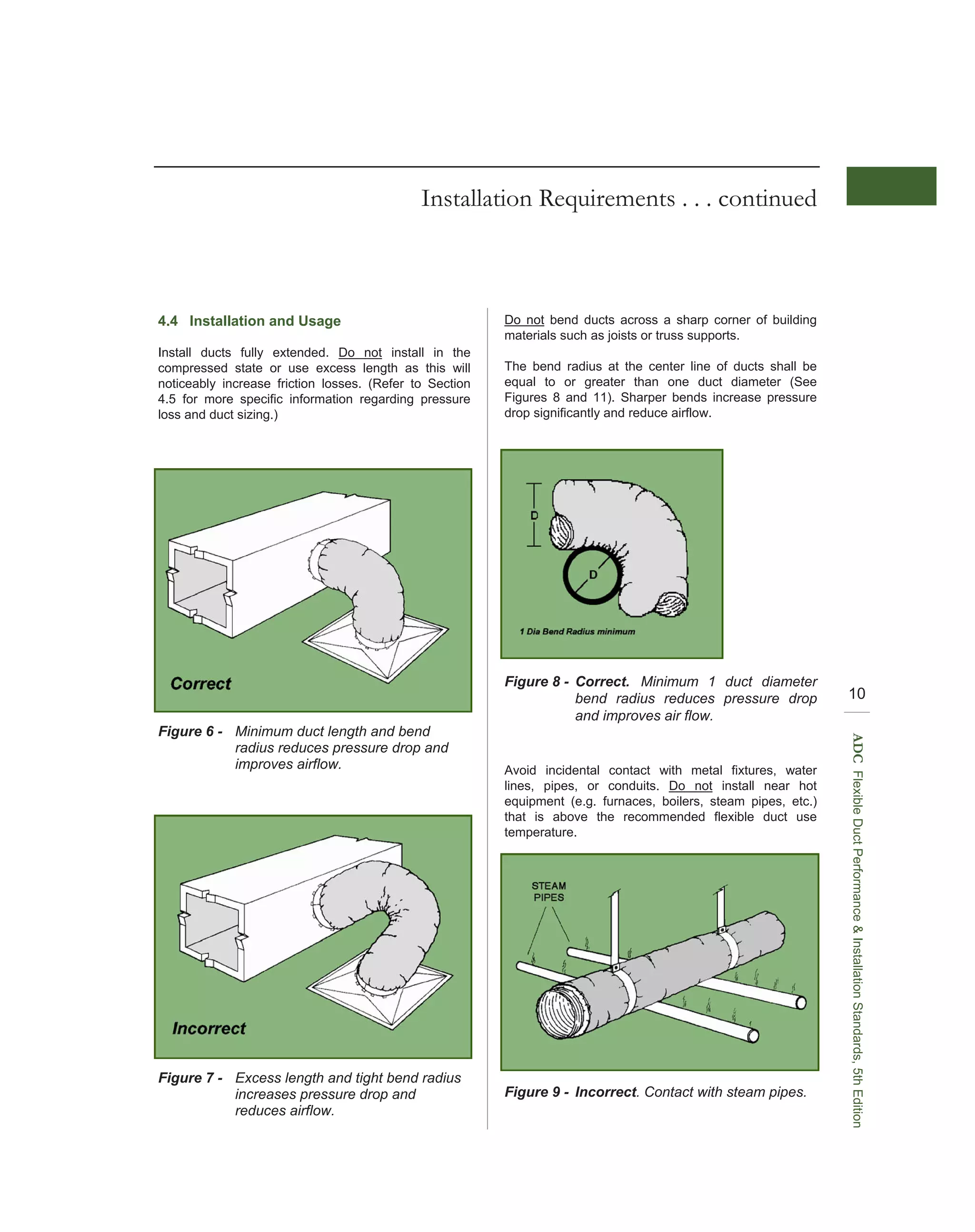
Every turn is an enemy. Every sag is a traitor. When you’re planning your route, imagine the air as water. You wouldn’t run a garden hose through a zigzag maze if you wanted good pressure, would you? Same deal here. Long flex duct runs should be as straight and direct as possible. If you absolutely have to turn, use wide, sweeping bends. A tight 90-degree kink in flex duct can increase pressure drop by 50% or more. That’s insane.
I always tell my guys: “Pretend the duct is made of glass. If you wouldn’t drop it, don’t bend it.” The goal is to maintain a smooth, circular cross-section along the entire length. Any compression, any flattening, any sagging—it all adds up. And it all increases static pressure.
Installation Techniques That Make or Break Your Static Pressure
Alright, you’ve got the right size duct and a decent layout. Now comes the part where good intentions get crushed by a bad install. I’ve seen it a thousand times. A perfectly good design ruined by a few minutes of lazy work. Don’t be that person.
The Art of Supporting and Stretching Flex Duct
Flex duct needs support. Period. The manufacturer says every 4 to 5 feet. That’s not a suggestion—it’s a requirement. Without support, the duct sags, creating low spots where air pools and friction spikes. Use wide strapping or mesh supports. Do not use zip ties tight enough to crush the insulation. And for the love of all things holy, stretch that duct. Pull it taut until the inner liner is smooth. A sagging duct is a restrictor.
- Support every 4-5 feet: Prevents sagging and maintains cross-section. - Avoid over-compression: Don’t cinch the ties too tight or you’ll dent the core. - Stretch it, but not too much: Over-stretching can rip the inner liner. Use a gentle tension.
Look—I once walked into a job where the installer had left a 20-foot run of flex duct sagging like a hammock. The static pressure at the end of that run was triple what it should have been. We pulled it tight, added supports, and the airflow doubled. It’s that simple.
Transitions, Takeoffs, and That Dreaded Kink
The connection points are where airflow restriction likes to hide. A sharp takeoff from the plenum? Bad idea. A crushed boot at the register? Even worse. Always use a smooth, gradual transition from the rigid trunk to the flex duct. A metal turning vane or a proper boot makes a huge difference. And never, ever force flex duct into a space that’s too shallow. Kinking is the silent killer of static pressure.
Here’s a list of installation sins I see every day:
1. Using a 90-degree elbow that’s too sharp. 2. Not stretching the duct before securing it. 3. Leaving excess duct length coiled up in the attic. 4. Pinching the duct between joists or studs. 5. Using duct tape instead of proper clamps at connections.
Each one of these adds incremental pressure drop. Alone, they’re minor. Together, they sabotage your system. It’s a big deal.
Common Questions About How to Minimize Static Pressure in Long Flex Duct Runs
Does using a larger diameter flex duct always reduce static pressure?
Yes, within reason. A larger diameter gives the air more room to move, which lowers velocity and reduces friction. But you can’t go too big or you’ll lose velocity at the register, causing poor throw and mixing. The trick is balancing static pressure with terminal velocity. For most residential systems, jumping one size up from the standard calculation is the sweet spot.
Can I fix high static pressure by adding a booster fan?
That’s a band-aid, not a fix. A booster fan can help push air through a restrictive run, but it masks the root problem. Plus, it adds noise, energy use, and another point of failure. You’re better off addressing the duct design and installation quality first. Seriously, fix the duct before you throw a fan at it.
How tight should I stretch flex duct during installation?
Stretch it until the inner plastic liner is smooth and free of wrinkles, but not so tight that you feel the wire helix pulling. A good rule of thumb: stretch it enough to remove about 10-15% of the slack. If it looks like a wrinkled sock, you’ve left too much slack. If you hear the wire creaking, you’ve gone too far. The goal is a smooth, round bore.
Is fiberglass flex duct better than PVC or polyester for long runs?
For minimizing static pressure, fiberglass flex duct generally has a smoother interior surface and better insulation properties. But the material matters less than the installation. A well-installed polyester duct can outperform a poorly installed fiberglass duct any day. Focus on the install, not the brand. That said, always check the manufacturer’s friction loss data for the specific product you’re using.
Should I always use metal duct instead of flex duct for long runs?
If you can, yes. Metal duct has much lower friction factors and is more rigid, so it maintains its shape better over long distances. But I get it—flex duct is cheaper, easier to install, and sometimes the only option in tight spaces. When you must use flex duct for long runs, follow every rule I’ve laid out here. Size it up, support it well, stretch it taut, and avoid sharp bends. It’s not ideal, but it can work.